Everyone in music says they want discovery, but most discovery systems are better at confirming what has already started moving. Streams, saves, social proof, playlist lift, algorithmic traction — all of it can tell the industry where attention is already gathering. Hype-Index is built around a different bet: that someone with taste should still hear the record before the numbers explain why it deserves attention.
That is why the daily email format feels more interesting than it looks on paper.
A short briefing in the inbox is not flashy, but the inbox is still where agents, managers, labels, publishers, curators, and other music people do a lot of their actual work. Hype-Index began there because the problem was practical: too much music, too little time, and too many promising records getting buried before the right person had a chance to hear them.
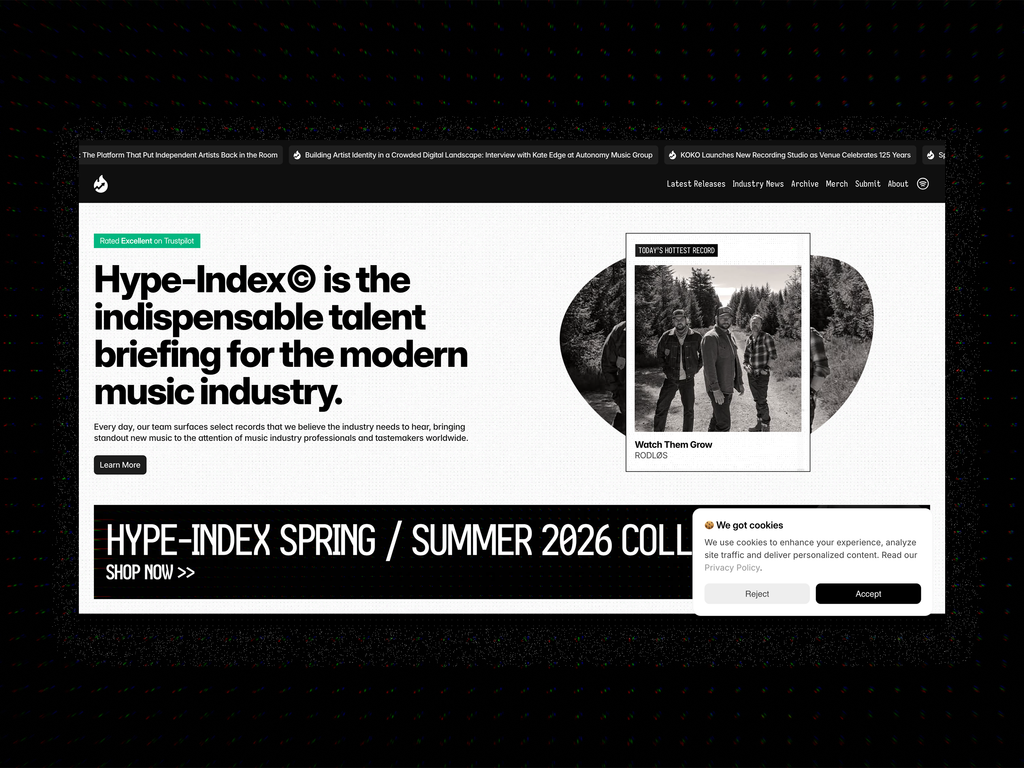
The brand has since grown into a wider publication with a permanent home for selected releases, news, features, interviews, and industry coverage. But the central idea is still refreshingly strict.
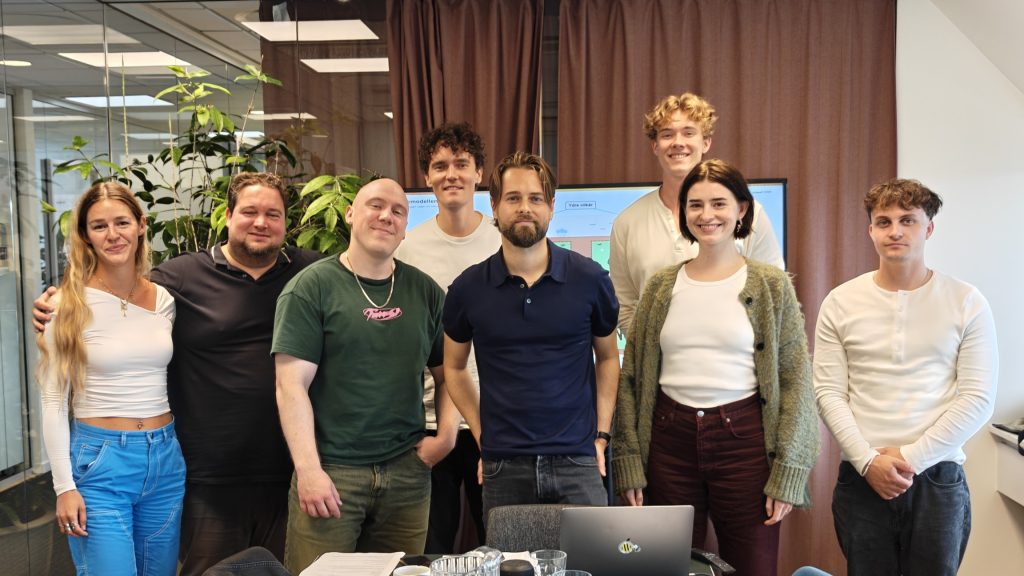
We sat down with Lily Nguyen of Hype-Index to see how she and her team listen first, keep the selection narrow, and treat credibility as the thing that cannot be traded away once revenue enters the picture. In a market where every platform wants scale, that editorial restraint may be the whole point.
Interview With Lily Nguyen Of Hype-Index

When Hype-Index began as a grassroots newsletter, what problem were you trying to solve for people working in music?
Our mission from the very start has been to make it easier for exciting new records to reach the right person’s radar. I think people working in the industry nowadays are surrounded by so many new artists, but discovery is typically led by algorithms and data that tends to reward what is already moving.
Hype-Index began as a way to make that process human-led and more intentional: a curated shortlist of records worth knowing about, regardless of the artist’s size, status or momentum. That gives us a really interesting editorial mix, where we can feature a recently signed band looking for a RoW booking agent next to a bedroom producer that’s just put out a killer debut single.
What made a daily email the right starting format for the publication?
Email was already where our readers did business, so a short daily briefing that could be scanned in a few minutes, saved, forwarded or returned to later made sense.
The website now gives every selected release a permanent home, alongside news and features that explore the people and ideas shaping the industry.
You receive roughly 300 submissions each week and publish a small portion of them. What happens during the first listen?
My first focus is always the record itself. I try to avoid reading the pitch or learning anything about the artist until I’ve formed an initial gut feeling on the actual song.
In terms of what we’re listening for, it’s almost always a distinct artistic identity, exceptional songwriting or production, someone doing something genuinely unique, or ideally some overlap between those things.
The thing I love most about our editorial policy is that we’re completely genreless and rarely swayed by an impressive press release or “story.” While I’m always conscious of what feels culturally or commercially relevant, we’re also free to share some properly weird and wonderful stuff that a purely data-led discovery system might overlook.
With hundreds of weekly submissions plus outside research, how is the workload divided so each selected record receives enough editorial attention?
We intentionally keep our song briefings concise, so it definitely helps that we’re not writing four to six paragraphs for every release we cover.
As we’ve grown as a publication, we’ve been able to add more staff and systemize a lot of the listening process, but I’d be lying if I said there wasn’t still a huge amount of work going into each day’s briefing. It helps if you genuinely love doing it, though, which I do.
As the commercial side grows, which editorial rule would you keep even if it restricted revenue?
The most important rule is that commercial opportunity can never override editorial judgement. Maintaining credibility is what keeps our core audience reading Hype-Index every day. If those people stop trusting our opinion, the publication stops having any real value.
We don’t have investors or major-label stakeholders, so we’ve always had to find ways to monetize what we do, but that can never influence the decisions we make about the artists, labels or companies we pick up on.
From a revenue standpoint, we could undoubtedly grow faster by lowering our selection criteria, publishing more releases or accepting every potential commercial partnership, but the real value of Hype-Index lies in its fierce independence and our freedom to showcase the artists we genuinely believe need to be heard.

Closing Thoughts
The most compelling thing about Hype-Index is how unfashionable the model almost feels on paper.
A daily email.
A small team.
A curated release list.
A first listen before the pitch.
None of that sounds like the loudest possible answer to modern discovery, but it may be a better one for the specific people Hype-Index is trying to reach.
That connects naturally with my interview with Sample Focus on curation, discovery, and building better ways to find sounds. Sample Focus is working closer to the producer side, while Hype-Index is aimed at the industry side, but both are dealing with the same overload problem. When the volume of available music becomes too large for anyone to process cleanly, the question becomes who or what gets to filter it.
There is also a clear link to my piece on SubmitHub and the platform’s role in independent artist discovery. SubmitHub operates at a different scale and with a different marketplace logic, but it sits in the same larger conversation. Artists need ways to reach people who might actually care, while curators need ways to sort the flood without pretending that data alone can hear a record properly.
Hype-Index’s first-listen rule is the editorial hinge.
By trying to hear the record before reading the pitch, the publication protects itself from one of the easiest traps in music coverage: letting the story become more persuasive than the song. That does not mean context has no place. It means context should not do the work the record cannot do on its own.
The commercial answer is also the part that makes the brand more interesting. Hype-Index is not pretending it can exist outside revenue. It has to monetize, like any independent publication trying to survive. But the line is clear: commercial opportunity cannot override editorial judgment. That is easy to say and harder to maintain once inbound demand grows.
That is where Hype-Index has to be careful as it scales. Lowering the bar would probably bring faster short-term revenue, more partnerships, and more inventory to sell. It would also weaken the reason industry readers open the email in the first place. Scarcity is part of the product. Selection is part of the product. Taste is part of the product.
The broader takeaway is that Hype-Index is not trying to replace algorithmic discovery. It is trying to create a more intentional lane next to it. Algorithms are good at measuring motion. Hype-Index is betting that people still need editorial judgment to notice records before the motion is obvious.
For emerging artists, that distinction can be everything.

Will Vance is a professional music producer who has been involved in the industry for the better part of a decade and has been the managing editor at Magnetic Magazine since mid-2022. In that time period, he has published thousands of articles on music production, industry think pieces and educational articles about the music industry. Over the last decade as a professional music producer, Will Vance has also ran multiple successful and highly respected record labels in the industry, including Where The Heart Is Records as well as having launched a new label with a focus on community through Magnetic Magazine. When not running these labels or producing his own music, Vance is likely writing for other top industry sites like Waves or the Hyperbits Masterclass or working on his upcoming book on mindfulness in music production. On the rare chance he's not thinking about music production, he's probably running a game of Dungeons and Dragons with his friends which he has been the dungeon master for for many years.