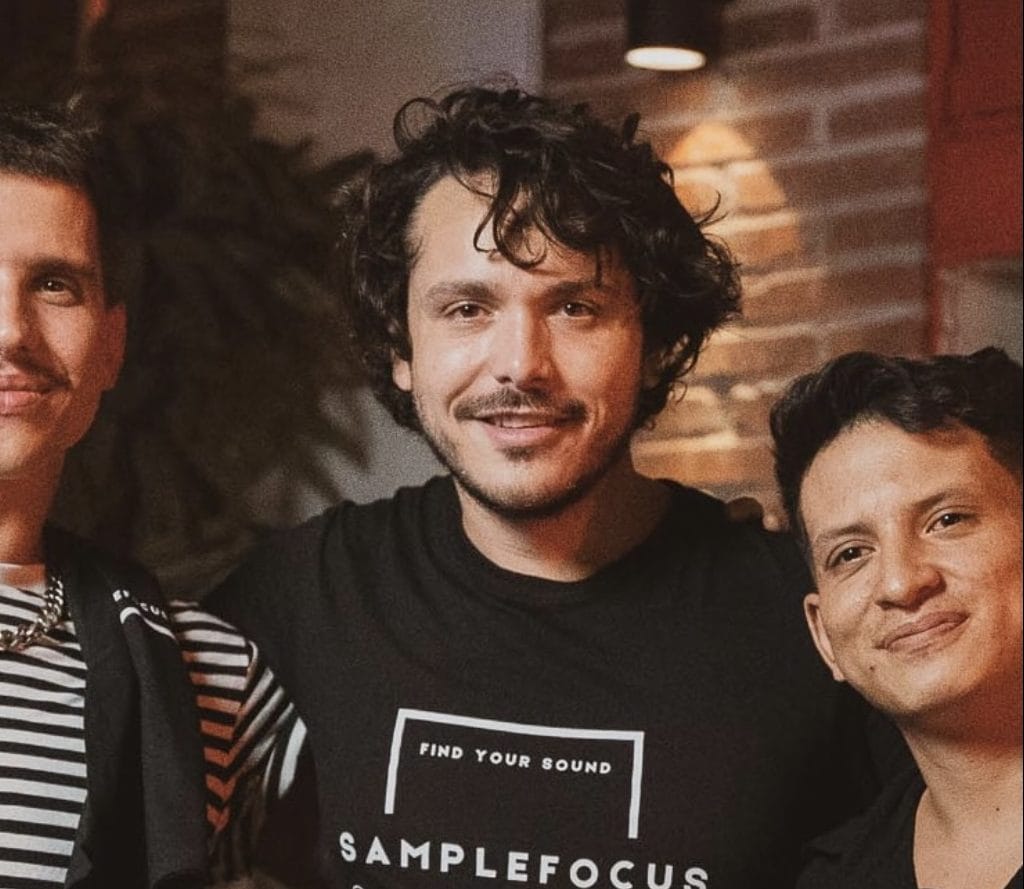
Sample Focus occupies a different lane in the sample-library market because it starts from a producer problem that never really went away: finding the sound in your head before the idea disappears. The platform was built around that moment of friction, when a session slows down because a folder full of “Kicks,” “Synth Melodies,” and half-remembered files forces the producer to become a librarian instead of a musician.
That origin still explains the company’s identity.
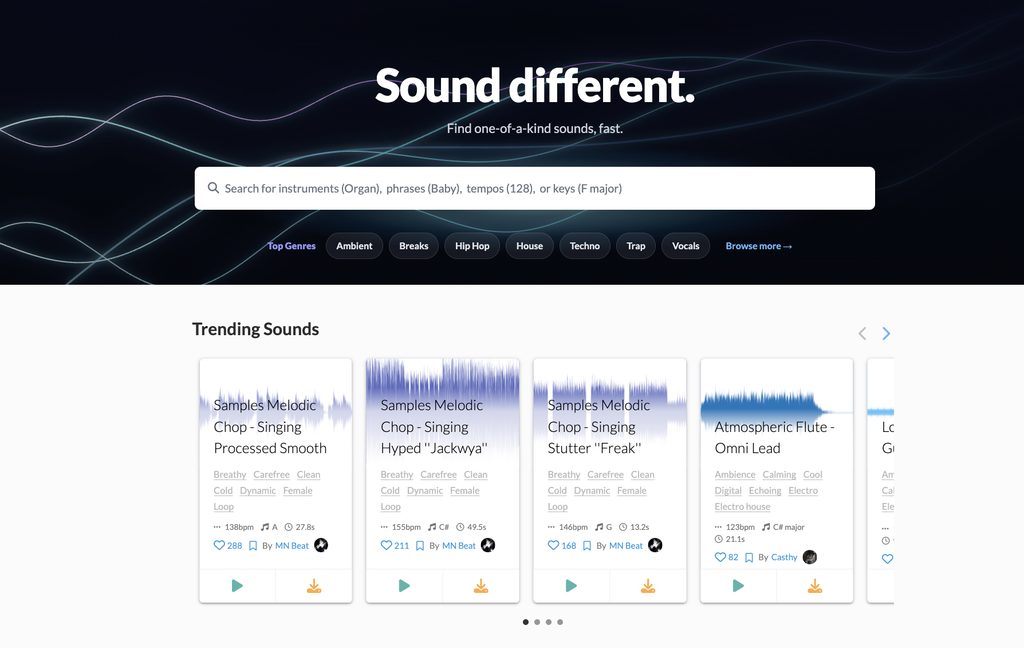
Sample Focus is a curated, user-generated library where every uploaded sample is reviewed before publication, searchable by musical and sonic attributes such as instrument, tempo, key, mood, and character, and paired with a downloadable license for clarity on commercial use. The proposition is less about giving producers an endless wall of polished material and more about helping them uncover sounds that feel specific enough to change the direction of a track.
In the interview below, founder Daniel Trostli breaks down why early sample libraries misunderstood producers’ search behavior, how Sample Focus developed its tag-based discovery system, why moderation became far more important than expected, and how shared libraries can keep their place as text-to-audio systems continue to improve.
The answers give a more insightful look at the quiet labor behind a platform that depends on user contribution without turning into a free-for-all.
Interview Daniel Trostli
What problem were you repeatedly encountering as a producer that convinced you Sample Focus needed to exist?
I started making music using Ableton in 2007, mostly house music with some experimental music sprinkled in between. Like many producers, I used a combination of software synths and samples to translate the musical idea I had in my head into music.
For years, I struggled with not only organizing my sample library but, most importantly, quickly finding the sound I was looking for! My sample library was a mess. On my hard drive, I had amassed a huge collection of nested upon nested folders, many of which had the same bland and nondescriptive names: “Kicks” or “Synth Melodies.” I remember many sessions where I would spend 45 minutes looking for a particular synth stab that would work.
By the time I found it, I had lost or forgotten the initial spark that got me excited in the first place.
In 2013, I attended Dev Bootcamp in San Francisco, the very first coding bootcamp of its kind, which sadly is now defunct. There, I started my journey from Mechanical Engineering to Software Engineering, which enabled me to start brainstorming ideas. By 2015, thanks to a slew of software engineering jobs in Silicon Valley, I had developed the necessary skills to do something about it. At first, I thought of perhaps spending a week or two manually organizing my library in a distinct fashion with cleanly named folders. However, I realized I couldn’t possibly be the only one to have the same issue.
This was the spark for me to start ideating on what eventually became Sample Focus! I was very much inspired by the user-contributed, self-organizing system of Wikipedia and used it as fertile ground for the initial idea.
The core proposition of the product I initially built for myself was to build the fastest way to find the sound in your head. Simple steps, like allowing users to audition samples by hovering instead of pressing a play button, were among the first innovations I came up with.
When you began developing Sample Focus, what did competing sample libraries misunderstand about how producers search for audio?
The main thing competing libraries misunderstand, still to this day, is that producers don’t always want highly polished, perfect sounds. Sometimes that’s appropriate; however, more than anything, I believe producers want to have a unique sound. This means sourcing your sounds from a more diverse set of sources.
I often give people the analogy that companies like Splice and Loopcloud are like Netflix.
They source their sounds from large sample labels like Loopmasters, Cymatics, and other major loop publishers. That’s great when you want to consume highly polished media like The Lord of the Rings, but if you want something different, unique, or eclectic, Netflix is not a user’s typical first choice. It’s YouTube. It’s on a user-generated platform where you can really find unique gems.
That’s why I sincerely believe that, while highly polished platforms have their place, Sample Focus is the very best at helping users discover unique, user-generated sounds they can’t find anywhere else. With a user-generated service like ours, we can offer a broader range of sources, textures, recording conditions, and interpretations of what makes great sound. In fact, Sample Focus’s registered trademark tagline is “Sound Different.”
Sample Focus launched in 2016. What did the first version offer, and which early assumptions proved incorrect once producers began using it?
To be honest, the current version is still an evolution of the very first version.
Our signature hover-to-play functionality has been there since day one. Our taxonomy and categories have mostly stayed the same as well. However, the quality and quantity of sounds, ease of use, upload speed, tagging, and search have all vastly improved.
In short, the core assumptions baked into the product since the first version have not significantly changed. However, there were some areas we underestimated, including the scale and scope of moderation and feedback we needed to give uploaders.
Users were not the best at describing and tagging sounds, so we built quite a few tools to help, such as giving users detailed feedback on why their samples were rejected or may need additional information. We also built a sophisticated tagging user interface, and automated tag and naming suggestions.
An additional concern we learned about later on is around licensing. A real concern with a user-generated library is around copyright. That’s why every sample is human-reviewed and passes through several checks before being published. We also recently launched a license generator for producers when they need to submit proof they can use our samples freely.
All things considered, I’m pretty happy with where the product is.
Although there are always more improvements to make, we consistently get glowing reviews from our users. So far, producers have downloaded over 50 million samples since launch.

Sample Focus places discovery ahead of endless browsing. How did you develop a search experience that can interpret requests based on instrument, tempo, musical key, mood, or sonic character?
The core insight that enabled this was a switch from the playlist/folder architecture, which users are accustomed to in organizing their sample library, to a tag-based architecture, where each tag is a node in a tag graph. This allows for a great search and discovery experience, as sounds then become easily searchable and related to each other based on common tags.
This tag graph and our built-in taxonomy allow a closer approximation to natural-language search. For example, you can search for “dark and distorted staccato synth, 128 BPM, C minor.” We can then surface a sound for you that matches all or part of this metadata, even if its name doesn’t contain any of that information.
Another core organizational principle is the distinction between mutually exclusive categories, such as instrument type, and more ambiguous tags, such as genre.
This helps us keep our growing library of over 300,000 sounds neatly and highly organized.
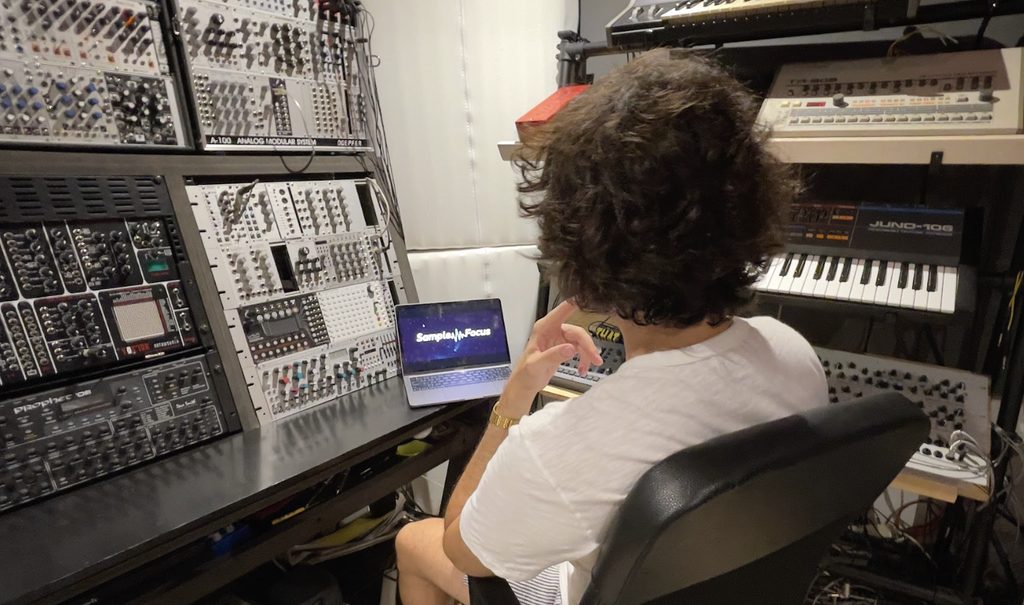
As text-to-audio systems improve, do you expect producers to continue searching shared libraries, or will Sample Focus need to change the role it plays during production?
As technology progresses, producers change the way they make music.
This has always been the case and will continue to be. Producers will certainly use text-to-audio generation, although shared libraries still have the edge in serendipitous discovery, curation, and unexpected variety. That’s why I believe there will always be a space for shared libraries. As far as new technologies are concerned, we actually have some really cool new products cooking that I can’t announce yet, but stay tuned!
After a decade of running Sample Focus, what part of the company do users rarely see, yet has become essential to keeping the platform operating?
What users rarely see behind the scenes is our dedicated team of content moderators. They are the ones who ensure the user-contributed samples we receive meet the standards of quality and organization we expect. Every single sample is reviewed before entering the library.
Moderators check audio quality, trimming, tagging, tempo, key, categorization, duplication, and potential copyright infringement. As you can imagine, there is a lot of ambiguity in classifying audio, so good taste and strong opinions help a lot with this task.
The ambiguity in music and sound, like all art, makes this a difficult process to automate. The moderators, in the end, are the guardians who keep this lovely garden of sound we have created pristine.
Closing Thoughts
Sample Focus makes the most sense when you think about the producer’s attention span inside an actual session. A producer does not usually need “more samples” in the abstract. They need the right stab, texture, drum hit, vocal cut, or odd recording fast enough that the idea still has heat. Daniel’s origin story is built around that exact pain point: 45 minutes lost to folder digging, followed by the creative spark going cold. Sample Focus was designed around preventing that moment.
The other creates range while using curation to keep the archive from becoming noise.
The platform also sits beside the larger question raised in my piece on the best websites to get royalty-free samples: producers increasingly need search, licensing confidence, and practical context as much as they need raw material. That is where Sample Focus has a cleaner pitch than a random free-sample archive. The downloadable license matters because commercial releases require paperwork, not vibes. The moderation matters because user-generated audio brings rights questions, tagging problems, duplicates, bad trimming, and quality-control issues that the producer should not have to solve mid-session.
That same thread runs through my interview with Black Octopus Sound on building systems for the next era of producers. Black Octopus has been thinking about AI, education, and producer workflow from a company that also understands sample-pack culture from the inside.
Sample Focus arrives at a related problem from search and community architecture. The hard part is no longer just collecting audio. It is helping producers move through large libraries without flattening discovery into the same predictable results.
The strongest point in Daniel’s answers is the hidden moderation layer. A user-generated platform can sound open and democratic from the outside, but the archive only stays playable if someone is making decisions about audio quality, trimming, tagging, key, tempo, duplication, categories, and possible rights issues. That is the unglamorous work behind the front-end experience. Sample Focus is not valuable because anyone can upload a sound. It is valuable because those sounds pass through enough human judgment to make discovery feel worth the producer’s time.
That is where Sample Focus has a durable role in the market. Polished libraries will keep serving producers who want finished, label-grade material from known suppliers. AI systems will keep reducing the time between request and output. Sample Focus is betting on something less linear: human-uploaded sound, moderated taste, licensing clarity, and a search system built around how producers actually remember audio.
In a market drifting toward infinite content, that combination may be more important than scale alone.

Will Vance is a professional music producer who has been involved in the industry for the better part of a decade and has been the managing editor at Magnetic Magazine since mid-2022. In that time period, he has published thousands of articles on music production, industry think pieces and educational articles about the music industry. Over the last decade as a professional music producer, Will Vance has also ran multiple successful and highly respected record labels in the industry, including Where The Heart Is Records as well as having launched a new label with a focus on community through Magnetic Magazine. When not running these labels or producing his own music, Vance is likely writing for other top industry sites like Waves or the Hyperbits Masterclass or working on his upcoming book on mindfulness in music production. On the rare chance he's not thinking about music production, he's probably running a game of Dungeons and Dragons with his friends which he has been the dungeon master for for many years.