The BOSS VE-22 Vocal Performer is still one of the easiest vocal processors to recommend in 2026 for singers who want a stage-ready box with pitch correction, harmonies, doubling, compression, EQ, delay, echo, reverb, specialty effects, a looper, USB-C audio, and battery power in one compact unit.
It sits in the middle of the vocal-processor market.
It costs less than the BOSS VE-500 and TC-Helicon VoiceLive 3 Extreme, more than the TC-Helicon VoiceLive Play, and roughly the same as the Zoom V6-SP. The real reason to buy it is the balance of BOSS reliability, fast controls, XLR I/O, preset storage, and live performance layout.
The answer: The BOSS VE-22 is still worth buying in 2026 if you sing live, stream, rehearse, or record simple vocal parts and want hardware effects without building a computer-based chain. At $384.99 from Sweetwater, it is best for singers who want portable control. Skip it if you need deeper editing, guitar-controlled harmonies, or plugin-level vocal tuning.
So, let’s get after it or head over to BOSS’ website to learn more about it RIGHT HERE.

What Is The Verdict On The BOSS VE-22 In 2026?
The BOSS VE-22 still earns a clear recommendation because it solves a specific live-vocal problem cleanly. It gives singers a dedicated processor that can sit on the floor, tabletop, or pedalboard and handle the main vocal effects people reach for in real time.
The interface is the strongest part of the product. You get a color LCD, three large switches, knobs for Harmony, Effect, and Echo, 50 presets, 99 user memories, and enough hands-on control to use it without treating the unit like a small computer.
The price is the main friction point. Sweetwater lists the VE-22 at $384.99. That is fair for the feature set, although budget buyers should also check the TC-Helicon VoiceLive Play at $229 and the Zoom V3 at $279.99. Singers who need deeper routing and guitar-linked control should look at the BOSS VE-500 or TC-Helicon VoiceLive 3 Extreme instead.
My verdict is straightforward: buy the VE-22 if you want a modern, compact BOSS vocal processor for live singing, rehearsal, streaming, and simple recording. Skip it if you only need studio vocal tuning inside a DAW.
How Much Does The BOSS VE-22 Cost In 2026?
The current price checked is $384.99 at Sweetwater. Guitar Center also lists the VE-22, and bundle pricing can change depending on whether the package includes the PSA power supply or CB-VE22 carry bag.
| Purchase Path | Current Price Checked | Best For |
|---|---|---|
| BOSS VE-22 Vocal Performer | $384.99 | Most singers who want the core unit |
| VE-22 with power supply bundle | $394.99 at Sweetwater when checked | Buyers who want wall power included |
| VE-22 with carry bag bundle | $445 at Sweetwater when checked | Singers carrying the unit to rehearsals and shows |
| BOSS VE-500 | $527.99 | Deeper BOSS vocal processing |
| TC-Helicon VoiceLive Play | $229 | Lower-cost vocal harmony and effects |
The clean price range for the VE-22 right now is about $384.99 for the unit and about $394.99 to $445 for common bundles.
What Is The VE-22 Vocal Performer?
The BOSS VE-22 is a compact stompbox designed to enhance vocal effects, suitable for use on stage, in the studio, or at home. It features a range of vocal effects, including harmony, reverb, and delay, with harmonies that adapt automatically to the singer’s key. The device also has advanced pitch correction capabilities, allowing subtle tuning adjustments or more dramatic tuned effects. Additionally, it includes an onboard looper with up to 37 seconds of recording time, providing expansive possibilities for sonic layering and performance enhancement.
The pedal has a microphone preamp that supports switchable phantom power and adjustable sensitivity, an auxiliary input, a headphone output, and stereo XLR outputs. It also functions as a USB-C audio interface, facilitating direct recording into digital audio workstations (DAWs). The VE-22 has 50 factory presets, offering various effects, from subtle enhancements to bold vocal transformations. Users can further personalize their sound by saving custom settings in up to 99 user preset slots, totaling 149 possible presets accessible with ease.
Regarding connectivity and utility, the VE-22 includes a USB-C port, enabling straightforward digital recording. This feature lets vocalists and performers capture live performances, practice sessions, or studio work directly into a DAW. The pedal’s comprehensive features and versatile functionality make it a practical tool for enhancing vocal performances and recording sessions.
Now, with the vanilla and descriptive jargon out of the way, let’s dive into the fun parts about what I loved about this device, how I used it in the studio, and some of my favorite things about us.
What I Liked Most About The VE-22 Vocal Performer
The Presets + Effects

A lot is going on under the hood of this foot-friendly vocal box.
While that does reward those who want to spend hours poring over the manual and watching every video on YouTube, the presets and easy-to-use FX means that the VE-22’s complexity is far from prohibitive.
BOSS even went the extra mile to create dozens and DOZENS of presets for almost every genre of music you’d need this thing for, no matter how modern (like Hyper Pop and Trap) to older school vibes (like Lo-Fi or Oldies).
They even have presets that cater to more creative uses like Beat Boxing!
All the presets are super easy to manipulate and save for later use, which not only rewards you over time for learning the device’s intricacies but also, as its library becomes more customized to you specifically, can quickly help shape your signature sound during live performances which aren’t something you necessary come across every day (especially for vocalists).
Its Layout + Design

Another thing that makes this device super approachable is the overall layout, which is kept purposely streamlined without overcomplicating the interface with too many buttons or features. A couple of foot-friendly buttons and a few rotary knobs are all you need to navigate your way through all that it has to offer (with a bit of pre-programming and prep, at least if we’re talking from a live performance and gigging perspective).
Performing live, especially from a vocal perspective, is all about reacting to and getting lost in the moment, and the simple design and easy-to-follow layout of the VE-22 are ideal for what it seeks to do.
Plus, the sleek and sexy red exterior looks fantastic.
And while I wish there were a couple of different color options to choose from, even just a white or black option, it does leave room for future releases and limited runs of the device, which I’ll undoubtedly be looking forward to.
Its Flexibility + Functionality
The obvious use case for the VE-22 Vocal Performer is for live-performing vocalists, but it’s far from a one-trick pony. It packs a ton of significant effects, tools, bells, and whistles into its compact design, and I found myself using it even more in the studio than I ever would have in live performance settings. However, this is specific to me, who spends 75% of my life in studios.
I’ll talk about these specific use cases in an upcoming section of this review, but here’s a quick rundown of some of the unconventional ways the VE-22 Vocal Performer’s flexibility wrestled its way into my workflow:
- De-essing my vocals before they hit my DAW (which is processing I HATE doing manually during the mixing process)
- Light pitch correction leads to more natural sounding recordings, and even a little bit more correcting is needed in the DAW (saving me from leaning heavily on a single pitch correction software, which usually creates nasty artifacts)
- Delays + Reverbs helped turn my vocal shots, breaths, and ad-libs into wild and crazy transitional effects and atmospheres.
- Harmonizer Effects helped me create interesting vocal harmonies and ad-libs to support and enhance vocal samples I found on sites like Splice.
Who Is The VE-22 Vocal Performer For?
Live Performers (…Of Course)
This one is an easy recommendation, as it’s really what the VE-22 Vocal Performer’s bread-and-butter functionality is designed to do. That being said, I would argue that it goes above and beyond the call of duty here and knocks its goal of being an all-in-one vocal performance-enhancing device out of the park.
And because it’s priced at $349.99 at the time of writing this review, it’s an easy-to-justify purchase, seeing as it likely costs less than a month of vocal coaching while also serving a double purpose in the studio as a tiny little assistant (which is the perfect segway to my next point).
Bedroom Producers
When I say bedroom producers, I don’t necessarily mean new or hobbyist producers. I suggest the VE-22 Vocal Performer is great for any producer of any skill level making music in small spaces. It needs maximum use and functionality out of their limited space in their studios.
While massive Hollywood studios can have multiple mix and control rooms filled with various outboard effects, gear, and thousands of terabytes of storage for plugins and vocal takes, most smaller creators don’t have the luxury and would benefit from having such a versatile and flexible tool in their studio (that they can also take with them on the road and on stage to elevate their live performances and gigs).
Public Speakers + MCs
This is a big one that is way too often overlooked by anyone doing a lot of public speaking. I think that just having a mic is all you need from the job. And while the Microphone preamp on the VE-22 really does help ensure that pretty much any mic can be used with this pedal, there’s a ton more functionality this device brings to the table that can really be an X-factor for anyone doing any public speaking or MCing.
- The onboard USB-C audio interface allows for recording. So, for example, if you’re a wedding DJ, you can record speeches and other event moments for later relistening.
- User-friendly effects are PERFECT for karaoke DJs to spice up the event. I did karaoke once where the DJ had a similar pitch-correcting tool, and it was a SUPER X-factor that I’m honestly shocked more karaoke nights don’t offer. Beer-drinking would-be singers always have a ton of fun experimenting with auto-tune, and this is the easiest way to access it.
How I Used It
As A Studio Assistant
While it is predominantly a live performance device, I found it invaluable as a quick-and-easy studio assistant whenever I recorded my vocals. The subtle pitch correction and de-essing that it brings to my recordings before the audio even hits my DAW saves me a ton of legwork and tedious mixing once the audio is printed in Ableton.
Also, as mentioned before, the various presets and different genre-specific patches that the VE-22 gives me can help spice up my vocal recordings as well, which can be as inspiring as it is just overall incredibly useful.
As An FX Tool
Whether it’s heavy-handed applications of autotune to create robot-like effects on my vocals or just heavily washed out, phasey vocal textures and washes, the VE-22 has become an essential tool for me to no longer have to rely on endlessly scrolling through Splice for similar textures, since it’s given me the ability to create them all directly on my own.
Could I have done all these effects by recording my vocals and tweaking many plugins? Of course. But the hands-on, or sometimes feet-on approach to scrolling through presets and different vibes before recording my key-locked vocal textures and effects is really fun and a unique way to sound, well, more unique.
What I Use It With
LA-320 V2

This has long been my favorite workhorse microphone in the studio, and I think it’s the perfect pairing for the VE-22, at least when it comes to studio work. There are likely better live performance mics, like the DPA 2028 VOCAL MIC, for gigs, but when it comes to studio work, the LA-320 V2 compensates for a few shortcomings the VE-22 has.
The main “shortcoming” here is that Lauten’s mic has a tube amp, which gives that classic warm and texturally dense tone that isn’t included in the VE-22.
Hologram Chroma Console + Microcosm
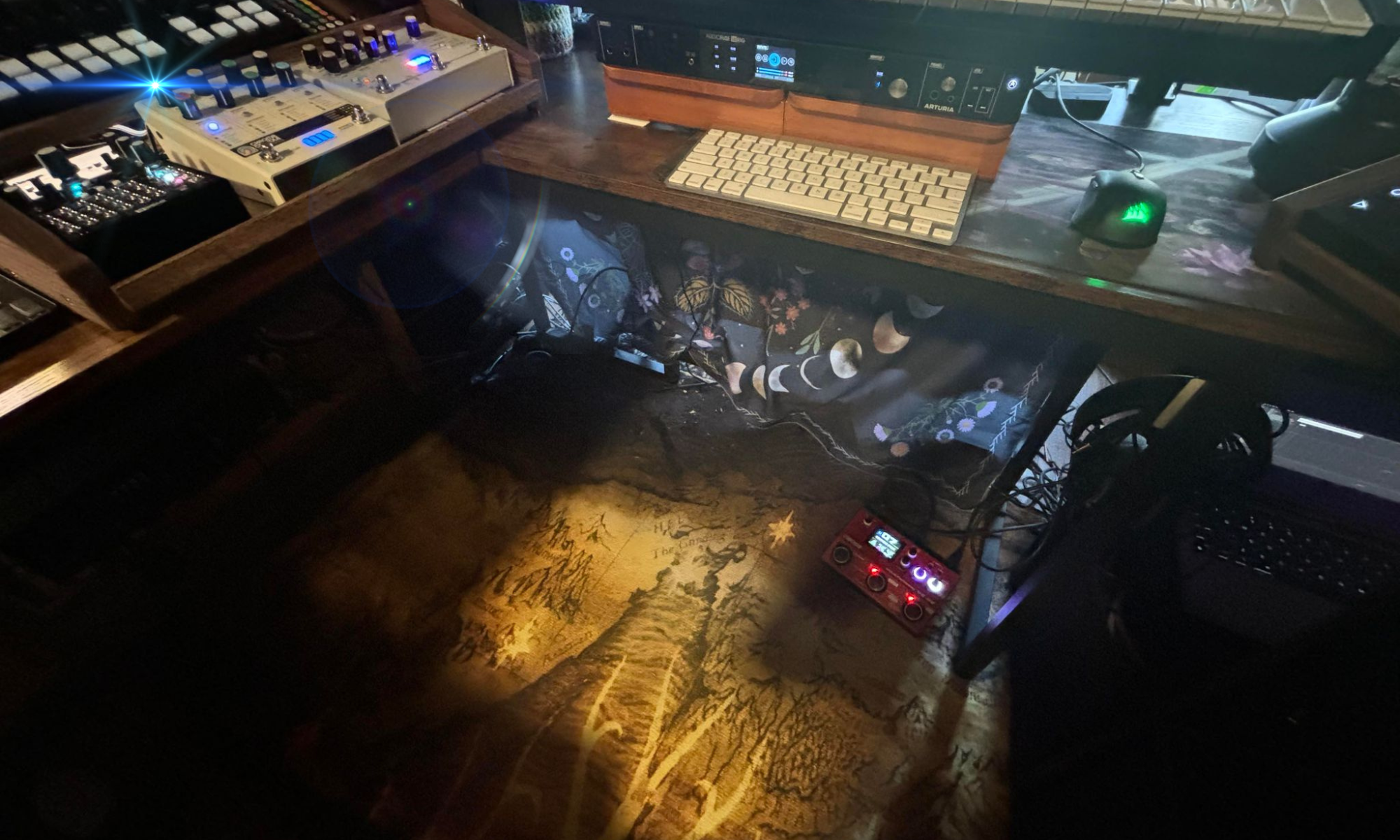
These two pedals are the real X-factor for almost any sound design move and are the perfect pairing for when I’m doing those vocal wash FX described earlier.
Because the VE-22’s effects are creative and tailored for live performance, they fall short of adding real texture and movement over time outside of the standard effects. However, adding the incredible ambient delays from the Microcosm and the various distortions, characters, and movement features from the Chroma Console is just the next level.
Couple all this with the Capture feature on the Chroma Console, and you can turn the FXs recording and processed by the VE-22 into something out of this world, alive with character and motion.
Arturia Audiofuse 16 Rig Interface

The VE-22 got me started creating a lot of my super unique FX and textures from my voice, but the rest of the gear in my studio cranked up the individuality to 11 (or, dare I say, 16?!).
Arturia’s Audiofuse interface feels custom-made for gear hogs like myself. Its seemingly countless outputs and inputs allow me to further run my vocals through effects processors (like the Hologram stuff above) and guitar pedals. Plus, its internals and drivers help maintain the highest audio quality from my LA-320 V2 into the VE-22 and finally into the Audiofuse.
Who Should Buy The BOSS VE-22?
Buy the VE-22 if you are a singer who wants better live vocal control without carrying a laptop, interface, and plugin chain.
It is a good fit for solo performers, worship singers, acoustic acts, electronic artists, livestreamers, rehearsal spaces, small venues, and singers who want pitch correction, harmony, doubling, delay, reverb, and basic tone shaping in one piece of hardware.
It also works for producers who sing on their own tracks and want a hardware box that makes vocal ideas feel performable right away. I kept thinking about the Lipless feature on using your own voice in productions, where he said singing on your own tracks “brings something different to the table.” The VE-22 fits that idea because it gives producer-vocalists a fast way to test vocal tone before the part gets buried in a DAW chain.
The VE-22 is also a good buy if you want a compact backup vocal processor. It is small enough to keep in a gig bag and flexible enough to cover clean vocal support, harmony sections, and special effects.
Who Should Skip The BOSS VE-22?
Skip the VE-22 if you need detailed vocal editing inside a DAW. A hardware pedal cannot replace note-level tuning, timing edits, comping, clip gain, and post-production cleanup.
Skip it if you need guitar-driven harmony control. The VE-22 can create harmonies by key, but it does not have the guitar input and guitar-aware vocal workflow found on units like the BOSS VE-500 or TC-Helicon VoiceLive Play Acoustic.
Skip it if you mainly want AI vocal separation, stem cleanup, or backing-track prep. For that lane, my LALAL.AI Vocal & Instrumental Separation Review is the better internal read because it covers separating vocals from existing audio.
Skip it if you want a plugin vocal suite for production. My Minimal Audio Evoke Review covers that side better because Evoke is built for DAW-based vocal shaping rather than live stage control.
Skip it if you already own a larger vocal processor and do not need a smaller BOSS unit. The VE-22 is best when portability and fast control are the reason for buying.
Final Thoughts
The VE-22 Vocal Performer is a versatile tool for studio recordings and live performances, ideal for vocalists who value flexibility and quality. It offers an easy-to-use interface, various effects, and presets for different musical styles. Whether you’re a performer or a producer, the VE-22 promotes creativity and efficiency with its user-friendly design. Its aesthetics are functional and visually appealing, adding style to any setup. Future color options and customizations can enhance the user experience.
Features like USB-C connectivity and customizable settings ensure consistent sound quality across venues and sessions. The VE-22 Vocal Performer is a valuable investment for music industry professionals. It offers technical prowess and artistic flexibility. It adapts to studio work and live performances, making it a top choice for vocalists and producers, making it one of the more exciting products to have hit the market this year (and I’m not saying that just because there’s not a lot of competition in the vocal-performance devices space), and is why I’ve awarded it an editor’s choice award for 2024.
Congrats to BOSS!
How Does The BOSS VE-22 Compare Against The Best Alternatives?
| Product | Current Price Checked | Best For | Main Reason To Buy | Main Reason To Skip |
| BOSS VE-22 | $384.99 | Live vocal effects, harmonies, compact stage control | Best balance of BOSS effects, XLR I/O, USB-C, and portability | Costs more than some beginner options |
| BOSS VE-500 | $527.99 | Deeper BOSS vocal control and guitar-linked setups | More advanced vocal floor unit | Bigger and pricier |
| TC-Helicon VoiceLive Play | $229 | Lower-cost harmony and vocal effects | Cheaper and preset-heavy | Older interface and less modern I/O |
| TC-Helicon VoiceLive Play Acoustic | $289 | Singing guitarists | Mic and instrument inputs in one unit | Less direct for non-guitar singers |
| TC-Helicon VoiceLive 3 Extreme | $569 | Advanced vocal and guitar performance rigs | Bigger performance system with deeper control | Too much for simple vocal effects |
| Zoom V3 | $279.99 | Tabletop vocal processing and streaming | 16 effects, three-part harmony, USB interface | Less stage-pedal feel |
| Zoom V6-SP | $369.99 | Floor-based vocal processing | Harmony, effects, presets, and looper | Larger footprint |
| Roland AIRA Compact E-4 | $269.99 | Electronic voice effects and compact setups | Auto-pitch, harmonizer, vocoder, looper | Smaller I/O and less traditional stage layout |
| Roland VT-4 | $299.99 | Voice transformation, pitch shifting, vocoder effects | Hands-on electronic vocal control | Less focused on normal live vocal polish |

Will Vance is a professional music producer who has been involved in the industry for the better part of a decade and has been the managing editor at Magnetic Magazine since mid-2022. In that time period, he has published thousands of articles on music production, industry think pieces and educational articles about the music industry. Over the last decade as a professional music producer, Will Vance has also ran multiple successful and highly respected record labels in the industry, including Where The Heart Is Records as well as having launched a new label with a focus on community through Magnetic Magazine. When not running these labels or producing his own music, Vance is likely writing for other top industry sites like Waves or the Hyperbits Masterclass or working on his upcoming book on mindfulness in music production. On the rare chance he's not thinking about music production, he's probably running a game of Dungeons and Dragons with his friends which he has been the dungeon master for for many years.