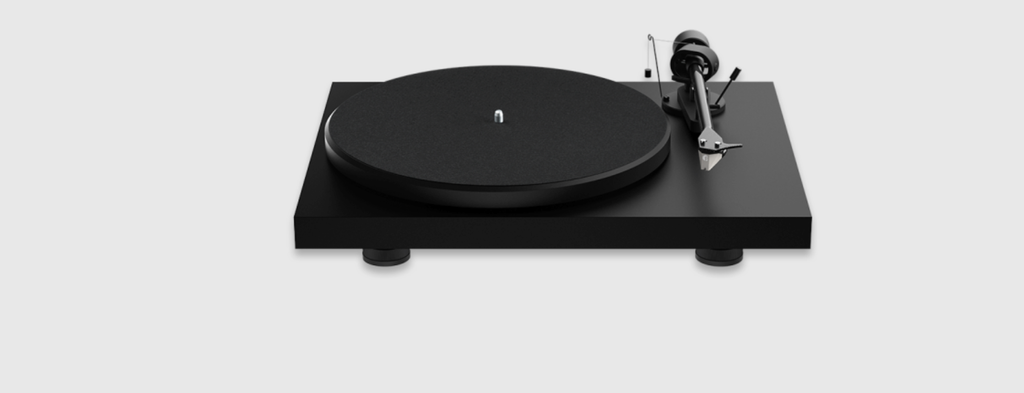
We pay a lot of attention to the speakers we use for producing, mixing, and listening to music, but far less to what those speakers are actually sitting on. You can spend thousands of dollars on an excellent monitoring system, position everything carefully, and invest in acoustic treatment, yet still have mechanical vibrations transferring through the speaker cabinets into the floor.
I think that interaction matters most for large floorstanding monitors and subwoofers, where the physical energy generated during playback can affect the surrounding structure.
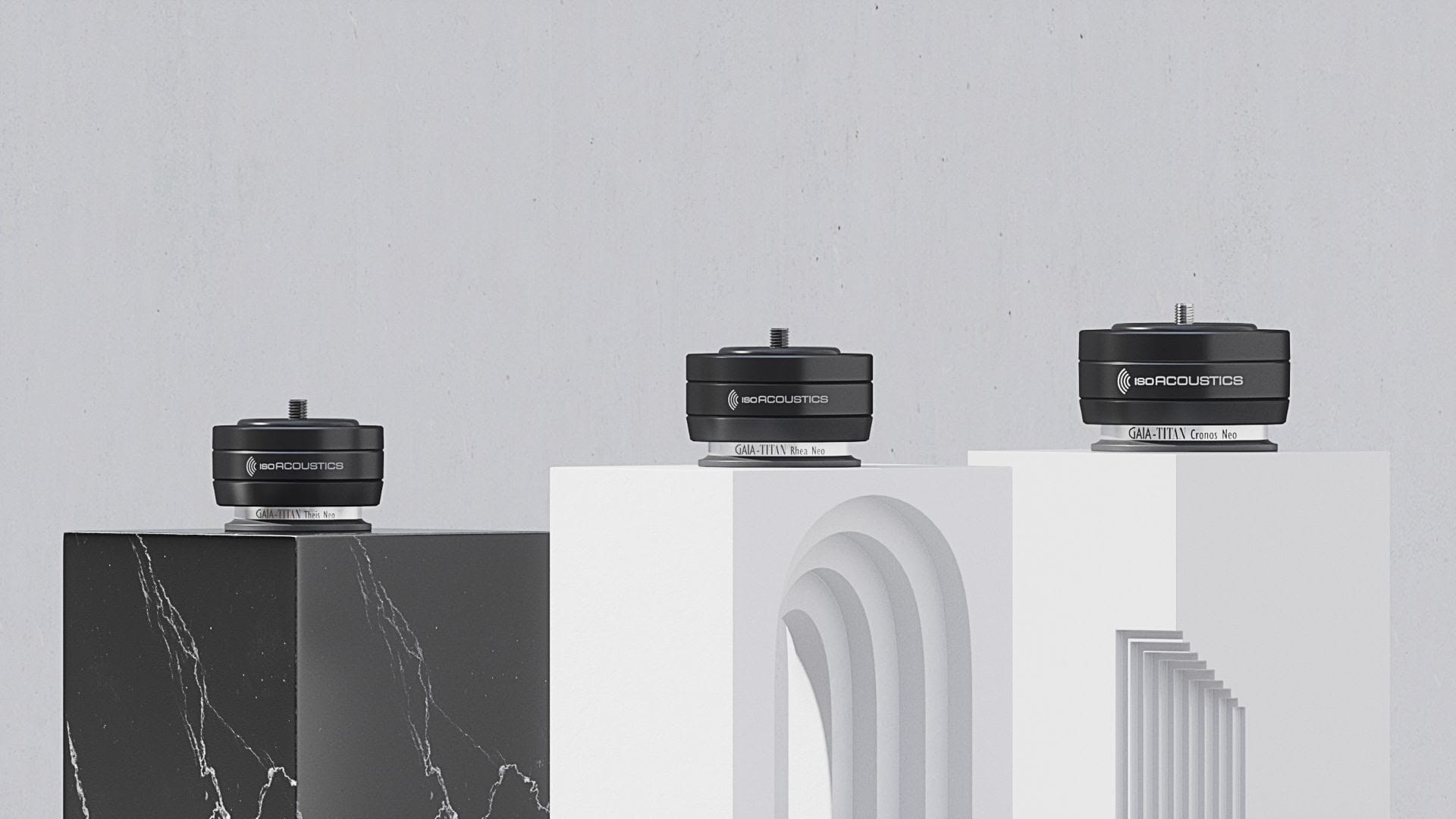
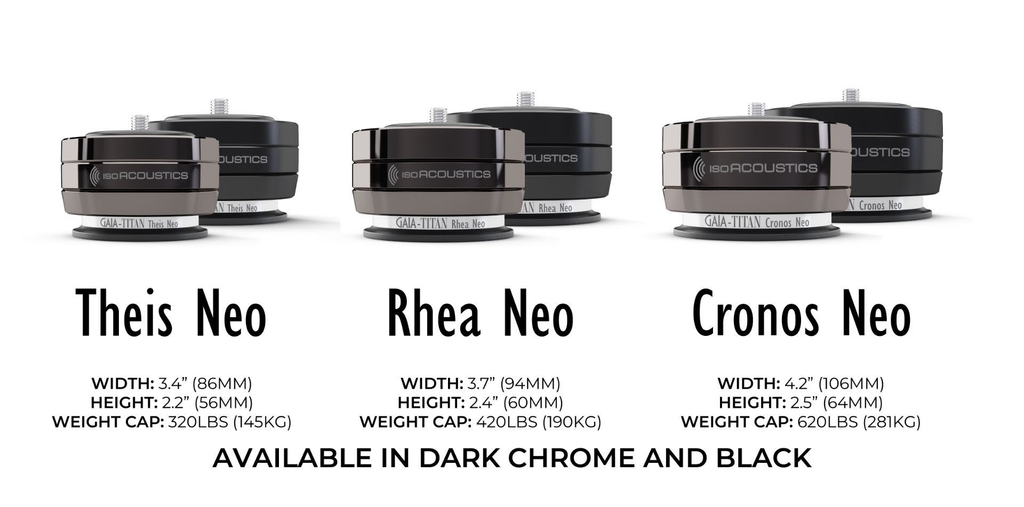
IsoAcoustics has spent years developing products intended to manage those vibrations, and its latest release brings the company’s updated GAIA-TITAN Neo technology to owners of high-mass loudspeakers and subwoofers. The new series replaces the original GAIA-TITAN design with revised internal isolation components, integrated height adjustment, and a more straightforward installation system.
Three models support speakers weighing 320 to 620 pounds, with prices starting at $1,264.99 for a set of four.
What’s particularly interesting is that this technology has already been incorporated into flagship loudspeakers from JBL and Marten. The companies developed custom implementations with IsoAcoustics before the standalone GAIA-TITAN Neo became available to consumers.
Now, owners of compatible large speakers can add the isolation system to their existing equipment, although this is very much a product intended for substantial hi-fi systems, reference monitoring installations, and high-end listening rooms rather than ordinary desktop speakers.
Why Speaker Isolation Matters for Accurate Monitoring
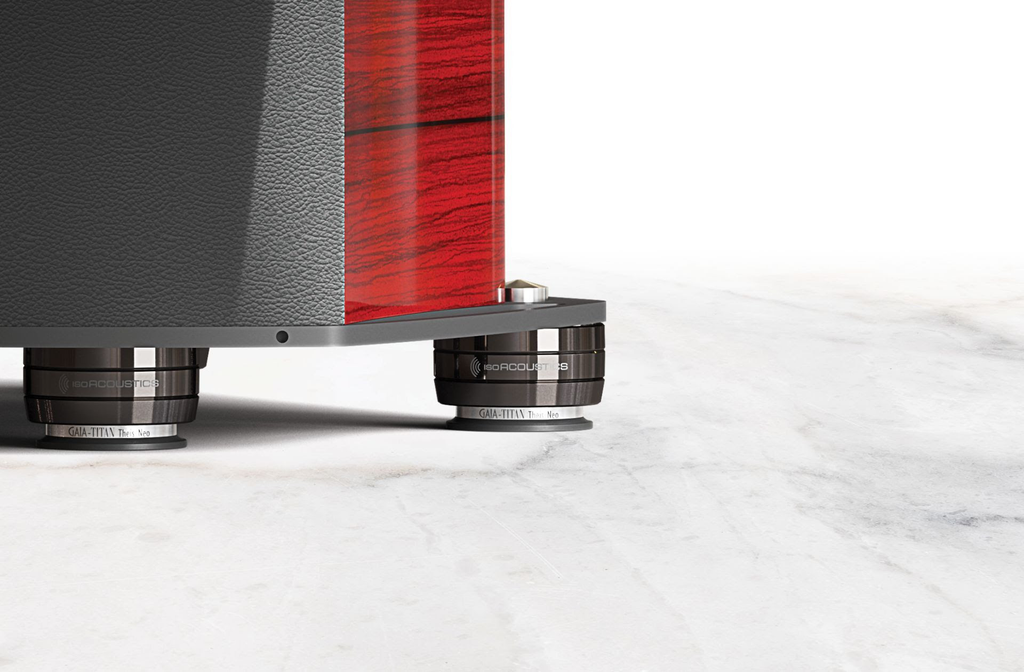
One of the main problems speaker isolation addresses is the transfer of mechanical vibration between a loudspeaker and the surface supporting it. When a speaker cabinet vibrates during playback, some of that energy can enter the floor or surrounding furniture.
Depending on the supporting structure, those vibrations can introduce additional resonance or influence how energy returns to the cabinet. IsoAcoustics’ approach concentrates on reducing that mechanical interaction while maintaining stable support for the speaker.
The GAIA-TITAN Neo uses internal isolators that separate the metal housing from the floor, ensuring that only the lower isolation element contacts the supporting surface. This differs from conventional speaker spikes, which establish a relatively rigid mechanical connection. IsoAcoustics points to testing conducted at the National Research Council of Canada that found its isolation technology reduced cabinet vibration compared with spikes while maintaining a consistent frequency response across the audible range.
Those findings support the company’s underlying approach, although they shouldn’t be treated as an independent listening comparison between the new Neo models and their predecessors.
We’ve examined this relationship before in our IsoAcoustics ISO-PUCK review, where Ujin Kim tested the company’s smaller isolation products with Yamaha studio monitors.
He reported improvements in bass definition and stereo imaging, while acknowledging that isolation alone cannot correct every monitoring problem. I also included IsoAcoustics in my 2026 studio monitor stand recommendations, particularly because positioning and reducing vibration transfer are related parts of setting up a reliable monitoring environment. GAIA-TITAN Neo addresses those considerations for much heavier speakers.
What’s New With GAIA-TITAN Neo?
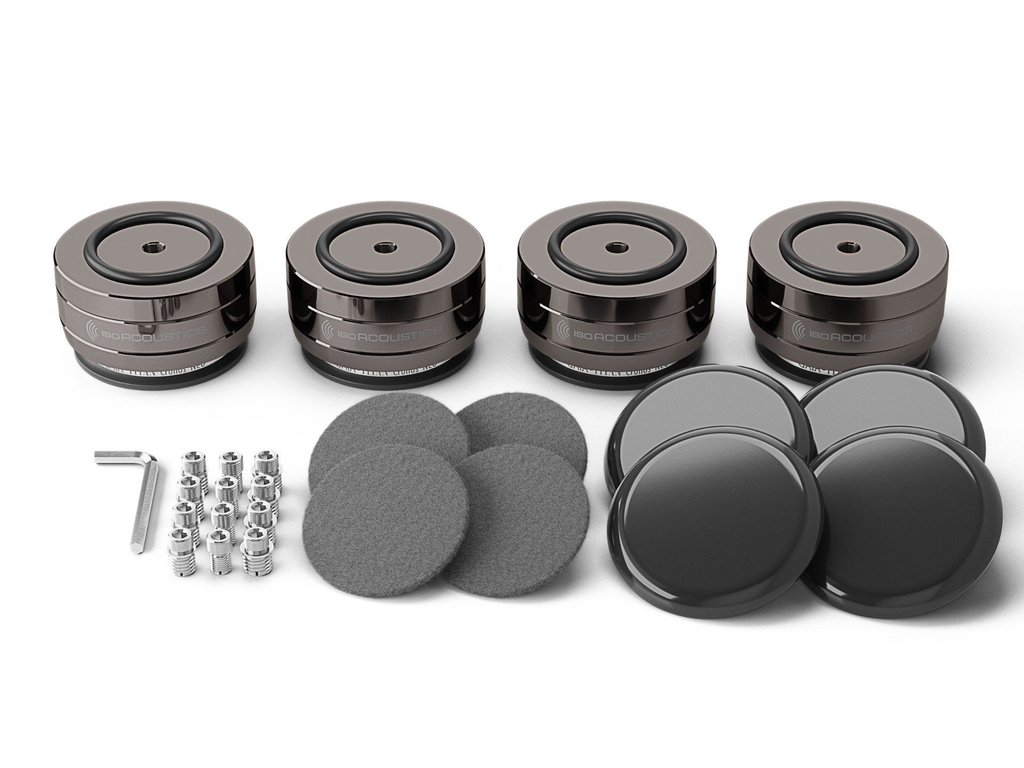
The most important changes involve the internal isolation components and how the feet connect to the loudspeaker. IsoAcoustics has refined the shape, thickness, materials, and hardness of the isolators to improve their behavior under substantial loads. The company has maintained the weight capacities of the original GAIA-TITAN series, so the new models concentrate on isolation performance and installation rather than supporting heavier equipment.
Each isolator now includes integrated height adjustment of up to 8.5 mm, allowing users to level a speaker after installation. That’s particularly relevant when dealing with a floorstanding loudspeaker weighing several hundred pounds, where repositioning the cabinet to make small adjustments can become difficult. The lower isolation element can also pivot to maintain contact with slightly uneven flooring, while the revised housing fits against the bottom of the speaker without the visible lock nut used on the original design.
Is GAIA-TITAN Neo Worth Considering for Your Studio?
For producers working with conventional five-inch or eight-inch nearfield monitors, GAIA-TITAN Neo is unlikely to be the appropriate product. IsoAcoustics already offers smaller isolation stands and feet designed for those applications. The new series is better suited to large monitoring installations, substantial subwoofers, and high-end listening systems where speaker weight, floor contact, and cabinet vibration require additional consideration.
It’s also important to distinguish mechanical isolation from acoustic treatment.
An isolation system can reduce vibration transferred into the supporting surface, but it won’t eliminate room modes, correct poor speaker placement, or replace appropriate bass trapping. As I discussed in my studio monitor setup article with KRK, speaker positioning and room acoustics remain essential parts of reliable monitoring, regardless of the hardware supporting the cabinets.
GAIA-TITAN Neo is available now through IsoAcoustics’ global dealer network, with pricing starting at $1,264.99 for four isolators. The refinements to installation, leveling, and mechanical isolation are worth examining for anyone operating a high-mass speaker system, particularly when the room and speaker positioning have already been addressed. The remaining question is how much improvement the redesigned isolators provide compared with the original GAIA-TITAN under identical conditions, which would require controlled testing.
Learn more through the official IsoAcoustics GAIA-TITAN Neo product page.

Will Vance is a professional music producer who has been involved in the industry for the better part of a decade and has been the managing editor at Magnetic Magazine since mid-2022. In that time period, he has published thousands of articles on music production, industry think pieces and educational articles about the music industry. Over the last decade as a professional music producer, Will Vance has also ran multiple successful and highly respected record labels in the industry, including Where The Heart Is Records as well as having launched a new label with a focus on community through Magnetic Magazine. When not running these labels or producing his own music, Vance is likely writing for other top industry sites like Waves or the Hyperbits Masterclass or working on his upcoming book on mindfulness in music production. On the rare chance he's not thinking about music production, he's probably running a game of Dungeons and Dragons with his friends which he has been the dungeon master for for many years.