Illyus Barrientos steps inside the studio for the latest edition of Magnetic Magazine’s How It Was Made, breaking down the tools and techniques behind Thinking Of You.
Rather than an exhaustive tour of the session, the Scottish producer focuses on a handful of plugins that played key roles in the record, from the pitched movement of its Reese bass to the subtle delay bringing character to the piano. Along the way, he makes a case for keeping things simple: learning a few trusted tools properly, knowing when to stop tweaking, and allowing a track to develop without burying the original idea under unnecessary layers.
Here, Illyus takes us through Serum, Logic’s Delay Designer and a trio of studio staples that helped shape the finished record.
SERUM (Main Plug-In)

I feel like Serum is the go-to synth for so many producers across all kinds of genres. Once you get to know it properly, the interface is really intuitive, and I think most people would agree that’s when it starts to click.
For me, the real fun begins when you start loading in presets and manipulating them into your own sound. A good patch isn’t the finished product—it’s the starting point. Twist it, reshape it, layer it, and before long you’ve created something that feels completely your own.
With Thinking Of You, the obvious thing to talk about would probably be the piano or the vocal. But every time I play it out, it’s the bend in the reese bass that I love most. It’s nothing too complicated—a classic saw wave, a low-pass filter to roll off some of the top end, mono voicing, and a touch of portamento to taste. The real trick was in the MIDI.
Some of the notes overlapped so the portamento could glide between them. That’s where those little bends come from.
I’m not someone who knows every function inside Serum. Like every plugin I use, it’s mostly trial and error. I keep things simple and try not to overthink it.
Serum can do almost anything, but that’s also its biggest trap. If you stumble across a sound that feels good, don’t keep tweaking it just because you can. Sometimes that’s the sound.
Delay Designer (Creative Plug-In)
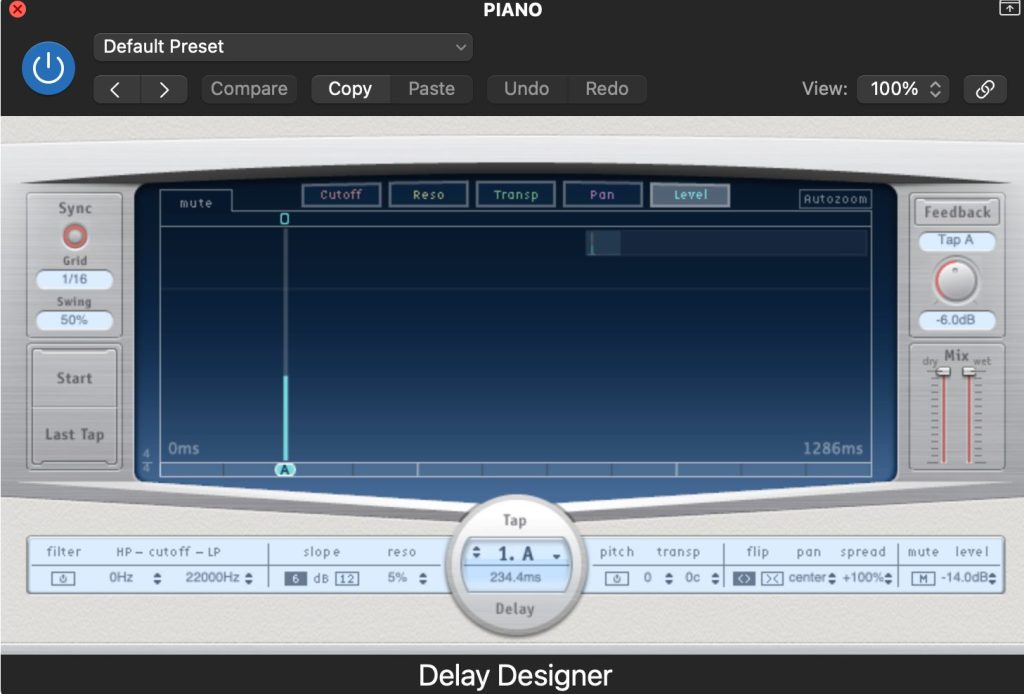
I’m not sure how much I can explain what this plugin does, the name gives it away. But I’ve always had a soft spot for the old skool Logic effects, and Delay Designer is definitely one of them.
It’s incredibly versatile. Whether you’re creating simple echoes, adding groove, or completely transforming a sound, it’s one of those plugins I still come back to time and time again. Sometimes the smallest delay can be the difference between a sound feeling static and one that feels alive.
One little trick I always come back to is adding a tiny bit of Delay Designer to my pianos. It’s barely noticeable, but it just gives them that old skool house flavour I love.
Sometimes it’s the smallest touches that make the biggest difference, and for me this is one of them.
It’s only a delay plugin, and there’s nothing fancy about it. But that’s kind of the point. You don’t need every new plugin on the market to make records people connect with. Learn the tools you already have, experiment with them, and trust your ears. More often than not, less is more.
Valhalla / FabFilter Pro-Q 4 / ShaperBox
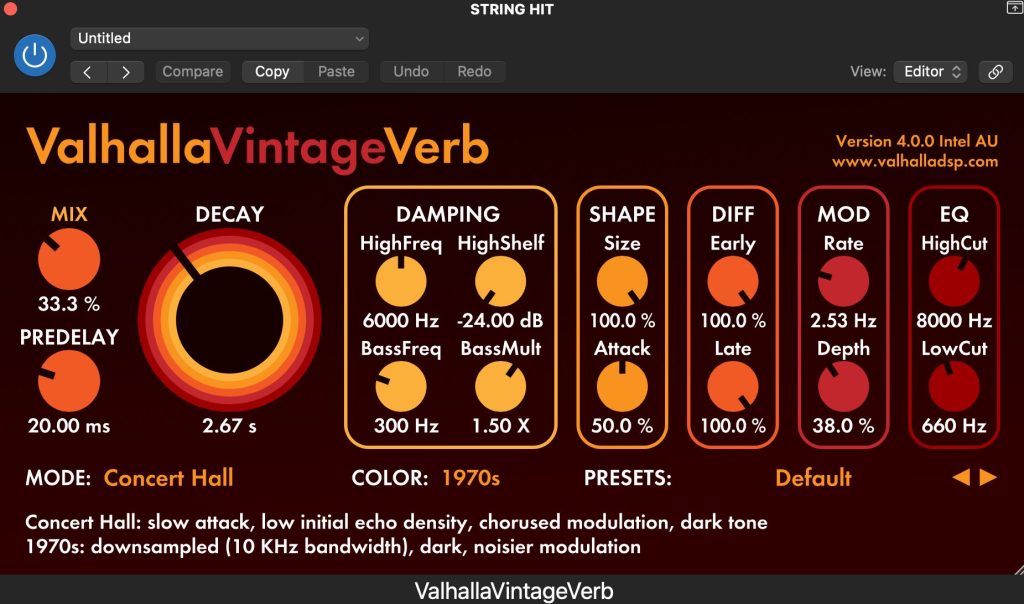

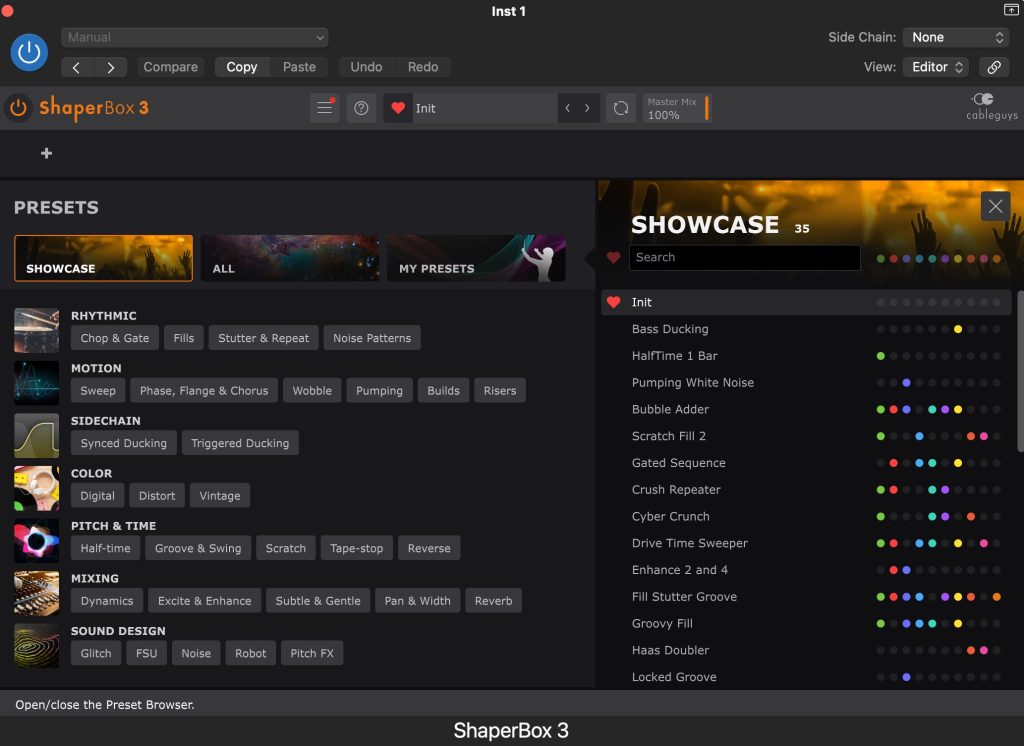
I’m going to cheat a bit and talk about all three because I’m kind of like that…
Valhalla is, for me, the best reverb out there. If you make music and don’t own it yet, I’d seriously recommend getting it. It ends up on almost every project I work on.
The same goes for FabFilter Pro-Q 4. Hands down the best EQ I’ve used. It’s packed with features, and I’m still discovering new things it can do.
And finally, ShaperBox. To me, it’s just pure fun. If you’ve got a sound that feels a bit flat or uninspiring, throw ShaperBox on it and start experimenting. You’d be surprised how quickly it can turn something ordinary into something with movement and character.
I think that’s the common theme with all of these plugins—they’re powerful, but they’re also creative. Don’t be afraid to twist knobs, try things that don’t make sense, and see where they take you. That’s where some of the best ideas come from.
Advice on Making Records
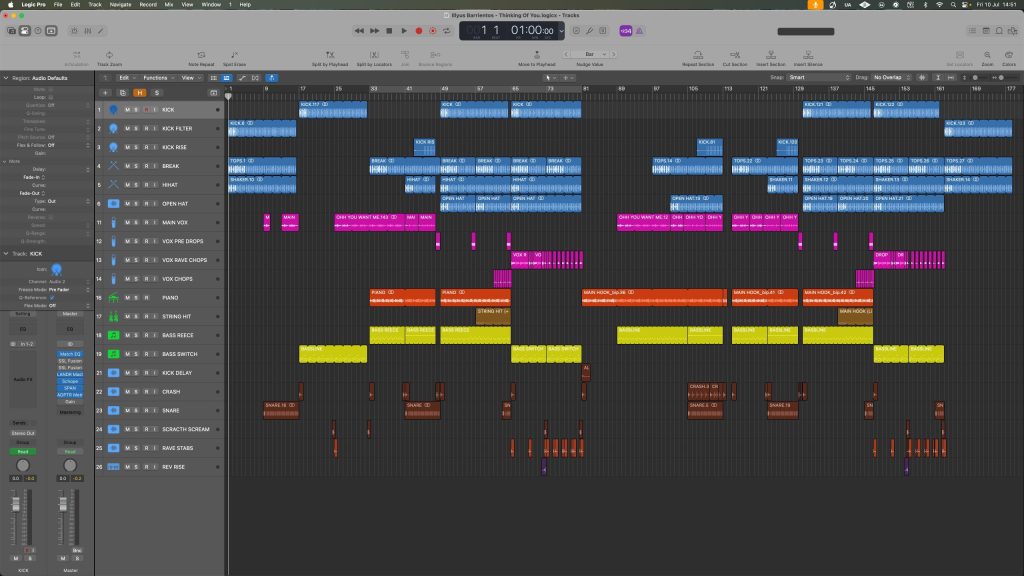
As you can see, Thinking Of You is actually quite a simple project. Don’t get me wrong, I’ve got plenty of sessions that are far more complex, but with this one everything just flowed.
If I really think about my back catalogue, most of the records that got signed or connected with people came together through an easy, natural workflow. I wasn’t overthinking every decision. I was just enjoying making music.
Music doesn’t always need to be complicated. Think about a band. You’ve got a drummer, a bass player, a vocalist, someone on keys and a guitarist. That’s only a handful of elements, yet they can create timeless records.
Sometimes it’s worth treating your productions the same way instead of constantly adding more layers because you feel like you should. Focus on making every sound count.
The same goes for plugins. You don’t need the biggest collection or the most expensive tools. Learn the simple ones, experiment, trust your ears and enjoy the workflow.
At the end of the day, that’s what making music should be about. Have fun with it.