Losoul (@losoul_is) has been exploring the edges of minimal house since the mid-90s, and his new album Broken English Dubs finds him returning to an approach where relatively few sounds can still contain an enormous amount of detail. Arriving October 5 on Logistic Records, the six-track album draws from jazz, funk and soul while exploring the idea of broken English as a universal language, using rhythm, texture and movement as its vocabulary. NEWS RELEASE Losoul – Broken En…

“Some Pals Were Sleepers” is one of the deeper cuts on the record, and its production is decidedly old-school. Most of its sounds were created with analog hardware and recorded into the DAW, with some parts arranged digitally and others printed as sequences or played directly.
A mixed-manufacturer modular system handles much of the drums, percussion and bass, while a first-generation Vermona DRM-1, an eighties Digitech delay, a Yamaha DX7 and a TAC Scorpion console each contribute something specific to the finished record.
What is interesting here is how Losoul uses older equipment for qualities that come directly from its limitations. Low-resolution processing, raw synthesized noise, minimal-velocity DX7 patches and the darker response of an old console all become deliberate production decisions. Below, Losoul explains how “Some Pals Were Sleepers” was made.
Mixed-Manufacturer Modular Synth
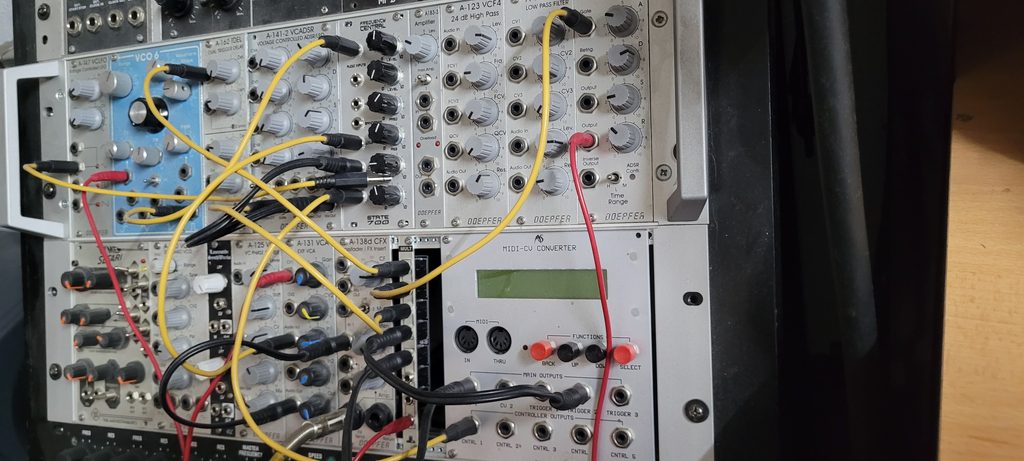
For most sounds in this track a mixed manufacturers modular synth was used. It is actually a pretty simple setup, comparable to a monosynth with some extra features. As a modular it is versatile and allows for quite some modulation. It makes quite a pure electronic sound and recorded via proper equipment it sounds pretty good.
In this track most drums and percussions as well as the bass sounds have been made from scratch, some in various versions for variation. I liked to have the drums quite classic electronic but with a more individual texture. Here I used some subtle filtering envelope, low resolution sampling, phasing and variing pitch modulation.
The melodic and bass sounds are also quite percussive. But they are sequenced and more modulated among the arrangement for an organic flow and physical feel. How it was made_TEXT
Vermona DRM-1
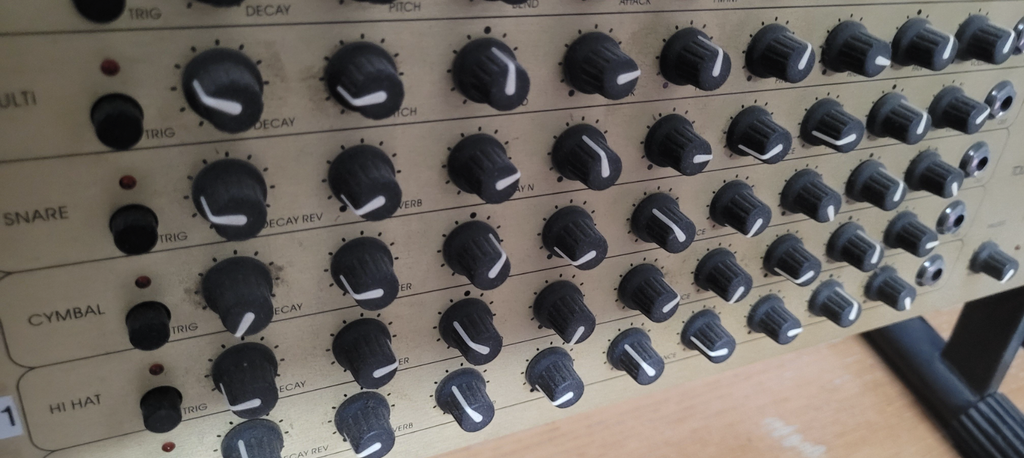
Vermona DRM-1. This is the very first version from the 1990s, labelled Touched-by-Sound which I think was their distributor at that time. It is a basic and strong sound source, especially the hihats and cymbals with their raw noise. I also like to use the clap which is very raw, too and vibey. These are synthesized like in the 1970s.
I sometimes use an analog gate or denoiser on them, to shape the transients and control the noisy decays. How it was made_TEXT
Digitech Time Machine Digital Delay/Sampler

I do like that old delay unit from the eighties. I once purchased it from the US as they are quite rare here in Europe. I still use it here and there. It has the typical low resolution processing paired with quite a few analog CV modulation options. And it can be used as a simple sampler with Gate/CV control, too.
Here I used it as a Chorus/Flanger, mainly on the hihats and higher percussions. It gave these a warm and dark open space that fitted perfectly here.
Yamaha DX7

For those lower pads I used a preset electric piano from the OG Yamaha DX7. Many of its sounds are a bit dated or even cheesy. But in some pitches they are very useful. Here these keys are played with a velocity close to the minimum where the presets produce almost no harmonics. So you still have the programmed attacks that indicate a nice e-piano feel but the body of the instrument stays almost just a sinewave.
So it fits in the mix very well as a lower voicing without overloading the tonal spectrum.
TAC Scorpion 32-8-2 Mixing Console
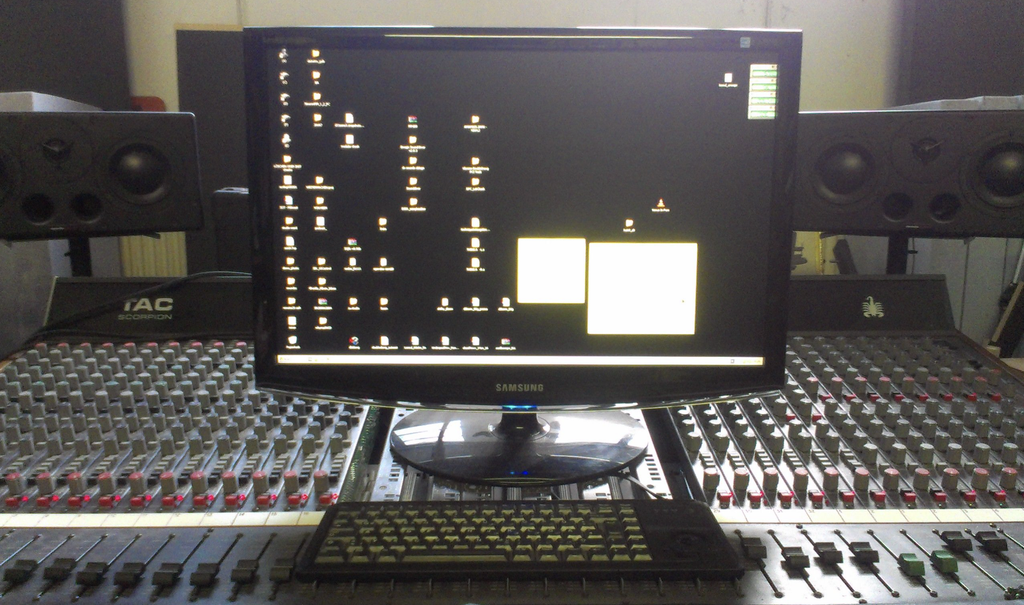
I have several mixers from different eras and I used to use these to achieve different kinds of overall sound in my mixdowns. This one is from the 1980s and it was mainly used in Rock music – as a recording or live mixer. It has a darker sound to it with some special distortion when pushed, not high-end sound but very atmospheric when gainstaged carefully. It supports the darker and slower atmosphere of this track and coats all the music with a little bit of dust – in a good way.
I also like the equalizers in the channels to shape the sound, they are very different from today’s most plugins, so sometimes both get their use. They shape the dialled in frequency ranges quite naturally in their colour.
Quick Fire Hot Takes About Production
Hot Take #1

Stay with the stuff you know well, even if technology or trends suggest changes or replacements. Music isn’t just fashion or novelty. The same goes for styles – you don’t have to reinvent the wheel with every new work or release you do. Again, don’t settle just with the standards or presets, find out what makes a sound special. You love that one delay effect? Keep the plugin or box. That synth sound always hits different in a subtle way?
Keep that synth. It’s not just the specs, it’s the detail in how it’s constructed and how well it lets you use it to find the sweet spots.
Hot Take #2

Of course, it’s about the musician, the idea, the vision, not just the gear. Some gear gives you special options that other doesn’t – look for those devices that especially help to express yourself.
Don’t just look for classics or their copies. Joining is not about assimilation, it’s interactive diversity. Play some notes just like that, learn to leave that sequence when it’s time.
Almost as an exception here a Fender Rhodes plugin was used for the solo part. It was played on the keyboard without further quantisation, just with a few takes.
Hot Take #3

Don’t let anyone – be it the most successful reference – influence your style or focus too much. People tend to use proven recipes. When I came up in the 90s quite a lot of music was copied as folks didn’t see for themselves.
Here is the mixer model Open Door and all my other music from around that time was made on. It does sound raw, so you have to like that. To be honest it is not the exact piece of gear – I sold mine. But I got another one, just to use it sometimes for that certain crunch.
Hot Take #4

Keep it simple. Even if it gets dirty, even if things need to be revised.
Don’t let the work you put into your production become a remarkable part of the outcome. Record your sounds with as many of those quirks and features you want to have in it. But use some proper recording gear. So you keep what you hear.

Will Vance is a professional music producer who has been involved in the industry for the better part of a decade and has been the managing editor at Magnetic Magazine since mid-2022. In that time period, he has published thousands of articles on music production, industry think pieces and educational articles about the music industry. Over the last decade as a professional music producer, Will Vance has also ran multiple successful and highly respected record labels in the industry, including Where The Heart Is Records as well as having launched a new label with a focus on community through Magnetic Magazine. When not running these labels or producing his own music, Vance is likely writing for other top industry sites like Waves or the Hyperbits Masterclass or working on his upcoming book on mindfulness in music production. On the rare chance he's not thinking about music production, he's probably running a game of Dungeons and Dragons with his friends which he has been the dungeon master for for many years.