Table of Contents
2026 has become the year when every serious headphone brand has decided to ship a closed-back flagship or near-flagship, and Final Audio DX3000CL Studio Headphone is throwing its name into the hat for the top contender, too. Beyerdynamic, Focal, Sennheiser, Audeze, Yamaha, they’ve all swung.
Final Audio is a quieter name in that list for most American producers, but if you’ve spent any time around Japanese audio, you already know the brand. Eye-watering prices, anti-flash design, a stubborn refusal to chase trends.
The DX3000CL is their first closed-back in the DX series.
It sits underneath the open-back DX6000 flagship (about $1999) at $599, which is a third of the price for what is essentially the closed-back interpretation of the same design philosophy. That kind of trickle-down can go either way. Either it’s a true distillation of what makes the flagship work, or it’s a stripped-down product riding on the family name. I’ve been using them for a few weeks now, mostly for production sessions, and mixdown reference checks against my monitors
Let’s get into it.
What You’re Actually Getting
A $599 closed-back, made in Japan, built around a single 40mm paper/carbon composite dynamic driver with a free-edge surround. 37Ω impedance, 96dB sensitivity, 10Hz–40kHz claimed frequency response. Easy enough to drive that your interface’s headphone out will not embarrass itself, but they scale up when you give them real amplification.
This is not a reference flat studio headphone. It’s not trying to be a DT 770 Pro or an HD 600, even though those are technically audiophile headphones. Final positions this as an audiophile listening tool first, with studio-adjacent usefulness as a byproduct. That distinction matters, and I’ll come back to it.
Build
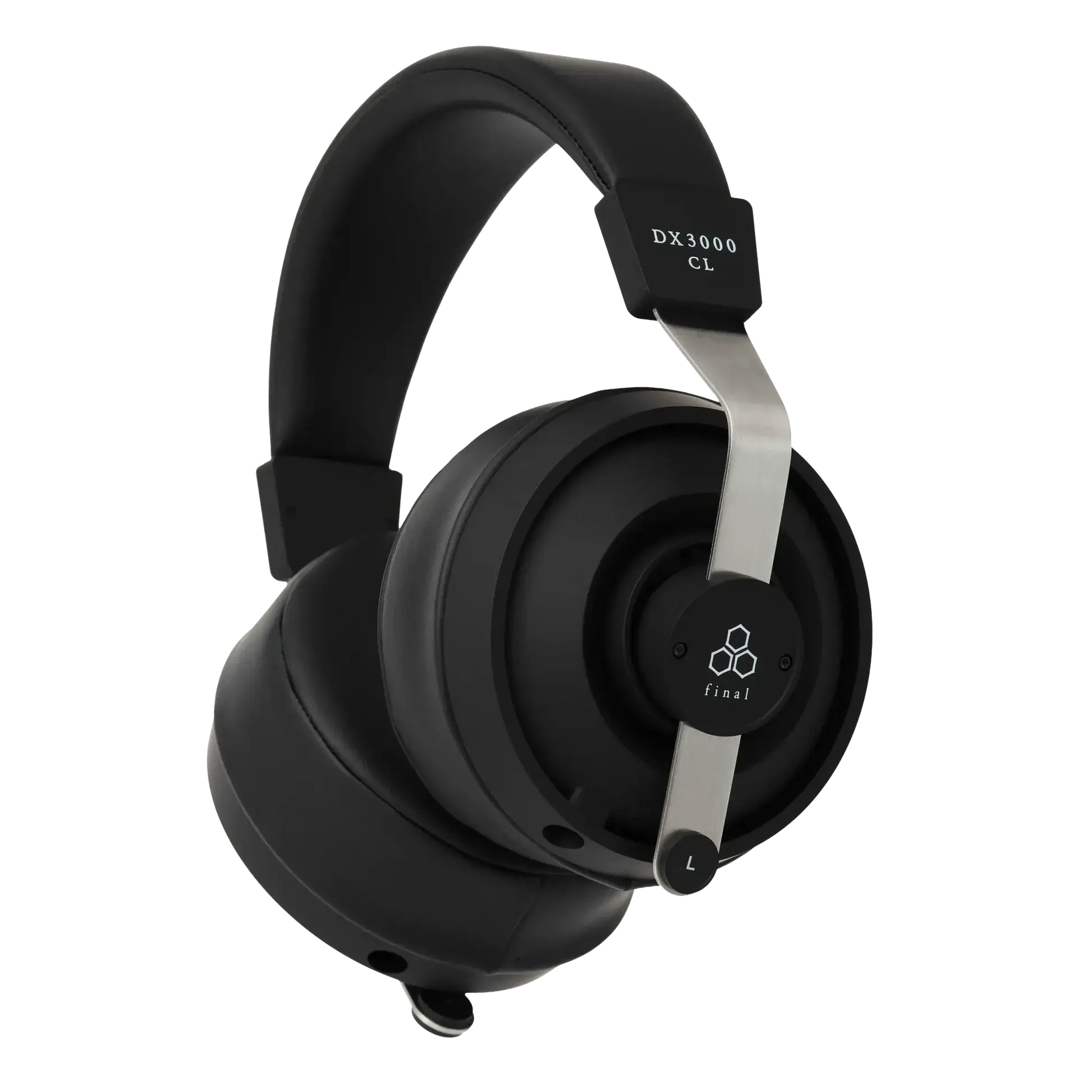
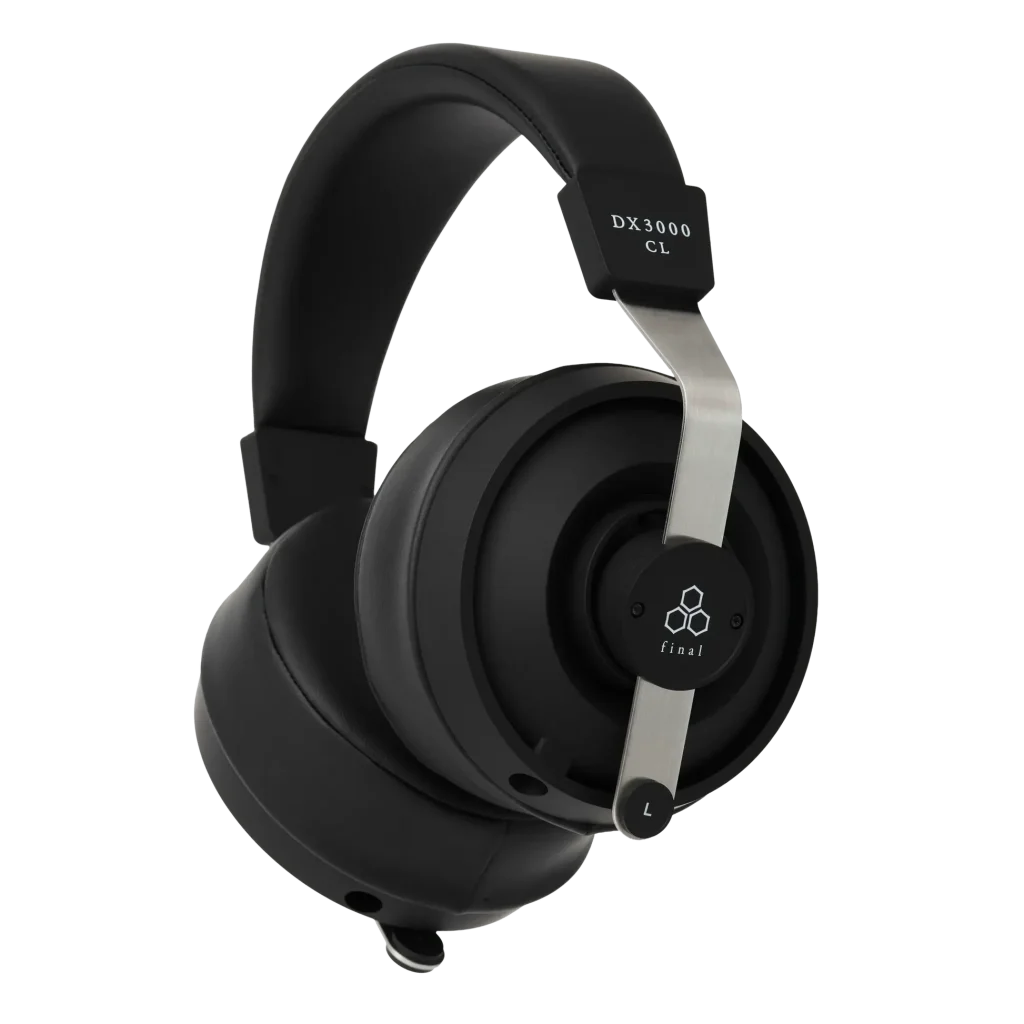
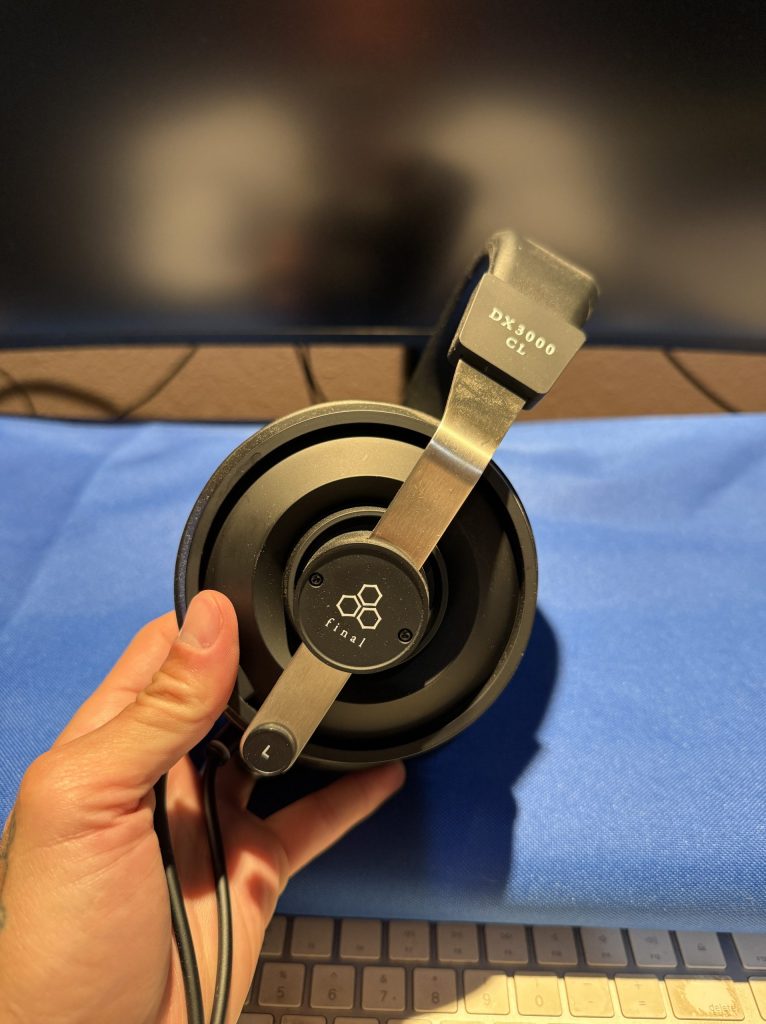
Out of the box, very Final. Understated to the point that someone unfamiliar with the brand would probably underestimate the price. Glass-fiber-reinforced resin housings, steel headband arms, and generous memory foam earpads wrapped in synthetic leather. No flash, no metallic ostentation, no LEDs, no logos screaming for attention. Anti-clown design language, which I respect.
In a category where most $600 headphones are essentially disposable once they cross a certain damage threshold, this matters. It signals that the company is building for longevity rather than a 3-year replacement cycle.
The earpads are listed as 30mm thick. It maintains a seal regardless of head shape or whether you wear glasses, and it keeps the driver at a sufficient distance from your ear to reduce the boxed-in feel that plagues most closed-backs. Trade-off: your ears will get warm.
After two hours, I notice it. After four, I’m taking them off for a few minutes. Not a dealbreaker, but worth knowing if you’re planning long mix sessions.
At 410g without the cable, they’re not light, but the clamp pressure and headband distribution are calibrated well enough that the weight doesn’t become a problem. Comfortable for the kind of sessions I run.
The cable connects at the lower front edge of each cup and terminates in a 4.4mm balanced connection. Good for serious headphone amps and DAPs, slightly annoying if your whole setup is single-ended and you have to source an adapter. A 6.3mm or 3.5mm option in the box would have been welcome at this price.

Visually, they also remind me of a cross between AKG and AIAIAI, which is cool.
The Driver
The 40mm paper/carbon composite diaphragm with a free-edge surround is the actual story. The free-edge design allows the diaphragm to move more freely without the surround constraining its motion, which, in theory, means lower distortion at low frequencies and a more natural decay.
The paper/carbon blend is intended to give you the heat and tonal character of paper with the speed and rigidity of carbon. Most companies choose a philosophy and commit to it. Final’s entire brand identity is built around composite solutions like this.
Worth noting: this is not the magnesium alloy driver from the DX6000. They didn’t try to fake the flagship’s exact technology at a third of the price. They built a different driver philosophy for this product, which is more honest than spec-sheet copying.
Sound
Here’s where I have to be careful, because if you’ve read my CLA-10A review, you know I’m not afraid to call gear unforgiving. The DX3000CL is the opposite category of tool. It’s tuned for musicality, not for flaw detection.
Low end: Rich, warm, slightly soft, but not the tightest bass. For listening to records, this is a feature. For mixing kicks in a techno track, you’ll want to verify against your monitors or something tighter. The closed-back seal genuinely delivers low-end weight that open-backs at this price can’t match, and Final has avoided the bloated mid-bass hump that ruins most consumer closed-backs.
The 500Hz–2kHz range, where most of my mix decisions live, is rendered with clarity that makes it genuinely useful as a reference, even though that’s not its primary purpose.
Highs: Smooth and open rather than sparkly. If you’re coming from something like a Focal Clear or a Beyerdynamic with treble emphasis, the DX3000CL will sound a little reserved at first. After a few sessions, the lack of artificial sparkle becomes the feature. No fatigue, no harshness, no sibilance jumping out. You can listen for hours.
Soundstage: For a closed-back, the spatial presentation is genuinely impressive. Much wider than I expected. The imaging holds up under busy arrangements. Not open-back wide, but close enough that the closed-back trade-off feels worth it for the isolation you get in return. When A/Bing them with my monitors (IK Multimedia’s iLoud Micro Monitors and also the Precision MTMs), I was actually surprised by how similar they felt.
Production Use
I want to be specific here because most reviews of audiophile headphones either pretend they’re studio tools or write them off entirely.
The DX3000CL is not a final-mix-decision headphone. It won’t replace your monitors or reference cans for setting bass levels or stereo width. The soft low end will lie to you if you trust it absolutely. Same with the smooth treble; you might miss sibilance issues that a brighter headphone would surface.
What they’re great for is the other 80% of the work. Sound design sessions where you need to live with a patch for hours without ear fatigue. Late-night arrangement work where monitors aren’t an option. Critical listening to your own finished masters in environments where your room isn’t available. Long flights when you’re sketching ideas in your DAW.
The mid coherence, in particular, makes them useful for vocal work and sample selection. I’d trust them to tell me whether a vocal sample will sit at the same level in the mix. I’d trust them to tell me a song is well-produced. They get you 90% of the way there. That last 10% still belongs to the speakers.
From a comfort standpoint, despite their size and bulk, they are very lightweight and don’t put much pressure on my head. The thick pads are extremely comfortable. Almost like I have pillows on my ears. This has to be one of the most surprising things about the DX3000CL. Especially when you consider other headphones of this size.

How They Stack Up
At $599, they’re a solid middle ground. My normal working headphones have been the Sennheiser 490 Pros for a while now, and these are just a bit more expensive. That’s a challenging bracket to be in. Most people either go with a cheaper option or spend over $1000. How much better are the headphones sitting at that $1000 mark? That’s hard to say, but from my personal experience, I don’t think that much. You’re mostly paying for the name or slightly nicer materials.
It’s important to reiterate that these are geared towards audiophiles but are tuned to be studio-friendly. If you’re looking for surgical precision, these may not be the best choice.
Final Verdict On The Final Audio DX3000CL
Final is a company I’d never even heard of, but the DX3000CL is the kind of product I respect more after using it than the spec sheet suggests. I generally try to stay away from consumer headphones, even audiophile ones. Is it revolutionary? No. It’s a Japanese closed-back that does exactly what it says it does, built with the kind of long-game engineering that mostly disappeared from this price tier.
It’s not the right headphone for every job. If you do most of your mixing on headphones, get something flatter and more revealing.
But if you want a closed-back you can wear for six hours without thinking about it, that delivers a soundstage that doesn’t feel sealed, that handles mids better than headphones twice its price, and that you can still be using in 2036 because Final actually built it to be serviced.
The DX3000CL is one of the most quietly impressive releases of the year. I will say, though, the tip not being a 3.5mm jack is annoying and limits these to studio use only unless you want to buy an adapter, but the size makes them too inconvenient to travel with regularly.