Table of Contents
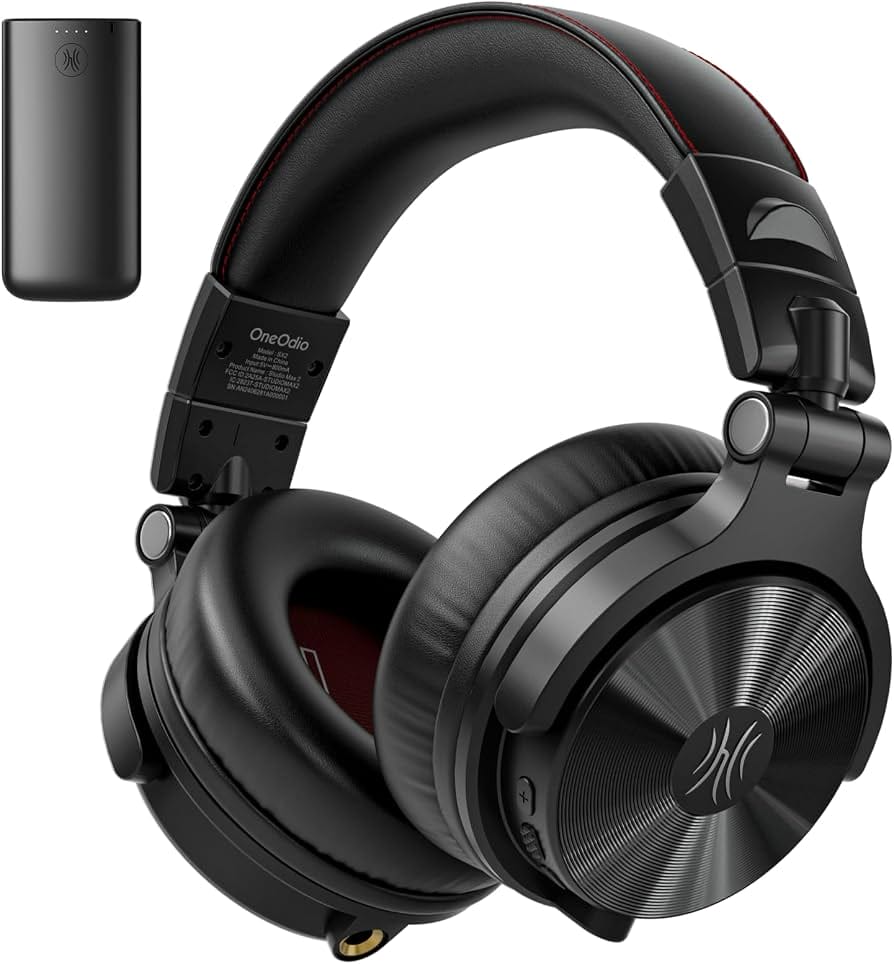
The OneOdio Studio Max 2 looks to find an audience among wireless DJ consumers at a price point that is feasible but with quality that raises an eyebrow.
Wireless DJ headphones have spent years living in the same category as artificial reality; everyone kind of likes the idea, but the execution usually leaves you reaching for the cable. Latency has always been the dealbreaker. Scratch too early, cue too late, trainwreck the mix, no thanks. AiAiAi was the first to crack the code with their TMA Studio wireless with their proprietary transmitter, but these were not positioned as DJ headphones to start, just wireless studio headphones.
OneOdio wants to change that with the Studio Max 2, a $200-ish pair of DJ headphones built around its third-generation RapidWiLL+ wireless technology, promising just 9ms of latency. On paper, that’s quick enough that you shouldn’t notice the delay while DJing, producing, or even playing instruments.
The problem is that solving latency is only half the battle. A pair of DJ headphones also needs to sound good, travel well, and justify taking up precious backpack space alongside controllers, laptops, USB drives, and the dozen adapters every DJ somehow ends up carrying.
The Studio Max 2 gets some things right, but it never quite escapes feeling like a good idea that stops short of becoming a great product.

Studio Max 2: Build Quality & Design
OneOdio has clearly improved the presentation over the original Studio Max. The included EVA hard case feels substantially more premium than the soft pouch found on its predecessor and does a much better job protecting the headphones during travel.
Inside you’ll find:
- Studio Max 2 headphones
- RapidWiLL+ wireless transmitter
- Coiled DJ cable with 3.5mm and 1/4-inch connections
- USB-C cable
- 1/4-inch adapter
The headphones themselves feel sturdy enough without becoming overly heavy. Some reviews I read really leaned into the weight, so if you are sensitive in that category, these might be too much for your noggin. They feature the familiar DJ-friendly design with 90-degree swiveling earcups and nearly 180-degree outward rotation for single-ear monitoring.
Large red left/right indicators are surprisingly useful in dark booths, which is a tiny detail that makes more difference than you’d think in dark environments and something I wish more headphone brands would do- simple and effective.
Comfort is decent rather than exceptional. The faux leather pads seal well enough for passive isolation but get warm after extended sessions, while the headband was fine for me overall. The adjustment mechanism is excellent, with clearly marked sizing positions that make finding your preferred fit easy.
The biggest issue isn’t durability; it’s size. The case alone is a beast, and compared to other wireless models, they are just a bit too big for me. I could DJ with these, and can, but wouldn’t take them out to a gig unless I had no other choice.
While they fold, these aren’t especially compact headphones. Once you include the wireless transmitter and hard case, the package takes up noticeably more room than most DJs want to dedicate inside a travel backpack. If you’re already squeezing a laptop, audio interface, cables, power supply, and camera gear into one carry-on, you’ll notice the extra bulk.

Features / Specs
Feature-wise, the Studio Max 2 checks almost every box.
Specifications include:
- 45mm drivers
- 20Hz–40kHz frequency response
- 34-ohm impedance
- Bluetooth 6.0
- Sony LDAC support
- Up to 120-hour Bluetooth battery
- 50-hour battery in low-latency mode
- 9ms RapidWiLL+ wireless latency
Switching between Bluetooth and Ultra Low Latency mode is handled via a simple slider on the right earcup. Bluetooth performance is solid for casual listening, calls, and everyday use, while the included transmitter creates a dedicated wireless connection for DJing or music production.
Setup is refreshingly painless. Plug the transmitter into your audio source, pair it, and you’re off. The companion app also adds EQ adjustments, firmware updates, and access to Sony’s LDAC codec.
Low Latency Performance
The wireless system actually works very well. Nine milliseconds is fast enough that beatmatching feels natural, cueing is responsive, and even playing virtual instruments feels convincing. For home studios or DJs tired of snagging cables on desks and controller corners, it’s genuinely liberating.
The big question for this category is whether DJs actually need wireless headphones. It seems to land in the middle with a lot of the DJs I’ve asked, but once they try on my AlphaTheta HDJ-F10s or TMA-2 DJ Headphones, most quickly change their tune (pun intended) and love the freedom that comes with being untethered.
I, along with all working DJs, have happily used cables for decades because, well, there was no real option that worked. So yes, the Studio Max 2 model works just fine when it comes to latency; it’s the other issues that make it a questionable choice for working pros.
Sound Quality
Here is where I and many others derail on this headphone. The tuning and sound quality are where the Studio Max 2 loses momentum. Out of the box, the tuning is difficult to recommend. It will work for you if you are DJing, but it’s nowhere near the AlphaTheta or AiAiAi models.
Vocals sound thin and oddly nasal. High frequencies become harsh surprisingly quickly, making podcasts, long listening sessions, and vocal-heavy music fatiguing if you are using them for your daily drivers as well. Electronic music hides these shortcomings better than acoustic recordings, but once you notice the upper-mid emphasis, it’s something that will probably irritate you if you’re sensitive to sound.
The app’s EQ helps considerably. Creating your own custom profile makes the headphones perfectly usable, but that’s also the problem. At this price, you shouldn’t have to rescue the tuning yourself. Even after adjustment, the sound lands somewhere decent and ok.
That’s acceptable for casual listening, and it might be fine for the average prosumer DJ/Producer that hasn’t quite developed their sonic palette, and that’s maybe who they are targeting with this model. For DJs relying on headphones for critical cueing or producers making mixing decisions, “okay” isn’t exactly the benchmark you’re shopping for.
The Competition
This is where things get difficult for OneOdio. The low-latency wireless DJ headphone space is no longer empty. The obvious alternatives are the AIAIAI TMA-2 DJ Wireless and AlphaTheta HDJ-F10.
AIAIAI TMA-2 DJ Wireless
AIAIAI has spent years refining its modular headphone platform, and the wireless version feels purpose-built for professional DJs.
The sound is noticeably more balanced, the modular construction means nearly every part is replaceable, and the lightweight design makes them much easier to travel with. They’re expensive, but they also feel like an investment instead of an experiment.
AlphaTheta HDJ-F10
AlphaTheta (formerly Pioneer DJ) essentially built its wireless headphones around the needs of club DJs.
They’re more refined, more rugged, and offer stronger overall audio performance. They also integrate naturally into the ecosystem many DJs already use. The price is significantly higher, but so is the overall experience.
Both competitors ask you to spend more money. Both also make a stronger case for doing so if you are really going to use these headphones professionally or even seriously.
If wireless headphones are becoming part of your professional setup rather than a fun accessory, they’re easier recommendations, but you are definitely going to drop more cash.
Pros
- Excellent 9ms wireless latency
- Premium carrying case
- Strong battery life / 120 Hrs
- Easy wireless setup
- Useful companion app
- Comfortable for moderate sessions
- Good value compared to premium wireless competitors and great for casual users looking to upgrade from cheapo headphones.
Cons
- Sound quality is merely average without EQ
- Harsh upper mids and treble out of the box
- Requires app tweaking to sound respectable
- Larger and bulkier than ideal for traveling DJs
- Faux leather ear pads aren’t replaceable and can get very hot quickly
- Better options exist if you’re serious about long-term use
Final Verdict
The OneOdio Studio Max 2 proves that affordable low-latency wireless DJ headphones are no longer a novelty. The technology works, setup is painless, and being free from a cable while practicing or producing is undeniably enjoyable.
The problem is everything surrounding that achievement.
The sound never rises above average, the headphones occupy more bag space than many touring DJs will appreciate, and once you start approaching the $200 price point, you’re also entering territory occupied by products that simply perform better across the board, especially for wired models.
If you’re curious about wireless DJ headphones without spending flagship money, the Studio Max 2 is an accessible entry point and a glimpse of where the category is heading.
But if you’re serious about your monitoring, whether that’s long club sets, studio work, or years of heavy travel—it’s worth stretching the budget toward the AIAIAI TMA-2 DJ Wireless or AlphaTheta HDJ-F10. They’re more expensive, sure, but they’re also the kind of purchase you make once instead of replacing after a couple of festival seasons.
Wireless has finally arrived for DJs.
The Studio Max 2 just isn’t the pair that completely sells the future. To learn more check out OneOdio’s website HERE.

Magnetic byline note: This byline is used for staff produced updates and short announcements, often based on press materials and official release information. Editorial responsibility: David Ireland (Editor in Chief) and Will Vance (Managing Editor). About: https://magneticmag.com/about/ Masthead: https://magneticmag.com/masthead/ Contact: https://magneticmag.com/contact/