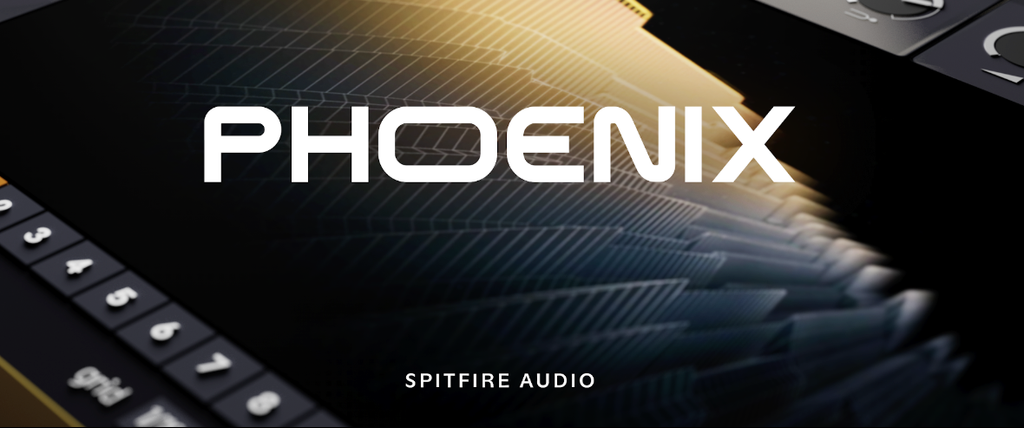
Spitfire Audio’s Phoenix feels like the kind of instrument that starts from a simple question and then refuses to answer it simply. What happens when you take BT’s private archive of vintage synthesizer, sampler, cassette, and vinyl material, place it next to orchestral recordings from Spitfire’s libraries, then build a synthesis system designed to pull the material apart instead of merely replaying it?
That is the basic premise behind Phoenix, the latest Spitfire Audio collaboration with Grammy-nominated composer, producer, and technologist BT.
It is their third instrument together, following Phobos in 2017 and Polaris in 2022, but Phoenix seems aimed at a more specific middle ground: cinematic sound design that still gives producers deep hands-on control.
The source material is already loaded with personality.
BT brings decades of private archive material, while Spitfire contributes 50 instruments across strings, brass, woodwind, choirs, guitars, pianos, and tuned percussion. The orchestral side also reaches away from safe scoring colors, with material such as frozen strings, quarter-tone clusters, and bowed textures sitting near the edge of pitch.
That is where Phoenix gets interesting. It is not only a synth with nice sources.
It is an instrument designed to resynthesize, warp, cross-modulate, and reshape those sources until they become something less obvious than a preset pad or scoring texture.
I spent time with Spitfire’s more painterly side in my Impressionism review, and Phoenix feels like it comes from a more volatile part of the same company. Impressionism leaned into immediacy and color. Phoenix leans into mutation.
The Stereo Design Is the Real Hook
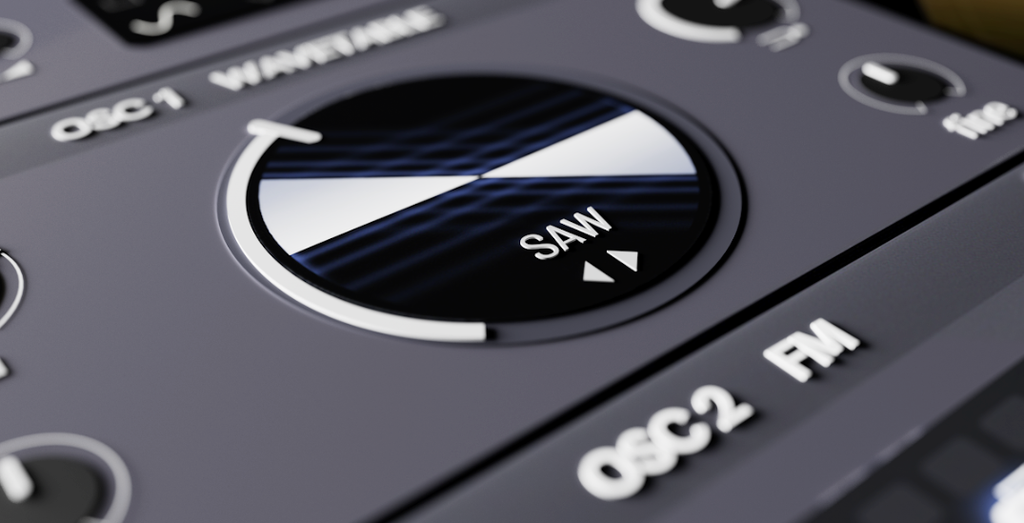
The headline idea is Phoenix’s stereo-from-the-ground-up design. Each voice has two complete synthesis chains, one for each channel. That means the left and right sides of a sound can be shaped independently, creating movement, detuning, spectral modulation, phase warps, and spatial detail as part of the actual synthesis process.
That is more meaningful than a wide patch with stereo effects placed at the end. Phoenix treats stereo motion as something built into the instrument’s architecture. The two sides of the sound can evolve differently while still belonging to the same note, which gives composers a way to create motion without stacking a dozen plug-ins after the fact.
The six synthesis engines are broad enough to push the instrument in several directions. Phoenix includes spectral wavetables, hyper-modern FM, deep sampling, 2OP FM transients, subharmonic generation, and a complex noise oscillator.
It also includes a six-operator FM engine with 34 algorithms, stereo wavetable processing with spectral warping and modal resynthesis, and 16-voice full MPE support.
That kind of feature list can look dense on paper, but the point is pretty direct.
Phoenix is built for material that changes over time. It wants a note to smear, bloom, pull apart, drift, and become something else. For composers working in trailers, screen scoring, ambient-adjacent electronic music, and darker hybrid production, that is often where the sound earns its place.
BT’s Rhythmic Language Is Built Into the Engine
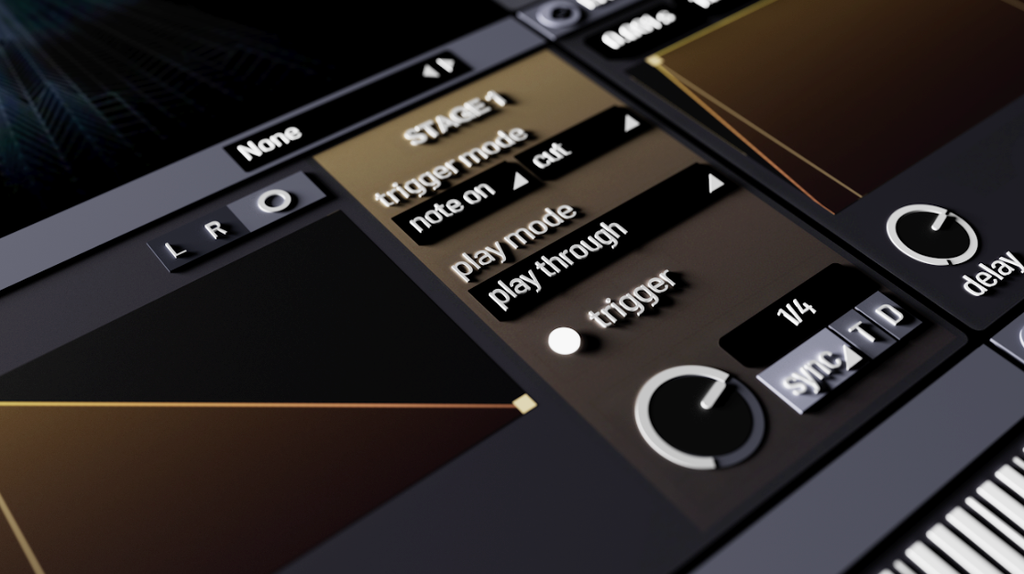
Movement is one of the major themes here, and BT’s fingerprints are clearest in the modulation system. Phoenix includes eight multi-segment MetaSequencers, four random generators with 636 handmade rhythm patterns, and a probability arpeggiator derived from the rhythmic language of BT’s patented StutterEdit.
That last detail matters because BT has spent years treating rhythm as something more microscopic than a groove or pattern. His best-known production ideas often involve slices, stutters, edits, and tiny rhythmic moves that make a sound feel alive at the edges. Bringing that approach into Phoenix gives the instrument a different personality from a normal cinematic synth.
The modulation matrix has no slot limit, which is a smart choice for an instrument built around deep transformation. There are also 37 bespoke effects, each with its own interface, ranging from spectral smearing and granular reverbs to vinyl-style degradation and shimmer reverbs. Again, the larger idea is clear: Phoenix is meant to be a self-contained sound-design environment, not just a source generator.
For some context around BT’s long-running role in producer technology, my older piece on the Magnetic x iZotope Virtual Classroom with BT and Stutter Edit 2 still connects to this release. Phoenix feels like another step in the same direction, where musical motion and technical architecture are treated as part of the same creative act.

Spitfire Is Pushing Past the Normal Library Model
Phoenix also reflects a broader shift in orchestral and cinematic tools. The old model was simple enough: record beautiful sources, map them well, then let composers perform them inside a sampler. That still has a place, but a lot of modern scoring work asks for something less literal. Composers need acoustic fingerprints, but they also need ways to distort, stretch, hybridize, and animate them quickly.
That is the space Phoenix is built for.
It takes Spitfire’s orchestral recordings and BT’s archive material, then turns them into raw matter for synthesis. A frozen string can become a moving spectral object. A cassette source can become a cinematic pulse. A choir, guitar, or tuned percussion source can be pulled through FM, wavetable, granular, and spatial processing until the origin is still felt, but not obvious.
I covered this larger shift in my interview with MeldaProduction’s Vojtech Meluzin about sampling realism and the future of orchestral plugins, where the core question was how far virtual instruments can move past basic playback. Phoenix comes at that question from the opposite side. It is less concerned with realism as an endpoint and more interested in what happens when recorded sources are made unstable.
There is also a visual piece to the workflow.
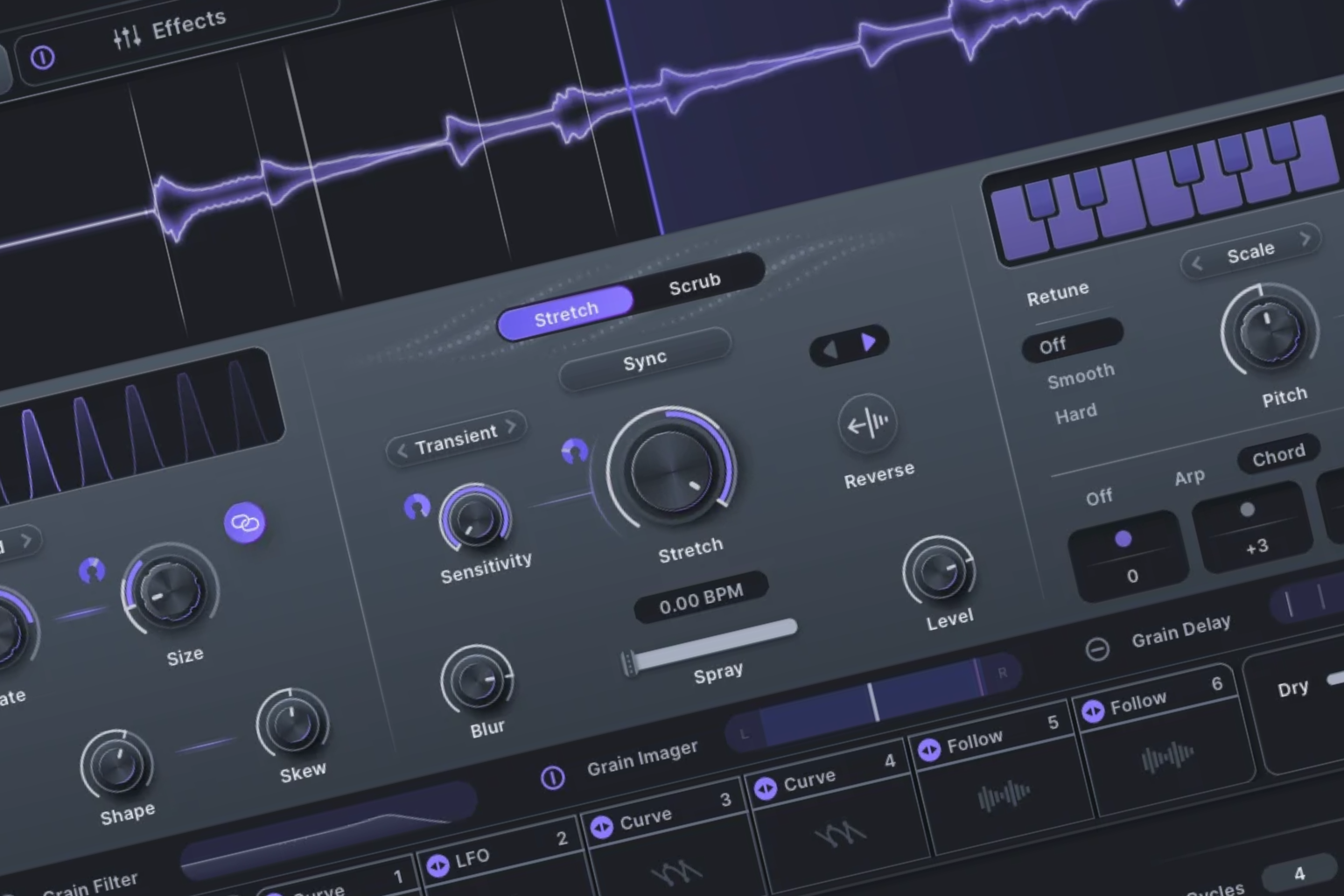
Phoenix includes a real-time 3D renderer that draws the waveform being synthesized after warping and spectral processing, presenting it as an object the user can turn and inspect. For a synth this deep, that visual feedback could help users understand what the instrument is doing instead of getting lost in a hidden chain of modulation.
Phoenix Is Built for People Who Want the Sound to Move
Phoenix is available now exclusively from Spitfire Audio’s website as a perpetual license. The intro price is £199 until October 25, after which it moves to £249 RRP. It will also be available to demo at ADE from October 21 through 25.
The instrument’s appeal is pretty specific, and that is a good thing.

Will Vance is a professional music producer who has been involved in the industry for the better part of a decade and has been the managing editor at Magnetic Magazine since mid-2022. In that time period, he has published thousands of articles on music production, industry think pieces and educational articles about the music industry. Over the last decade as a professional music producer, Will Vance has also ran multiple successful and highly respected record labels in the industry, including Where The Heart Is Records as well as having launched a new label with a focus on community through Magnetic Magazine. When not running these labels or producing his own music, Vance is likely writing for other top industry sites like Waves or the Hyperbits Masterclass or working on his upcoming book on mindfulness in music production. On the rare chance he's not thinking about music production, he's probably running a game of Dungeons and Dragons with his friends which he has been the dungeon master for for many years.