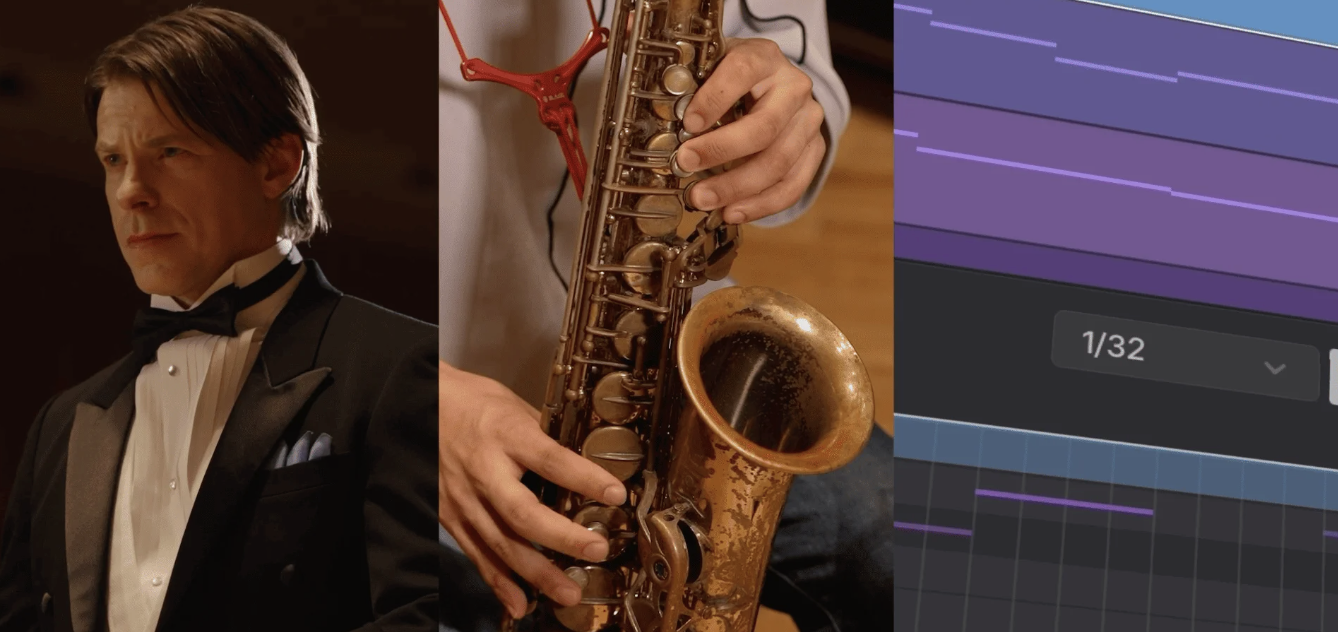
Dreamtonics has shared a new behind-the-scenes documentary on Instrument X, its neural acoustic modeling platform for orchestral and acoustic instrument performance. The video offers a rare look at the engineering behind the product, especially the parts that set Instrument X apart from traditional orchestral sample libraries.
The basic promise of Instrument X is easy to understand: write notation, load an Instrument Expansion, and create a more fluid instrumental performance without leaning on massive sample libraries, endless keyswitch maps, or stiff static playback.
The harder part is how Dreamtonics gets there.
The documentary focuses on exactly that, walking viewers into the technical problem behind acoustic modeling instead of only showing another polished launch reel.
Dreamtonics frames Instrument X as a neural acoustics modeling engine rather than a sample player. Instead of triggering static recordings, the engine renders performances inside the DAW, with legato, breath swells, room behavior, instrument response, and microphone perspective treated as part of the same performance system. That is a huge claim in a category where realism usually comes from gigantic libraries, careful programming, and a lot of manual editing.
This fits the path Dreamtonics has already been on.
The company has spent years making the line between recorded performance and generated performance feel less rigid, especially with voice products. I covered that side of the company in my piece on Vocoflex and again with Synthesizer V Studio 2 Pro. Instrument X takes that same larger question and points it at orchestral instruments.

The Problem Was Never Only the Notes
The documentary makes one thing clear: modeling orchestral instruments is not only about pitch and articulation. It is about how instruments sit in a room, how sound reaches different microphones at different times, and how a player’s intent changes the instrument’s physical response.
One section of the film explains the multi-microphone problem in plain terms.
A player creates a sound; that pressure wave reaches a close microphone first, then reaches a Decca tree later, then reflects off the room and arrives again. Those small time differences shape how the listener perceives a real space. They also create major problems when a neural model tries to represent many microphone feeds at once without phase issues.
Dreamtonics’ answer is not to ignore the room, but to separate the dry instrument from the room’s response, then rebuild that relationship inside the engine. The documentary introduces a custom dodecahedral speaker array, Dreamtonics’ first internally built hardware device, made to measure how the recording space responds to sound radiating in different directions.
That is the part of Instrument X that feels most consequential. The product is not only trying to make a violin patch with better legato. It is trying to model the acoustic event: player, instrument, microphone system, room, and listener perspective.
That puts it in the same bigger conversation as modern orchestral realism, which I discussed with MeldaProduction’s Vojtech Meluzin in my interview on sampling realism and the future of orchestral plugins.

Instrument X Is Built Around Fewer Workflow Obstacles
The product page and documentary keep coming back to a clear idea: orchestral writing should feel less like managing a database and more like shaping a performance. Instrument X is built to avoid some of the usual sample-library burdens, including multi-gigabyte storage footprints, complex keyswitch maps, and stiff articulation switching.
Instead, Dreamtonics is leaning on automatic articulation behavior, a unified articulation editor, predictive expression control, and a single-lane performance system that lets users shape intensity and motion without programming every tiny transition by hand. Notes can overlap without cutting each other off, and users can regenerate performance variations for phrases when they want another take.
There is also a soundstage side to the workflow.
Instrument X includes a microphone mixer panel with modeled positions such as close mics, Decca tree arrays, and room pairs.
That will matter most for two groups. Film composers and orchestral writers get a way to mock up arrangements without fighting keyswitch systems. Electronic producers get a source they can push harder, with microtonal movement, fluid gestures, and organic acoustic tone that can move beyond stock orchestral realism.
The Documentary Helps Explain the Claim
Instrument X is a large claim packaged as a product. “Neural acoustic modeling” can sound abstract until the underlying problem is made visible. That is why the documentary is worth embedding in coverage. It shows the recording-space problem, the speaker-array solution, and the technical work required before a user ever writes a note.
Instrument X is available with a free host engine and paid Instrument Expansions.
Individual expansions are listed at $99, with Orchestral Essentials at $349 and the Complete Collection at $649. The launch set includes 15 Instrument Expansions covering strings, winds, brass, and saxophones, with a 14-day trial available.

Will Vance is a professional music producer who has been involved in the industry for the better part of a decade and has been the managing editor at Magnetic Magazine since mid-2022. In that time period, he has published thousands of articles on music production, industry think pieces and educational articles about the music industry. Over the last decade as a professional music producer, Will Vance has also ran multiple successful and highly respected record labels in the industry, including Where The Heart Is Records as well as having launched a new label with a focus on community through Magnetic Magazine. When not running these labels or producing his own music, Vance is likely writing for other top industry sites like Waves or the Hyperbits Masterclass or working on his upcoming book on mindfulness in music production. On the rare chance he's not thinking about music production, he's probably running a game of Dungeons and Dragons with his friends which he has been the dungeon master for for many years.