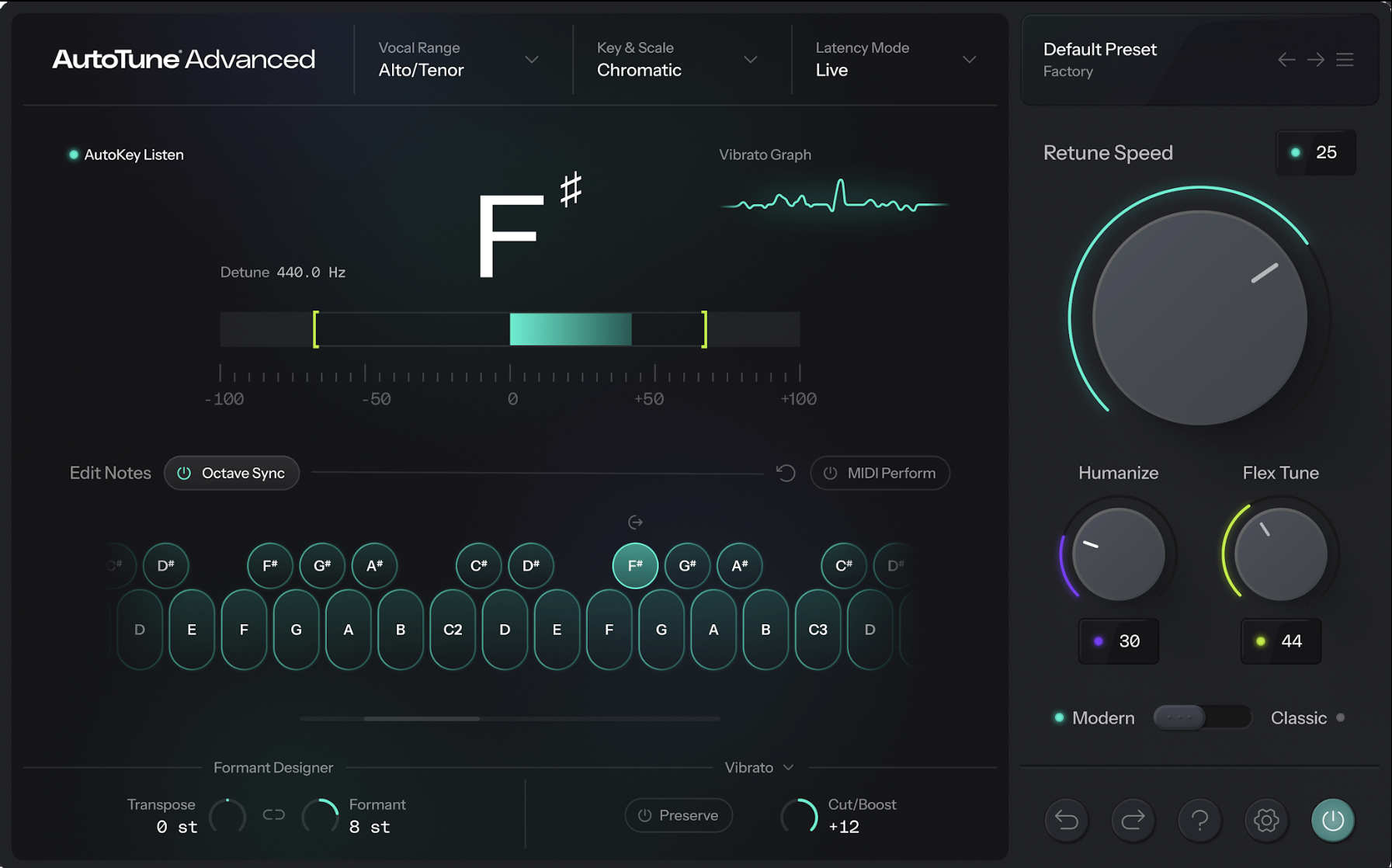
AutoTune® Advanced is Antares Audio Technologies’ new flagship for real-time automatic pitch correction, and the main idea is simple: harder tuning should not automatically mean a flatter vocal.
Built around a rebuilt AutoTune algorithm and a new patent-pending DVA™ engine, the plug-in is designed to detect a singer’s natural vibrato and preserve it under transparent correction and under the harder-tuned settings that helped make AutoTune a defining part of modern vocal production.
That is the central tension with pitch correction. Most producers want control, speed, and accuracy, but the moment the tuning starts sanding away the movement in the vocal, the performance can lose the part that made it worth tuning in the first place.
Antares is positioning DVA as the answer to that exact problem. It listens for vibrato, identifies it as part of the singer’s expression, and keeps it alive while the pitch correction does its work.
AutoTune Advanced now sits at the top of the AutoTune lineup. AutoTune Pro 11 remains the home for Graph Mode and deeper manual editing, while AutoTune handles the more streamlined daily pitch-correction role. Advanced is aimed at the producer or engineer who wants fast automatic correction with more detail, more performance control, and less fear of losing the human movement inside the vocal.

That gives the release a clear place in the current plug-in conversation.
We have covered vocal processing from a more character-driven angle in my review of Baby Audio Humanoid, and AutoTune Advanced attacks a different side of the same issue. Vocal tools are no longer only about fixing pitch. They are about deciding how much of the singer should remain visible after the processing is done.
The New Engine Is Built for Speed and Session Work
Antares describes the updated Auto-Mode pitch algorithm as its largest engineering investment in the AutoTune algorithm since the product’s original introduction. The point is not only smoother tuning. The company is pitching Advanced as its most accurate and clear automatic tuning system yet, with a new engine foundation built for stability during long, complex vocal sessions.
The new Live mode is one of the key workflow additions. It provides ultra-fast real-time monitoring, with Antares reporting plug-in latency of 0.84 ms at 44.1 kHz. From there, users can move into Low Latency mode for tracking or High Quality mode for mix-ready fidelity. That gives engineers a way to choose the right response for the moment instead of treating every session stage the same.
That flexibility is important because pitch correction does different jobs during tracking, comping, production, and mixing. A singer may need immediate monitoring while cutting takes. A producer may want to ride a hard-tuned effect in real time. An engineer may want a more polished correction pass later in the mix. AutoTune Advanced is built to move between those uses without forcing the same setting across the whole process.
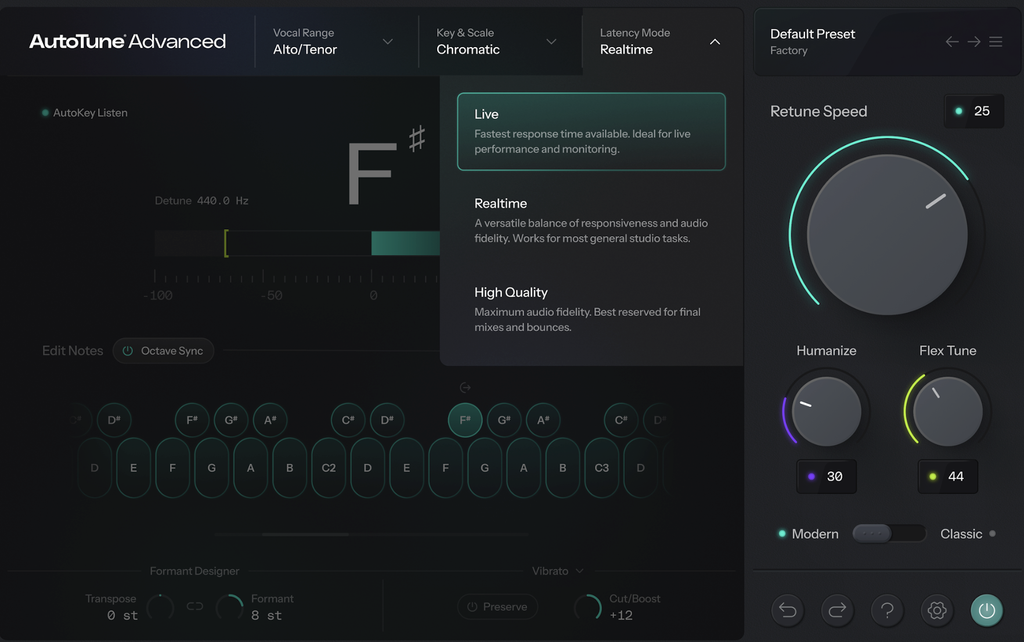
The plug-in also launches with Classic Mode and Modern Mode. Classic Mode is there for the hard-tuned sound that has shaped pop, rap, R&B, and electronic music for decades. Modern Mode is aimed at natural correction that disappears into the vocal. The framing is clear: Advanced is not trying to replace AutoTune’s most recognizable effect. It is trying to give that effect, and its more transparent counterpart, better control over vocal character.
DVA Gives Producers Another Way to Shape the Vocal
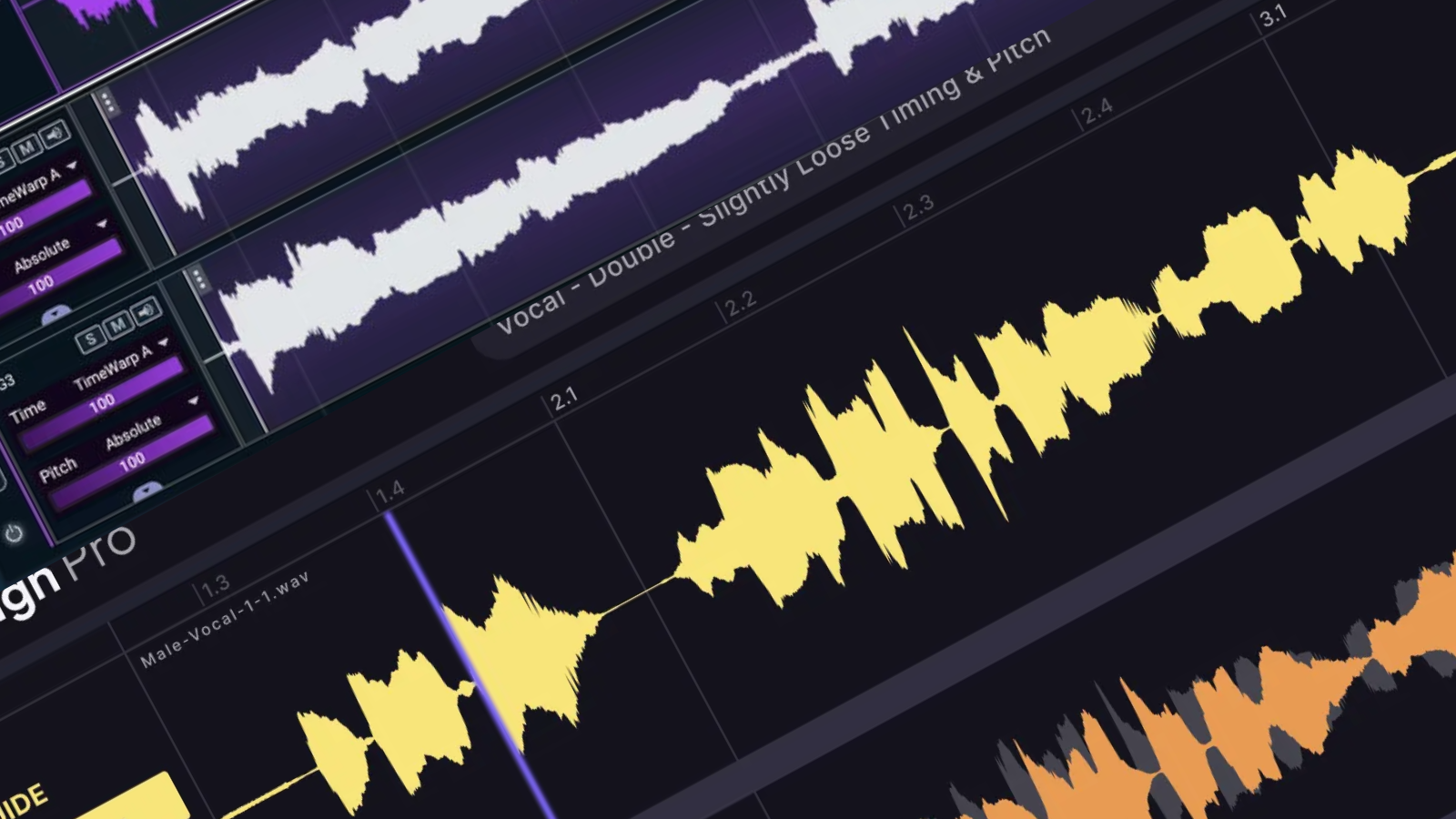
DVA is the headline feature, but Antares also built more visual and creative control around it. The real-time vibrato visualizer shows what the engine is detecting as it happens, which should help engineers understand how the plug-in is reading a performance. When a singer has no vibrato in the source take, the new Vibrato FX section can create movement using sine, square, saw, or triangle waves, with rate and cut/boost controls.
That combination is smart because vocal production often swings between preservation and invention.
Sometimes the job is to protect a singer’s natural movement. Sometimes the job is to create a hyper-stylized vocal effect that never existed in the raw take. AutoTune Advanced gives producers a way to work on either side of that line without treating vibrato as a casualty of tuning.
The updated Formant Designer adds another layer by shaping vocal timbre with more precision. Formant control can be subtle, especially when the goal is to seat a vocal in the record without making the singer sound processed. It can also become a creative sound-design move when pushed harder. That makes it especially relevant for producers using vocals as hooks, textures, chops, or transformed melodic material.

That side of the plug-in connects directly to the way many electronic producers work with vocals now.
I wrote about this in my piece on plugins for vocal chops, where the vocal often becomes a melodic instrument as much as a lyric carrier. AutoTune Advanced is clearly built for engineers, but plenty of its features will appeal to producers treating the voice as a flexible production source.
For a related look at modern vocal plug-ins and how much work they now carry in a mix, my review of Minimal Audio Evoke sits in a close space. AutoTune Advanced is more narrowly focused on tuning, but it reflects the same broader shift: vocal processing tools are becoming production environments in their own right.

Pricing and Availability
AutoTune Advanced launches September 24 on the AutoTune website.
It is available as a perpetual license or as part of the AutoTune Unlimited subscription. Current AutoTune Unlimited subscribers get AutoTune Advanced free, and a free trial of AutoTune Unlimited is available. The plug-in supports VST3, AU, and AAX formats for macOS and Windows, with AutoKey 2 compatibility included.
Antares built AutoTune into one of the most recognizable vocal tools in recorded music.
AutoTune Advanced does not move away from that history. It goes straight at the old complaint that tuning can remove too much of the singer from the vocal. The DVA engine is the clearest sign of where Antares sees the next stage of pitch correction: faster, cleaner, more controllable, and still able to leave the human movement in the take.

Will Vance is a professional music producer who has been involved in the industry for the better part of a decade and has been the managing editor at Magnetic Magazine since mid-2022. In that time period, he has published thousands of articles on music production, industry think pieces and educational articles about the music industry. Over the last decade as a professional music producer, Will Vance has also ran multiple successful and highly respected record labels in the industry, including Where The Heart Is Records as well as having launched a new label with a focus on community through Magnetic Magazine. When not running these labels or producing his own music, Vance is likely writing for other top industry sites like Waves or the Hyperbits Masterclass or working on his upcoming book on mindfulness in music production. On the rare chance he's not thinking about music production, he's probably running a game of Dungeons and Dragons with his friends which he has been the dungeon master for for many years.