Most MIDI controllers still ask the same basic thing from the producer: bring the idea first, then use the hardware to enter it.
Fender Motion is built around a different pressure point. It is still a controller, with pads, encoders, touch strips, transport control, DAW navigation, MIDI I/O, and drum-programming use cases. The more interesting angle is that Fender Studio is trying to make the controller participate earlier in the writing stage.
That is why Chord Mode leads the announcement. Motion is designed to help players start with playable custom-voiced progressions, assignable scales, and hands-on control inside Fender Studio Pro. It comes in Motion 16 and Motion 32 versions, and it is aimed at producers, songwriters, guitarists, keyboard players, and creators who want hardware that can jump between idea generation and DAW control without turning the desk into a separate command center.
Fender has spent years being one of the most recognizable names in guitars, amps, and player identity.
Motion is a different kind of move. It puts Fender deeper into the writing desk, where the modern producer may be starting a track from pads, samples, MIDI, chords, audio clips, or a guitar part going into an interface.
Chord Mode is the feature people will test first
The headline feature is the built-in Chord Mode, which includes more than 30 human-made progressions and assignable scales with organic voicings.
That sounds simple until you think about how many producers get stuck before the production even begins. A good chord idea can open the whole track. A bad one can turn the next three hours into browsing presets and pretending the problem is sound selection.
Motion’s chord system seems designed to get producers past that first wall quickly. Fender is not only giving users static shapes to trigger. The pitch is built around playable progressions, which means the controller is trying to help people move from a harmonic idea into a song section before the energy disappears.
That connects directly with my article on how chord progressions can speed up music production. The larger point there was that chords are often the part of production people avoid learning, then they wonder why every loop feels stuck in place. Motion appears to bring that gap onto the hardware itself, giving producers a way to start from harmonic motion instead of isolated notes.
FATAR pads give Fender a serious hardware claim
The pads are another major part of the story.
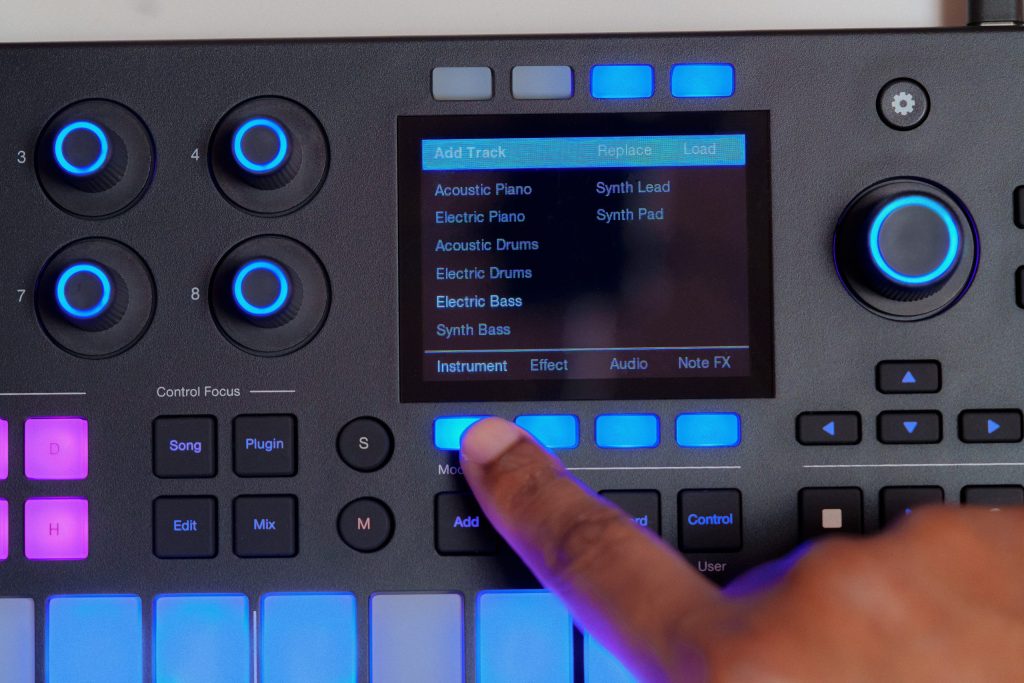
Fender built the context-aware pads in partnership with FATAR, a company best known for high-end keybeds. Fender says these are FATAR’s first-ever pad design, which gives Motion a more credible claim in a product category where pads can make or break the entire experience.
The pads adapt between drums, chords, melodies, and scales, which is where the “context-aware” language comes from. In plain terms, Fender wants the surface to feel closer to an instrument than a grid of buttons. One moment it can handle drum programming. The next, it can trigger chords or melodic parts. The goal is to keep the user playing and shaping ideas from the same piece of hardware.
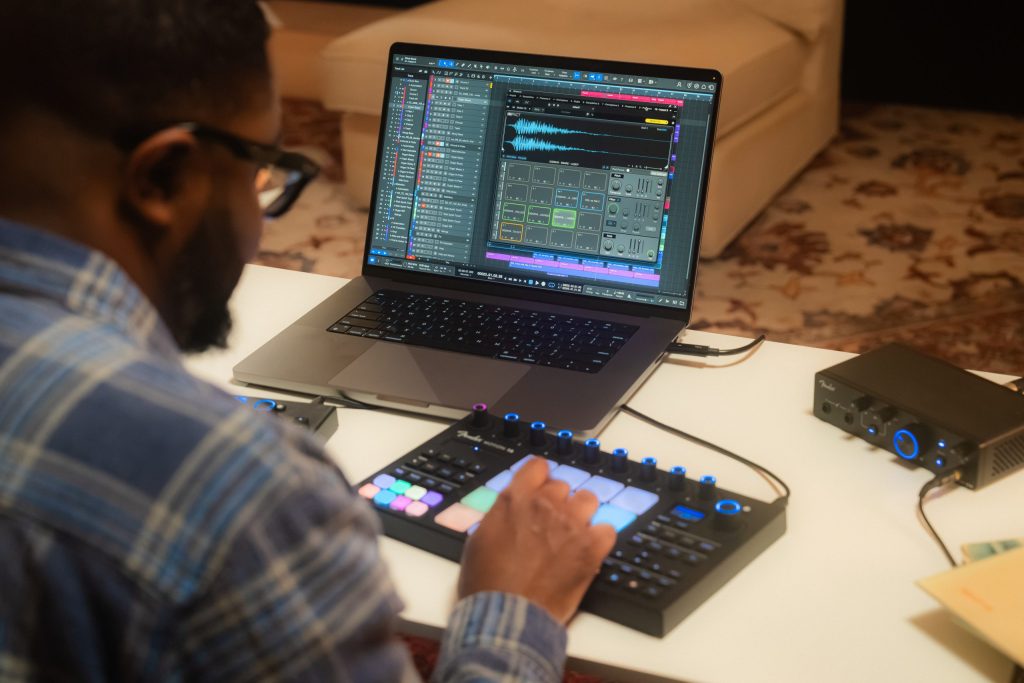
Motion also includes RGB touch encoders and touch strips for virtual instruments, effects, mixer moves, playback, editing, and performance control inside Fender Studio Pro. There is an Instant Add button for creating virtual instruments, audio tracks, or effects from the controller, which feels like a small detail until you are in the middle of writing and do not want to reach for the mouse.
I thought about this beside my earlier look at Novation’s FLkey Mini and FLkey 37 controllers, because DAW-specific controllers work best when they remove tiny breaks in attention. Fender Motion is clearly chasing that same benefit, with Fender Studio Pro as the center of the setup.
Pricing and availability
Fender Motion 16 lists at $269.99 USD, £239 GBP, €279 EUR, $479 AUD, and ¥42,570 JPY.
Fender Motion 32 lists at $329.99 USD, £299 GBP, €349 EUR, $549 AUD, and ¥50,820 JPY.
Fender notes that these are manufacturer’s suggested retail prices, and final retail pricing may vary by region, retailer, taxes, duties, import fees, currency changes, and availability.
The bigger takeaway is that Fender is not treating Motion like a novelty accessory. The FATAR pad partnership, included Fender Studio Pro license, Chord Mode, MIDI I/O, encoders, touch strips, and DAW integration all point toward a serious attempt to bring Fender further into modern production rooms.
The question now is whether producers see Motion as a Fender product with controller features, or as a real controller that happens to come from Fender. The difference will come down to the pads, Chord Mode, and how tightly Fender Studio Pro responds when the mouse stays out of the way.

Will Vance is a professional music producer who has been involved in the industry for the better part of a decade and has been the managing editor at Magnetic Magazine since mid-2022. In that time period, he has published thousands of articles on music production, industry think pieces and educational articles about the music industry. Over the last decade as a professional music producer, Will Vance has also ran multiple successful and highly respected record labels in the industry, including Where The Heart Is Records as well as having launched a new label with a focus on community through Magnetic Magazine. When not running these labels or producing his own music, Vance is likely writing for other top industry sites like Waves or the Hyperbits Masterclass or working on his upcoming book on mindfulness in music production. On the rare chance he's not thinking about music production, he's probably running a game of Dungeons and Dragons with his friends which he has been the dungeon master for for many years.