Electronic music has always had a close relationship with invisible forces.
Voltage. Signal. Feedback. Interference. Magnetic pull. The hum that leaks out of machines before anyone decides whether it is a problem or a texture. Eternal Research has built an entire instrument around that last part, and its latest Rite of the Demon performance showed how strange the idea can get once it leaves the product demo table.
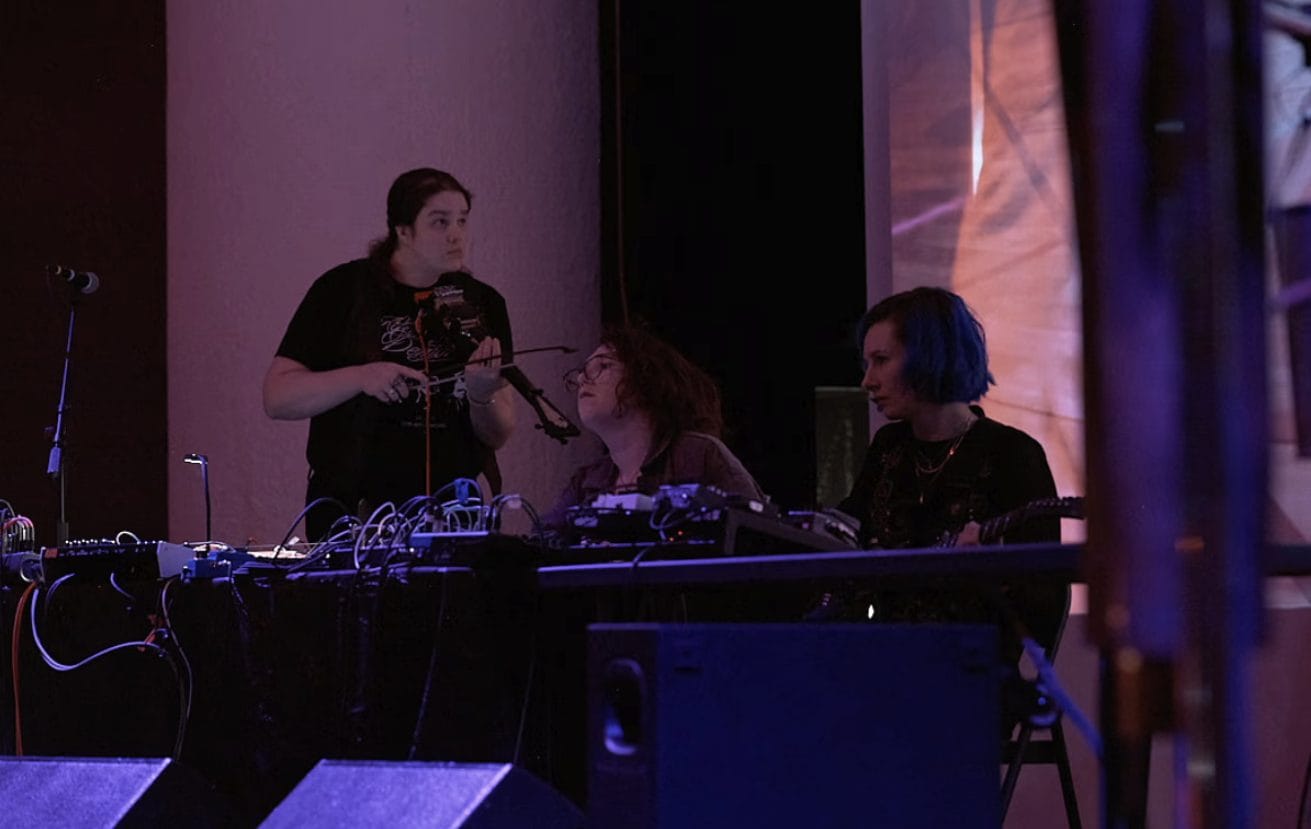
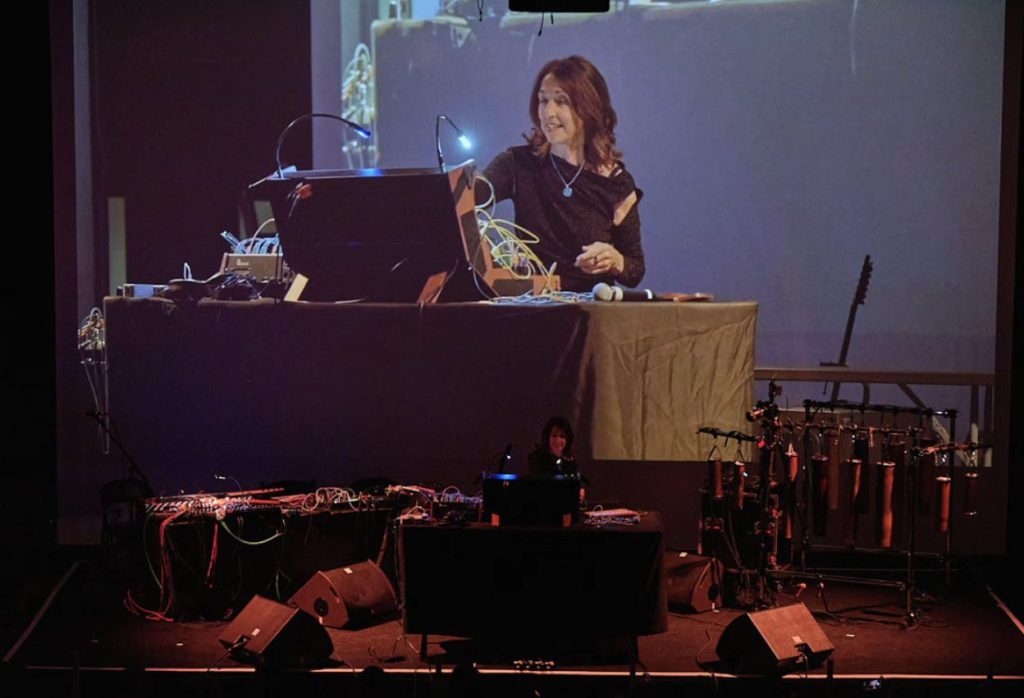
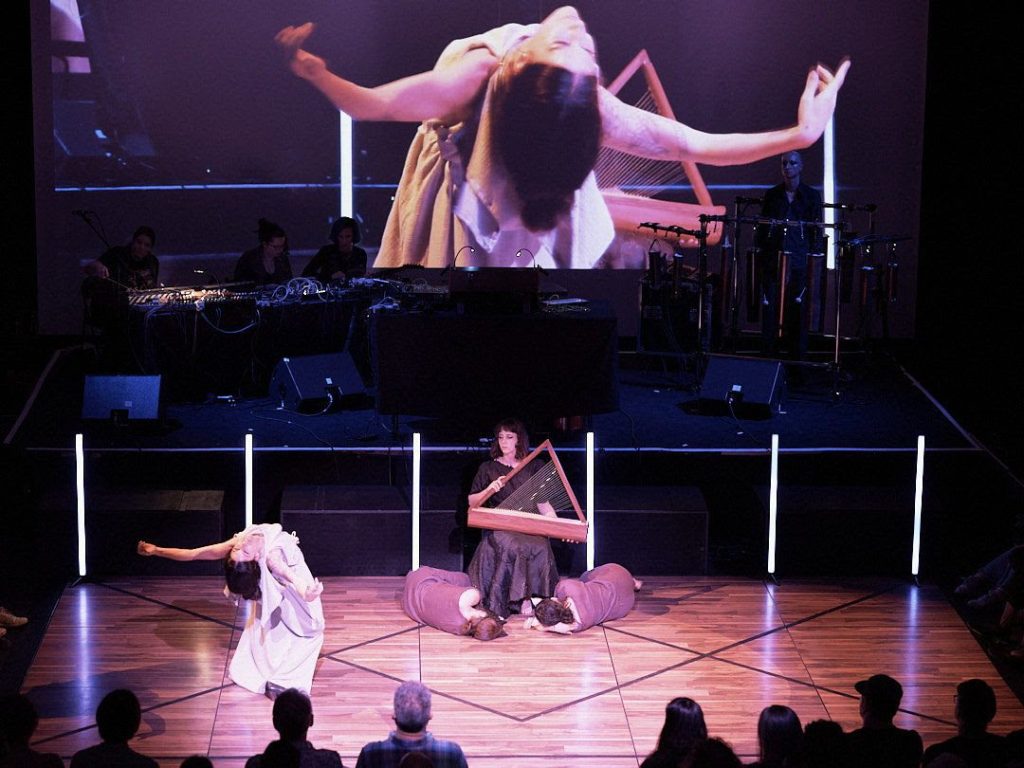
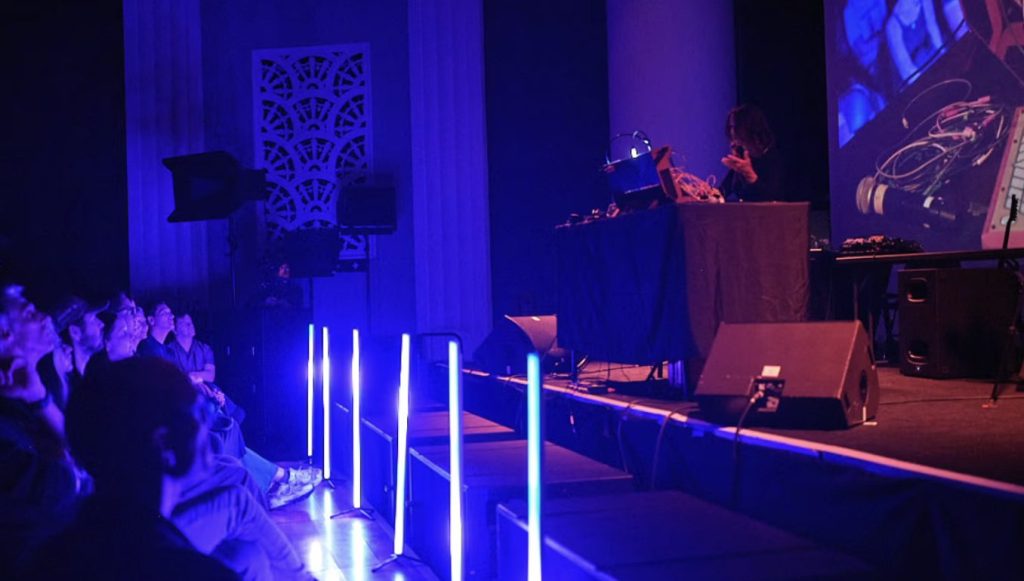
Rite of the Demon: Summer took place at Gray Area in San Francisco as a sold-out immersive audiovisual performance, with electronic music pioneer Suzanne Ciani joining Eternal Research founders Alexandra Fierra and Bryn Nieboer. The event combined live electronic performance, dance, cinematic projection, handcrafted instruments, and quadraphonic sound, with the Demon Box turning surrounding electromagnetic activity into playable audio in real time.
That is the part worth sitting with. The Demon Box is not simply a device that reveals interference. It turns that interference into something an artist can perform with, while also generating MIDI and control voltage for modular rigs, DAWs, live setups, and installations.
In a scene where so many music-tech releases are about cleaner control, Eternal Research is moving in the opposite direction. It is asking artists to treat the electrical mess around them as part of the composition.
For more information about the Demon Box or to place an order, visit https://eternalresearch.com/ and follow Eternal Research on Instagram for updates on upcoming performances.
Suzanne Ciani was the right artist for this room
Suzanne Ciani’s presence gives the performance a lot of weight without needing to overstate it.
Ciani’s work has long been tied to electronic performance, Buchla systems, spatial sound, and a more physical relationship with synthesis. Putting her at the center of a quadraphonic Rite of the Demon event created a direct line between older electronic instrument traditions and Eternal Research’s current obsession with electromagnetic sound.
Alexandra Fierra described Ciani’s appearance as meaningful because her work shares Eternal Research’s belief that technology can uncover hidden layers of experience. Ciani, reflecting on the event, called it “a mini festival of artforms: dance, visuals, and immersive audio.”
That quote gets close to why the event reads as something bigger than a gear showcase. The Demon Box may be the product entering general availability, but Rite of the Demon: Summer framed it as part of a larger performance language. The audience was not only hearing a new instrument. They were watching a group of artists place it inside ritual, movement, projection, and spatial sound.
That connects with our earlier article on the Demon Box appearing at Perfect Circuit for a live EMF sound demo, where the basic promise was already clear: electromagnetic energy can become playable material. San Francisco gave that idea a larger stage.
The Demon Box is shipping now
The timing of the performance matters because the Demon Box is now shipping to customers.
Originally developed through a successful Kickstarter campaign, the Demon Box is billed as the first portable electromagnetic field instrument designed for musicians, sound artists, educators, and creative technologists. It captures surrounding electronic fields and turns them into audio, MIDI, and control voltage.
That last pairing is important. Audio alone would make the Demon Box a strange pickup system for hidden electrical noise. MIDI and CV make it a control source, which means the environment can drive synth parameters, modular patches, DAW instruments, and performance systems.
For producers, this is where the instrument gets interesting. A laptop, phone charger, light fixture, synth, mixer, power supply, or venue wiring can become part of the patch. The room starts behaving like source material.
That idea sits near the same strange edge as my Moog Etherwave Theremin review, because the appeal is not only the sound. It is the act of performing with something you cannot grab directly. The theremin turns proximity into pitch and expression. The Demon Box turns electromagnetic activity into musical control.

EMF performance belongs in the wider spatial audio conversation
The quadraphonic setup is another important part of the San Francisco event.
Ciani’s immersive performance placed the Demon Box inside a room where sound could move around the audience instead of sitting flat at the front. That matters because electromagnetic material can easily become a novelty if it is treated as a single noise source. Spatial placement gives it shape, direction, and drama.
Electronic music has been circling this for years. Producers have spent decades obsessing over stereo width, club systems, surround work, and immersive formats. The question is always the same: does a new listening format change the music, or does it only change the playback?
I wrote about that tension in our article on how spatial audio can change DJ mixes, and Eternal Research brings a more experimental version of the same question. If the room’s hidden signals can become sound, and the sound can move around the room, the performance starts to feel less like playback and more like a live encounter with the space itself.
The next rite moves to Brooklyn
Eternal Research will continue the series with Rite of the Demon: Fall on Friday, September 18 at Triskelion Arts in Brooklyn.
The Fall edition is billed as a more intimate evening of experimental music and audiovisual performance, featuring Testu Collective and Leslie Garcia. It will continue the company’s focus on electromagnetism, mythology, live performance, the Demon Box, and its custom-built instrument family.
That smaller setting may be the right next step. San Francisco proved the concept in a sold-out room with Ciani as the centerpiece. Brooklyn can bring the audience closer to the instrument and the process.
For Eternal Research, the next few months are about more than shipping a piece of hardware. They are about teaching artists how to think with it. The Demon Box gives musicians a new relationship with the electrical life already surrounding them, and Rite of the Demon gives that relationship a public form.
That is the interesting part. The instrument does not ask artists to escape the noise of modern electronics. It asks them to listen closer and decide what the noise has been trying to say.

Will Vance is a professional music producer who has been involved in the industry for the better part of a decade and has been the managing editor at Magnetic Magazine since mid-2022. In that time period, he has published thousands of articles on music production, industry think pieces and educational articles about the music industry. Over the last decade as a professional music producer, Will Vance has also ran multiple successful and highly respected record labels in the industry, including Where The Heart Is Records as well as having launched a new label with a focus on community through Magnetic Magazine. When not running these labels or producing his own music, Vance is likely writing for other top industry sites like Waves or the Hyperbits Masterclass or working on his upcoming book on mindfulness in music production. On the rare chance he's not thinking about music production, he's probably running a game of Dungeons and Dragons with his friends which he has been the dungeon master for for many years.