The promise of spatial audio is easy to understand until the delivery list gets involved.
A music mix may need stereo. A broadcast job may need surround. A film or post job may need ADM or Dolby Atmos. A live recording may need several versions for different playback systems. The creative part is placing sound in space. The frustrating part is rebuilding or checking related mixes across formats without losing the relationship between them.
That is the problem Boris FX is going after with Sequoia 2026.5.
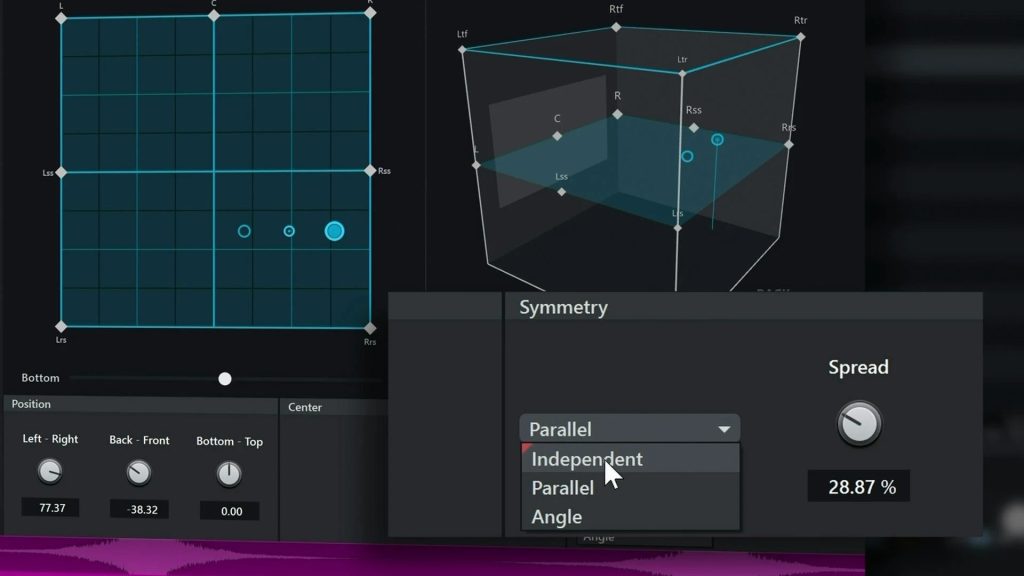
The new release adds a Spatial Panner that brings stereo, surround, and spatial formats into one connected visual workspace. Instead of treating each version like a separate mix that has to be managed track by track, Sequoia links panning across target buses so one move can update stereo, surround, and Dolby Atmos versions at the same time, while still letting engineers adjust each target format on its own when needed.
That is the real headline here. Sequoia 2026.5 is not only adding another panner. It is trying to make spatial delivery less fragmented.
The Spatial Panner gives engineers one visual map
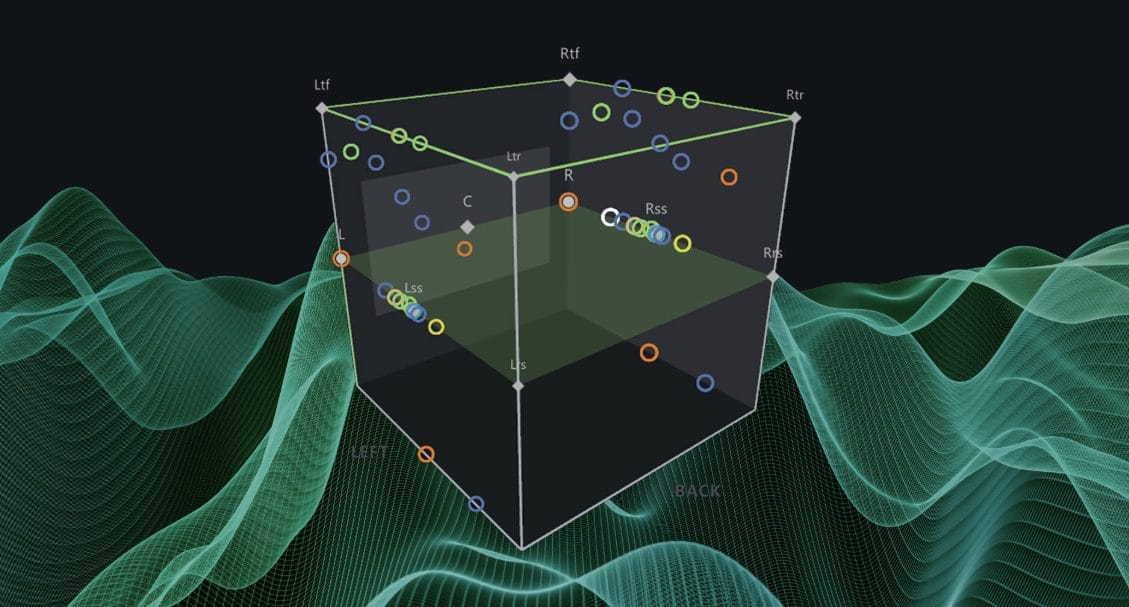
The Spatial Panner replaces isolated panning and constant format switching with a single visual space for mono, stereo, surround, and 3D channel formats up to 22.2.
Each active source can display with peak meters, solo and mute controls, and track colors, which should help engineers keep larger spatial layouts easier to read. There is also an optional 3D view for seeing source placement and relationships.
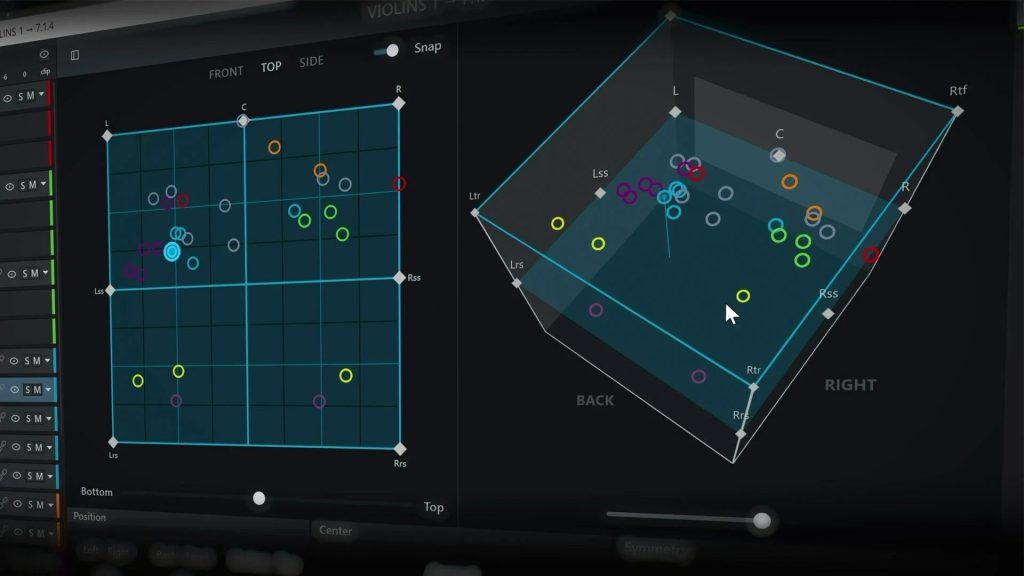
That matters because spatial mixing can become visually exhausting fast. Once a project has dialogue, music, effects, ambience, audience response, stems, buses, and multiple delivery targets, the panner needs to do more than move dots around a field. It has to help the engineer understand the relationship between objects and the format they are being delivered into.
I wrote about a broader version of this problem in my article on how spatial audio changes DJ mixes. Spatial audio can change how listeners experience movement, placement, and depth, but creators still need production systems that keep the process from becoming a routing puzzle.
Sequoia 2026.5 seems built for that second half of the conversation.
Sequoia’s spatial audio shift feels complete
Emanuel Hoisl, Sequoia Product Specialist, says the DAW has moved over recent releases from a powerful stereo production system into a fully capable spatial production platform.
That claim is based on several additions: surround enhancements, a native ADM Editor, Dolby Atmos integration, and now the 2026.5 Spatial Panner.
The sequence matters because spatial audio production does not become easier through one feature alone. It needs format support, metadata handling, panning, monitoring, delivery awareness, and enough stability for professional work. Sequoia has historically been tied to mastering, broadcast, editing, and high-pressure audio environments, so the spatial move has to meet a higher bar than a music-only experiment.
That is also why this update feels relevant beyond film and broadcast. Producers are already being pushed toward Atmos and spatial thinking, even when the money is not always obvious yet. In our interview with Monica Bolles about why producers should learn spatial audio, the point was that spatial skills are becoming part of a wider creative and professional vocabulary. Sequoia 2026.5 gives that vocabulary a more unified production surface.
The video engine and plugin updates matter for post rooms
Sequoia 2026.5 also updates the video side.
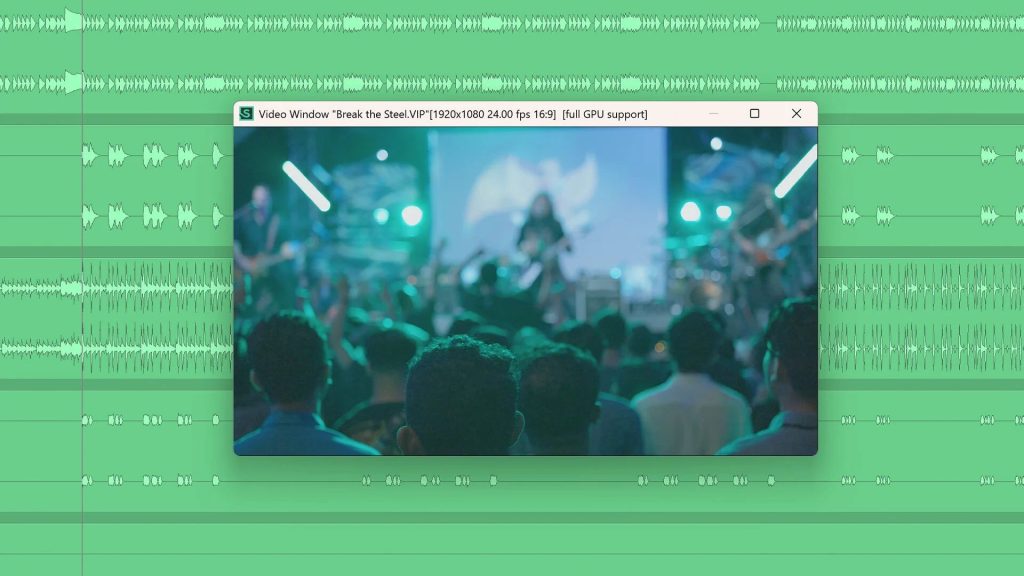
The release includes an enhanced video engine with better timecode sync, more flexible Blackmagic hardware support, multi-stream audio capabilities, and refined video preview. That gives the update a cleaner fit for broadcast and post-production rooms where audio cannot be separated from picture.
There is also real-time waveform calculation during playback, which should make editing and review feel faster in heavier projects. Greater plugin compatibility is part of the release as well, with Audio Plugin Union features described as faster, smoother, and more responsive.
CrumplePop SoundApp ARA, another Boris FX product, is now available directly within Sequoia, adding AI-driven stem separation and denoising inside the DAW. Expanded ARA2 support allows Sequoia to detect and enable ARA plugins with full-clip analysis and processing directly in the arranger window.
That set of updates points to Sequoia’s professional role. This is not only a DAW for music arrangement. It is a system for audio teams handling picture, dialogue, restoration, stem work, music, delivery specs, and spatial formats under deadline.
That also sits near the same post-production modernization conversation I covered in our article on Avid and Google Cloud targeting faster post-production. The products are different, but the pressure is similar: production teams need fewer slow handoffs and fewer repeated technical chores.
Boris FX Sequoia Pricing and update details
Sequoia is available as a standalone DAW with subscription, perpetual, and upgrade and support renewal options.
Pricing starts at $595 per year or $95 per month. Boris FX says customers with active Sequoia or Boris FX Suite subscriptions, or a Sequoia upgrade and support plan, receive the 2026.5 update as a complimentary release.
That pricing keeps Sequoia in the professional category, which is where this update is clearly aimed. The Spatial Panner is built for engineers, producers, broadcast studios, post rooms, live recording teams, and mastering environments where spatial delivery is no longer a fringe request.
For those users, the value is not only that Sequoia can pan in 3D. It is that Sequoia can keep several delivery versions tied together, visible, and adjustable without making the engineer rebuild the same creative decision over and over.
That is the part that makes 2026.5 worth watching. Spatial audio is no longer only a format story. It is a workflow problem, and Boris FX is trying to solve it from inside the DAW.

Will Vance is a professional music producer who has been involved in the industry for the better part of a decade and has been the managing editor at Magnetic Magazine since mid-2022. In that time period, he has published thousands of articles on music production, industry think pieces and educational articles about the music industry. Over the last decade as a professional music producer, Will Vance has also ran multiple successful and highly respected record labels in the industry, including Where The Heart Is Records as well as having launched a new label with a focus on community through Magnetic Magazine. When not running these labels or producing his own music, Vance is likely writing for other top industry sites like Waves or the Hyperbits Masterclass or working on his upcoming book on mindfulness in music production. On the rare chance he's not thinking about music production, he's probably running a game of Dungeons and Dragons with his friends which he has been the dungeon master for for many years.