Spatial audio has been on a slow rise in popularity over the past few years, and more and more clubs, venues, and corners of the industry are starting to notice. Yet the number of producers and audio engineers willing to learn how to mix in this new medium hasn’t kept pace with how fast the technology has grown.
This means there is no better time for producers and engineers looking to break into the pro audio world to strike while the iron is hot.
And if you’re looking for a place to start learning how to work with spatial audio, CRAS (Conservatory for Recording Arts & Sciences) and Spatial is the place to do it. They are an award-winning immersive audio technology and software set to unveil a groundbreaking new curriculum designed to train engineers and producers for new job opportunities in experiential, immersive audio.
But before we get into all that, are you ready to elevate your sound even further? Dive into our comprehensive guide on the 25 must-have VST plugins for music producers regardless of genre you’re making.
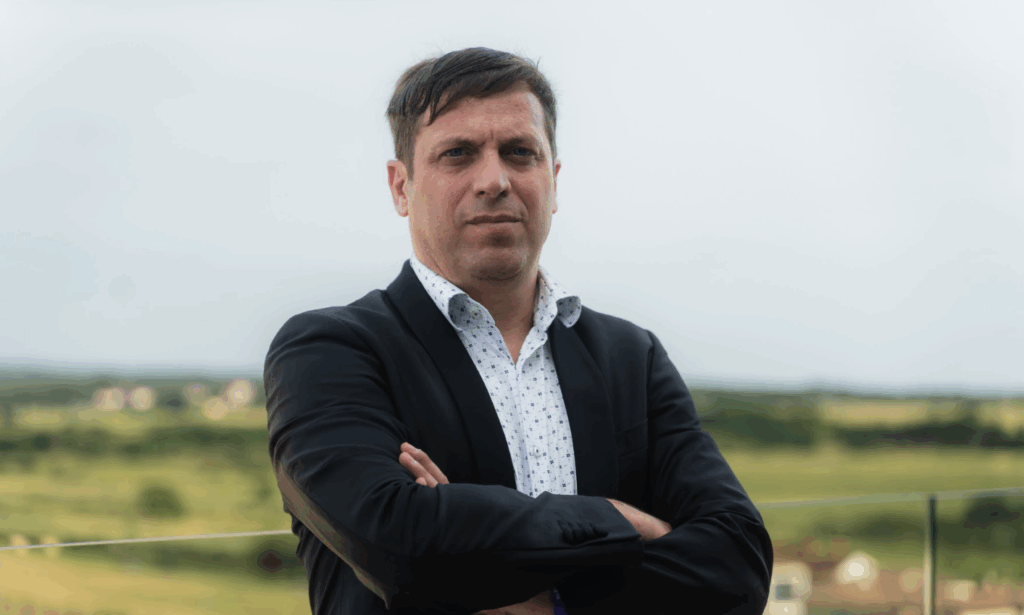
Who Is Monica Bolles?
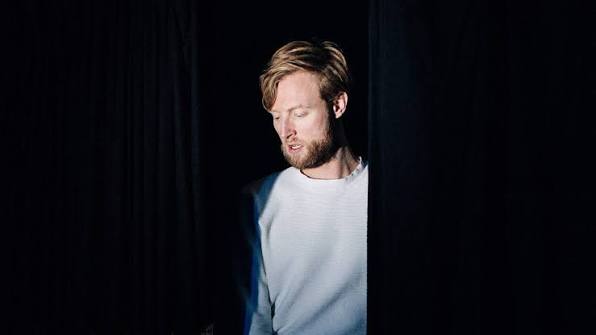
We sat down with Monica Bolles to dive deep into why right now is the best time to use this powerful immerging technology. Monica Bolles is a digital artist, audio engineer, and composer from Boulder, CO, with a B.S. in Music Production from CU Denver and an M.S. in Creative Technology and Design from CU Boulder.
She has created and produced works exhibited in the 140-channel speaker array at the Cube at Virginia Tech, the IMERSA Fulldome Summit, NIME (New Interfaces for Musical Expression), and the Conference of World Affairs, among others.
Why is right now the best time to learn how to mix spatial audio?
There is a massive uptick in interest in spatial audio.
When Oculus first announced its Kickstarter and launched the hype around VR, you suddenly saw all of these big audio companies beginning to pay attention to spatial audio. Before that, I’d say it existed in the fringes of academia and European research institutes like IRCAM.
Now the industry is paying attention to the rise of VR/AR/XR, immersive experiences, and the metaverse… suddenly ‘immersive’ is the new hot thing, and everyone wants to be involved. That means that there are a lot of opportunities. It’s still early days, too, so I think there’s a lot of room for new faces.
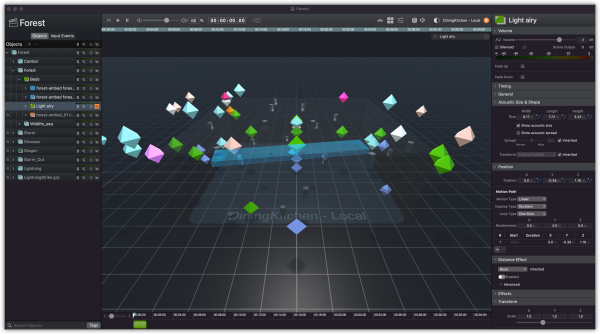
Many new toolsets on the market make it much easier to be creative. Companies like Spatial are creating studio suites for non-linear spatial audio design that are specifically valuable for creating large-scale immersive installations and experiences. Other companies are actively pushing into applications for live music and in-home listening…
With all the support behind new formats and toolsets, it is easier to create efficient workflows and focus on the creativity of the projects without worrying as much about technical complexities.
Snag Premium House Music Samples Without Breaking The Bank With Our Massive Curated List Of Warm, Punchy Sounds From Across The Internet. Click Here To Get 4k+ Free Sounds and Samples
What will be the most challenging thing a professional studio engineer will face when learning spatial audio?
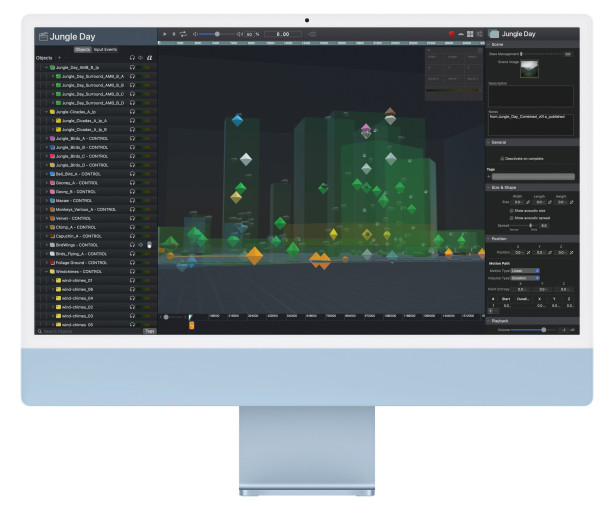
There is a lot of educational noise right now, and it can be hard for someone interested in learning to work with spatial audio to find good information about what ‘spatial audio’ is. Many studio engineers I talk to who are just getting into spatial audio think it refers to Dolby Atmos.
In truth, people use various algorithmic approaches to solve ‘spatialization,’ and each algorithm can offer them something different.
While Dolby has created a particular set of standards and tools that work within those standards, there are so many other tools and standards being developed by other companies (like Spatial, which I mentioned above) that can be used to create a spatial audio mix.
Every approach has a ‘sound,’ and choosing a spatial audio algorithm is like selecting an eq. Choosing the tool you are using or the standard depends on the application of your mix and what part of the industry you are trying to work in.
In reality, the tools, workflows, and standards are still developing; there are still a lot of limitations, so you have to be willing to do the research, innovate, and think outside of your ‘traditional’ training.
Ready to explore the world of top-tier hardware synths? Dive into our comprehensive guide on Fantastic Hardware Synths for Making Massive Leads and Ear-Catching Hooks in Music Production and elevate your tracks with unmatched sonic brilliance.
How does learning to mix spatial audio differ from conventional mixing in a music studio?

When creating a spatial mix, most of the tools available at this point focus on the ability to virtualize the positioning of sounds. However, due to the way these algorithms work, many tools we use as studio engineers, such as FXs, eq, and compression, won’t work.
You could use regular plugins on a mono sound that is a ‘source’ in your audio space, but after that, you are limited as to what other ways you can affect the sound of the overall mix. Any tool you use after the spatial virtualization will affect the spatialization. I’m not sure Mastering has been figured out yet.
You will also have to get good at routing and understanding how to do complex bussing. While DAWs have come a long way in making it easier to interface with different spatial audio formats, there will still be a certain amount of complexity to how you will need to route and set up your IO and configurations.
Looking to excel in musical collaborations? Gain insights from ‘5 Lessons in Musical Collaboration: Biesmans Shares What He Learned While Making the Watergate 28 Compilation’ – collaborate smarter here.
What will be the most straightforward thing about the transition from standard mixing into spatial audio mixing?
Space. As a mix engineer, you constantly try to find space for your sounds.
In stereo, we use eq and compression to help us find space. With spatial mixing, you don’t need to use those tools as much because you create space through virtualized space. You can help give your sounds space to breathe by positioning them in different locations of your virtualized ‘space.’
What incentives should up-and-coming engineers watch out for after learning the art of mixing spatial audio?
Being in a ‘niche’ field has helped me in life.
If you know something nobody else knows, you will set yourself up for being valuable. Are there more job prospects with this skill set? I think that’s hard to say.
The industry is growing rampant, but many people are trying to break into this space. As a mix engineer, you are competing against some of the top mix engineers in the industry who are hopping on the spatial audio hype train. If you are someone just coming out of school as an audio engineer, I think to break into spatial audio, you have to be passionate about it and find a way to approach it from a unique angle.
Because it’s such a new industry, there’s still room for a lot of innovation; the rules are still being written so take advantage of that.
Curious about the link between exercise and creativity? Dive into ‘How Exercise Affects a Producer’s Creativity: Wassu Shares How Running Defines His Career in the Studio and on the Road’ – find inspiration here.
Tell me of the exciting entry-level projects somebody who just learned spatial audio would be working on.
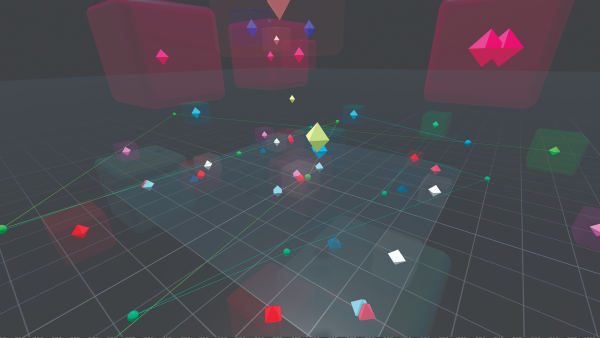
Spatial audio is currently being used in many different audio industries, so this will vary based on what part of the industry you want to go into. The tools and processes you are going to use are going to be different, too.
Spatial audio is a massive VR/AR/XR space component. Most creators in this space use ambisonics-based toolsets and spatial audio plugins that allow 6 degrees of freedom.
We are seeing spatial audio introduced to the live performance space. There is much exciting work around designing spatial audio installations for theme parks, event spaces, museums, and health facilities. The Spatial, Inc. toolset is paving the way for non-linear content creation most applicable to building sound worlds for installations. More and more music is being mixed for spatial audio. Car manufacturers are starting to include spatial audio. Sennheiser Ambeo Mobility is taking the lead on this.
Almost every part of the industry is being influenced by spatial audio.
Looking for student-friendly music gear? Check out ‘Affordable Music Production Gear for Students: Essential Equipment for Campus-Living Creatives’ – gear up here. ️ ️ ️
Where is the best place to get your foot in the door and start learning to mix spatial audio?
Some tremendous online communities have much knowledge to share and can be good to join and learn from if you are starting. I help host a virtual Spatial Audio Meetup through NOTAM and also help co-host the Immersive Audio Podcast, both great resources for learning about many of the tools and projects people are working on.
There is also the Spatial Audio in VR/AR/MR group on Facebook, which I highly recommend anyone in the industry to join. AES has conferences specifically oriented toward spatial audio; sometimes, they host online events.
Anyone with the correct initiative can quickly learn to mix binaural audio with free or near-free toolsets. Still, if you want to start working with multichannel systems, you must find a place to let you come in and start playing with their system.
For that, I would recommend finding a university with facilities that you can use and programs oriented toward spatial audio. Some places host residencies or more short-term programs as well.

Will Vance is a professional music producer who has been involved in the industry for the better part of a decade and has been the managing editor at Magnetic Magazine since mid-2022. In that time period, he has published thousands of articles on music production, industry think pieces and educational articles about the music industry. Over the last decade as a professional music producer, Will Vance has also ran multiple successful and highly respected record labels in the industry, including Where The Heart Is Records as well as having launched a new label with a focus on community through Magnetic Magazine. When not running these labels or producing his own music, Vance is likely writing for other top industry sites like Waves or the Hyperbits Masterclass or working on his upcoming book on mindfulness in music production. On the rare chance he's not thinking about music production, he's probably running a game of Dungeons and Dragons with his friends which he has been the dungeon master for for many years.