The supersaw is one of those sounds producers recognize immediately, even if they have never stopped to break down why it works. Stack enough saw waves, detune them against each other, spread them wide, and the result can move between pop gloss, rave pressure, and full emotional overload in seconds.
Native Instruments and A. G. Cook have turned that idea into SuperStarSaw, a dedicated synth built from Cook’s own patches and production sessions. Cook’s version of the sound has been tied to work with Charli xcx, Beyoncé, Caroline Polachek, and Oklou, and this instrument is built around the part of that process producers usually have to fake with several synth instances, automation lanes, and a lot of patience.
Two 16-Saw Banks Do the Heavy Lifting
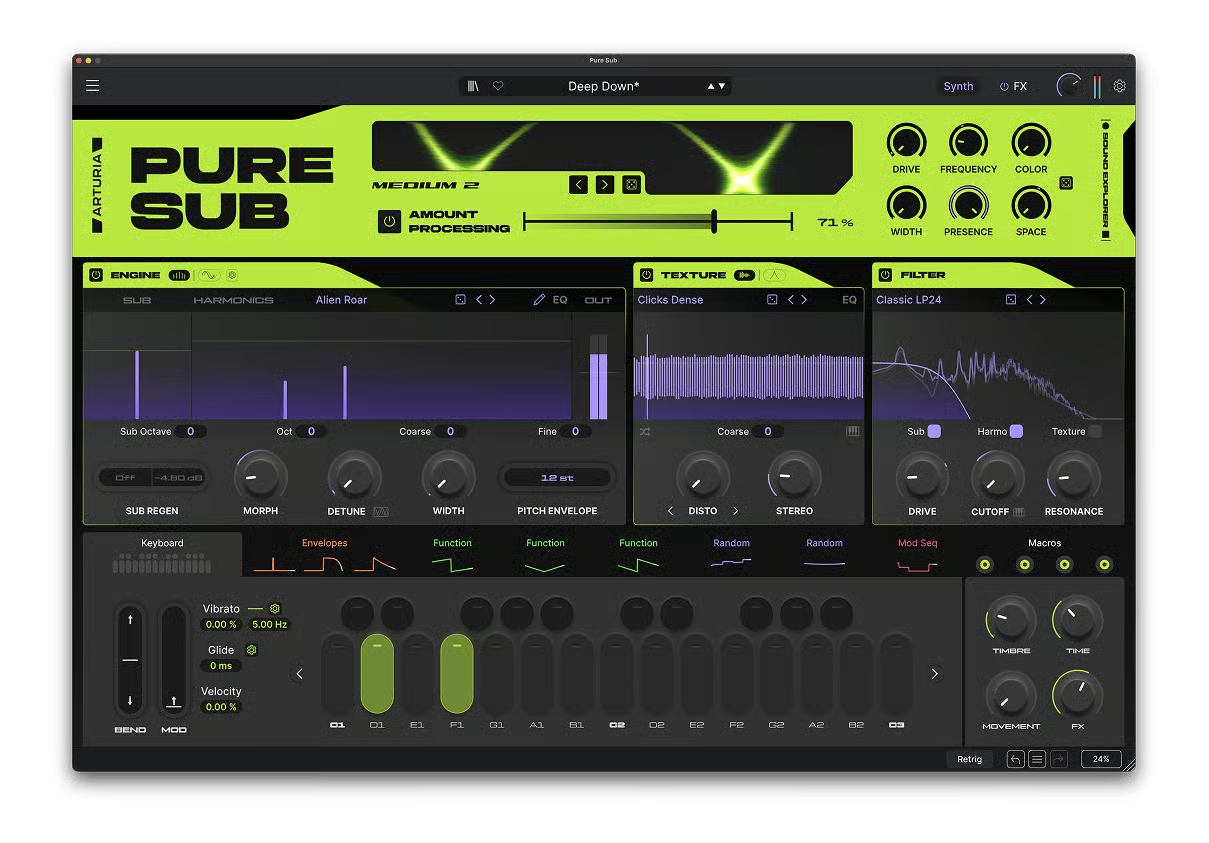
SuperStarSaw starts with two independent 16-saw oscillator banks. That gives producers a fast route into the stacked, detuned tone that has been central to so much of Cook’s production work.
The appeal here is control. Instead of building a supersaw patch from the ground up every time, SuperStarSaw gives you the density first, then lets you push the sound into cleaner harmony, metallic tension, rave leads, basses, chords, and warped glide-heavy movement.
I recently wrote about SuperClassic and its take on the supersaw sound, and SuperStarSaw enters that same conversation from a different angle. This one is less about rebuilding a classic dance synth reference and more about turning a producer-specific sound into an instrument people can actually play.

The Morpher Is the Main Performance Move
The four-corner X/Y Morpher is the part that feels most tied to Cook’s production style. Each corner can hold a different patch state, and producers can move between them in real time.
That turns what would usually require a bunch of automation into a single playable gesture. You can start with a smoother chord shape, drag into something sharper, then pull the sound back before it gets too chaotic.
Cook puts it clearly: “I’ve always been interested in sounds that can flip between harsh and beautiful.” He says the goal was to make something expressive enough to “turn itself inside out with a single click or drag.”
That is the right way to think about this instrument. It is built for movement, not static pad presets.
A. G. Cook’s Pop Language Gets a Dedicated Tool
Cook’s production work has always blurred the line between polished pop writing and synthetic extremes. SuperStarSaw leans into that tension by giving producers a synth that can sound emotional, abrasive, glossy, and unstable without needing a huge session setup.
Our earlier 2021 coverage of A. G. Cook’s Apple vs 7G remix album showed how far his production language can stretch across collaborators and remix contexts. SuperStarSaw brings that same instinct into a single instrument.
The visual side also stays close to Cook’s circle, with logo and Morpher design work from his longtime collaborator Simon Whybray.
SuperStarSaw is available now from Native Instruments for $99 / €99.

Will Vance is a professional music producer who has been involved in the industry for the better part of a decade and has been the managing editor at Magnetic Magazine since mid-2022. In that time period, he has published thousands of articles on music production, industry think pieces and educational articles about the music industry. Over the last decade as a professional music producer, Will Vance has also ran multiple successful and highly respected record labels in the industry, including Where The Heart Is Records as well as having launched a new label with a focus on community through Magnetic Magazine. When not running these labels or producing his own music, Vance is likely writing for other top industry sites like Waves or the Hyperbits Masterclass or working on his upcoming book on mindfulness in music production. On the rare chance he's not thinking about music production, he's probably running a game of Dungeons and Dragons with his friends which he has been the dungeon master for for many years.