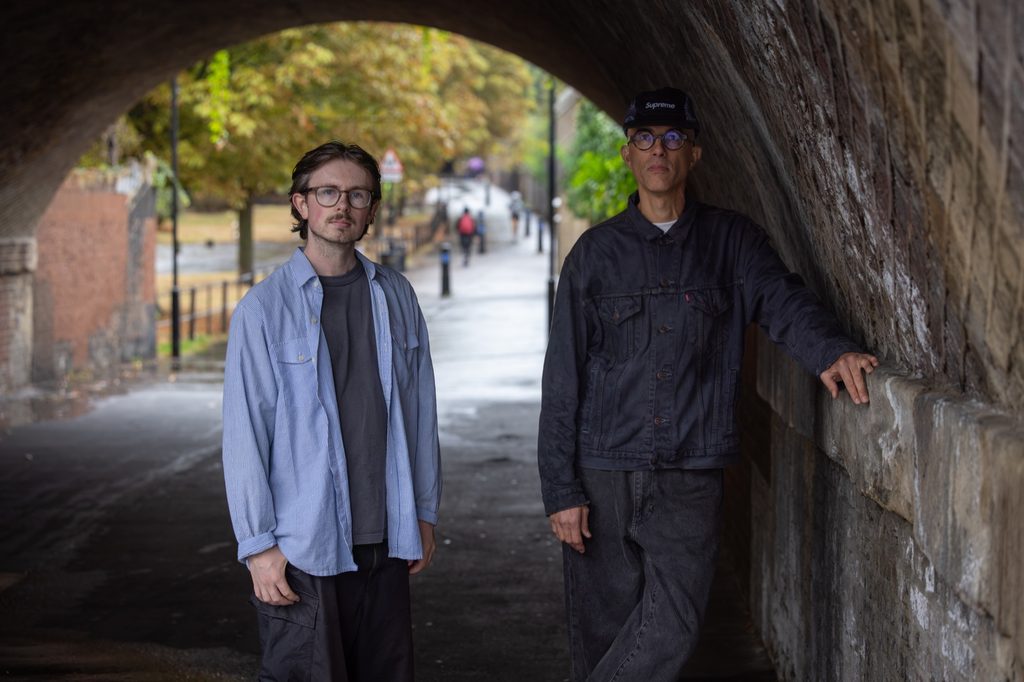
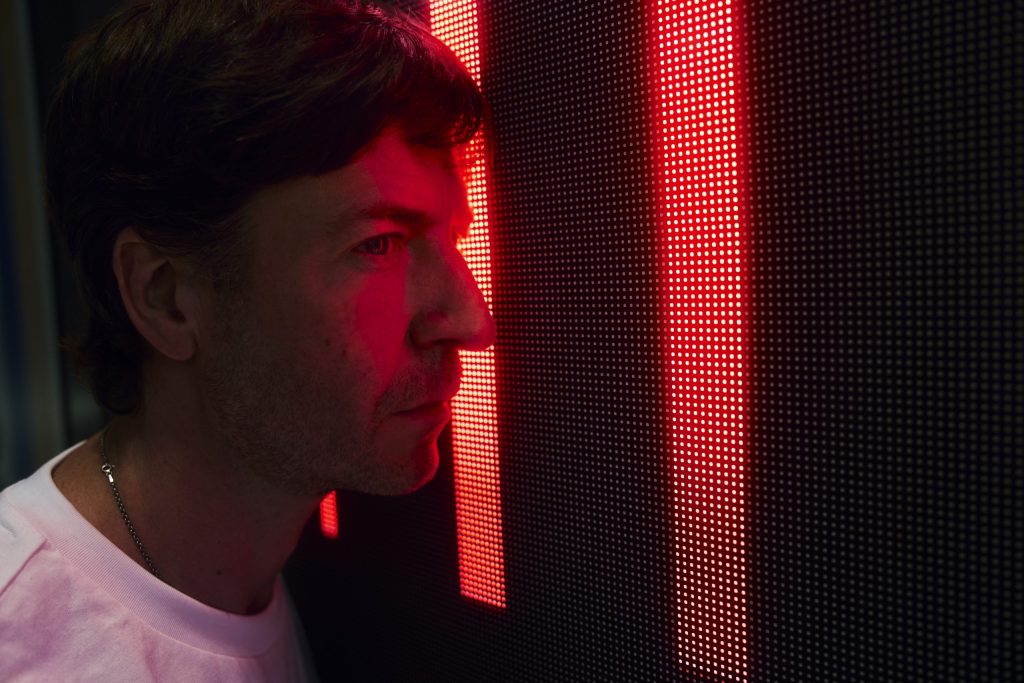
With a history in electronic music stretching back to the days of hard-to-find US techno imports, Amp//Xist has experienced the scene from several different perspectives, including live drumming, studio engineering, DJing and event promotion. His latest EP, Shadow Jerk (Ya Body), released through Nearfield, draws on that experience, combining detailed sound design with an experimental approach to production.
Alongside an exclusive mix for Magnetic Magazine, we caught up with him to discuss the changing relationship between technology and creativity, the value of musical discovery, knowing when to abandon an idea and the personal experiences behind his new project.
You’ve experienced dance music across several very different eras. What’s something about the way people make, release or consume electronic music now that you think has genuinely improved, rather than simply changed?
Hello Magnetic Mag, thanks for having me. This needs answering with a bit of nuance, as some things are a double-edged sword.
We definitely have virtually unlimited power and high-end tools at our disposal for relatively little money in the DAW world. Ableton, and all modern DAWs, are supremely high-end recording studios in our laptops. There are no excuses now. I can write, mix and master in Ableton. It’s incredible, and I’ve probably only explored and utilised 20% of it.
I used to have loads of hardware, from an Atari ST way back, with Akais and Junos, Sequentials, outboard compressors, a huge eight-bus desk and a fiddly Fostex digital eight-track that was a nightmare. Give me Ableton any day.
Having said that, I am window-shopping for hardware again now. Modern sequencers, sampling grooveboxes, etc., look brilliant, and ultimately I want to take my music live for that visceral crowd experience, so some hardware seems the way to go. And as Octave One said to me in a message, hardware “breathes”. So equipment choice, power and accessibility have improved. But remember, the dancefloor does not care how a record is made, as long as it moves feet and minds.
As for releasing, again, we can do it all ourselves quite easily, with one or two vital partners, PR, etc. The double edge of that is the sheer volume of extremely high-quality material being released. One has to work on being seen and heard, and strive for something a bit different and fresh.
The tech platforms are obviously an easy way to consume music. Bandcamp is great. I am wary of certain apps with algorithms that may be forcing a change, not for the best, and potentially moving some music away from the essence that makes it work on the dancefloor. I’m certainly not alone in that thought.

There’s a lot of detail in these tracks that might go completely unnoticed on a first listen. Do you care whether somebody consciously hears those details, or is it enough that they affect how the record feels?
I spend many hours working on the sounds, details and subtle stuff to try to get it right and create that good feeling. So if someone picks up on that, great, it’s worked.
At the same time, if a listener hears more and more after numerous plays, that must hopefully be interesting and engaging for them. Ultimately, though, the feel and how it works on a dimly lit dancefloor with smoke machines and strobes is my primary focus.
The title Shadow Jerk (Ya Body) is pretty suggestive, but also slightly cryptic. Where did it come from, and how closely do titles tend to relate to the music for you?
Thank you. I like that you have a curiosity about the EP title. I meant to spark that. Should I solve the cryptic message for you, though? The fact that you find it suggestive means that you are putting your own thoughts into it. Maybe I shouldn’t disrupt that.
This EP title relates to me arriving at the point I am now at with Amp//Xist. It came from reflecting on my inner journey over the last three or four years, after I had, shall we say, a period of mental strife that culminated in an episode which left me curled up in a ball at the side of the M25 motorway near London. Well, you asked! That is also where my artist name, Amp//Xist, came into being.
The track titles either relate directly to the production of the track, as in ‘Resodrum’, or are a play on words, mixing technical terms with my feelings about the world and music, as in ‘Diffusion Network’. Or they can be, as with a future planned release, just a fun, weird title with no deeper meaning.
After this long around electronic music, are you still capable of being completely wrong about a track you’ve made? Have you had records you were convinced worked that later fell apart for you, or things you initially dismissed that turned out to be much better than you thought?
I don’t have a prolific back catalogue at all. Much of my time around music has been spent live drumming with various dance and bass music outfits at festivals, putting on events and parties, engineering in studios, a bit of failed label activity and some DJing.
I’m content with everything I’m producing as Amp//Xist, for sure. I’d say that the tracks I think are maybe not so hot are sometimes the ones that are best received by listeners. I write a track to give me, and others, that feeling you have when you’re taken somewhere on the dancefloor, be it in the club or in your kitchen.
I’m pretty good at knowing when a track isn’t coming together because I’ll observe myself working too hard to get the essence happening, which signals to me that it’s going in the wrong direction. I’m not precious about an idea I’ve spent a week working on. I’m unattached and will brutally bin half of a track or arrangement, a bassline or lead riff, and rebuild with fresh ideas.
Electronic music production gives you almost unlimited possibilities to edit, refine and correct things. How good are you at leaving something alone? Is there a point where making a track technically “better” starts taking something important out of it?
You are right, and it can show easily. Technicality must always come second to, and serve, the vibe of a track.
I’m not a technical master anyway, so invariably my tracks will contain stuff that more professional ears may criticise. I don’t look for pitch perfection. I will actively disrupt pitches, not so it’s glaringly obvious, but so that it adds weirdness underneath, for instance.
My ears are smashed, and I have various tinnitus symptoms and hearing damage from being on extremely loud festival stages with distorted in-ear monitors, and spending entire nights with my head shoved up a bass bin at a club or free party. So my mixing, I would suggest, is not technically perfect.
On the other hand, I can go deep just to get one aspect of a production right because it will be integral to the vibe I want to create and the wholeness of the track.
You’ve lived through periods when underground dance music was genuinely difficult to find, followed by an era in which almost everything is instantly accessible. Has that abundance changed your relationship with discovery? Do records still have the chance to become as important to us when the next one is always immediately available?
Yeah, I started with buying US techno imports and white labels. They were hard to get, and only a handful would make it over to select vinyl shops in the UK. They would be exclusive and would garner jealousy and love from friends. You were a god, haha!
But that was so exciting. There was mystery around the music. I think now, with everything on tap, maybe it’s not so exciting? I do see people releasing limited-edition vinyl still, and that’s good. Or maybe you will only get certain digital tracks as a subscriber to the artist. So obviously people still want exclusivity, possibly even more so now.
I am starting out with a new project, so I want the whole world to hear it, but at some point I should have tracks available to those more in the circle.
Just to contradict myself, there is so much music being released that one still has to work to uncover something special. So in that regard, if you dig deep, you’ll find gems.
I won’t be releasing tons of music weekly, far from it. I want to keep space between releases. I know that gets followers on the apps, but it feels a bit fast food, doesn’t it? Each to their own, of course.
After decades of listening to dance music, what still catches you off guard? Not necessarily a particular artist or record, but what does music have to do now to make you stop and think, “I haven’t heard that before”?
I think sound design is one aspect that can still push boundaries. As I said, I’m not a technical master. I regularly hear something new that stops me in my tracks and sends a shiver of delight through me, and causes me to ask, “How on earth have they done that amazing thing?” I love that. And I’m jealous, in a smiley fashion.
Also, blurring boundaries between genres, which I hope I’m doing, can bring freshness. Those who are not chasing genres or trends will come up with the surprising elements, don’t you think?
Shadow Jerk (Ya Body) is out now on Nearfield