Image-Line has upgraded FL Studio 2026 is available now as a free update for registered users. with a rebuilt FLEX, added automatic cloud backup, expanded Loop Starter, introduced deeper in-project help through Gopher, and added Transmitter as a new sound-design plugin for transient and sustain processing.
That combination matters because FL Studio users often move quickly. Ideas can start in the Piano Roll, a sample loop, a FLEX preset, or a recorded audio clip, and the best updates tend to keep that early motion from turning into file management, routing cleanup, or recovery work. FL Studio 2026 is clearly aimed at that middle zone between starting an idea and keeping the session organized enough to finish it.

FL Studio 2026 Rebuilds FLEX With Faster Browsing and Lower CPU Use
FLEX gets the central update here. FL Studio’s preset-based instrument has been fully rebuilt for the first time since its 2019 release, with a deeper browser, faster previewing, full-pack search, advanced filters, and genre categories.
That is useful because preset browsing is one of the easiest places for producers to lose time. A good sound can start a track, while a bad search process can drain the idea before the first section is even built. FLEX now gives users a cleaner way to search across packs and narrow options faster, which should make the instrument more useful during the sketching stage.
The updated FLEX engine also reduces CPU usage for new and future packs. That matters most on larger sessions, where a producer may want several playable sounds open without freezing tracks early. Image-Line is also adding the Core Series, which brings eight free packs and more than 200 presets to all FL Studio users.
Plugin artwork now appears at full size, which is mostly a presentation change, though it also makes FLEX feel less like a utility browser and more like a dedicated instrument.

FL Cloud Project Backup Protects FL Studio Sessions Across Machines
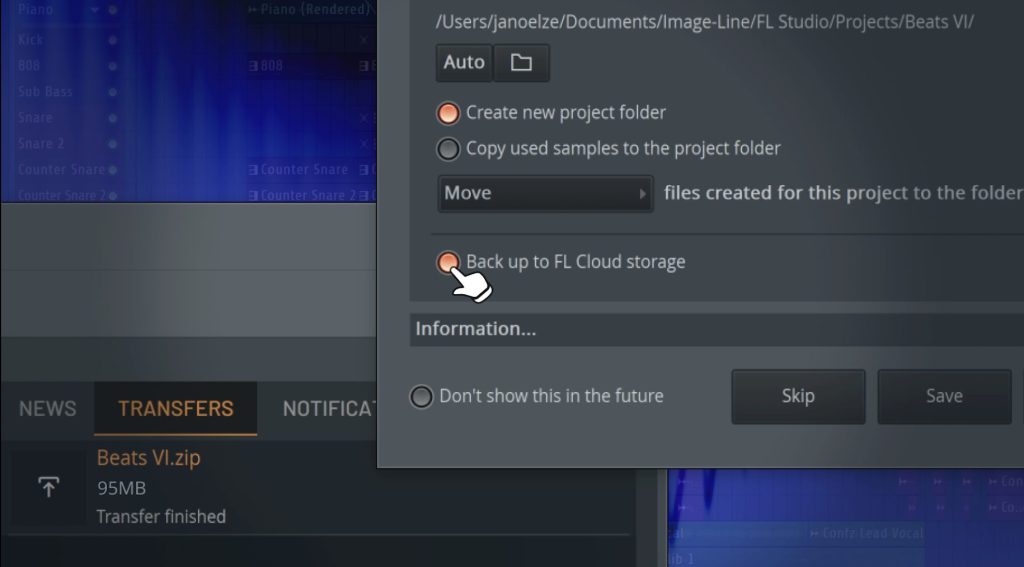
Project Backup is one of the most practical additions in FL Studio 2026. Every time users save, projects can be backed up to FL Cloud Storage. The backups are encrypted, kept private, and Image-Line says they are never used to train AI.
The storage tiers are clear: 500 MB in Free, 5 GB in Plus, and 1 TB in Pro. That gives producers a built-in safety net without building a separate backup system around folders, drives, or third-party cloud tools.
This matters because losing a session usually has nothing to do with creativity. It is a file-management failure, a drive issue, or a machine change at the wrong time. FL Cloud Project Backup turns that risk into a regular part of the save process.
For producers thinking about what happens after a project is finished, my article on why mastering matters in a release workflow covers the last stage from another angle: translation, level control, and the final version people actually hear.
Gopher Adds In-Project Assistance for Routing, Levels, Piano Roll Ideas, and More
Gopher is expanding from a question-answering assistant into a tool that can perform actions inside FL Studio projects. It can organize tracks, route mixer channels, set levels, adjust plugin parameters, generate Piano Roll content, highlight interface features, create VFX scripts, and handle other project tasks.
The key value is speed. A newer user can ask for help and see the relevant part of the interface, while an experienced producer can offload routine cleanup or setup work. That could make Gopher useful in the unglamorous parts of production: sorting tracks, building routing, and setting up the session so the actual music work can keep moving.
Image-Line also states that Gopher does not train on user data. That detail matters because AI tools inside creative software need clear boundaries around private work, saved projects, and user files.
Loop Starter, Chord Panel, Audio Logger, and Clip Gain Make Daily Production Faster
FL Cloud subscribers also get an expanded Loop Starter library with more loops and one-shots across genres. That gives users more starting points inside the DAW, which should help when a session needs a quick spark instead of a blank Piano Roll.
The Chord Panel now provides real-time note and chord detection in the Piano Roll, which helps users stay in key and test new chord progressions without stopping the session to check theory. Piano Roll notes can also be labeled, adding visual cues for melodic changes, arrangement notes, or performance reminders.
Audio Clip Gain controls are another practical update. Users can adjust gain directly on individual audio clips or across groups of clips, which makes level management faster before the mixer stage.
Audio Logger may be the sleeper feature. FL Studio now captures the last 60 seconds of master output, which means a producer can recover an accidental idea even when recording was not armed. For anyone who has lost a quick jam, that feature solves a real problem.
FL Studio 2026 is available now as a free update for registered users.

Will Vance is a professional music producer who has been involved in the industry for the better part of a decade and has been the managing editor at Magnetic Magazine since mid-2022. In that time period, he has published thousands of articles on music production, industry think pieces and educational articles about the music industry. Over the last decade as a professional music producer, Will Vance has also ran multiple successful and highly respected record labels in the industry, including Where The Heart Is Records as well as having launched a new label with a focus on community through Magnetic Magazine. When not running these labels or producing his own music, Vance is likely writing for other top industry sites like Waves or the Hyperbits Masterclass or working on his upcoming book on mindfulness in music production. On the rare chance he's not thinking about music production, he's probably running a game of Dungeons and Dragons with his friends which he has been the dungeon master for for many years.