
Best granular plugins for electronic music are worth covering on their own because granular processing solves a specific kind of production problem. Sometimes I do not need another reverb, another delay, or another synth preset. I need one sound to break apart, smear, freeze, repeat, stretch, or turn into a new layer that still remembers where it came from.
That is where granular tools become valuable for electronic music, especially when a track needs motion without adding another lead line. For this list, I am pulling from plugins I have reviewed on Magnetic and How It Was Made features, where artists talked about granular tools in real sessions. Arturia EFX Fragments is the most direct granular processor here, while Lunacy BEAM and Taps & Portals move through granular-adjacent delay, feedback, and modular FX design.
BLEASS Spectral Resonator and Soundtoys Crystallizer stretch the category slightly, though both can turn everyday sources into new harmonic or pitched material. I would not treat these as interchangeable because each one changes the source in a different way.
| Plugin | Main role | Best fit | Why I am including it |
|---|---|---|---|
| Arturia EFX Fragments | Dedicated granular processing | Producers who want to chop, freeze, smear, and rebuild audio | It is the most direct granular tool here and has clear artist workflow support. |
| Lunacy BEAM 2.0 | Modular multi-effect processing with granular design options | Producers who want a visual sound-design environment | It gives granular processing a larger FX system around it. |
| Lunacy Taps & Portals | Creative delay and feedback design | Producers who want repeats, timing, and feedback to become part of the writing | It turns delay into a more arranged and textural process. |
| BLEASS Spectral Resonator | Spectral harmonic processing | Producers who want source audio to become playable harmonic material | It is not strictly granular, though it sits in the same experimental processing lane. |
| Soundtoys Crystallizer | Pitch-shifted granular reverse echo | Producers who want reverse-pitched fragments, shimmer, and strange echo movement | It remains one of the most recognizable granular-adjacent effects for electronic production. |
Arturia EFX Fragments
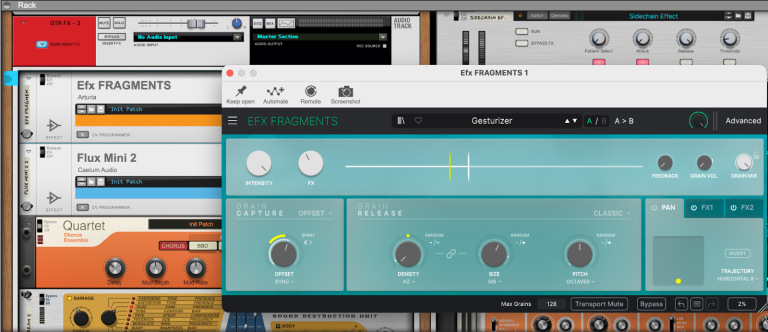
Arturia EFX Fragments is the most direct fit for this keyword because it is built around granular processing as the main idea. In Lecx Stacy’s How It Was Made feature for “With You, I’d Be Closer To God”, he called EFX Fragments his favorite plugin at the time and explained that it picks part of a sound, breaks it up, overlaps it, and plays it back in altered fragments.
That is the granular use case in plain language.
He also talked about running several instances, freezing the result, chopping it again, and automating density and size to create choppier, more atmospheric textures. Compared with Crystallizer, EFX Fragments offers more direct control over the granular process rather than building the effect around reverse-pitch echo. Compared with BEAM, it is also more focused because it does not ask you to build inside a broader modular environment.
I would use it on guitars, vocals, synth pads, field recordings, and one-shot samples that need to become part of a new track. If a producer wants a single granular plugin that clearly fits the category, this is the first one I would try.
Snag Arturia EFX Fragments Here
Lunacy BEAM 2.0

Lunacy BEAM 2.0 is the modular processing pick, and I would include it because granular effects often work better when they are connected to other movement, filtering, and parallel paths. In my BEAM review, the main appeal was the way Lunacy turned effects into a visual system where the routing and interaction felt central to the result. BEAM is not as direct as EFX Fragments if all you want is grain size, density, and frozen fragments.
It is better when the granular idea needs to live inside a larger effects chain with convolution, parallel processing, modulation, and other treatments happening around it. Compared with Taps & Portals, BEAM feels less like a delay tool and more like the larger sound-design space that can host different kinds of movement. Compared with BLEASS Spectral Resonator, it is also less focused on harmonic partials and more focused on routing, texture, and interaction.
I would use it when I want a sound to go through several stages of transformation without stacking a messy chain of separate plugins. It fits the electronic producer who likes experimenting with processing order as much as individual knobs.
Snag Lunacy BEAM 2.0 Here
Lunacy Taps & Portals

Lunacy Taps & Portals sits at the edge of this category because it is framed around delay and feedback rather than pure granular synthesis. I still want it here because in my Taps & Portals review, I kept finding myself using it in places where normal delay would have felt too plain. The point was not adding repeats for the sake of repeats; it was shaping timing, spacing, placement, and motion as part of the composition.
Taps gives the multi-tap side a more controlled rhythm, while Portals expands BEAM’s feedback structure in a way that can move into experimental territory quickly. Compared with EFX Fragments, this is less about grain-level destruction and more about turning delay behavior into arrangement material. Compared with Crystallizer, it is more modern and more editable, especially when the goal is deliberate placement rather than an obvious reverse-pitch effect.
I would use it on sparse synth parts, vocal fragments, guitar details, and percussive hits that need to echo with intent rather than wash behind the track. This is the pick I would reach for when the sound already works, but the space around it needs to become part of the hook.
Snag Lunacy Taps & Portals Here
BLEASS Spectral Resonator
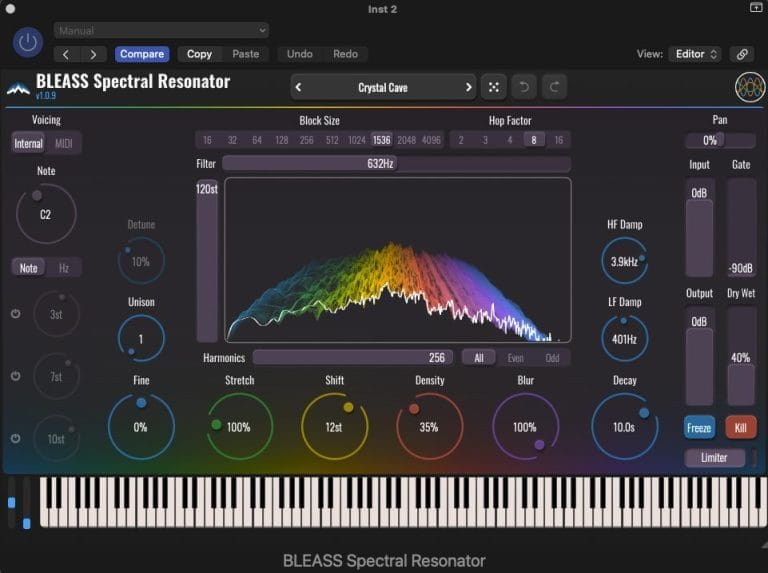
BLEASS Spectral Resonator needs a caveat because it is a spectral processor, not a dedicated granular plugin. I am including it because Nick Wax’s BLEASS Spectral Resonator review made a strong case for it as a tool that transforms everyday sounds into harmonic texture without forcing the source to disappear. The plugin analyzes incoming audio and generates banks of harmonic partials, with control over stretch, shift, density, blur, detune, unison, and filtering.
That puts it in a different lane than EFX Fragments, which is more about slicing and reassembling grains. It also differs from Crystallizer because the result can feel like a playable harmonic layer rather than a pitched echo trail. I would use it when a vocal, guitar, drum hit, or synth part needs to create a musical bed underneath itself. The MIDI control side is why it belongs in an electronic music article: the source audio can trigger material that follows the harmonic input. I would frame it as the spectral caveat pick for producers seeking transformation, movement, and harmonic control without a purely granular workflow.
Snag BLEASS Spectral Resonator Here
Soundtoys Crystallizer
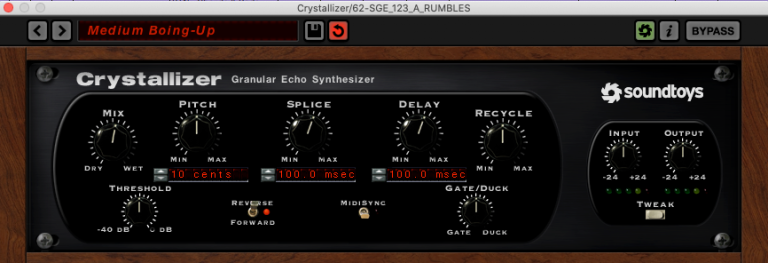
Soundtoys Crystallizer is the classic granular-adjacent pick because it combines pitch shifting, reverse echo, and granular slicing in a way producers still recognize immediately.
In Robin Thurston’s How It Was Made feature for “Equinox”, he described Crystallizer as a creative effect that can transform sounds into something shimmering and textured through pitch shifting and granular echo. That lines up with my own sense of where Crystallizer fits: it is not the most surgical granular processor, though it can make a simple part feel like it has been bent into a new role.
how2fly made a similar point in his How It Was Made feature for “Hold You”, where he said Crystallizer chops audio into reversed, pitched, and repeated fragments. Compared with EFX Fragments, Crystallizer is less about granular design depth and more about a specific reverse-pitched echo identity. Compared with Taps & Portals, it is less about the timing of arranged delays and more about a recognizable processing color.
I would use it on synth leads, guitars, vocal tails, and transition details when the sound needs a clear pitch-shifted smear around it. It can take over quickly, so I usually prefer it as a highlighted moment rather than a permanent insert across an entire bus.
Snag Soundtoys Crystallizer Here
Honorable Mentions I Would Keep On The Radar
These tools also sit near the granular and experimental processing category, though I would keep them outside the main list until I have enough review time or stronger Magnetic source material.
| Plugin | Why it is on my radar | Best fit |
| Output Portal | A well-known granular processor with a polished interface and many preset-led starting points | Producers who want instant granular movement without building from scratch |
| Imaginando FRMS | A granular and FM hybrid synth built around layered sound design | Producers who want granular synthesis as the source rather than an insert effect |
| MeldaProduction MGranularMB | A multiband granular processor with deeper control | Producers who want detailed granular work across separate frequency ranges |
| Sugar Bytes Graindad | A granular effect aimed at real-time transformation and experimental playback | Producers who want performance-driven grain processing |
Wrapping Things Up
Best Granular Plugins For Electronic Music should be chosen based on how much control you want over the source. Arturia EFX Fragments is the most direct pick for true granular chopping, freezing, and recombination. Lunacy BEAM 2.0 is the better option when granular-style processing needs to live inside a larger modular effects system.
Taps & Portals is the delay-and-feedback pick, especially when timing and spacing need to feel as if they were written into the track. BLEASS Spectral Resonator is the caveat choice for producers who want harmonic transformation rather than grain-level editing. Soundtoys Crystallizer remains the classic reverse-pitch echo option, especially for moments that need a clear processed identity.
The artist notes from Lecx, Stacy, Robin Thurston, and how2fly help this article avoid sounding like a generic sound-design roundup by showing how these tools fit actual records. If I were building a focused granular toolkit from this list, I would start with EFX Fragments and Crystallizer, then add BEAM or Spectral Resonator, depending on whether I wanted deeper routing or harmonic transformation.

Will Vance is a professional music producer who has been involved in the industry for the better part of a decade and has been the managing editor at Magnetic Magazine since mid-2022. In that time period, he has published thousands of articles on music production, industry think pieces and educational articles about the music industry. Over the last decade as a professional music producer, Will Vance has also ran multiple successful and highly respected record labels in the industry, including Where The Heart Is Records as well as having launched a new label with a focus on community through Magnetic Magazine. When not running these labels or producing his own music, Vance is likely writing for other top industry sites like Waves or the Hyperbits Masterclass or working on his upcoming book on mindfulness in music production. On the rare chance he's not thinking about music production, he's probably running a game of Dungeons and Dragons with his friends which he has been the dungeon master for for many years.