Table of Contents
Learning how to extract vocals from a song for remixing, and having the best tools for the job, has become one of those production skills that feels way less nerdy and way more useful once you actually start using it.
A few years ago, if you wanted a clean acapella, you were usually stuck waiting for an official remix pack, digging through old promo pools, checking whether a label had uploaded a vocal stem somewhere, or trying some sketchy phase-cancellation trick that only worked when the instrumental lined up perfectly.
Most of the time, it did not. You would end up with a thin vocal, a bunch of cymbal wash, and enough leftover music in the background that the remix felt messy before you even wrote a new chord progression.
AI stem extraction has changed that in a real way, and the main reason I think it matters is that it lets producers get ideas moving faster. You can hear a vocal, wonder whether it would work over a different tempo, pull it into your DAW, separate it, and start testing the idea while the inspiration is still fresh.
That does not mean every extraction will be clean enough to release, nor does it mean rights magically stop mattering, but it does mean the process is now much closer to normal production work.
Three Biggest Takeaways
- AI vocal extraction is useful because it gets ideas moving faster. Tools like LALAL.AI can help producers pull a usable vocal from a finished track without waiting on an official remix pack, which makes it easier to test remix ideas while the concept still feels fresh.
- The source song matters as much as the extraction tool. Clean vocals, sparse arrangements, high-quality files, and less overlap between the voice and instrumental usually lead to better acapellas, while dense choruses, loud cymbals, heavy guitars, and stacked backing vocals can create artifacts.
- Extracted vocals still need producer judgment. A separated vocal may need EQ, de-essing, timing edits, and arrangement support, and producers still need to think about rights before uploading, monetizing, or distributing a remix that uses a commercial vocal.

That is where I’ve found that LALAL.AI fits into the conversation since it’s has been around as an AI audio separation tool for a while, and it recently won the People’s Voice Webby Award for Best Use of AI & Machine Learning in the Apps, Software & Immersive category. The biggest benefit for producers is that they now have a VST plugin, so the stem extraction process can happen much closer to the DAW session, rather than feeling like a separate browser-based errand.
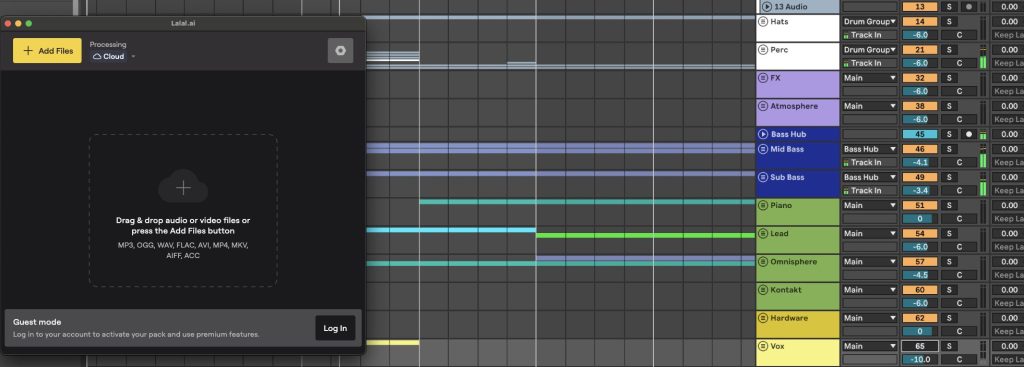
For remixing, that is the coolest part. You are not trying to make AI do the creative work and instead you are trying to get a usable vocal into the session faster, then make actual production decisions around it for your bootlegs, flips, and remixes

What Does Vocal Extraction Actually Do?

When people talk about extracting vocals, they usually make it sound like the vocal is sitting inside the track as a separate file, and the software is simply pulling it out. That is not really what is happening.
A finished song is usually a stereo file in which the vocals, drums, bass, synths, guitars, effects, backing parts, and mastering are already printed together. AI stem separation examines the finished file and tries to identify which parts are likely vocal and which are instrumental.
The better the source file and the cleaner the original mix, the better the result tends to be.

That is an important expectation to set early because a vocal extraction is rarely perfect, and oftentimes, you might get a little reverb from the original record, small bits of cymbal bleed or other percussion, some roughness around esses, or a weird artifact when the vocal overlaps with a synth or guitar.
That does not automatically make the vocal unusable. In a remix context, the question is not always, “Is this vocal perfectly taken out?” The better question is, “Can I make this vocal feel like it belongs inside a my own new track?”
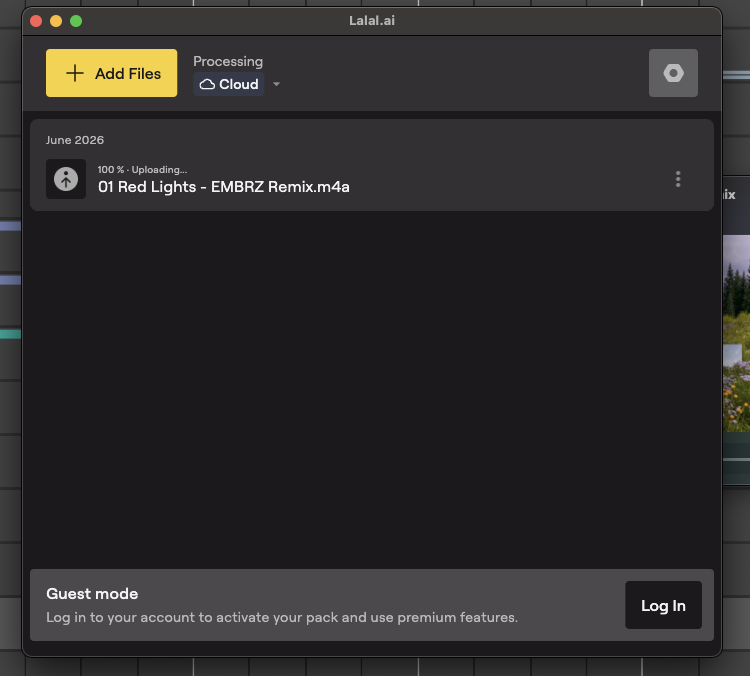
Sometimes the answer is yes. Sometimes the answer is yes, if you use shorter phrases. Sometimes the answer is no, and you move on before wasting two hours trying to save a bad source file.
That is why I like thinking of vocal extraction as a creative filter. It tells you pretty quickly whether a remix idea has legs.

LALAL.AI Any Good?
The big thing that drew me to LALAL.AI is pretty straightforward, but also the fact that it allowed for more stems to be extracted than just Ableton’s stock four (separated into the four buckets below, which doesn’t give you much room compared to LALAL.AI’s shown in the picture earlier on in this piece)
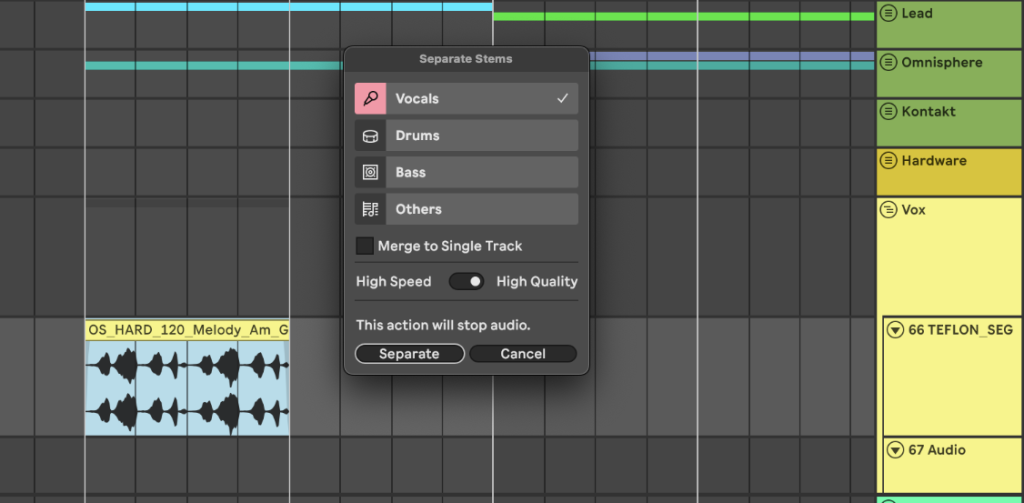
It is built around audio separation, and the platform can split vocals, instrumentals, drums, bass, piano, guitar, and other parts from audio or video files. It also has voice cleaning, echo and reverb removal, voice changing, voice cloning, and lead/backing vocal separation tools, so it is broader than a basic vocal remover.
For producers, the VST plugin is the piece that makes this feel more useful in a real session. Browser tools are fine, and sometimes they are still the easiest option, but they can interrupt the flow. You upload the file, wait, download the result, drag it back into the DAW, label it, line it up, and only then do you find out whether the vocal works for the remix idea.
The plugin shortens that loop entirely, though, and has been a real game-changer. You can pull the track into your DAW, separate the vocal, audition the result, and start arranging around it without bouncing between as many steps. That matters because remix ideas are often fragile early on. The first few minutes are usually where you figure out whether the vocal sits over your groove, whether the key actually works, and whether the hook has enough space to carry a new version.
The point is not that a plugin makes the result magically cleaner. The point is that it makes the process quicker, and speed matters when you are trying to test ideas.
How To Extract Vocals From A Song For Remixing
Start with the best audio file you can get. A WAV, AIFF, or high-quality download will usually give the separation tool more information to work with than a low-quality MP3. If you start with a rough file, the extraction can still work, but you are making the tool fight against compression artifacts before it even starts separating the vocals.
Bring It To The DAW
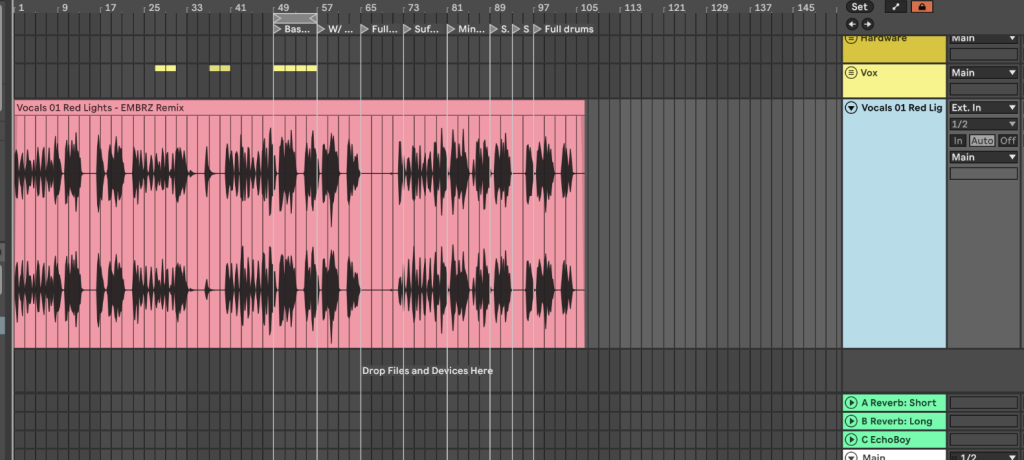
Once you have the file, bring it into your DAW and make sure it lines up from the very first downbeat or first clear transient. If you are using the LALAL.AI VST plugin, load it in the session, choose vocal separation, and let the tool process the track.
If you are using the browser version instead, upload the file, choose the vocal-and-instrumental split, download the vocal stem, and then drag it back into the project.
Make Sure It Actually Sounds Good
After you have the vocal, listen to the entire thing before you start building the remix.
This step sounds boring, and it is the step people skip, but it saves time. The hook might sound great while the verse has obvious artifacts, or the first chorus might be clean while the final chorus has too much crash cymbal bleed. You want to know that before you build your whole arrangement around a section that falls apart later.
Find The Tempo

Next, find the tempo. If the original song was produced to a grid, this is usually easy.
Set your DAW tempo, warp the vocal, and check that the main phrases land correctly every eight or sixteen bars. If the song has live timing or tempo drift, you may need to add warp markers manually. Do that before you add drums, bass, or chords, because timing problems become harder to fix once the arrangement is crowded.
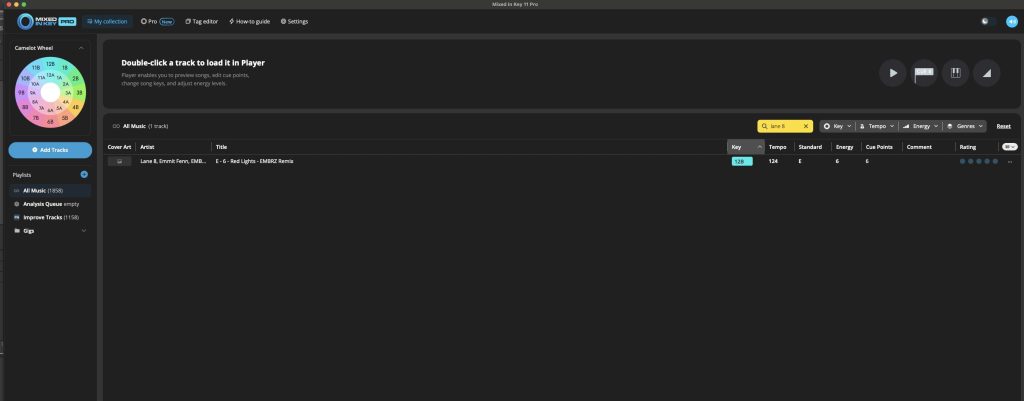
Another tip I actually like doing here is using something like Mixed In Key to get the tempo and the key (shown below). That software has super powerful detection and labeling algorithms, and I let it do al ot of the heavy lifting.
Find The Key
Then figure out the key.
You can use a key detection tool, a piano roll, or your ear. I would still check it manually, because vocal melodies often include notes outside the basic key, and automated tools can get confused by dense songs. Once you know the key, start with simple chords and see how much harmonic movement the vocal can handle. If you’re using something like Mixed In Key mentioned above, it tackles this in the same step.
Clean It Up!
From there, clean the stem lightly. I would usually start with a high-pass filter, then use a little subtractive EQ if there is boxiness or leftover low-mid clutter. A de-esser can help if the separation made the consonants too sharp. Compression can even out the phrase level, but heavy compression can also pull the artifacts forward, so go easy at first.
Once the vocal is cleaned up, build around it.
Do not make a full instrumental and then force the acapella on top. Mark the sections, find the phrases you actually want to use, and let those parts decide where the remix opens up, where it pulls back, and where the hook needs the most room.
Why You Would Want To Extract Vocals In The First Place
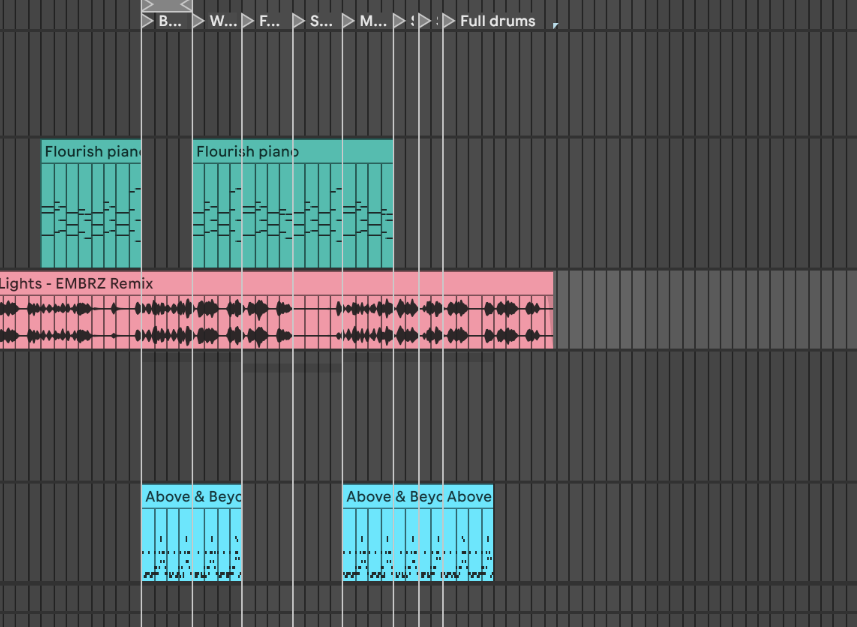
The obvious answer is remixing, but that is only part of it.
Extracting vocals gives you a fast way to study how records are put together. When the lead vocal is separated from the full mix, you can hear details that get buried in the finished version. You can hear where the doubles enter, how much tuning is being used, where the delay throws happen, how compressed the lead is, and how the vocalist phrases around the groove.
That is valuable even if you never release the remix. Dropping a known vocal over your own instrumental can tell you a lot about your production. If the vocal cannot find space, your arrangement might be too busy. If the vocal feels flat over your chords, the harmony might not be supporting the melody. If the vocals sound disconnected, your groove or tempo might be off.
Acapellas are also useful for DJ edits.
You can take a short hook, a verse phrase, or a recognizable line and create a transition tool or live edit that fits your sets better than the original track. This is especially useful when the original song is too slow, too radio-structured, or too far outside the tempo range you usually play.
For producers, extracted vocals can also be used as writing prompts. Sometimes you do not need the whole vocal. You might only need one line to build a new idea around. You can chop it, pitch it, reverse it, resample it, or use it as a placeholder while writing an original topline later.
The key is knowing what role the vocal is playing.
Is it the lead of the remix, a short hook, a background texture, a DJ tool, or a reference for learning? Each use case needs a different level of cleanliness.
Where To Find Good Songs To Extract Vocals From

The best songs for vocal extraction usually have a great lead vocal, a clean mix, and enough separation between the voice and the rest of the production. Sparse verses are often easier to separate than huge choruses, and a dry vocal usually extracts better than a vocal covered in reverb, delay, distortion, or wide backing layers.
Modern pop, R&B, house, indie dance, and vocal electronic records can all work well, especially when the vocal is centered and the instrumental is not fighting it in the same frequency range. Songs with loud guitars, dense cymbals, stacked harmonies, or noisy masters can be harder because the AI has to make tougher decisions about what belongs to the vocal.
You can also use public domain recordings, Creative Commons material, or royalty-free sample packs, but read the license before assuming you can release the result. Some files allow commercial use, some require attribution, and some do not allow derivative works. AI extraction does not erase those terms.
For private practice, study, and internal remix sketches, commercial songs can be useful learning material.
For uploads, monetized content, official distribution, or anything tied to a brand, you need to treat the rights side seriously, and while I am no lawyer, I hope I can safely advise you against ever uploading these bootleg remixes and flips onto commercial DSPs where you can make money from them. A separated vocal from a released song is still tied to the original recording and composition.
Final Thoughts
Learning how to extract vocals from a song for remixing is less about one button and more about building a better remix workflow. The separation tool gets you the raw material, then your taste, editing, arrangement, and mixing decide whether the idea actually works.
LALAL.AI is such a great option here because it gives producers a quick way to separate stems, and the VST plugin makes the process feel more like normal DAW work. That matters when you are testing a remix idea, and you want to know quickly whether the vocal has enough potential to build around.
The best results come from picking the right source file, checking the vocal before committing to the remix, cleaning it lightly, and arranging around the phrases that actually work. Some extracted vocals will be clean enough for full remixes. Some will be better for short edits, chops, DJ tools, or study sessions. Some will tell you within five minutes that the song is not worth forcing.
That is still a win. The real value of AI stem extraction is speed, and speed lets you test ideas, reject bad ones faster, and spend more time on the remix concepts that actually have a chance.

Will Vance is a professional music producer who has been involved in the industry for the better part of a decade and has been the managing editor at Magnetic Magazine since mid-2022. In that time period, he has published thousands of articles on music production, industry think pieces and educational articles about the music industry. Over the last decade as a professional music producer, Will Vance has also ran multiple successful and highly respected record labels in the industry, including Where The Heart Is Records as well as having launched a new label with a focus on community through Magnetic Magazine. When not running these labels or producing his own music, Vance is likely writing for other top industry sites like Waves or the Hyperbits Masterclass or working on his upcoming book on mindfulness in music production. On the rare chance he's not thinking about music production, he's probably running a game of Dungeons and Dragons with his friends which he has been the dungeon master for for many years.