Cars used to have a built-in soundtrack before the stereo ever turned on.
The engine, the road, the vibration, the gear changes, and the physical feel of movement all shaped the experience. EVs changed that equation. They are quieter, smoother, and more software-driven, which leaves automakers with a new question: what should a car sound like when the old mechanical cues disappear?
LALAL.AI and Impulse Audio Lab are answering with music instead of simulated engine noise.
The two companies have partnered on “drivable music,” a new approach that uses AI stem separation and real-time vehicle data to turn existing songs into interactive soundtracks. Instead of playing a track passively in the background, the car can reshape musical elements as the driver accelerates, turns, signals, and moves through the road.
That is the interesting part here. This is not only another in-car audio feature. It points toward a future where the vehicle becomes part of the arrangement.
Stem separation is what makes the idea scalable
The old problem with interactive music was content.
If every drivable soundtrack had to be composed from scratch, the idea would stay limited to demos, concept vehicles, and premium brand activations. A few custom scores might work, but the average driver would not be able to take the music they already love and turn it into something responsive.
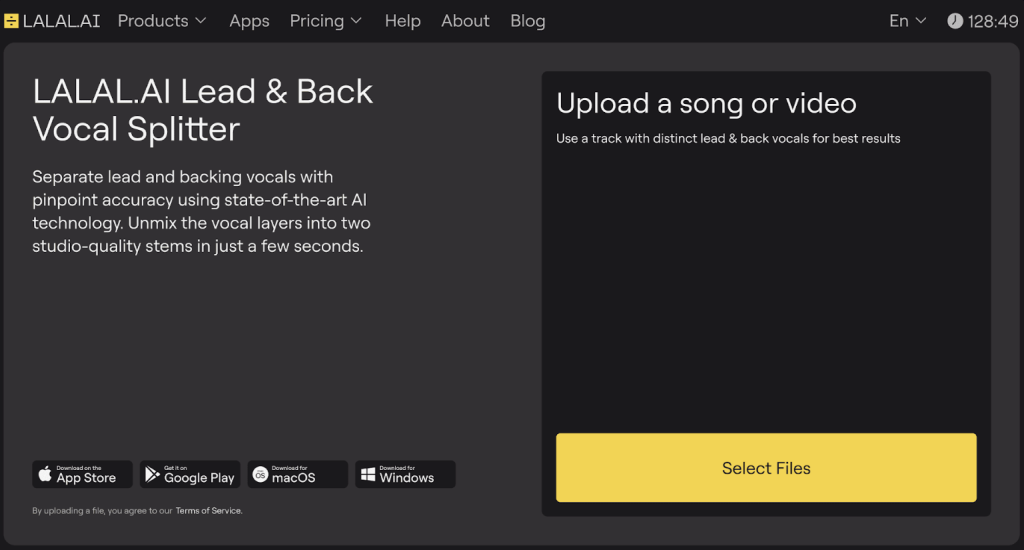
LALAL.AI’s stem separation changes the source material problem.
Its technology can separate vocals, instruments, and other elements from music and video files, creating individual stems that Impulse Audio Lab’s EVx platform can then treat as interactive musical material. Once the song is separated into parts, the system has something to work with: drums, bass, vocals, melodic lines, and other layers that can respond differently inside the car.
That moves the concept closer to real consumer use. Instead of asking drivers to accept a generic synthetic driving score, drivable music could let them bring familiar songs into a new format.
For producers, this sits near the same wider shift we covered in our article on plugins for vocal chops, where separated and reshaped audio becomes a creative starting point. LALAL.AI and Impulse Audio Lab are taking a related idea out of the DAW and putting it inside the vehicle.
This could matter for music makers too
For artists and producers, the obvious question is what happens when music is made for driving systems from the beginning.
Today, most tracks are finished for streaming, clubs, radio, sync, social video, or headphones. Drivable music adds another possible destination: songs that can be separated into stems and made responsive inside a car.
That could change how artists think about arrangement.
A producer might start paying more attention to which parts can be isolated cleanly. A songwriter might consider how a vocal should sit if the instrumental reacts to acceleration. A sound designer might create stems meant to change with speed, turn signals, braking, or cabin energy. A label might eventually deliver “drivable-ready” versions of tracks for automotive platforms.
That does not mean every release needs an in-car interactive version. But it does suggest another path for music technology, especially as EVs continue pushing cars toward software-based experiences.
The same larger question sits behind our article on how spatial audio changes DJ mixes. When playback changes, music production eventually starts responding. Drivable music is another version of that pressure, with the car becoming the playback environment and the control surface at the same time.
This is bigger than fake engine sound
Automakers have spent years trying to decide how EVs should sound.
Some approaches lean into futuristic tones. Some try to replace the missing engine with synthetic movement cues. Some are focused on safety, especially low-speed pedestrian alerts. LALAL.AI and Impulse Audio Lab are aiming somewhere else: personalized musical response.
Klara Alexeeva of LALAL.AI describes automotive sound systems as a platform for creating new sonic environments, especially as EVs need new audio-visual cues. She also points to the role of audio in attention, enjoyment, and safety.
That safety detail matters because car sound cannot be treated like a novelty feature. If music becomes interactive inside a vehicle, it has to support attention instead of distracting from the drive. That will likely decide whether drivable music becomes a production feature or stays a concept.
Impulse Audio Lab CEO Florian Walter says software and processing power in EVs have changed sound design because systems like LALAL.AI and EVx can now run in real time. He expects drivable music to become part of everyday life as the company begins working with major automakers to implement the technology.
The car becomes another remix environment
The most interesting way to think about drivable music is as a remix environment that does not sit in a studio.
The driver is not editing stems on a timeline. They are changing the relationship between the stems by driving. Speed, signals, movement, and vehicle behavior become part of how the song expresses itself.
That has obvious consumer appeal, but it also raises deeper creative questions. Who controls the final experience: the artist, the AI system, the automaker, the driver, or the road? How much should a song be allowed to change before it no longer feels like the same song? Could artists make official drivable versions, the way they now make radio edits, extended mixes, stems, instrumentals, and spatial mixes?
Those questions are why this partnership is worth watching.
LALAL.AI and Impulse Audio Lab are not only adding another feature to in-car listening. They are pointing toward a future where songs can become responsive objects, and the EV becomes a place where music is not only heard, but played by the act of driving.
That is a strange idea, but it is also a natural one. Cars have always shaped how people listen. Drivable music lets the car shape the song itself.

Will Vance is a professional music producer who has been involved in the industry for the better part of a decade and has been the managing editor at Magnetic Magazine since mid-2022. In that time period, he has published thousands of articles on music production, industry think pieces and educational articles about the music industry. Over the last decade as a professional music producer, Will Vance has also ran multiple successful and highly respected record labels in the industry, including Where The Heart Is Records as well as having launched a new label with a focus on community through Magnetic Magazine. When not running these labels or producing his own music, Vance is likely writing for other top industry sites like Waves or the Hyperbits Masterclass or working on his upcoming book on mindfulness in music production. On the rare chance he's not thinking about music production, he's probably running a game of Dungeons and Dragons with his friends which he has been the dungeon master for for many years.