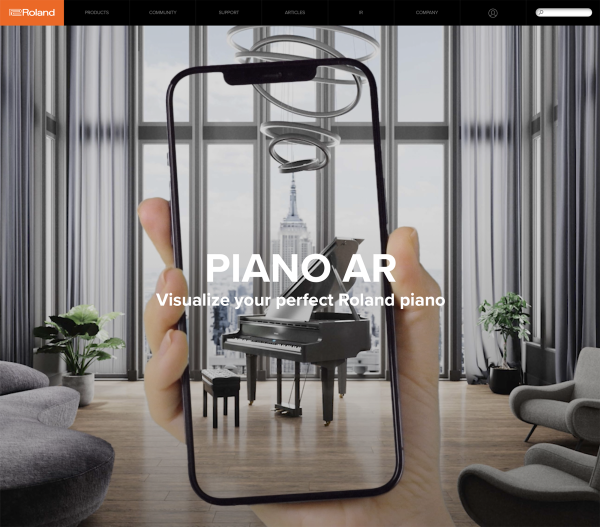
Shopping for a piano is no small feat— it’s both an instrument and a piece of furniture that takes up considerable space. Knowing this, Roland Corporation recently unveiled Roland AR, a groundbreaking Augmented Reality experience that is changing how consumers interact with and purchase Roland Pianos. Imagine eliminating the guesswork of whether the grand piano you’ve been eyeing will fit into your living room or match your interior décor. Thanks to state-of-the-art LIDAR technology in modern smartphones, Roland AR makes this possible.
To Learn More, Visit Their Site Here
The Problem Solved: Bringing the Showroom to You
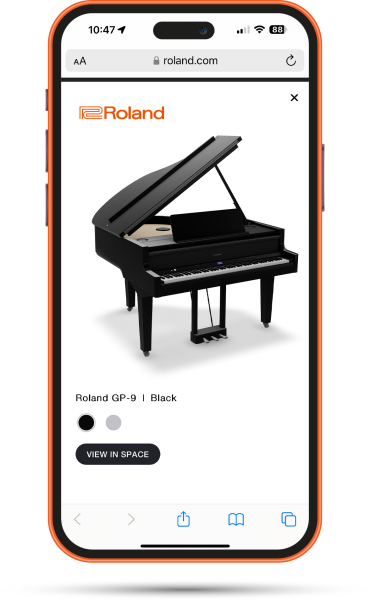
One of the biggest hurdles in buying large musical instruments like pianos is visualization. You can’t just lug a grand piano into your living room to see if it fits or matches your furniture. Roland AR addresses these challenges head-on:
- Fit: Leveraging LIDAR technology, Roland AR allows you to scan your living space and place a true-to-scale virtual model of the instrument you’re interested in. This is a game-changer for spatial planning.
- Look: What looks good in a store might not in your home. Roland AR lets you visualize different color options and finishes in the context of your own surroundings.
The feature is browser-based, sparing you from the hassle of additional app downloads. Just go to Roland’s website or any authorized dealer’s product page, and you’re good to go. With dynamic lighting and reflections, the AR experience offers an accurate representation of how the instrument will look in your personal space.
Building Connection: From Your Home to the World
But Roland AR isn’t just about functionality—it’s also about engagement. You can walk around the to-scale 3D model on your mobile device, diving into every detail as if in a physical store. And it doesn’t stop there:
- Sharing: You can share your AR experiences directly in social stories, giving friends and family a sneak peek into your potential new purchase.
- Universal Access: This feature is not exclusive to roland.com. Authorized dealers also integrate Roland AR into their listings, broadening its reach and allowing for a unified shopping experience.
David Paul, Global Channel Marketing Manager, emphasized the importance of this tool not just for individual consumers but also for interior designers and commercial properties like hotels and bars. It’s a comprehensive solution that addresses multiple needs.
FAQs:
- How does Roland AR work? Using LIDAR technology, you can scan your room and place a virtual model of a Roland Piano to visualize its fit and appearance.
- Is an app download required? No, Roland AR is a browser-based solution, so there’s no need for an additional app.
Conclusion
In summary, Roland AR is a game-changing tool in the musical instrument retail space. It solves consumers’ real-world problems when purchasing pianos, offering a realistic and engaging experience. The technology eliminates uncertainty, offering you the freedom to make informed decisions from the comfort of your own home.
It’s a blend of technological innovation and customer-centric design, redefining how we shop for pianos.

Magnetic byline note: This byline is used for staff produced updates and short announcements, often based on press materials and official release information. Editorial responsibility: David Ireland (Editor in Chief) and Will Vance (Managing Editor). About: https://magneticmag.com/about/ Masthead: https://magneticmag.com/masthead/ Contact: https://magneticmag.com/contact/