Back in February, LALAL.AI’s VST hit the market and what stood out then was how quickly it let producers pull vocals and instrumentals without leaving the session. It was useful, but still limited in how far you could push it before needing other tools. This new update changes that in a way that actually affects how you work day to day.
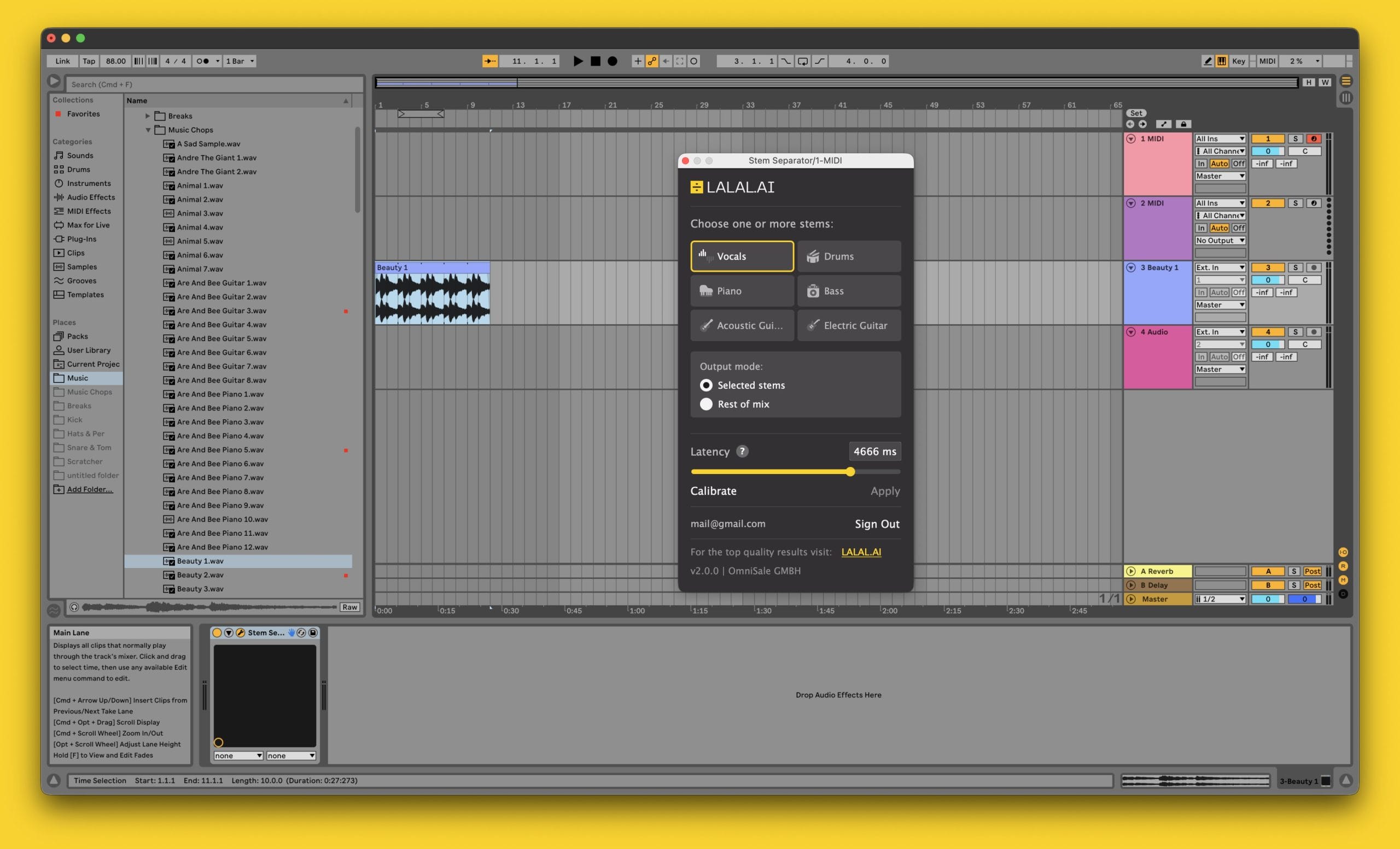
The plugin now splits audio into six distinct stems: vocals, full instrumental, bass, drums, acoustic guitar, electric guitar, and piano. That level of separation immediately opens up more options inside the DAW. Instead of treating everything as broad groups, you can now isolate specific instruments and make decisions faster without stacking extra plugins or exporting audio back and forth.
What I noticed right away is how this shifts the role of the plugin. Before, it was a quick utility. Now it starts to feel like part of the core workflow, especially if you’re doing edits, remixes, or any kind of reconstruction work.
Keeping everything inside the session
The biggest improvement here is not only the number of stems. It is the fact that everything runs locally. No uploads, no waiting for files to process, no concerns about sending unreleased material outside your system. That alone changes how comfortable you feel using it in a professional setting.
If you’re working with client material or anything unreleased, that local processing becomes essential. You can stay inside Ableton, FL Studio, or whatever you’re using, run the split, and keep moving. There is no break in the workflow, which is usually where these tools fall apart.
The separation between acoustic and electric guitar also deserves attention.
Most tools group guitars together, which limits what you can actually do with the output. Having those split into separate stems gives you more control over arrangement decisions, especially when you are trying to reshape a mix or extract usable parts.
Built for iteration, not just final output
The plugin runs on LALAL.AI’s Lyra model, which is designed for local use. From what I can tell, the focus here is speed and usability rather than pushing for absolute isolation at all costs. That tradeoff works in practice because this is the kind of tool you use while building ideas, not something you rely on for final mastering decisions.
You can test variations quickly, mute elements, isolate parts, and rework sections without committing to a destructive process. That kind of flexibility is where this update actually lands for producers. It supports experimentation instead of slowing it down.
Another key detail is that the separation is unlimited. You are not working against credits or usage caps when using the plugin, which removes another common friction point with stem tools. You can run full tracks, albums, or multiple versions without thinking about cost per export.
This update puts LALAL.AI’s VST in a different position than before. It is no longer just a quick fix for extracting vocals. It is a practical, in-session tool that fits directly into how producers already work.
About LALAL.AI

Will Vance is a professional music producer who has been involved in the industry for the better part of a decade and has been the managing editor at Magnetic Magazine since mid-2022. In that time period, he has published thousands of articles on music production, industry think pieces and educational articles about the music industry. Over the last decade as a professional music producer, Will Vance has also ran multiple successful and highly respected record labels in the industry, including Where The Heart Is Records as well as having launched a new label with a focus on community through Magnetic Magazine. When not running these labels or producing his own music, Vance is likely writing for other top industry sites like Waves or the Hyperbits Masterclass or working on his upcoming book on mindfulness in music production. On the rare chance he's not thinking about music production, he's probably running a game of Dungeons and Dragons with his friends which he has been the dungeon master for for many years.