What We’re Talking About
Learning how to master music at home used to feel like the final boss of music production.
You could spend weeks getting a track to feel right, then hit the final stage and suddenly everything felt a bit wonky. The mix sounded decent during the session but weak compared to the released music, just as the low end felt fine in headphones but fell apart entirely in the car. The track had energy in the room, then lost it when you bounced it down and played it in a DJ set… I’m sure you get the picture.
That is why home mastering matters so much now.
Most producers are moving fast. They are finishing ideas, sending demos, testing IDs, pitching labels, posting clips, preparing edits for sets, and trying to keep their catalog moving, growing, and connecting more dots than ever with it. In that workflow, mastering at home is less about pretending to replace a great engineer and closer to having a reliable way to hear your music in a finished context before the track leaves your studio.
That is the real X-factor of the best mastering software. It helps you get a track louder, cleaner, and closer to release level without turning the final stage into a separate technical project every time you finish an idea.
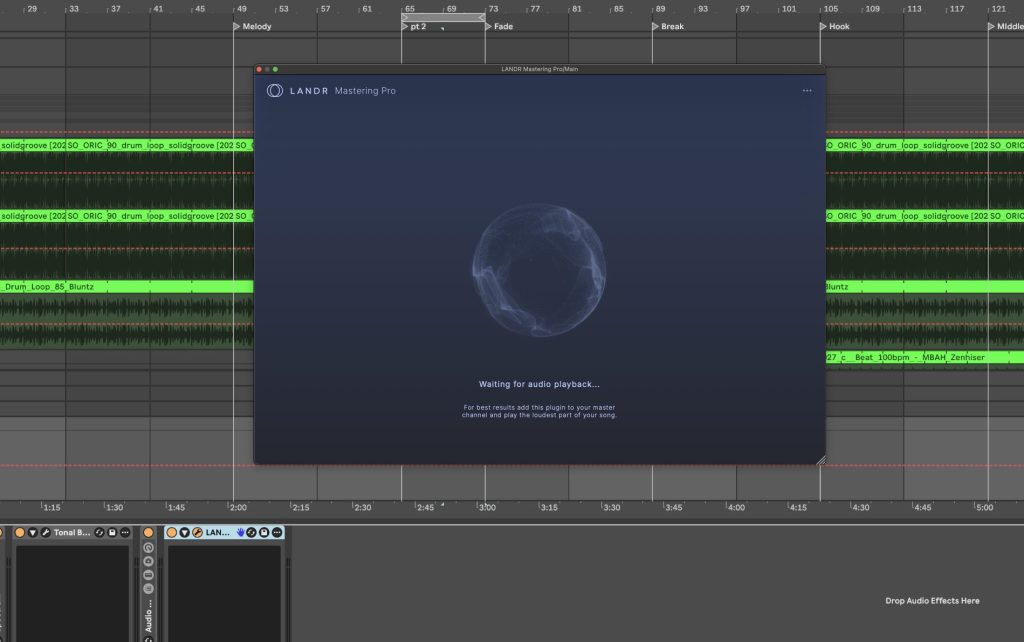
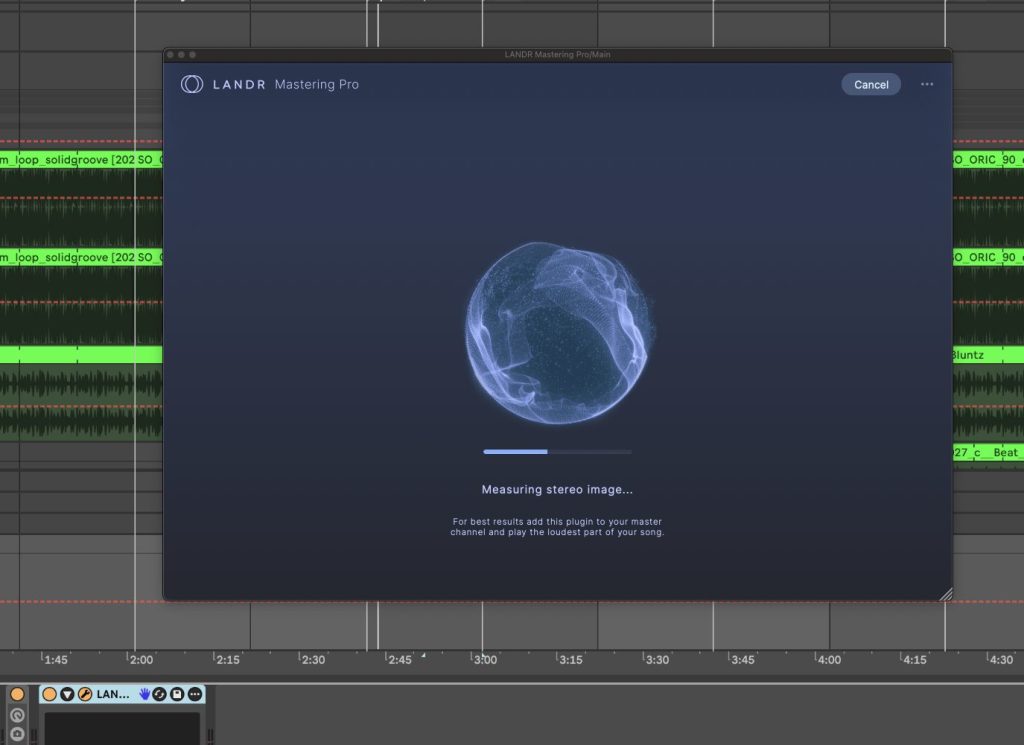
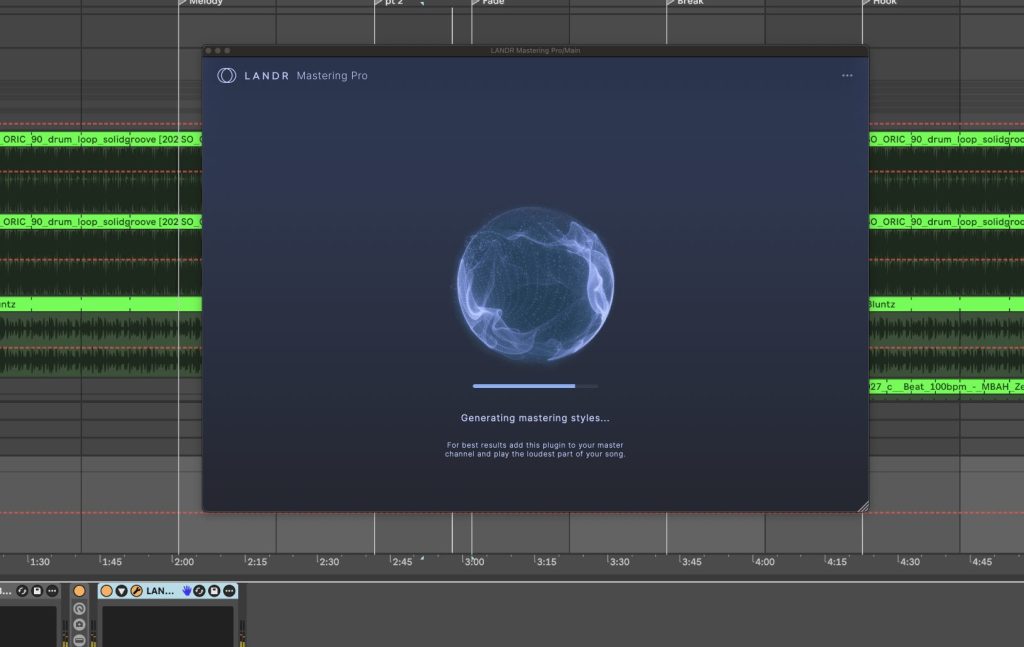
LANDR’s Mastering Plugin helps a ton here in that use case because it brings LANDR’s AI mastering engine directly into your DAW. Instead of exporting a mix, uploading it, waiting, downloading it, comparing it, then going back to the session, you can put the plugin on your master channel, play the loudest section of the track, let it analyze the material, and start making decisions inside the same session.
For producers working at home, that matters a lot more than you think.
The less friction there is between finishing the music and hearing a mastered version, the easier it becomes to make clear calls. You can decide whether the vocal is too loud, whether the low end is too heavy, whether the arrangement needs a final lift, or whether the track is ready enough to send out.
Mastering production can get complicated quickly, and a professional engineer still has a real place in the release process, especially for label singles, EPs, albums, vinyl, or high-level campaigns. But for daily work, writing, pitching, testing, and rough release prep, home mastering gives you speed, control, and a clearer sense of where the track actually stands.
What Mastering At Home Actually Means
Mastering is the final processing stage after the mix is finished. The goal is to prepare the track for playback outside your DAW, which usually means adjusting loudness, tonal balance, stereo width, compression, limiting, and final export settings.
Have you ever played a track on Spotify or Soundcloud and it’s noticeably quieter than the song previous to the point where it completley threw you out of the vibe?
Well, that’s a mastering issue (or maybe just an attention-to-detail issue).
That sounds simple, but the reality gets messy really quickly.
A track can be loud and still feel harsh, it can be clean and still feel underpowered, it can have a wide stereo image and still lose focus in mono. It can have plenty of low-end and still fail when played after a properly mastered record. Volume mastering is part of the job, yet volume alone does not make a track feel finished.
The biggest mistake I see with newer producers is treating mastering like a magic fix. They finish a mix that still has problems, put a limiter on it, push the gain until it feels competitive, then wonder why the top end hurts, or the kick loses impact.
A master can help a good mix translate better, but it cannot turn a confused mix into a finished record without tradeoffs.
That is why the best home mastering mindset is simple: use mastering as a decision tool first, then as a finishing tool second. Put a mastering chain or mastering plugin on the track, listen to what happens, then use that information to improve the mix. If the master gets harsh right away, the problem may be in the upper mids. If the limiter clamps down too hard, the kick or sub may be taking too much space. If the master sounds smaller after processing, your mix may already be too compressed.
That is the kind of mastering software I think home producers actually need because there’s less mystery, less waiting, and a faster path to a usable version (whatever that use case may be).
The goal is not to become a mastering engineer overnight. The goal is to make better decisions before the track leaves your hands.
Why One Mastering Plugin Makes Sense For Home Producers
LANDR has been around the AI mastering conversation for a long time, and the main appeal of its Mastering Plugin is directness. It takes the LANDR mastering engine and puts it inside your DAW, which solves one of the least enjoyable parts of finishing music: leaving the session to find out whether the track is working.
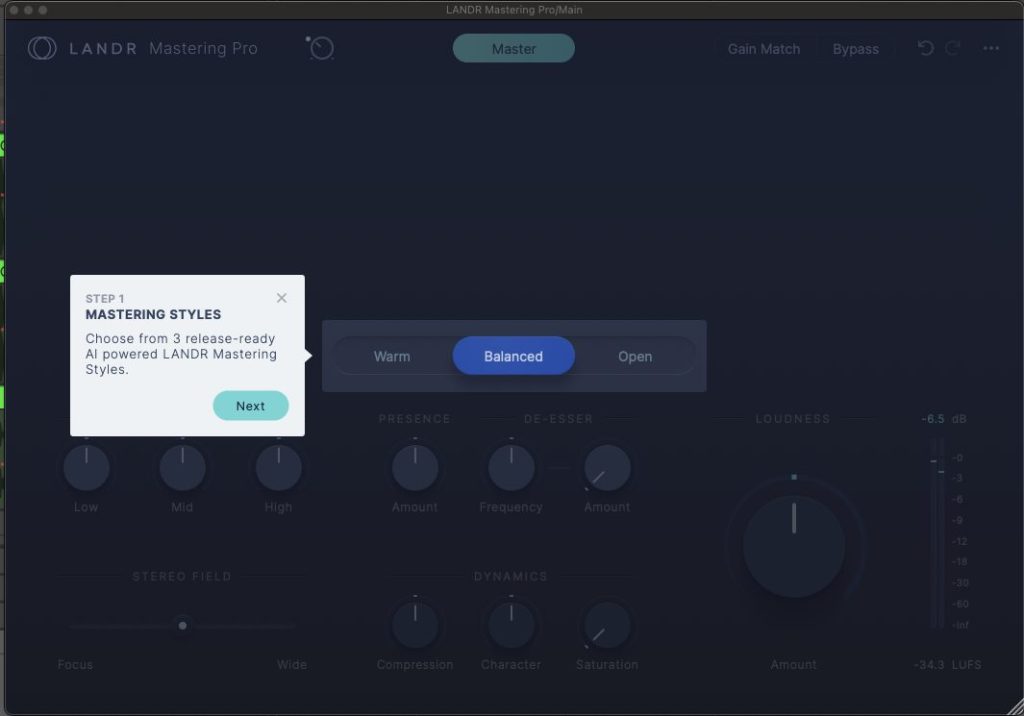
That may sound like a small workflow detail, yet it matters when you are making music often.
When I am finishing a track, I do not want the mastering step to become a full reset. I want to know whether the mix is translating, whether the energy is close, whether the low end is controlled, and whether the overall level is in the right range for the purpose at hand. A plugin-based mastering workflow helps with that because I can keep the session open and keep making changes while the track is still fresh in my ears.
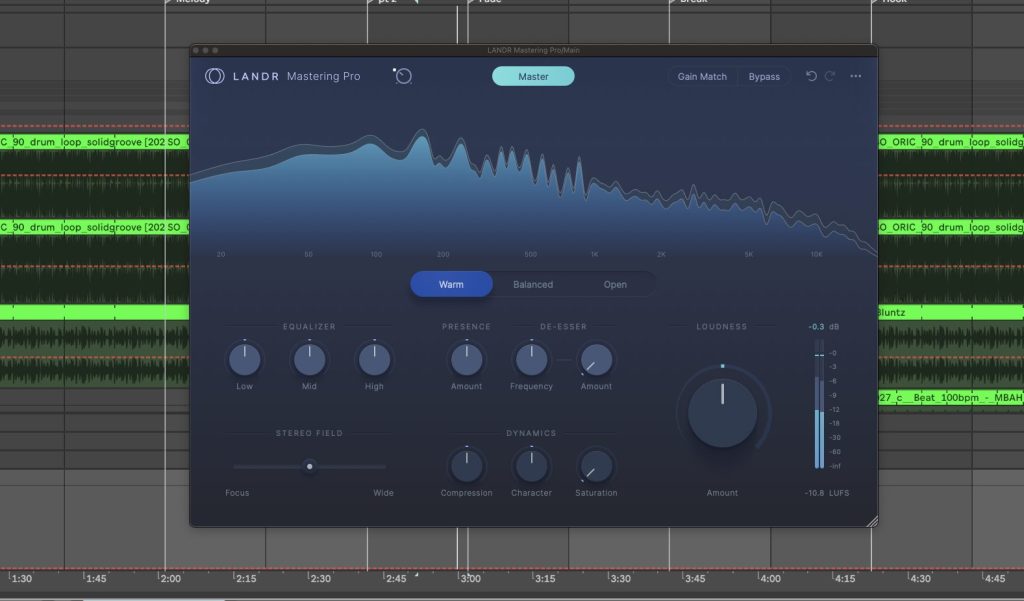
LANDR’s Mastering Pro plugin asks you to play the loudest part of the track so it can analyze the material. After that, you can hear a processed version inside the session. That workflow is practical because mastering decisions should be based on the most demanding part of the song. If the drop, chorus, or main section survives the processing without falling apart, the rest of the track has a better chance of translating.
Does AI Mastering Require the Internet?
Another useful detail is that the plugin does not require internet access for the actual analysis and processing once authorization is handled. That makes it feel more like a standard studio tool than a web-only service sitting outside your process.
For many producers, LANDR also offers the benefit of speed. You can create a polished reference master quickly, then use that version for the next step. That might mean sending it privately to a vocalist, testing it in the car, playing it in a DJ set, sending it to a manager, or checking how it feels against a released reference.
This is why I see LANDR less as a replacement for every professional mastering situation and more as a daily utility. It helps you get a track into a listenable, presentable state without overthinking the final 5 percent every time.
The best mastering plugins in context
That is where the “best mastering software” conversation gets out of the weeds and starts making a lot more practical sense once you know the whole context. The best option is not always the one with the longest feature list. For many home producers, the best option is the one that gets used most often, delivers consistent results, and helps you finish music rather than leaving projects sitting in the folder for another month.
LANDR’s Mastering Plugin is built for that kind of user. It is for producers who need fast, reliable masters inside the DAW, with enough control to make the result useful and enough automation to keep the process from turning into a technical spiral.
Three Use Cases For Mastering At Home
Home mastering becomes easier to understand when you stop thinking of it as one final release step. In practice, there are several reasons to master music at home before hiring an engineer or sending a final file to a label.
1. Sending rough demos to labels
A label demo does not need to be final-master perfect, yet it does need to communicate the track properly.
If the demo is too quiet, too dull, or too unfinished, people may respond to the presentation rather than the writing. That does not mean labels expect every submission to sound like a fully approved release master, but the track should be loud enough, clear enough, and controlled enough for someone to understand the idea in one listen.
This is one of the clearest reasons to use mastering software at home. A quick master can help your demo feel more finished, making the listening experience easier for the listener. It also helps you hear what the label might hear. If the master exposes problems, you can fix them before the pitch.
2. Road testing music in DJ sets

For dance music producers, this is one of the biggest reasons to master at home, even if it’s not the “final master” that you send off to distribution.
If you are playing your own unreleased music in a DJ set, the track needs to sit next to released records without a major level drop. It does not have to be the final master, yet it needs enough loudness and control to judge the arrangement, energy, and mix in the room.
This is where volume mastering has a real practical purpose. You are not chasing loudness for the sake of a number. You are trying to make the track usable in a set so you can learn from it.
Maybe the intro is too long. Maybe the low end feels weak after a track is released. Maybe the main section hits too hard and eats the system. Maybe the break loses people. You learn that faster when the track is mastered well enough to test under real conditions.
A home master lets you get those answers before paying for a final master.
3. Revealing mix problems before the track goes any further
One of the biggest reasons to master at home is that it shows you what your mix can actually handle once it gets pushed. A track can feel fine while it is sitting quietly in the session, then the second you add compression, limiting, saturation, and final level, all the weak spots start coming forward.
The kick starts choking the bass, the vocal gets sharp, the hats start poking out too much, the low mids feel crowded, or the limiter starts grabbing the whole record every time the main section hits.
I honestly think this is where quick DIY mastering is most useful. You are not trying to fake a final master; you are putting pressure on the mix to see what breaks. If the master falls apart, that usually tells you something specific. Maybe the gain staging is messy, maybe the sub is too loud, maybe the upper mids are too hot, or maybe the mix is already too compressed before the mastering chain even touches it.
That feedback is incredibly helpful because you can go back into the session, fix the actual issue, and end up with a cleaner mix before anyone else hears it.
Home Mastering Vs. Professional Mastering

This is where I think producers can get too rigid in how they talk about mastering. Some people act like DIY mastering means you never need a professional engineer again, while others act like a track has no value unless it has passed through a dedicated mastering room.
I think the better answer is much more practical. Home mastering and professional mastering solve different problems, and the smartest workflow usually makes room for each one at different points in the process.
The case for DIY mastering
DIY mastering is about speed, context, and learning how your own mixes respond when pushed closer to release level. If you are sending demos, testing IDs in DJ sets, sharing private links, making content clips, or checking whether a track feels finished enough to keep working on, waiting on a professional master every time will slow everything down.
The best mastering software provides a middle step between the raw mix and the final release file, which is useful because it lets you catch problems earlier. You can find out if the low end is too heavy, if the limiter is working too hard, if the vocal gets sharp, or if the track falls apart once compression and volume mastering come into play. That feedback makes you a better producer because you hear the mix under pressure, while you can still fix it.
Since it works inside the DAW, it lets you check a mastered version without leaving the session, bouncing files back and forth, or turning the final stage into a separate project. I would use that for demo masters, DJ tests, feedback rounds, private links, and early release prep. It gives you a fast way to make a track presentable, and it helps you stay honest about whether the mix is actually ready.
The case for professional mastering
Professional mastering still matters when the release is final, and the stakes are higher.
A good mastering engineer brings trained ears, proper monitoring, a treated room, and an outside perspective, which is hard to replace when you have been sitting with the same track for days or weeks. By that point, you may be too used to the problems in the mix. You might think the sub feels right because you built the whole track around it, or you might miss that the vocal is too loud because you have heard it a hundred times. A mastering engineer can catch those issues without being attached to the session.
For official releases, label campaigns, EPs, albums, vinyl, sync pitches, or records that need final quality control, I still think a professional master is the better call. DIY mastering helps you move faster and make better decisions while the song is still in progress, while professional mastering gives the finished track a final technical and creative check before it goes public.
The best workflow is not about choosing one side forever. It is about using home mastering when speed and feedback matter, then bringing in a professional when the record is approved and ready for the final pass

Will Vance is a professional music producer who has been involved in the industry for the better part of a decade and has been the managing editor at Magnetic Magazine since mid-2022. In that time period, he has published thousands of articles on music production, industry think pieces and educational articles about the music industry. Over the last decade as a professional music producer, Will Vance has also ran multiple successful and highly respected record labels in the industry, including Where The Heart Is Records as well as having launched a new label with a focus on community through Magnetic Magazine. When not running these labels or producing his own music, Vance is likely writing for other top industry sites like Waves or the Hyperbits Masterclass or working on his upcoming book on mindfulness in music production. On the rare chance he's not thinking about music production, he's probably running a game of Dungeons and Dragons with his friends which he has been the dungeon master for for many years.