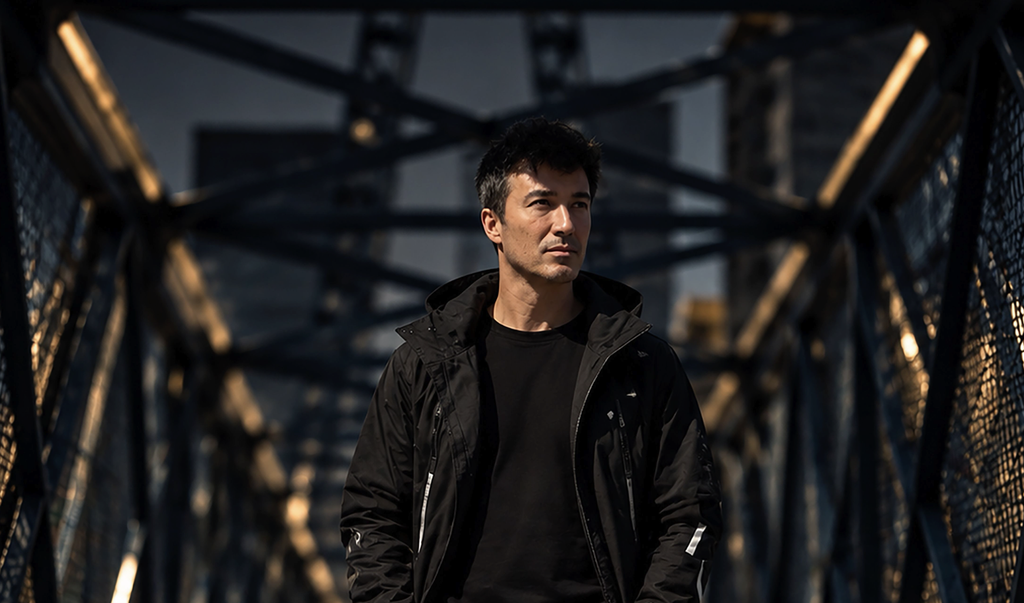
A DJ can spend weeks curating a set, only to discover within minutes that the room wants something completely different. The decision to follow that reaction without giving up personal taste is something Hoomance has been working on since his early clubbing years in Toronto.
At The Guvernment and Circa, he watched DJs working rooms of dramatically different sizes, which helped shape how he thinks about pacing, intimacy, and his responsibility to the people in front of him.
Now based between Toronto and Ibiza, the Canadian-Iranian DJ and producer has performed at Bedouin’s Saga at Pacha, Akasha, Chinois, and Nocturna, and has also played an eight-hour open-to-close set at fabric in London. His releases include music on Human By Default and Rebellion, plus a collaboration with HUGEL on the album Twenty-One.
Those bookings and releases give context for his career, but the interesting part of this conversation is how little he talks about recognition and how much attention he gives to the decisions he makes during a set.
One example comes from a Halloween performance in New York, when he slowed the tempo for a breakbeat edit of Michael Jackson’s “Billie Jean” and found that the crowd was willing to follow him in that direction.
That experience connects directly to his thoughts on Ibiza, longer sets, and the importance of introducing listeners to records they may have never heard before.
In the interview below, Hoomance discusses what he learned from Toronto’s club scene, how performing internationally changed his approach to DJing, and why earning an audience’s trust is central to playing music that people aren’t necessarily expecting.
Interview With Hoomance

Growing up in downtown Toronto, where did you first encounter the kind of dance floor you wanted to play for?
Some of my first clubbing experiences in Toronto were at The Guvernment and Circa. The Guvernment had eight rooms, each with its own musical identity and a different approach from the DJs playing there. You could go from a room holding 5,000 people to one with just 150, and experience a completely different connection between the DJ and the crowd.
Watching DJs work in those different spaces taught me a lot about how I wanted to play in these kinds of spaces. It made me appreciate how much the intimacy, size and energy of a room can shape a set.
When you started spending time in Ibiza, what did you have to reconsider about your approach to DJing?
When I first came to Ibiza, it felt completely different from anywhere else.
Such a small island could bring together so many people from everywhere, with so many clubs, parties and different musical tastes. It made me reconsider what I could expect from a dance floor, because everyone comes with their own background and connection to music. I became more open and attentive to the crowd, learning how to bring those different people together while staying true to my own sound.
Can you recall a night when the crowd responded to something unexpected and you changed the direction of your set as a result?
Yes, one that comes to mind was Halloween weekend many years ago at Paradise Club in New York. I played a breakbeat edit of Michael Jackson’s “Billie Jean” and had to bring the tempo down quite a bit for it to sound right. The transition worked really smoothly, and the crowd’s reaction gave me the confidence to stay in that direction and explore a little more. I hadn’t planned on taking the set there, but I could feel they were with me.
There’s always a bit of pressure when you step outside your comfort zone, but when it connects like that, it’s an amazing feeling.
You played an eight-hour open-to-close set at fabric. What did you want to accomplish with that amount of time?
I wanted to build the night from the very first record and give people something to remember. Playing an open-to-close set in Room 3 gave me the freedom to dig deep into my music, set the mood and let the energy develop as more people came into the room. Having that time allowed me to create different moments throughout the night, where a particular track could help define that part of the set.
What are you exploring with Mili that differs from the solo material you’re developing?
Mili is a fantastic producer, and every time we work together, I learn something new.
I enjoy bringing our different instincts into the same track and hearing an idea go somewhere I wouldn’t have taken it on my own. My solo material gives me more space to explore the details of my own sound.
As your audience grows, what do you want someone hearing you for the first time to understand about your taste, regardless of where you’re playing?
I’d love someone hearing me for the first time to come with an open mind and trust the music. I dig deep to find records, edits and remixes they might not have heard before, because I want to give them an experience that feels different. For me, some of the best moments happen through a groove or an unexpected track, without needing a big drop. It’s about earning people’s trust as the night unfolds and letting them follow the music with you.

Final Thoughts From The Conversation
The biggest lesson from Hoomance’s answers is that a DJ has to earn the audience’s trust before expecting people to follow an unexpected musical decision. His Halloween story is probably the clearest example of that. He lowered the tempo, played a record that wasn’t an obvious choice, saw the audience respond, and consciously chose to keep going in that direction. He wasn’t forcing an unfamiliar sound on the crowd or abandoning his musical preferences to get an immediate reaction.
He was paying attention, making a decision, and adjusting based on what happened next.
It’s something that has come up repeatedly in my conversations with other DJs, particularly in my interview with Spencer Brown about spontaneous DJing. Brown explained how knowing his music and organizing it for different situations allows him to make decisions based on what the audience is doing instead of following a predetermined tracklist. A similar point came up when I spoke with Malcolm Zeller about reading crowds and pacing longer DJ sets. Zeller discussed how longer performances give him opportunities to play less direct records and why an unexpected selection is often dependent on what the DJ has played leading up to it.
Hoomance’s experience at fabric is another example of how having several hours to work with changes the decisions available to a DJ.
There’s another relevant distinction in my conversation with Eddie Leader about DJ culture and musical identity. Leader explained that he prepares for different scenarios without selecting music solely because he assumes a particular audience expects to hear it.
That gets to what I find most interesting about Hoomance’s approach. Reading the room doesn’t mean giving people exactly what they already know, and playing unfamiliar records doesn’t mean ignoring their reactions.
The actual skill is understanding when the audience is receptive to something different, then having enough confidence in your selections to act on it. It’s a lesson worth considering for any DJ who wants to develop a recognizable musical identity while remaining responsive to the people who came to hear them play.

Magnetic byline note: This byline is used for staff produced updates and short announcements, often based on press materials and official release information. Editorial responsibility: David Ireland (Editor in Chief) and Will Vance (Managing Editor). About: https://magneticmag.com/about/ Masthead: https://magneticmag.com/masthead/ Contact: https://magneticmag.com/contact/