EVEN STUDIO is built around a problem every artist already knows: fans are everywhere, but the relationship is scattered.
An artist might build attention on TikTok, sell music on one platform, move merch on another, collect emails somewhere else, send fans to a ticketing page for shows, then hope all of those pieces somehow turn into a real business. That can work, but it is messy. It also means the artist is often renting attention from platforms that do not give them much control over the next step.
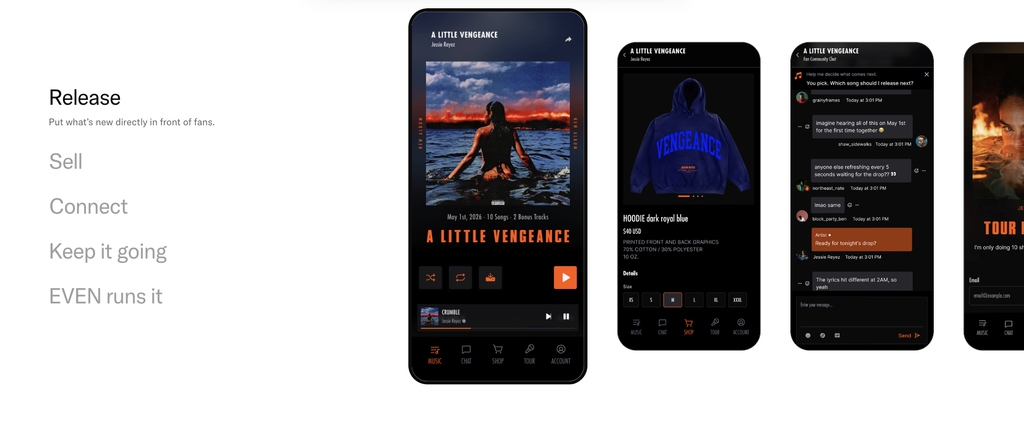
EVEN STUDIO is trying to bring more of that fan relationship back to the artist’s own property. The product gives artists a destination built on their own domain, where they can release music or content, sell tickets and merchandise, host livestreams, build community, offer special access, and shape whatever kind of fan-facing experience makes sense for the campaign.
That last part is the real angle. This is not a standard album page with a buy button dropped on top.
EVEN is positioning STUDIO as a flexible home for the campaign itself. An album can sit at the center. So can a tour, a merch drop, a ticket onsale, a comedy special, a piece of content, or a longer-running fan community.
For artists and labels, that changes the question from “where do we send people?” to “what do we want the fan experience to be?”
The Pre-Order Gets a Better Reason to Exist
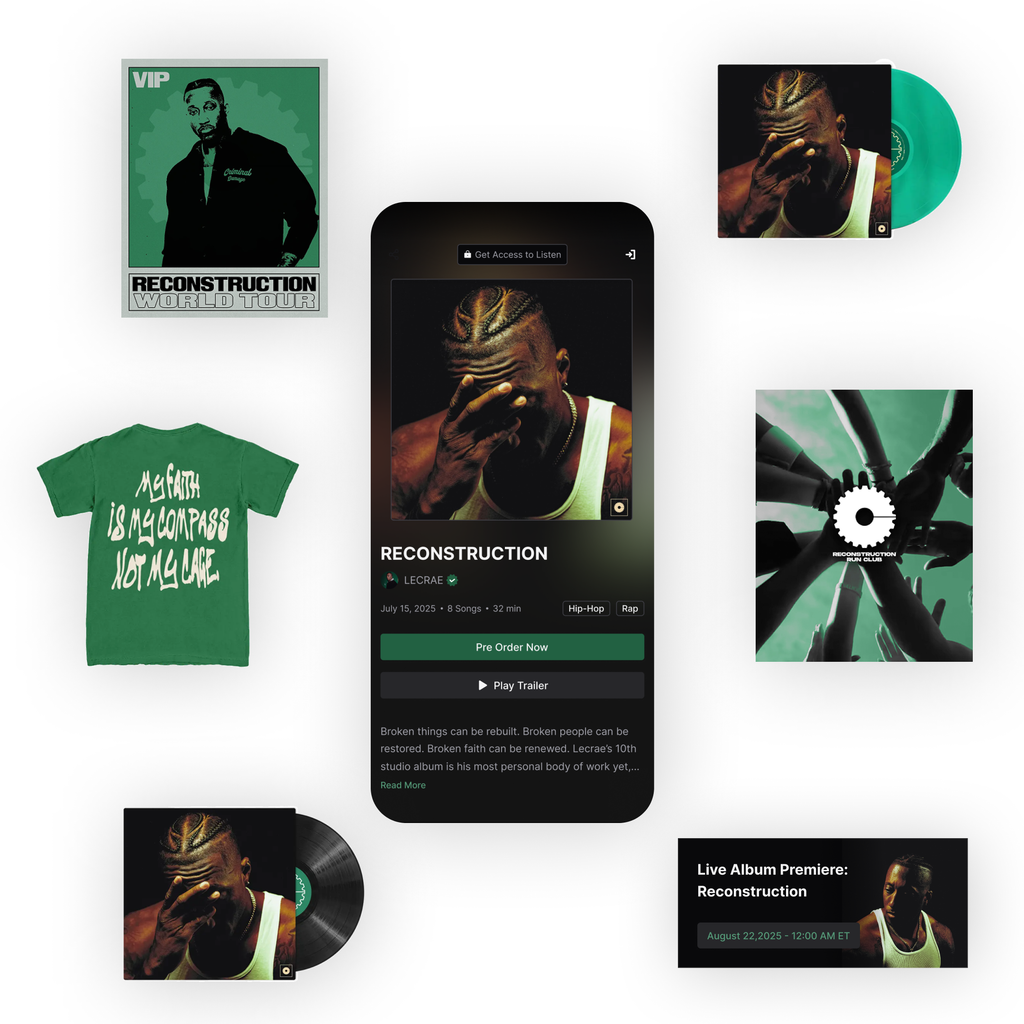
The most interesting music-specific piece is how EVEN STUDIO handles album pre-orders. Traditionally, a pre-order asks fans to pay early, then wait. That can help with chart timing and campaign planning, but it does not always feel great from the fan side unless the artist has a highly committed audience.
EVEN STUDIO changes that by letting artists give purchasers immediate access to up to four tracks before the full release. Instead of buying an album and waiting until release day, fans can start hearing the music as the campaign rolls out. The company also says qualifying redeemed album sales can be reported under applicable chart rules.
That is a better value exchange. Fans get music right away. Artists get direct revenue earlier in the campaign.
Labels and managers get a clearer read on who is engaged before release day. The wider album can still go to streaming, but the deepest fans have a reason to buy before everyone else gets access.
EVEN CEO Mag Rodriguez frames it as “EVEN and streaming, not EVEN or streaming,” which is the right way to think about this kind of model. Streaming gives reach. Direct purchase gives revenue, data, and a fan relationship the artist can carry into the next release.
I covered a related idea in my conversation on digital merchandise and modern music income, where the key point was that fan commerce works best when it feels tied to the artist’s identity rather than tacked on at the end.
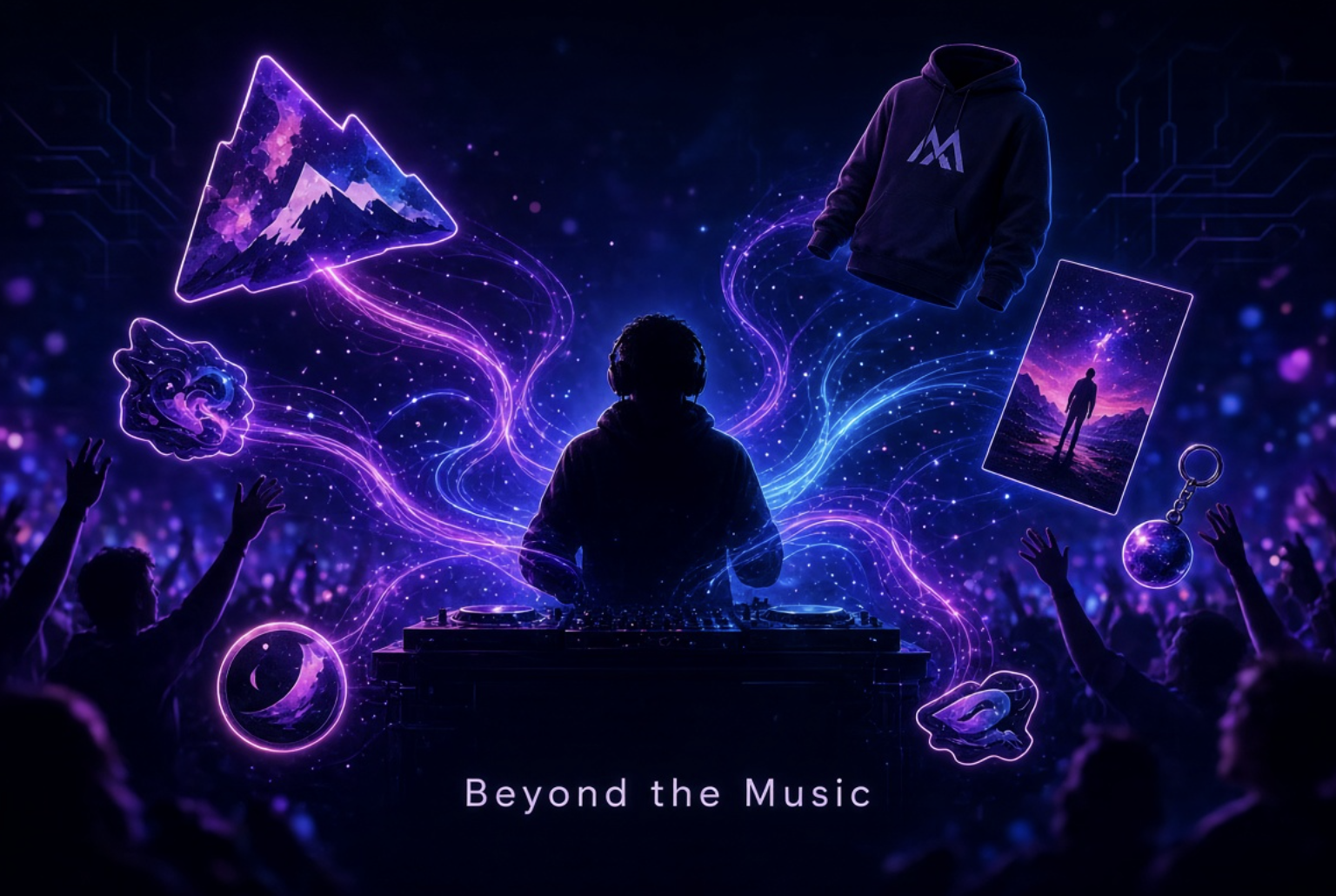
Merch Lives Inside the Same Fan Destination
The merch piece is especially important because it turns STUDIO into more than a pre-order product.
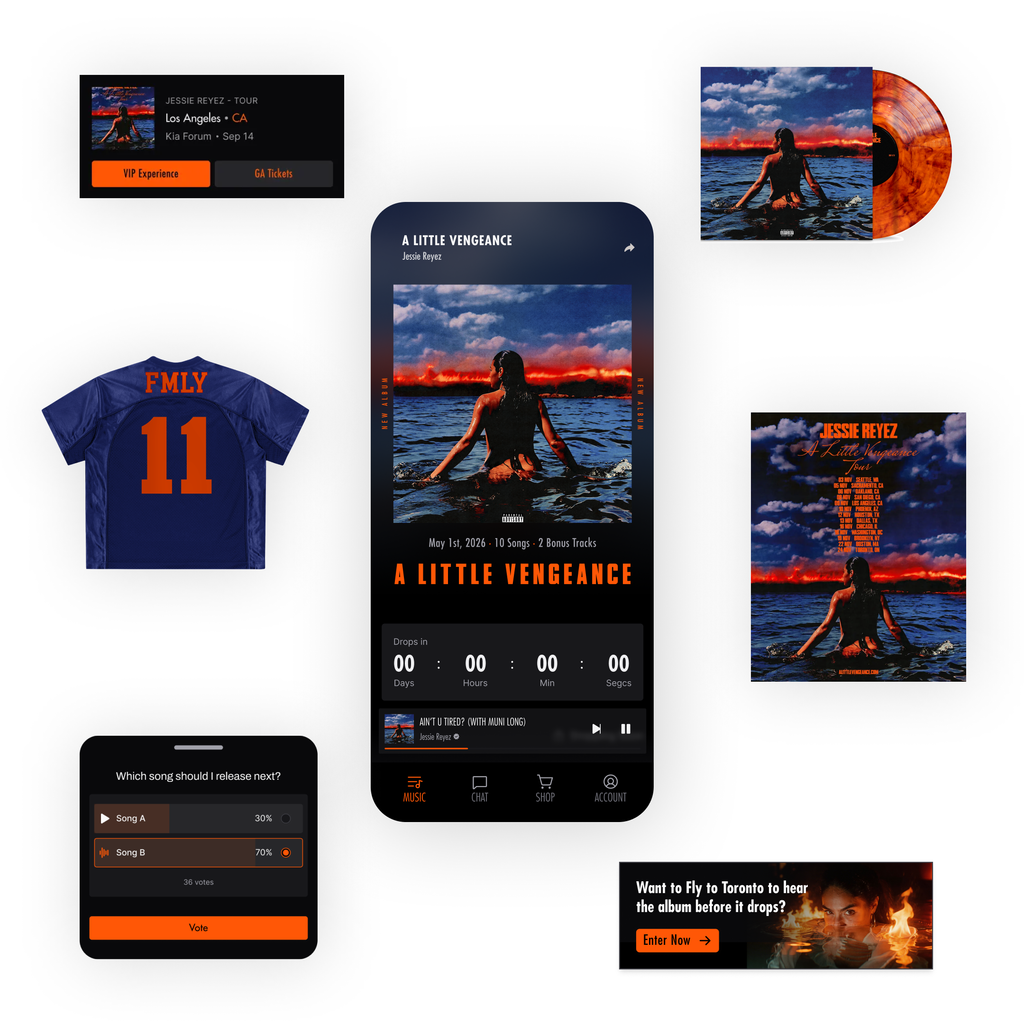
EVEN says merch can live directly on the STUDIO site rather than sending fans away to a separate store. Carrie Davis also clarified that EVEN can facilitate production and fulfillment with a number of partners, which means artists are not limited to using STUDIO as a simple outbound link hub.
That is a meaningful distinction. A link page can point fans toward merch. A real fan destination can make the merch part of the campaign. That difference matters when the goal is to connect album buyers, ticket buyers, merch customers, and highly engaged fans in one place.
For independent artists, merch is often one of the clearest ways to turn attention into income, but the production side can get annoying fast. Sourcing products, managing fulfillment, dealing with delays, keeping track of inventory, and linking everything to the actual release campaign can become its own job. If EVEN can lower that barrier while keeping the commerce on the artist’s own domain, that gives STUDIO a much broader use case.
I wrote about physical merch options for musicians in my roundup of physical merch creation platforms producers should know, and EVEN STUDIO appears to sit one step closer to the full artist business stack. It is not only about making the item. It is about connecting the item to the fan relationship.

The Real Product Is Fan Continuity
The launch copy talks about music, merch, livestreams, ticket access, waitlists, hospitality, presale registration, content, and community. That might sound broad, but the thread is simple: STUDIO wants to keep artists from starting over every time a fan does something.
A fan buys an album. That fan can later be shown merch. A merch buyer can become a ticket buyer. A ticket buyer can register for presale access. A livestream viewer can join a community or buy physical music. Each moment can feed the next one instead of disappearing into a different platform.
For managers, labels, distributors, promoters, and ticketing partners, that is where STUDIO becomes more than another artist website. It connects commerce to fandom in a way that can carry across a campaign, and possibly across an artist’s larger business.
That does not mean every artist needs a full STUDIO build immediately.
The product is invite-only, and the best fit is likely artists with enough audience activity to justify a deeper direct-to-fan destination. But for acts with fans willing to buy early, buy merch, show up live, or pay for added access, the model is easy to understand.
It also lines up with where artist income has been heading for years. I wrote about this larger shift in my article on creative ways record labels are making money, and the same logic applies here. Revenue is no longer one thing. It is music, merch, tickets, data, access, community, and the ability to move fans from one part of the business to another without losing them.

Will Vance is a professional music producer who has been involved in the industry for the better part of a decade and has been the managing editor at Magnetic Magazine since mid-2022. In that time period, he has published thousands of articles on music production, industry think pieces and educational articles about the music industry. Over the last decade as a professional music producer, Will Vance has also ran multiple successful and highly respected record labels in the industry, including Where The Heart Is Records as well as having launched a new label with a focus on community through Magnetic Magazine. When not running these labels or producing his own music, Vance is likely writing for other top industry sites like Waves or the Hyperbits Masterclass or working on his upcoming book on mindfulness in music production. On the rare chance he's not thinking about music production, he's probably running a game of Dungeons and Dragons with his friends which he has been the dungeon master for for many years.