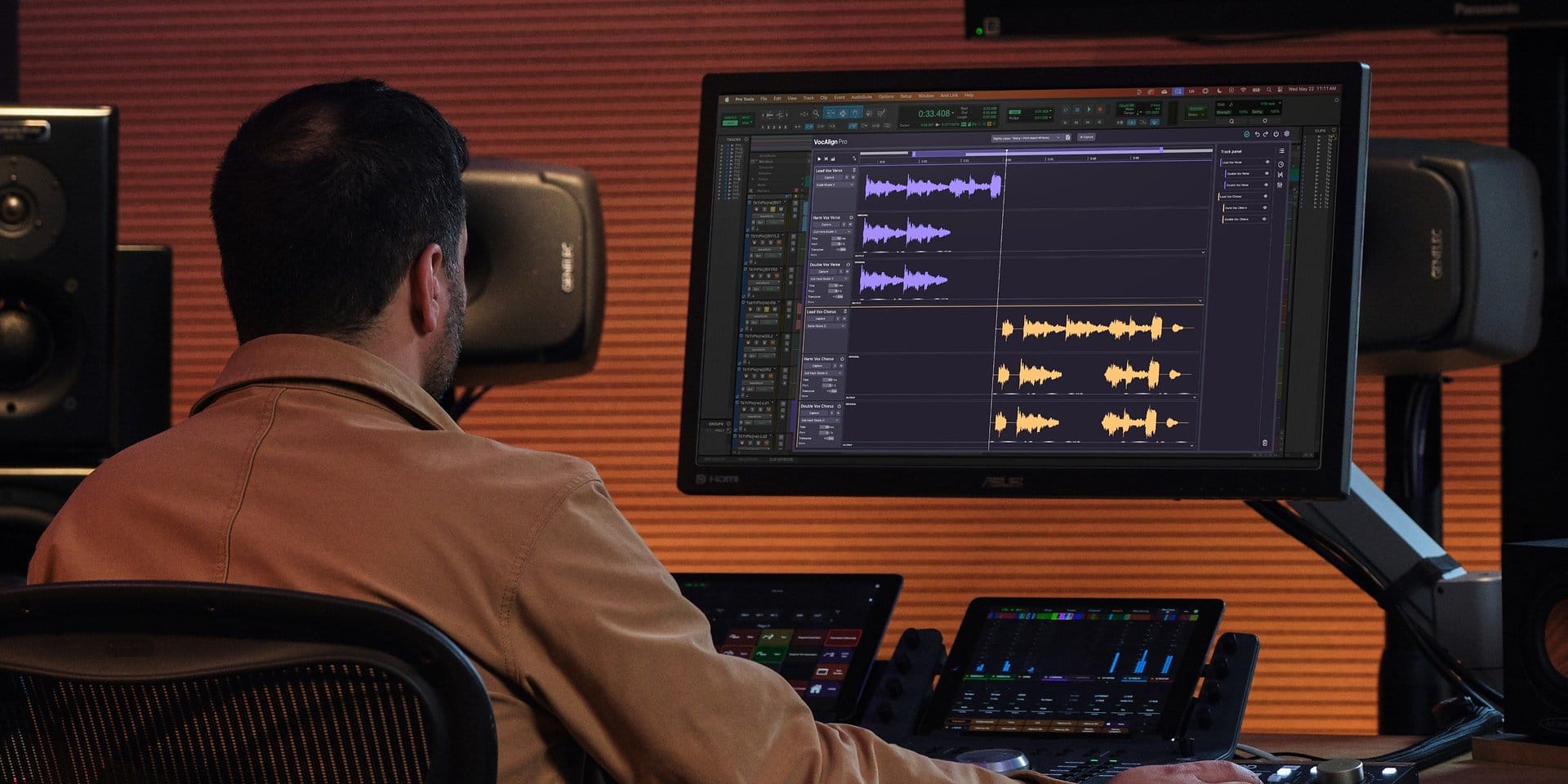
VocAlign 7 is the kind of update that makes more sense the second you picture a modern vocal session. One lead. Doubles. Harmonies. Ad-libs. Stacks. Background parts. Alternate takes. Then the producer or engineer has to make all of it feel tight without turning the performance into something sterile.
Synchro Arts has rebuilt VocAlign around that reality.
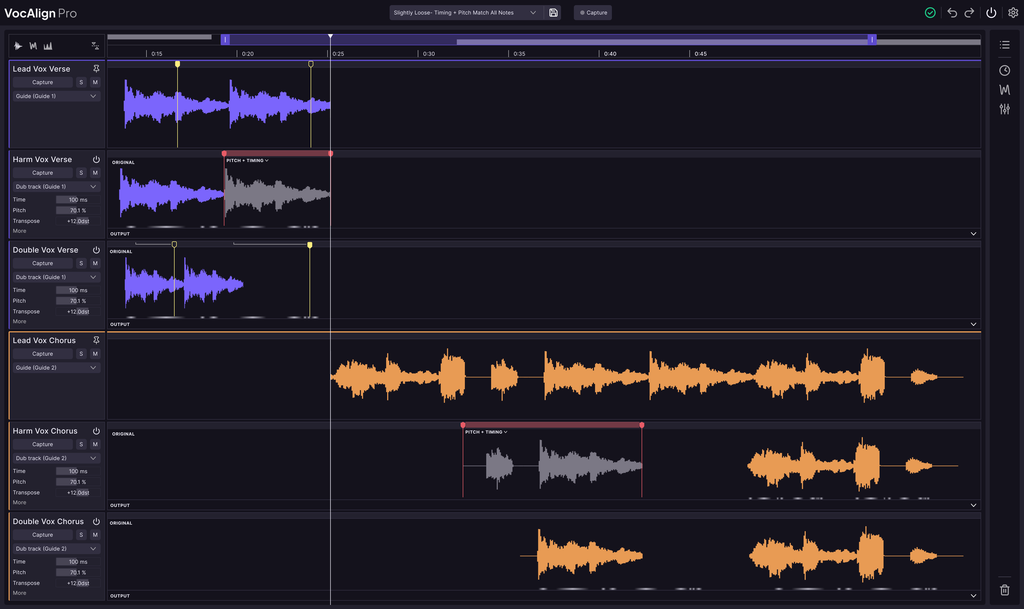
Released September 24, 2026, VocAlign 7 introduces a new multi-track workspace that lets producers view, manage, and align every vocal in a session from one environment. Any track can be assigned as the guide, and you can align multiple vocal layers at the same time in one operation.
That is the headline change because vocal alignment has always had a weird contradiction inside it. The process is supposed to save time, but large vocal stacks can still pull producers into repetitive track-by-track editing. VocAlign 7 is aimed directly at that bottleneck, moving the workflow from isolated alignment passes into a larger session view.
For producers working on pop, dance music, rap, R&B, vocal house, or anything with layered hooks, this is not a small adjustment. It changes how quickly a messy vocal session can become workable, especially when the creative idea is already there and the only thing slowing the record down is mechanical cleanup.
The New Workspace Is the Main Story
VocAlign has been around for more than 30 years, and its reputation has always been tied to speed and natural-sounding alignment. VocAlign 7 keeps that foundation, but the new multi-track view gives the software a more modern center. Instead of moving across tracks one at a time, producers can capture all vocals into one workspace and align layers together.
That matters most when the production has a lot of stacked parts.
A tight chorus might need several doubles, background harmonies, octave layers, and vocal textures moving together. Editing those individually can take a lot of time, and worse, it can break the producer’s sense of the full arrangement. VocAlign 7 makes the vocal stack easier to treat as one connected performance system.
The new Track-Based Pitch & Timing Control adds another layer.
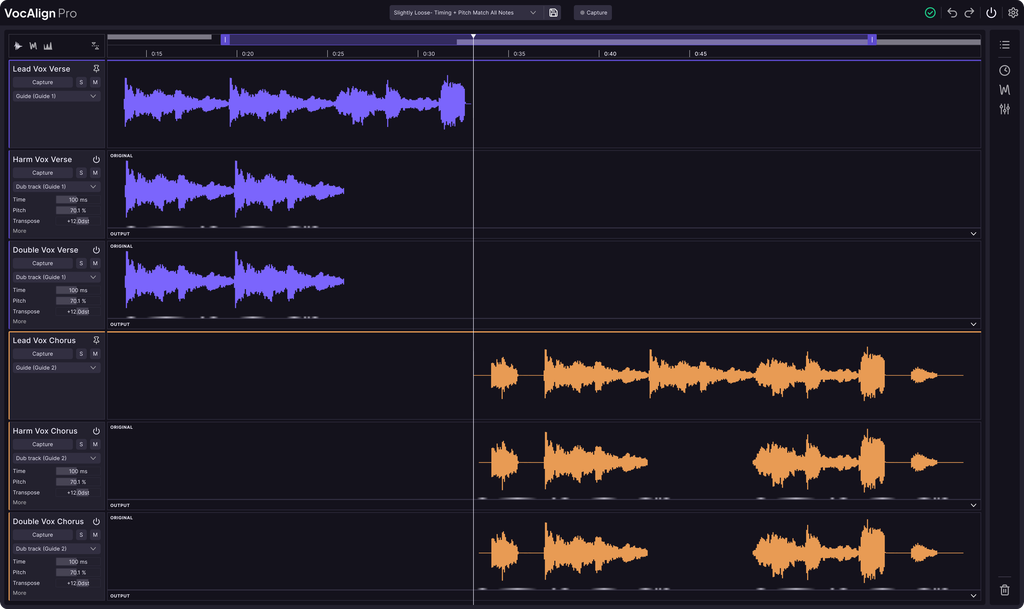
Users can apply corrections globally across a session or go into specific tracks and clips for more exact adjustment. That keeps the workflow broad when it needs to be fast, but still gives producers a way to handle the details when a single layer needs different treatment.
Visual Energy Analysis is another smart addition because it helps producers spot alignment problems across tracks. Vocal timing issues can be hard to identify when the ear knows something feels off but the session has too many layers to inspect quickly. Visual feedback gives engineers a faster way to find the trouble spots and keep moving.
This sits in the same larger shift we have seen across modern vocal tools. In my review of Minimal Audio Evoke, the bigger point was not only that vocal processing is getting more powerful. It is that vocal tools are starting to behave more like full production environments instead of single-purpose fixes.
Standard and Pro Split the Workflow
VocAlign 7 comes in Standard and Pro editions, and the split is pretty clear. Standard gives producers the new multi-track workflow, alignment tools, SmartPitch, track-based pitch and timing control, and visual analysis. Pro is where Synchro Arts adds deeper sound-shaping and tighter integration with the rest of its vocal editing ecosystem.
SmartPitch remains an important part of the package. It detects when backing vocals need pitch correction and applies it only where needed, which helps preserve natural harmonies and musicality. That is a good feature to keep visible because overcorrecting backing vocals can flatten the emotional shape of a stack fast. Tight does not always mean lifeless.
VocAlign 7 Pro adds Creative Formant Control, which lets producers shape stacks, create more convincing doubles, and add width through independent formant control. That pushes the software from pure alignment into vocal design. It is not only about making takes line up. It is about deciding how the stack should feel in the mix.
Pro also includes SynchroLink 2.0, built for tighter integration between VocAlign 7 Pro and RePitch 2. That link keeps tuning and alignment synchronized across the editing process, which should be a big deal for anyone moving between timing correction and pitch correction in the same vocal session.
Pricing and Availability
VocAlign 7 is available now in Standard and Pro editions.
VocAlign 7 Standard is priced at $149 for a new license, $69 for an upgrade, and $99 for a crossgrade. VocAlign 7 Pro is priced at $199 for a new license, $99 for an upgrade, and $133 for a crossgrade.
Synchro Arts also offers subscription options. The Artist plan is $14.99 per month or $9.99 per month billed annually at $119 per year, including VocAlign 7 Standard. The Pro plan is $24.99 per month or $16.58 per month billed annually at $199 per year, including VocAlign 7 Pro.
For anyone working with dense vocal stacks, VocAlign 7 is not just a normal version bump.
It is a workflow reset. The software takes a task that used to happen track by track and pulls it into one vocal workspace, which is exactly where modern vocal production already lives.

Will Vance is a professional music producer who has been involved in the industry for the better part of a decade and has been the managing editor at Magnetic Magazine since mid-2022. In that time period, he has published thousands of articles on music production, industry think pieces and educational articles about the music industry. Over the last decade as a professional music producer, Will Vance has also ran multiple successful and highly respected record labels in the industry, including Where The Heart Is Records as well as having launched a new label with a focus on community through Magnetic Magazine. When not running these labels or producing his own music, Vance is likely writing for other top industry sites like Waves or the Hyperbits Masterclass or working on his upcoming book on mindfulness in music production. On the rare chance he's not thinking about music production, he's probably running a game of Dungeons and Dragons with his friends which he has been the dungeon master for for many years.










![Baby Audio HyperWarp Review: Why Less [Processing] Is More](https://magneticmag.com/wp-content/uploads/2026/10/Untitled-Design-88-1024x683.png)
![How It Was Made: Lang Father i(Junkyard Dog) [Welofi]](https://magneticmag.com/wp-content/uploads/2026/10/Press-Pic_2-1024x576.jpg)