Most DJs understand the importance of matching tempo and key, but anyone who’s spent time building longer mixes knows those calculations only get you part of the way there. You can have two tracks sitting comfortably in the same key, their rhythms perfectly synchronized, and still end up with an awkward transition because the second track enters at the wrong point in the arrangement.
Maybe the incoming record introduces its main melodic phrase before the outgoing one has finished. Maybe a vocal arrives too early. The timing might be technically correct, but the musical structure doesn’t agree.
I’ve spent a considerable amount of time working with DJ.Studio over the years, including using it to assemble mixes for Magnetic Magazine and experimenting with potential track combinations before taking them into a live setting. One of the things I’ve appreciated about the software is its ability to organize a collection of music quickly while leaving room for the DJ to make individual decisions about the transitions.
But I’ve also found that the quality of those transitions depends on understanding each record’s arrangement, which automatic harmonic matching cannot fully account for.
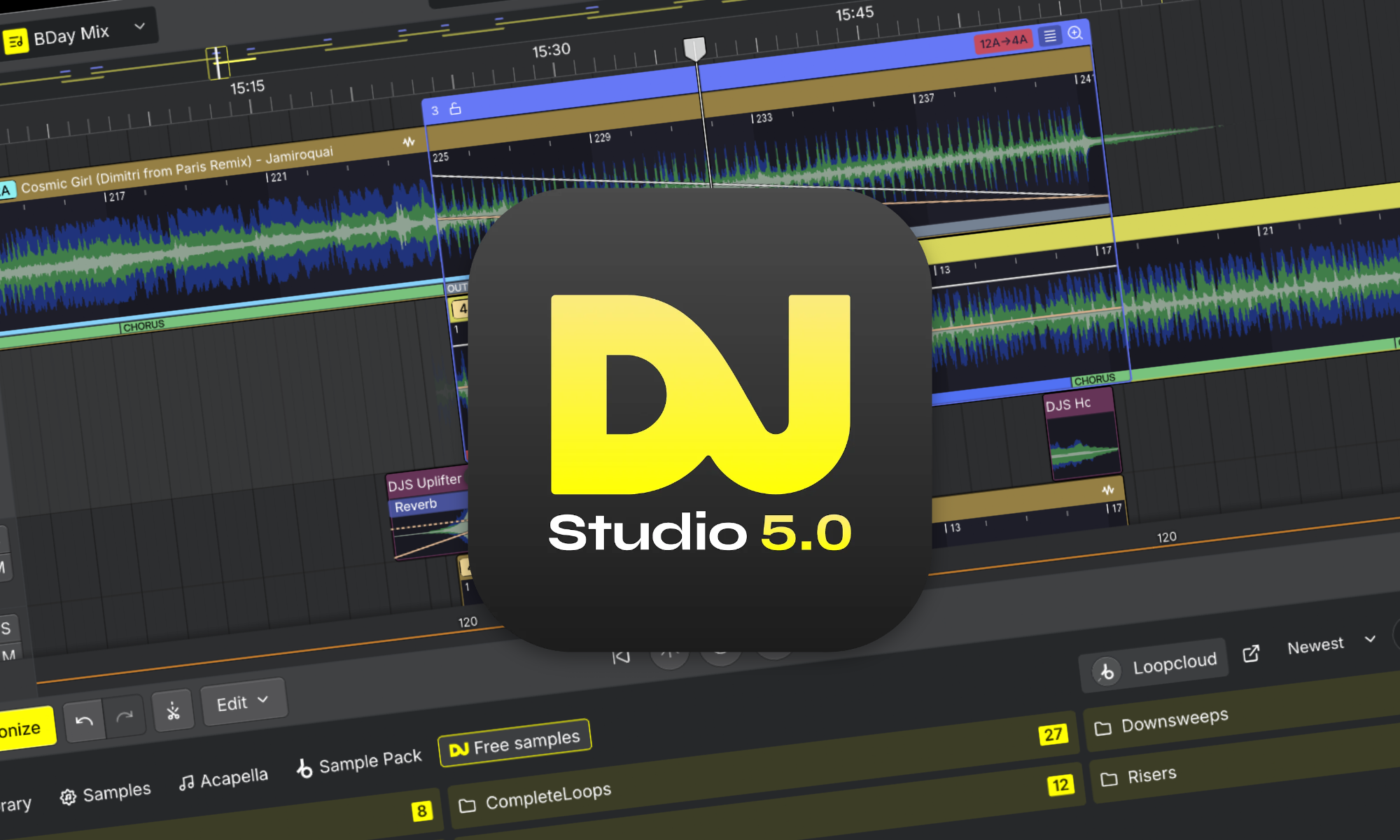
That brings us to DJ.Studio 5.0, released November 11, with an update that puts song structure at the center of its mixing process. The software now analyzes the phrases within each imported track, identifies sections such as intros, verses, choruses, and outros, and uses that information when arranging transitions. There’s plenty else to discuss, including an entirely rebuilt audio engine and expanded DJ library integration, but I think phrase detection is the addition most likely to change how people work with the software.
DJ.Studio 5.0 Now Understands Where Songs Change
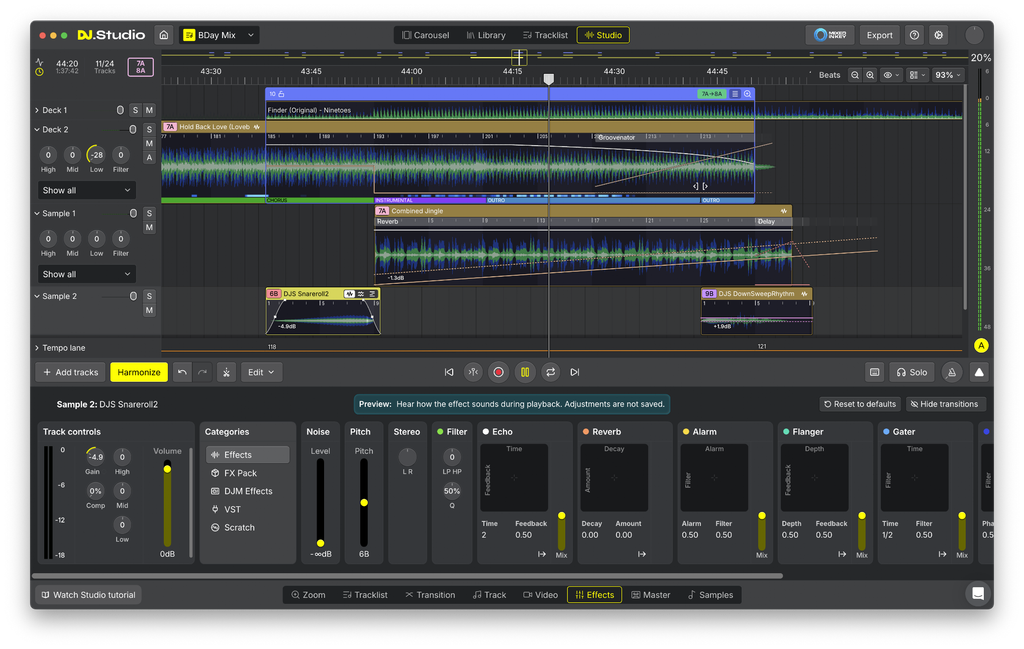
The new phrase detection system analyzes tracks as they’re imported and identifies their structural sections. These are displayed directly alongside the waveform, giving DJs a visual reference for where an introduction ends, a chorus begins, or a breakdown develops into the next section.
Previously, DJ.Studio’s automatic transitions were largely determined by counting a predetermined number of bars from the beginning or end of a track.
That worked reasonably well with predictable arrangements, particularly in electronic music, where producers frequently organize changes around regular groups of bars. But a fixed approach isn’t necessarily appropriate when working with shorter edits, unusual introductions, vocals, or records that don’t follow conventional arrangement patterns.
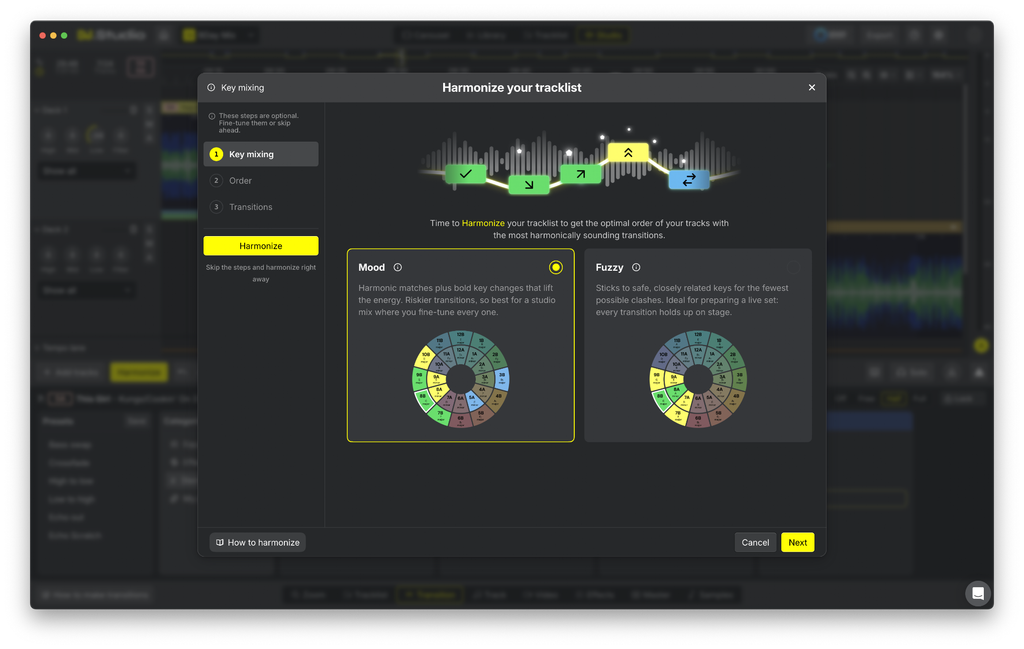
Version 5.0 gives Harmonize, the software’s automatic track-ordering and transition system, access to that structural information.
Harmonize can still organize music according to key and tempo, but it now considers where transitions begin and end in relation to each track’s musical phrases. DJs can choose to overlap introductions and outros, select specific phrase positions, or start transitions around recognizable sections such as a buildup, chorus, or breakdown.
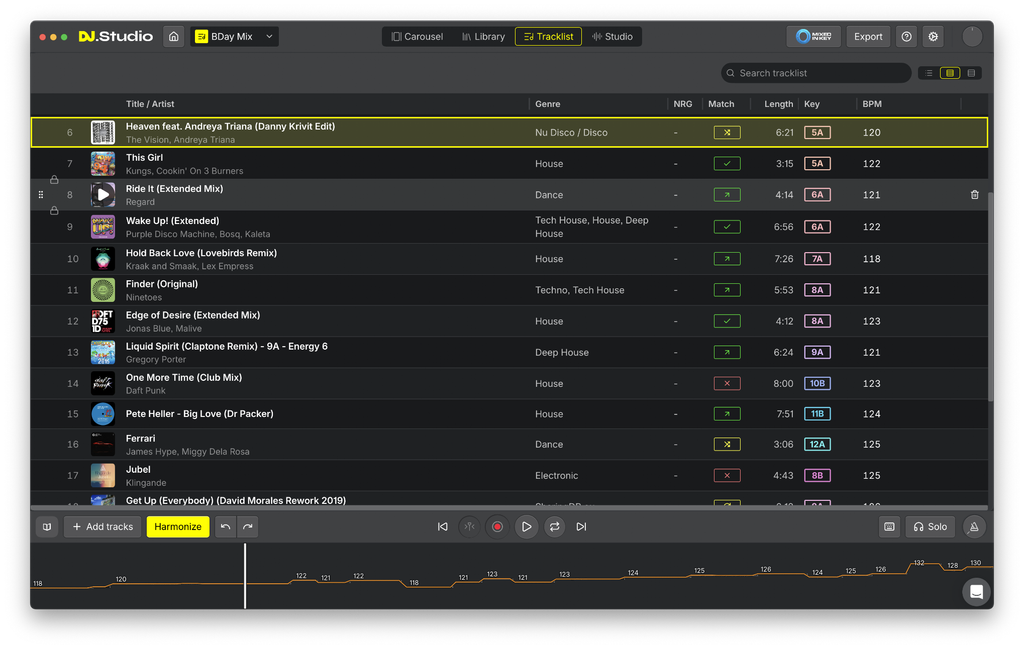
The important distinction is that these decisions remain editable. You can reposition a transition, adjust the identified sections, or disregard the proposed arrangement entirely. The phrase detection provides information and an initial suggestion rather than requiring every transition to follow the same formula.
For anyone unfamiliar with the software, my original DJ.Studio review explains how its timeline-based approach differs from conventional two-deck DJ software. I’ve always found that distinction relevant for artists building promotional mixes, recording radio shows, or experimenting with track combinations ahead of a performance.
The new phrase detection extends that approach because it allows producers to examine the relationship between two arrangements without manually identifying every transition point. I’d still want to evaluate the results by listening, particularly with unconventional tracks, but having those sections identified automatically could eliminate a fair amount of repetitive preparation.
Smart Beatgrid Addresses Older Records and Changing Tempos
The second major addition is Smart Beatgrid, a redesigned timing-analysis system that identifies a track’s first downbeat more accurately and follows tempo changes throughout the recording.
This is particularly relevant when working with older disco, funk, live recordings, and material performed without strict timing correction. A conventional fixed grid assumes that the spacing between rhythmic events remains consistent throughout the track. When a recording naturally speeds up or slows down, that assumption can cause transitions to drift out of sync.
For dance DJs who primarily work with contemporary, tightly quantized productions, this might seem like a relatively minor concern. But if your sets include older recordings, edits from live performances, or music with substantial timing variations, the accuracy of the underlying grid becomes far more important.
I discussed some of these considerations in my article on software for preparing DJ sets, particularly how automated preparation can help artists evaluate potential combinations before performing. DJ.Studio 5.0 attempts to improve the accuracy of that process while requiring fewer manual adjustments.

A Rebuilt Engine Makes DJ.Studio 5.0 Faster
The third change is less immediately visible, although it may be important for people using DJ.Studio regularly. The application’s core has been rewritten around a native C++ audio engine, with the company reporting lower CPU and memory usage alongside substantially faster exporting.
According to DJ.Studio, exports can be up to three times faster than in version 4, with a 60-minute mix taking under three minutes to render. These are company-reported performance figures rather than results from an independent test, and actual export times will depend on the computer, project, and processing involved.
For someone producing an occasional mix, that improvement is convenient. For DJs and labels preparing recurring radio shows, promotional mixes, or multiple versions of the same project, shorter exports could be a meaningful benefit.
That’s a use case I’m particularly familiar with through our Rhythm Radar mix series and other Magnetic Magazine projects. Once the music has been selected and the transitions have been adjusted, the final preparation process still takes time, especially when you’re creating multiple deliverables.
The update also expands the software’s creative tools, with built-in stem separation, up to ten sample lanes, and direct voice-over recording through an updated Input Lane. These additions provide additional options for assembling mashups, introducing spoken segments, and adding original material to a completed mix.
I’ve previously discussed DJ.Studio’s stem separation in my breakdown of software for remixing and bootlegs. Version 5.0 expands the environment surrounding those tools, making it possible to manage more of the finished production within the same application.
DJ.Studio 5.0 Connects More DJ Libraries and Existing Projects
Another development is the expanded library integration. DJ.Studio 5.0 can bring tracks and playlists from rekordbox, Serato DJ Pro, Traktor, Engine DJ, djay Pro, VirtualDJ, and Mixed In Key into a shared workspace.
That matters because many DJs use different applications for separate responsibilities. Someone might organize a collection in rekordbox, perform with Engine DJ hardware, and occasionally use another platform when collaborating or playing on an unfamiliar setup. Keeping those libraries synchronized can become unnecessarily complicated.
The new version also lets you export completed DJ sets back to six major DJ applications, with support for Traktor and Engine DJ added in this release. Cue points and Smart Beatgrid information are retained during export, although compatibility should still be checked with the specific equipment and software version being used.
DJ.Studio 5.0 also introduces complete MixMeister project importing. That includes existing transitions, tempo and volume automation, cue points, and effects, allowing former MixMeister users to continue working on previously created projects.
DJ.Studio 5.0 Pricing and Availability
DJ.Studio 5.0 is available now for Windows and macOS. New perpetual licenses range from $99 to $209, depending on the edition, while the Pro+Stems subscription costs $29 per month. Prices are listed in US dollars before applicable VAT.
Existing customers with an active update package receive version 5.0 at no additional charge. Those whose update coverage has expired can purchase another year of updates and support for $49. The company is also offering a new seven-day trial to all users, including those who previously tested an older version. Exporting is unavailable during the trial.
I wouldn’t describe this release as software that eliminates the need for DJs to understand phrasing. If anything, it makes that part of mixing more visible, which could help newer DJs understand why certain transitions work and others don’t.
The real question for me is how accurately DJ.Studio recognizes structure across different styles of music. Progressive house and other genres with longer, regular arrangements may produce relatively predictable results, while unusual edits, live recordings, and records with less conventional structures will provide a more demanding test.
Still, the direction of this update is interesting. Harmonic compatibility and tempo matching have become fairly standard expectations in contemporary DJ software. DJ.Studio 5.0 adds another consideration by examining where musical sections begin and end, then using that information to suggest transitions that respect the arrangement.
For DJs preparing long sets, producing radio shows, or developing mixes for promotional use, that’s the feature I’d explore first.
You can download DJ.Studio 5.0, explore the full feature changes, or watch the official version 5.0 demonstration.

Will Vance is a professional music producer who has been involved in the industry for the better part of a decade and has been the managing editor at Magnetic Magazine since mid-2022. In that time period, he has published thousands of articles on music production, industry think pieces and educational articles about the music industry. Over the last decade as a professional music producer, Will Vance has also ran multiple successful and highly respected record labels in the industry, including Where The Heart Is Records as well as having launched a new label with a focus on community through Magnetic Magazine. When not running these labels or producing his own music, Vance is likely writing for other top industry sites like Waves or the Hyperbits Masterclass or working on his upcoming book on mindfulness in music production. On the rare chance he's not thinking about music production, he's probably running a game of Dungeons and Dragons with his friends which he has been the dungeon master for for many years.