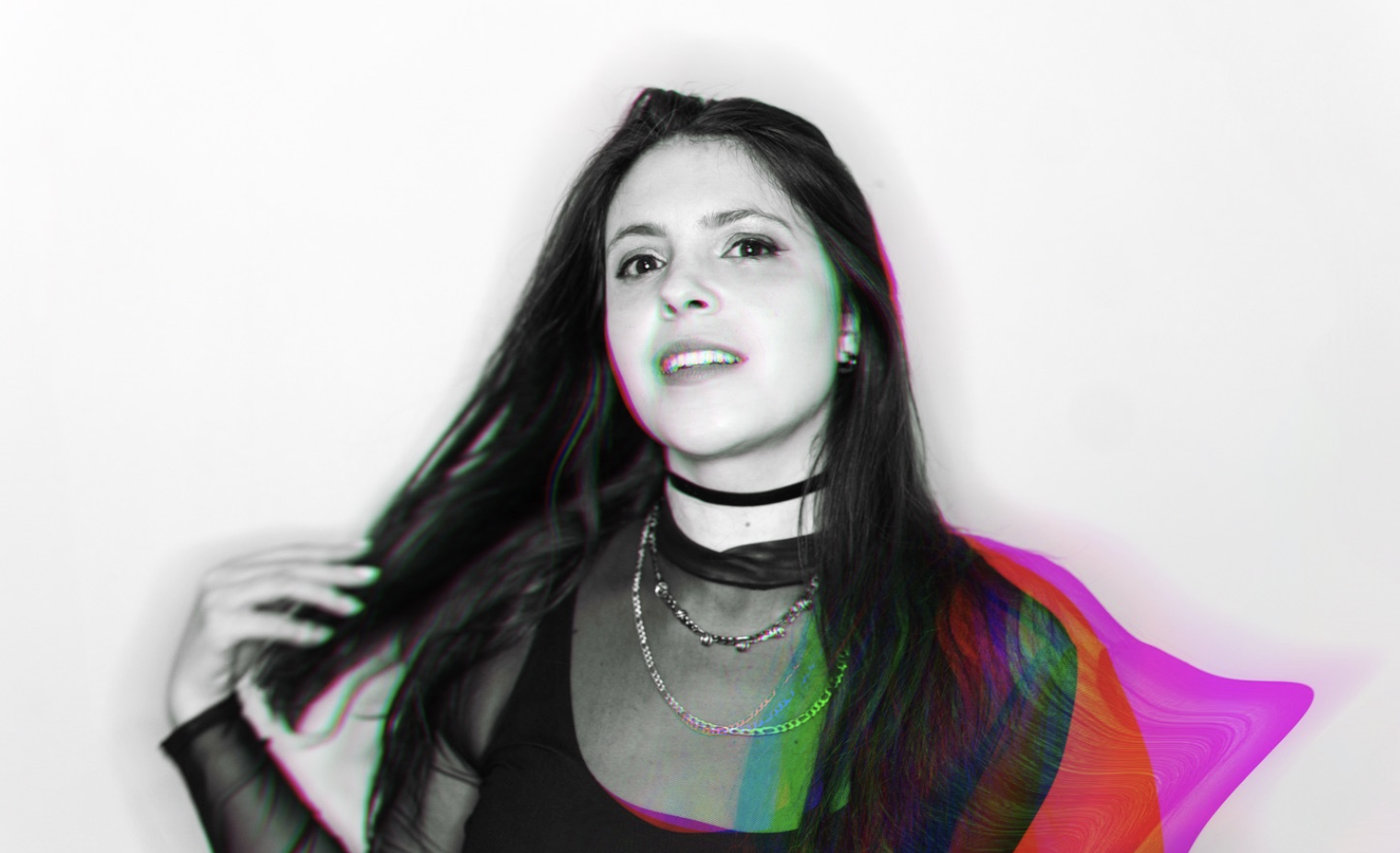
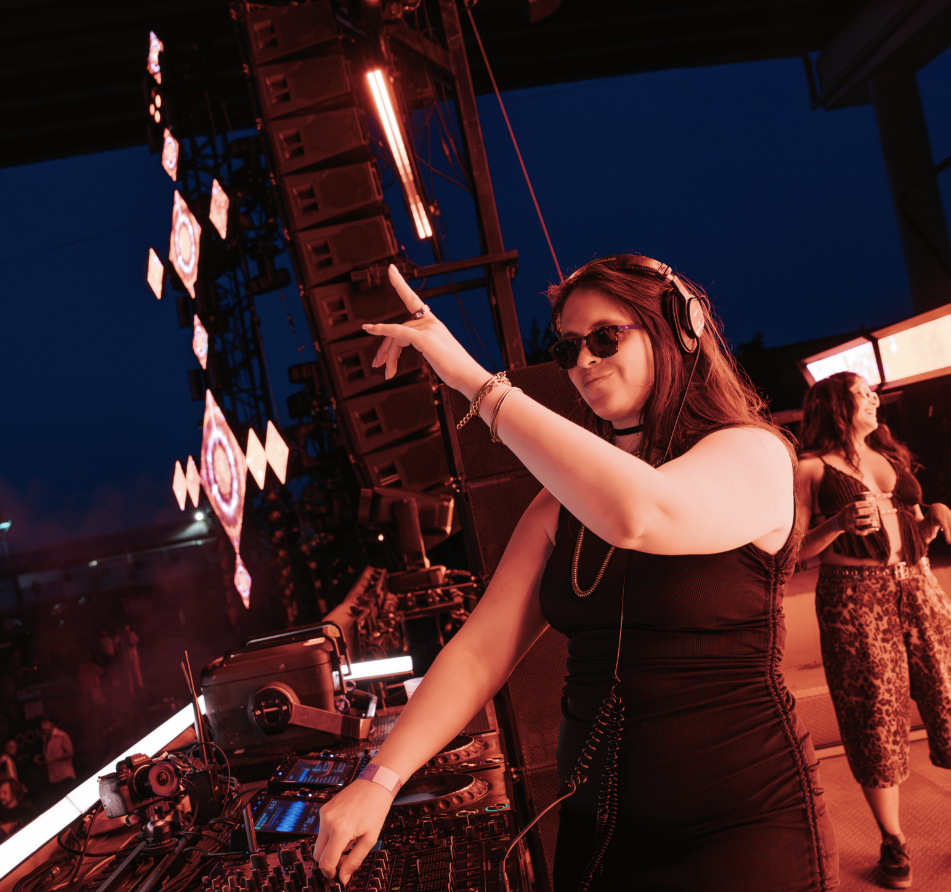
New York producer and DJ Lauren Ritter (@djlaurenritter) has spent years developing a production style that draws from house music’s deeper, more hypnotic influences, with a particular interest in hardware sequencing, analog synthesis, and the small rhythmic decisions that can completely change how a track feels.
Her recent memory detached EP, released through her own Rift Vision label, caught the attention of Constant Circles, whose founder had been supporting the record in DJ sets and radio shows.
That connection eventually led to an invitation to remix C.Vogt & Sofian’s “Girl Got Lashes,” giving Ritter an opportunity to reinterpret the original’s melodic elements through her own approach to groove and sound design.
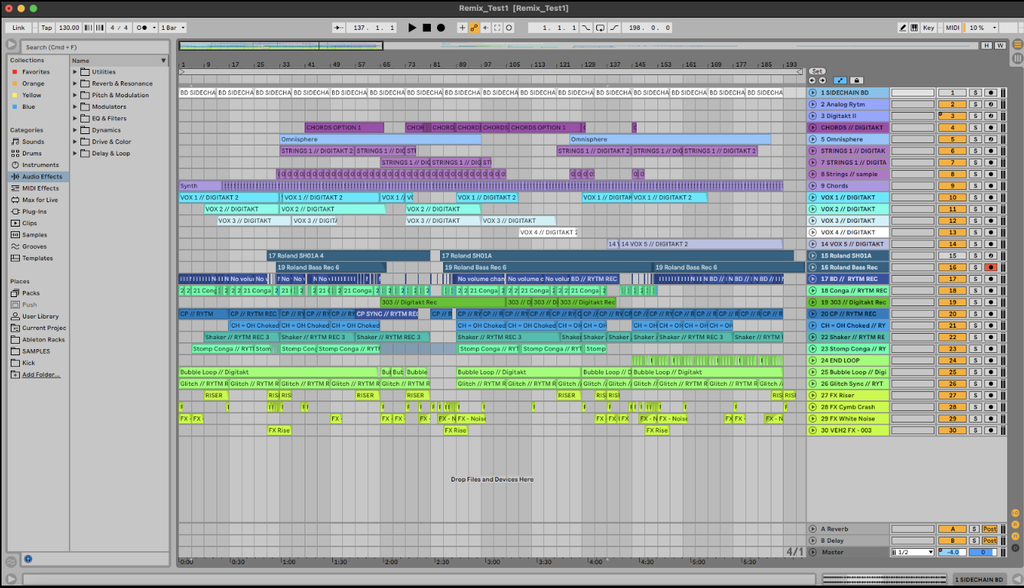
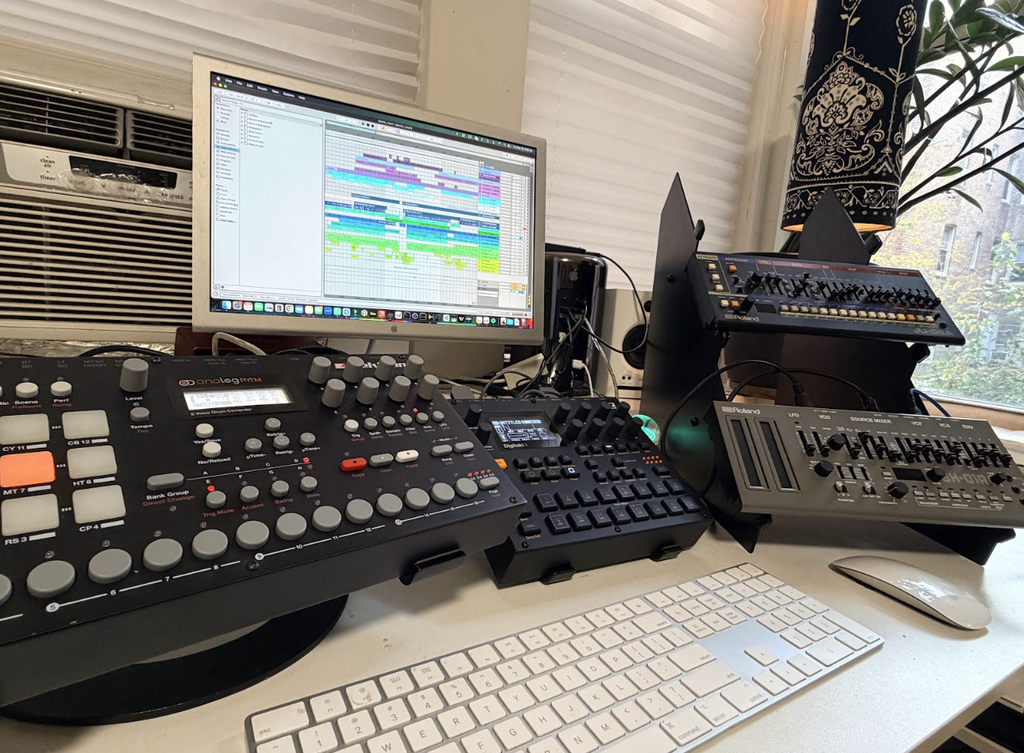
What makes Ritter’s remix particularly fun to unpack from a production standpoint is how much of the arrangement comes from hardware rather than extensive DAW editing. She built the drums using an Elektron Analog Rytm MK1, pushing its swing setting to 61%, and recorded the entire drum bus in mono.
The original vocals were chopped and rearranged on an Elektron Digitakt II, while a Roland SH-01A provided a sub bassline recorded in a single performance rather than programmed note by note. Spectrasonics Omnisphere supplied additional string textures for the breakdowns, letting her retain some of the original’s melodic character while adding a more pronounced rhythmic emphasis.
For this installment of pir How It Was Made series, Ritter explains how she approached each of those elements and why she continues to rely on a relatively focused hardware setup when producing house music.
Her breakdown covers the specific sequencing, sampling, and recording techniques behind the remix, including how she used probability-based triggers to rearrange vocal fragments, how she worked with swing and timing across the drums and bass, and why some of the quieter sounds in an arrangement can contribute considerably to the finished record.
Below, she walks through four instruments used in the production before sharing five observations on studio workflow and electronic music production.
Elektron Analog Rytm MK 1
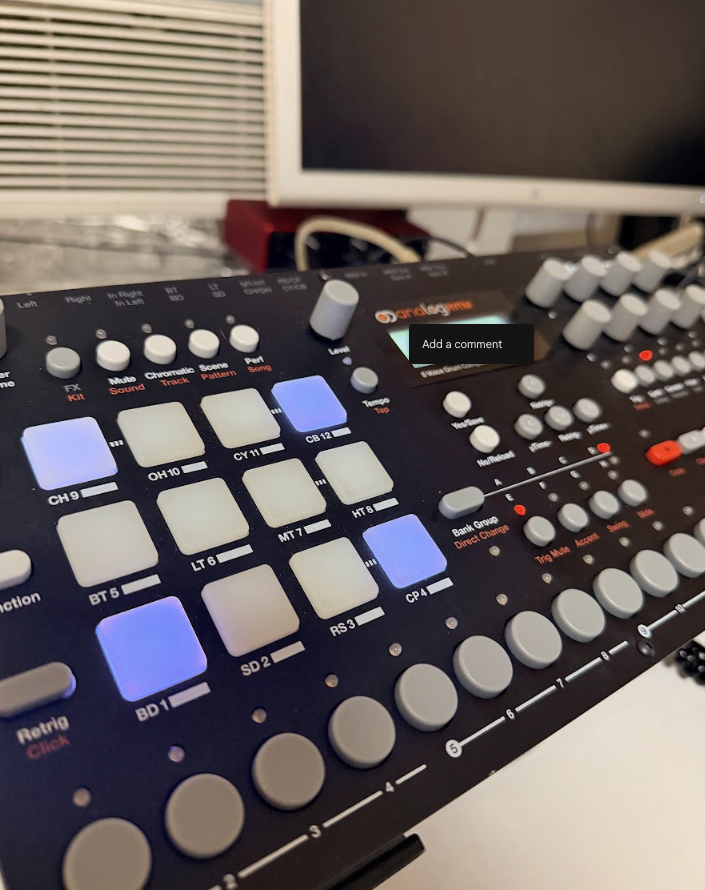
The Analog Rytm is at the heart of my workflow. It’s a hybrid drum machine that combines analog synthesis with sample playback, giving it both punch and flexibility. One of my favorite things about it is how quickly I can move from an idea to a groove without getting lost in menus or endless sound choices. Rather than programming every hit perfectly on a grid, I tend to treat the Rytm more like an instrument and build grooves by experimentation & feel. As the backbone of any track, the drums need to feel both powerful and alive, and the Rytm has a weight, punch, and immediacy that I have yet to find in other gear.
All of the drum programming in this remix was handled by the Rytm, using primarily 909 percussion samples. I recorded every drum part through the Rytm’s analog outputs and kept the entire drum bus in mono, which helped the groove feel focused and powerful. I also pushed the swing setting to 61%, which is the highest swing value I’ve used in any project to date. That exaggerated shuffle became one of the defining characteristics of the remix and gave the drums a loose, stomping energy that sits somewhere between house and UK garage influences.
For producers making deeper house music, I think groove matters far more than collecting more samples. If you already have sounds you like, spend time experimenting with things like subtle pitch shifting, LFOs, conditional triggers, retriggers, and swing values instead. The difference between 54% and 60% swing can completely transform the emotional feel of a drum pattern. Some of my favorite grooves have come from pushing the Rytm into new territory, so don’t be afraid to experiment beyond your usual settings.
Elektron Digitakt II
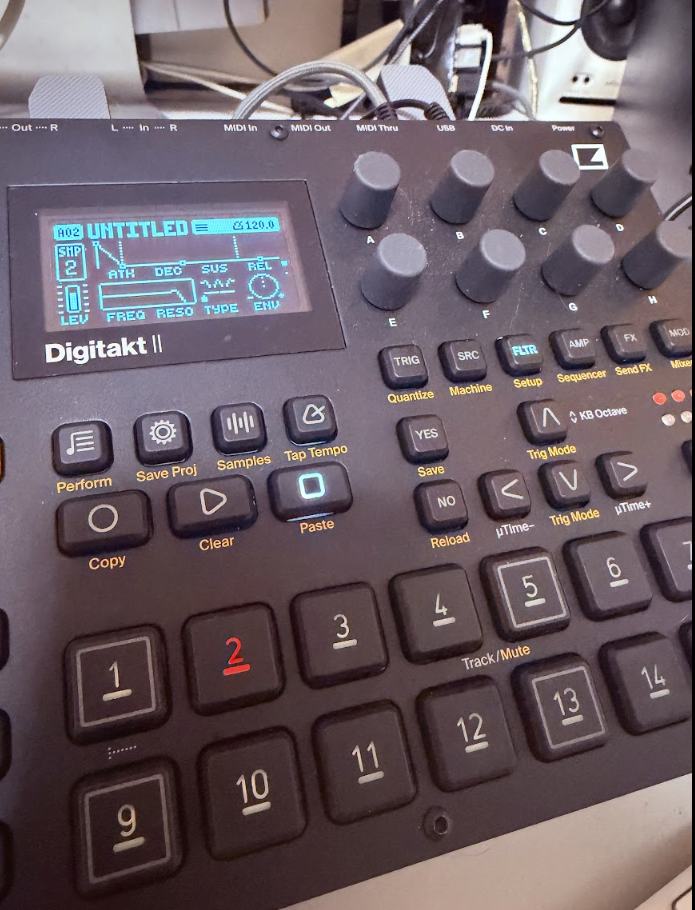
The Digitakt II is my primary hardware sampler and arguably the most creative piece of gear in my studio. Beyond simply playing back samples, it shines when transforming them through sequencing, modulation, conditional triggers, filters, and performance controls. It encourages experimentation in a way that often leads me somewhere I never expected to go. For music built around texture and movement, it’s an incredibly inspiring instrument.
The Digitakt II became the heart of all the vocal work in this remix. I sliced the original vocals into small fragments using Grid Mode and rebuilt them into entirely new phrases and textures. Heavy use of delay, reverb, conditional triggers, LFOs, and filter modulation allowed the vocal chops to drift and evolve throughout the arrangement, creating ghostly melodic fragments that constantly change shape. I also used the Digitakt to resample and re-sequence portions of the original acid line and chord progression so they would lock into the more aggressive swing of my new drum groove.
One of my favorite Digitakt techniques is treating vocal samples as raw material rather than complete finished phrases. Small slices, subtle filtering, and probability-based sequencing can create evolving atmospheres that feel unique every time the track plays. For hypnotic house music, that sense of movement is often more powerful than adding new elements. Some of my favorite moments happen when a sample takes on a life of its own, and the Digitakt is brilliant at creating those happy accidents.
Roland SH-01A
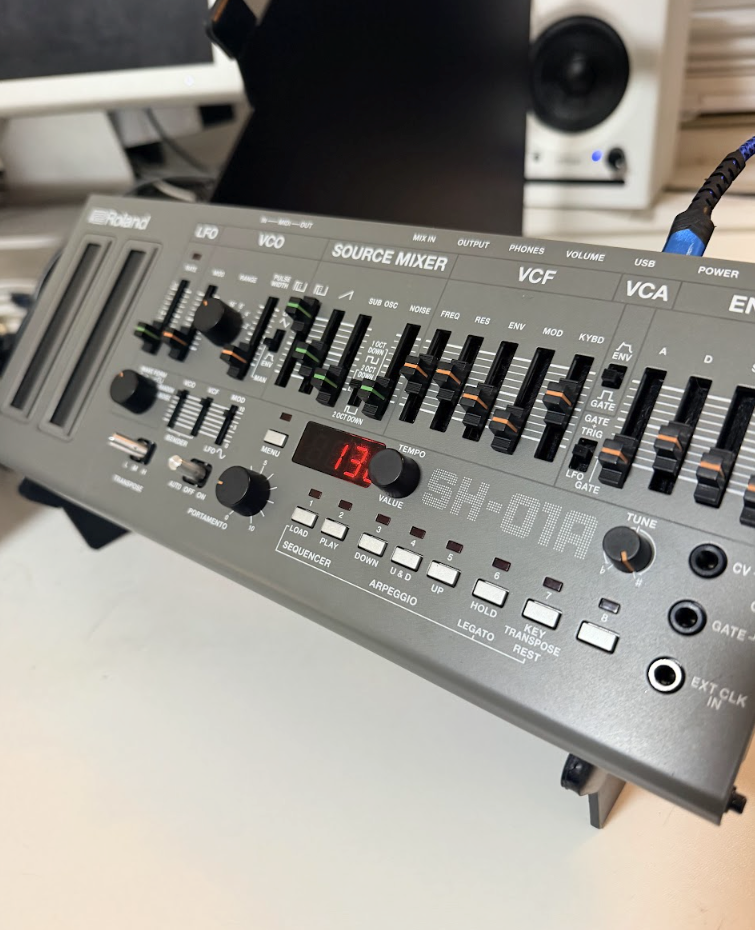
The Roland SH-01A has become my go-to whenever a track needs a strong low-end foundation. A faithful recreation of the iconic SH-101, it adds modern features like polyphony, unison, and chord modes. While it covers a lot of ground, it still feels immediate and hands-on, with very little menu diving standing between an idea and a finished sound. That’s a big part of why I keep coming back to it.
For my remix of “Girl Got Lashes,” I used the SH-01A to build a slightly-rattling sub bass sound using a low filter cutoff and a touch of resonance. Instead of programming the bassline step-by-step, I performed and recorded the entire part in a single take, which helped preserve subtle timing variations and keep the groove feeling human. That approach worked particularly well alongside the heavily swung drums, allowing the bass to ebb and flow naturally underneath the track.
One thing I’ve learned from using the SH-01A is that simple bass patches are often the most effective. In deep house and UK-influenced grooves, the magic usually comes from the rhythm rather than complicated sound design. I’ve found that recording multiple takes and choosing the one with the best feel often works better than endlessly editing MIDI notes. It’s those tiny imperfections that create the movement and magic.
Spectrasonics Omnisphere
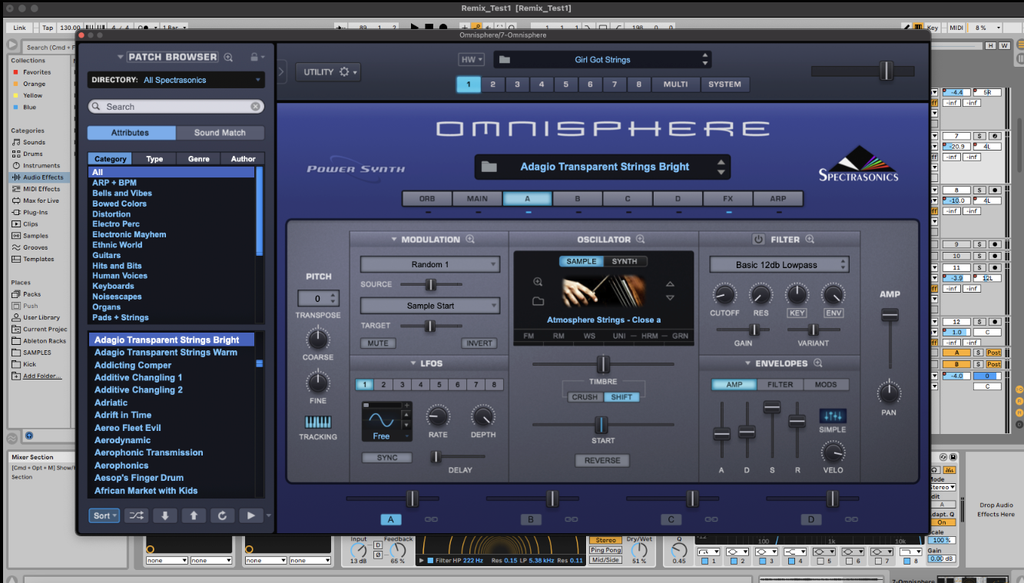
Omnisphere has been a constant part of my production process for over fifteen years and is to this day my favorite software synth. It’s still one of the first places I go when I’m looking for atmosphere and emotion. Few instruments create dreamy, cinematic textures as effortlessly. It’s a classic for a reason and still appears in nearly every project I release.
For this remix, Omnisphere was used to create a subtle floating string pad that appears primarily during the breakdown sections. The goal wasn’t to make the pad obvious, but rather to increase tension and emotional depth in key moments. I blended it quietly beneath other string samples I recorded from the Digitakt. That extra layer helped make the breakdowns feel larger and more immersive before bringing back the groove.
If you’re producing deep house, don’t underestimate the value of sounds that are felt more than heard. Some of my favorite Omnisphere parts sit surprisingly low in the mix but contribute enormously to the atmosphere. Rather than searching for the biggest-sounding pad, I focus on finding textures that complement the track’s emotional tone. A subtle layer can create more depth than an overly prominent one.
Quick Fire Hot Takes on the Scene + Production
Hot Take #1
The best workflow is the one you actually use. Most producers don’t need more options, they need fewer distractions.
Hot Take #2
Mono is your friend for punchy drums and a clean low-end. A mono drum bus and bass sound beats more processing almost every time.
Hot Take #3
Discipline fosters creativity. The more consistently you show up to make music, the easier it becomes to trust your instincts.
Hot Take #4
Making your arrangement dynamic is more important than adding another plugin. A great track shouldn’t end in the same place it started.
Hot Take #5
Learn your gear deeply before buying something new. A familiar instrument will usually give you better results than a new one you’re still figuring out.

Will Vance is a professional music producer who has been involved in the industry for the better part of a decade and has been the managing editor at Magnetic Magazine since mid-2022. In that time period, he has published thousands of articles on music production, industry think pieces and educational articles about the music industry. Over the last decade as a professional music producer, Will Vance has also ran multiple successful and highly respected record labels in the industry, including Where The Heart Is Records as well as having launched a new label with a focus on community through Magnetic Magazine. When not running these labels or producing his own music, Vance is likely writing for other top industry sites like Waves or the Hyperbits Masterclass or working on his upcoming book on mindfulness in music production. On the rare chance he's not thinking about music production, he's probably running a game of Dungeons and Dragons with his friends which he has been the dungeon master for for many years.