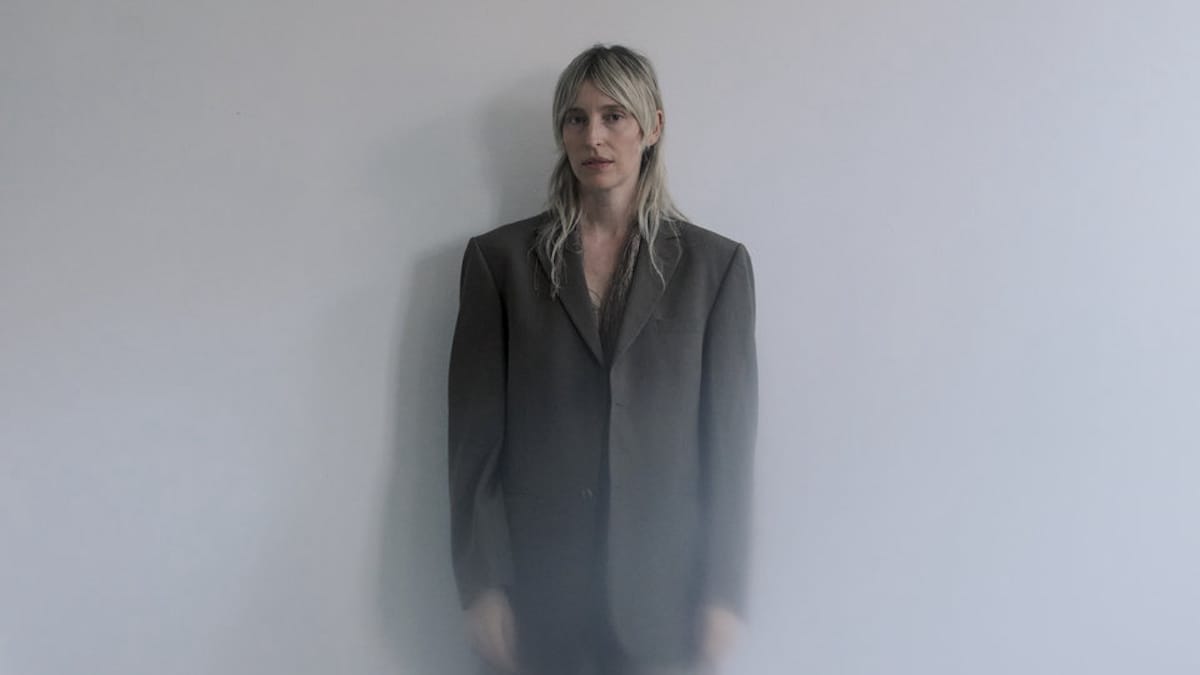
Ambient continues to be most interesting when nobody worries too much about whether it is actually ambient. This month’s selection stretches from Carmen Villain’s skeletal dub experiments and Gi Gi’s blurred sample work to guitar improvisation, modular electronics, field recordings and some surprisingly beat-driven diversions.
There are established names here, including Julia Holter, John Beltran and Windy & Carl, alongside artists working in some of the more interesting corners of contemporary experimental music.
These are the 15 Best Ambient Tracks of August 2026
Carmen Villain – Holding a Shape
Carmen Villain’s new album Memoria is a darker, stranger proposition than the soft-focus beauty of Only Love From Now On, bringing dub and low-end pressure much further into her music. “Holding a Shape” is perhaps its most abstract moment, built from backwards movement, tiny electronic disturbances and sounds that seem to appear somewhere beyond the edges of the track. There’s still a sense of dub architecture underneath it all, but almost everything has been stripped away, leaving a wonderfully strange little piece that feels unstable right up to its final seconds.
Argento – Sabbia Su Sabbia
Argento is the new project from David August and percussionist Lorenzo Setti, and Miraggi finds the pair digging into Italian library music, Balearic electronics, jazz fusion and the more luxurious end of new age. “Sabbia Su Sabbia” is particularly lovely: Rhodes spirals around brushed percussion while chimes, soft synths and assorted acoustic details keep drifting through the picture. There is something knowingly idyllic about the whole thing, like an imagined Mediterranean soundtrack discovered on an obscure early-’80s cassette, but the arrangement and musicianship are good enough to carry it.
John Beltran – Collage of Dreams
A welcome reissue gives us an excuse to revisit one of John Beltran’s finest pieces. Originally released in the mid-’90s, “Collage of Dreams” captures what has made his music so enduring, with Detroit electronics opening into ambient, jazz and something altogether more dreamlike. Synths arrive in long, overlapping waves, percussion flickers somewhere underneath and the whole piece seems to continually expand outwards. More than three decades on, it’s also a useful reminder of just how much of today’s ambient and downtempo electronic music can be heard somewhere in Beltran’s earlier work.
Windy & Carl, Optigan Consvervatory – Timelines
Nearly 30 years after first crossing paths in Michigan’s independent music scene, Windy & Carl and Optigan Conservatory finally made a record together. “Timelines” is where the collaboration becomes especially beautiful. Old keyboards and organ tones establish a hazy foundation before Carl Hultgren’s guitar gradually rises through it, less like a lead instrument than another layer of weather. The album often foregrounds the physical character of ageing instruments, and here those imperfect textures give the music its warmth. Six minutes disappear remarkably quickly.
J.WLSN, Liam Keenan – Teflon Blues I
J.WLSN and Liam Keenan grew up in different parts of regional New South Wales and use Country/The Country to revisit those landscapes through guitar, modular synths, samples and long-form improvisation. The first section of “Teflon Blues” feels suitably vast, with blurred guitar hanging in the distance while layers of electronics accumulate around it. There is a physical sense of landscape here, but also of trying to remember somewhere after years away, when geography and memory have started bleeding into one another. A strong opening to an absorbing record.
Jonny Nash, Tomo Katsurada – Anone None
Jonny Nash and former Kikagaku Moyo guitarist Tomo Katsurada have spent the past year exploring what two guitars can do together, and At The Emerald Pool is the beautifully understated result. “Anone None” sits somewhere between ambient, folk and improvised guitar music, with small melodic phrases passing between the pair and plenty of space left around them. Nash has long been excellent at making music that seems to exist in its own climate, and Katsurada is a natural partner. It feels loose, intimate and completely unhurried.
Julia Holter – Clepsydra
Named after the ancient water clock, “Clepsydra” lasts just over two minutes but contains enough oddness to justify considerably longer investigation. Holter strips things down to voice, electronics and keyboard textures, with dissonant arpeggios and processed harmonies giving the piece an almost choral quality. It appears on Materia, the companion record to 2024’s Something in the Room She Moves, and feels like one of those ideas that benefits from being left small and slightly unresolved. A strange, fleeting interruption in an album full of them.
Patricia Wolf – Adapted For Extreme Conditions
Patricia Wolf’s Yarrow was created around field recordings made at the Rocky Mountain Biological Laboratory in Gothic, Colorado, as part of a project connecting music with ecological research. “Adapted For Extreme Conditions” closes the record beautifully, folding those environmental recordings into soft electronic melodies and slowly shifting synth layers. There are traces of Boards of Canada in its faded melodic language, but Wolf’s attention to the surrounding ecosystem gives the piece its own character. Headphones recommended, partly for the music and partly for everything happening behind it.
Andreas Tilliander – Stralglans
Andreas Tilliander describes Lava as an exploration of southern Sweden through “light, memory, and open landscapes”, constructed from samplers, synthesizers, VHS recordings and field recordings gathered around Skåne. “Strålglans”, Swedish for “radiance”, takes a slightly different route: Tilliander made it entirely with Eurorack modular equipment, recording four channels before repitching sections in Ableton. The result is nearly nine minutes of gently mutating electronics, with tones continually separating, overlapping and recombining. Tilliander has been making adventurous electronic music since the late ’90s, and his curiosity clearly hasn’t diminished.
anthene – minds and bodies
There is an appealing patience to Brad Deschamps’ work as anthéne, and “minds and bodies” gives itself more than seven minutes to settle into place. Taken from time and space, his latest release for Home Normal, it works through sustained tones, distant melodic fragments and tiny changes in texture rather than obvious movement. Listen casually and it can seem almost motionless; give it a little attention and there is activity everywhere. It is ambient music in a fairly traditional sense, perhaps, but made with an unusually good understanding of how much can happen inside very small changes.
Wil Bolton – Vermilion
Wil Bolton describes “Vermilion” simply as warm, fuzzy melodic ambient, which is actually difficult to improve upon. Piano, Mellotron, synthesizer and field recordings dissolve into one another until the distinction between instrument and atmosphere becomes increasingly irrelevant. Bolton has a particularly good ear for worn, slightly weathered textures, and there is something almost tactile about the softness here. Nothing demands attention, but the details keep pulling you back in, especially the little melodic figures that emerge from the haze before disappearing again.
Eden Aurelius – Darkroom
One of the more substantial pieces in this month’s selection comes from Eden Aurelius’ debut album Entre Nous. “Darkroom” is ambient music with serious weight underneath it, pairing suspended, gauzy electronics with sub-bass that gives the track an unexpectedly physical presence. Aurelius has been circling this intersection of dub, ambient and hypnagogic electronics for some time, but Entre Nous makes the language feel particularly complete. “Darkroom” is a good example of why: dreamy enough to drift into, but with enough pressure underneath to keep you anchored.
zake, Coppice Halifax – Canopy Opening
The premise behind Tree Grid is fascinating. zakè sent Brian Grainger, aka Coppice Halifax, a collection of loops, sounds and textures with no beats or predetermined rhythmic structures, then gave him complete freedom to rebuild them. “Canopy Opening” is the first result, taking zakè’s characteristically expansive source material somewhere more rhythmic without losing its scale. Patterns emerge gradually from the drone, repetition starts doing strange things to your sense of time, and the boundary between remixing and composition becomes increasingly difficult to locate. Exactly the sort of collaboration that produces something neither artist would have made alone.
Danny L Harle, Doss – C’mon
Danny L Harle and Doss might seem like slightly unexpected guests in an ambient chart, which is part of the fun. Their collaborative Crystallise Divergence EP moves through trance, pop, electronica and various digital dream states, and “C’mon” sits somewhere in the middle of all of them. Bright synths, soft-focus textures and a persistent rhythmic pulse give it considerably more forward motion than most of this list, but there is a weightless quality to the production that makes the connection work. Ambient for people who have no intention of sitting down.
Gi Gi – Acumen
Gi Gi calls his approach “dubwise sampledelia”, essentially taking borrowed fragments and processing them until their original identity disappears. On In Lieu, released through Vancouver institution Mood Hut, that method is pulled closer to dub, downtempo and the dancefloor. “Acumen” lands in a particularly nice middle ground: woozy samples and smeared electronics drift around a low-slung rhythmic framework, with sounds repeatedly surfacing before dissolving back into the mix. It is murky, tactile and slightly disorientating, and a fitting endpoint for a month in which ambient music spent a lot of time wandering outside its supposed boundaries.