For Portuguese DJ and producer Alfonsvs, electronic music has always been about exploring the space between house and techno. Over the past 14 years, he has carved out a distinctive sound that balances driving rhythms, hypnotic depth and an instinct for the dancefloor, earning support from influential figures including Laurent Garnier, Carl Cox, Luciano and Pete Tong along the way.
Now, he returns to his own Kokölò imprint (@@kokolo.records) with Need Your Love EP, a release that embraces classic house influences while retaining the energy and depth that have become his signature. From the uplifting piano chords and soulful vocal samples of the title track to the darker, more immersive territory of ‘In There’, featuring RR, the EP captures an artist confident enough to explore different moods without losing sight of the dancefloor.
An interpretation from Amsterdam’s Elias Mazian adds another dimension, while ‘6AM Liberation’ closes the record with the hypnotic feeling of sunrise after a long night.
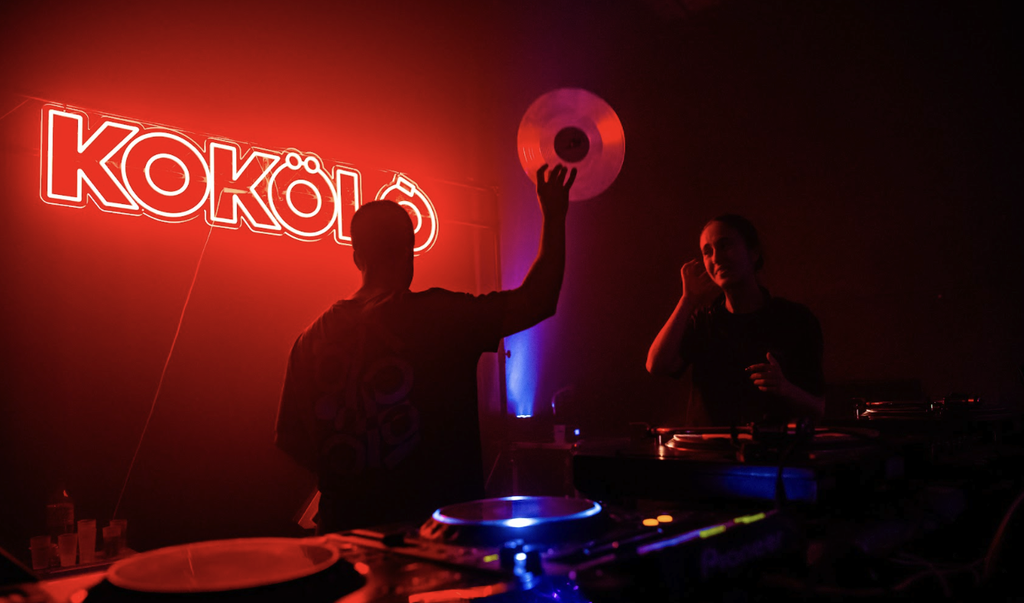
Beyond the studio and the booth, Alfonsvs has played an active role in shaping Porto’s underground electronic music community. Through his work with Kokölò and the former Future Perfect event series, he has helped to connect the northern region of the country with international talent while creating space for local artists to grow. With Need Your Love EP marking another chapter in his evolution, we caught up with Alfonsvs to discuss the inspiration behind the record, the experiences that have shaped his career, the changing landscape of Porto’s club scene, and what lies ahead.
Interview With Alfonsvs
1. Your new Need Your Love EP sees you lean into classic house influences while retaining the depth and energy that have defined your sound for over a decade. What inspired this new direction, and do you feel your relationship with house music has changed as your career has evolved?
I’ve always loved House as much as I love Techno. I think there’s a time and place for everything, and I’m definitely not a purist. What I love most about electronic music are the grey areas where these two worlds meet, and I’m also not someone who looks back too much, but when I think about it, I’m currently playing and producing the very sounds that hooked me into electronic music in the first place.
The inspiration for his EP came from wanting to break free from genre labels and simply put out music I genuinely believe in. On this release I ended up exploring a more euphoric side of House, but there’s so much to explore in both House and Techno! Some of these tracks were actually produced four years ago and are only seeing the light of day now, even though I’ve been playing them for years.
I think my relationship with House has always been there. Even during what people might call my techno years, house was always present in my sets. I sometimes joke that I’m too house for techno clubs and too techno for house parties, which probably says a lot about where I stand musically.
In recent years, I felt techno was becoming increasingly focused on higher BPMs and, at times, a little too formulaic for my taste. I wasn’t getting as much out of it creatively, so I decided to open things up and explore without worrying too much about where the music fits. At the end of the day, music is my escape. I still have a regular job, which keeps my mind occupied in other ways, and music is where I can express myself freely. I think Need Your Love reflects that mindset more than any deliberate change in direction.
2. The EP moves through different moods, from the uplifting piano chords and soulful vocal samples of ‘Need Your Love’ to the darker atmosphere of ‘In There’ and the sunrise energy of ‘6AM Liberation’. Did you have a particular journey in mind when putting the record together, and how important is storytelling in your productions?
The EP came together very naturally. I was experimenting in the studio, sampling old records and applying my instruments and processing tools, without a particular concept or journey in mind. Over time, I started gathering more and more tracks on my hard drive that didn’t really fit with Rave Child, but didn’t quite fit with what I had previously envisioned for Alfonsvs either.
To be honest, I was considering creating a separate alias for my house productions, but my booker was the one who convinced me to release them under Alfonsvs. In a way, I had to let go of the idea that every sound needed its own identity or project. We live in a world where everything is increasingly fragmented, especially through social media, and I felt it made more sense to bring these different sides of my musical personality together rather than create another name to maintain.
As for storytelling, I think it’s important for every track to have an identity of its own. I don’t necessarily approach music by trying to tell a specific story, but I pay a lot of attention to the atmosphere and feeling each track creates. I want every track to have its own moment, its own reason to exist. If there’s a story connecting the tracks on this EP, I think it emerged naturally through the process rather than being something I planned from the start.
3. You’ve collaborated with RR on ‘In There’, while Elias Mazian brings his own interpretation to the title track. What do you look for in a collaboration or remix, and how do you balance preserving your original vision with allowing other artists to take the music somewhere unexpected?
I have social media to thank for both of these collaborations, although the stories behind them are quite different.
RR was introduced to me through another artist I met on Instagram, Plastic Reflections. We started exchanging music and projects, and at some point he sent me an idea that I immediately felt I could contribute something to. We ended up working on the track by sending stems back and forth until it came together. The funny thing is, we still haven’t met in person!
With Elias, the story goes back a bit further. I met him many years ago while working as a lifeguard at the second edition of Waking Life Festival, and we stayed in touch afterwards. When I heard his last album, I knew I wanted to ask him to remix the title track. I had a feeling it would work really well, and I was more than happy when he told me he had ditched the vocal stem I sent him and used his own voice instead. That was exactly the kind of unexpected twist I was hoping for.
When I invite someone to remix my music, I believe I should give them complete freedom to take it wherever they want. There’s no point in asking another artist to reinterpret your work and then telling them how it should sound. I choose people because I trust their taste and their artistic vision, and I think that’s when the most interesting things happen. I’m happy for someone to take my original idea somewhere I would never have thought of myself… That’s the whole point of collaborating.

4. Looking back to your early releases, your appearance on Extended Records in 2016, and your subsequent release on Cod3 QR through Laurent Garnier, what have been the defining moments in your journey so far? Was there a particular point when you began to feel that Alfonsvs was developing a sound and identity of its own?
Cod3 QR was definitely a big moment for me as a producer. Coming from a small town, having my music reach that kind of platform was a big deal, and it helped me a lot in terms of visibility and confidence.
But I think I found my sound a bit later. In the beginning, I was trying all sorts of things at once. I was a student, had loads of free time and was constantly experimenting with different sounds.
Once I started working and had less time to spend in the studio, I had to become more efficient and make decisions faster. I also started paying more attention to my mixdowns, which is something I’m still trying to get better at today. Slowly, through a lot of trial and error, things started falling into place.
I like to think that, whether I’m making house, techno or something in between, there’s a common thread in the way I approach sound and process things. It took me a while to recognise it, but I think that’s what makes a track sound like mine. I’m still figuring things out, though… I don’t think you ever really stop learning or experimenting.
5. In 2017, you were selected for Burn Residency in Ibiza, with mentors and judges including Carl Cox, Luciano, Seth Troxler and Pete Tong. How did that experience shape you as a DJ and producer, and what lessons from that period still influence the way you approach music today?
I think the best advice I got from the crew was to stop trying to fit into the box people expect me to fit in.
Obviously, context matters, and you need to understand where you are and who you’re playing for… There’s this saying “You gotta read the room!”. But I’m not afraid of throwing in the odd curveball if I feel like it makes sense at that moment. I think a DJ needs to live in the present and react to what’s happening in the room, rather than just following a plan or worse… what they think the promoter expects of them.
I guess we’re all looking for some kind of consistency in our sets, but at the end of the day, the goal of a party is to make people have a good time, and I think it’s important not to lose sight of that.
6. The North of Portugal, and Porto specifically, have become a central part of your identity, both musically and professionally. Through Future Perfect and your work programming events for Kokölò, you’ve helped bring international artists to the city while supporting its local community. How would you describe the evolution of Porto’s underground scene, and what do you think it needs to continue growing?
I started throwing parties in my hometown, Barcelos, back in 2018. They were called Future Perfect and were mostly focused on techno. Over the years, I managed to bring artists like Luke Slater, Freddy K, Phase and Fadi Mohem to a small town in the north of Portugal, while giving local artists like Alex Randal, Morsil, Silêncio and VHS a platform to showcase their work. These are people who put a lot of time and dedication into what they do, and who might otherwise have had fewer opportunities to play and express themselves.
When we started Kokölò in Porto, together with Adriana Ruas, we carried that same philosophy forward, but with a broader musical spectrum. I think it’s really important to create space for new generations to express themselves. I’ve had people give me opportunities along the way, and I feel it’s only fair to do the same for others. If I see potential in a DJ, I’ll always try to help where I can. It’s about giving something back, but also about building something of our own.
As for Porto, I think the scene is going through a difficult period. Rents have become so high that a big chunk of people’s wages goes straight into keeping a roof over their heads, leaving less money to go out and support the places that make a city interesting. A lot of venues are struggling, and younger generations seem to be going out less and drinking less, which obviously has an impact on the whole ecosystem.
I don’t think there’s one simple answer to how the scene can keep growing. For our part, we try to keep Kokölò inclusive and accessible, while bringing artists we genuinely believe in and putting real thought into the musical curation. I think the key is to keep creating spaces where people feel they belong, where local artists can grow, and where going out is about more than just seeing a big name. But for that to work in the long run, the people making the scene need to be able to afford to live in the city they’re helping to build.
7. Running a label and programming parties alongside your own production career means working behind the scenes as much as performing. What motivates you to invest so much energy in building a platform for other artists, and has this wider perspective changed how you define success in electronic music?
It definitely has. I think I’m just as happy seeing younger DJs like Guta, Luis Afonso and Adriana Ruas getting booked at bigger venues as I am playing a festival or a club I’ve always wanted to play. It’s a different kind of satisfaction, knowing you’ve played a small part in helping someone else get there.
I’ve had people give me opportunities along the way, so I guess this is my way of giving something back. Running a label and putting on parties takes a lot of work, often behind the scenes, especially when you’re also juggling a day job. But it’s worth it when you see people you believe in getting the recognition they deserve.
At some point, I stopped caring so much about how many people are standing in front of me when I play and started getting more satisfaction from helping others take the next step in their careers. Obviously, I still love playing music. If I go a week without a gig, it feels a bit empty. But building something that can outlive my own career is just as rewarding.
8. You’ve played in a wide range of settings, from TRESOR in Berlin and Kappa FuturFestival to clubs such as Those Who Dance in Lisbon and Pérola Negra in Porto. How do different dancefloors influence your approach behind the decks, and is there a particular club or set that fundamentally changed your perspective on DJing?
I definitely notice that I play differently depending on where I am. Every venue sounds, looks and feels different, and that naturally influences the way I approach a set. Some dancefloors are darker, others have more light. Some are indoors, others are open air. All these little things make a difference.
I wouldn’t be able to name just one dancefloor that changed my perspective, but there are a few that have really stayed with me. Blitz in Munich is definitely one of them. I went there as a punter, and the sound system, the smoke and the way people really live the music were something else. The crowd was incredibly open minded, and that made the whole experience feel very freeing. The artists were really pushing the envelope, too. I remember great sets by Mama Snake and Ron Morelli. Ron played with so much distortion and roughness that he created this feeling of anarchic chaos on the dancefloor. It’s something I still remember today.
My first time playing at Tresor in Berlin was on the Globus dancefloor. You hear all these stories and read all these articles about legendary clubs, so you naturally build up high expectations before you get there. Sometimes the reality doesn’t quite live up to the image you’ve created in your head, but Tresor really blew me away. The sound in that room is something else, especially the low end. You can actually feel the bass moving through your body, and people react to certain tracks in ways they might not in another setting. It gives you the freedom to explore different sounds and take the dancefloor somewhere you might not have expected.
Closer to home, RUMU in Lisbon is one of my favourite dancefloors at the moment. I love the attention to detail, the crystal clear sound system and the intimacy of the room, which holds around 120 people. It’s probably the place in Portugal where I’ve felt most comfortable playing deeper music and still having an impact. That was quite a revelation for me, as I hadn’t really experienced that feeling here before. The sound system plays a big part in it. When the sound is right, you can approach things differently and explore sounds you might not feel work as well somewhere else.
9. Your music has consistently moved between house and techno without being confined to either. With electronic music continually shifting between trends and revivals, how do you keep your sound moving forward without losing the elements that make it recognisably yours? Are there any new directions you’re keen to explore?
I think I’ll always move between house and techno. I’ve loved both for the past 15 years, and I don’t see that changing just because trends come and go.
For me, the best way to keep evolving is to stay curious and keep listening to new music. You never know what might inspire you or find its way into your own productions. I don’t really want to force myself in a particular direction or feel like I need to reinvent my sound every few years. I’d rather stay open to new influences and let things happen naturally.
As for what’s next, I think I’ll keep exploring both worlds and whatever sits somewhere in between. I like the idea of not knowing exactly where things are going to take me. As long as I’m enjoying what I’m making and feel it’s honest, I think I’m on the right track.
10. With Need Your Love EP marking another chapter for both you and Kokölò, what can we expect from the label and your own productions over the coming months? Are there any collaborations, projects or ambitions on the horizon that you’re particularly excited to bring to life?
This is Kokölò’s 8th release, and we’ve got quite a few more in the pipeline. We’re also collecting tracks from some really cool local and “not-so-local” producers for a compilation we’re hoping to put out sometime next year.
On the production side, this month I’ve released a track on Creatures Of The Night, the label run by Zombies in Miami, another one on Monty Luke’s Black Catalogue, and a remix for Rick Offen’s latest album on Ritmo Futuro.
I’ve also got a new Rave Child EP coming soon, as well as another Alfonsvs EP that goes back to a more techno and progressive sound. There are a few more releases on other labels lined up, but I can’t reveal too much just yet. There’s definitely a lot of music coming, which I’m really happy about!

Magnetic byline note: This byline is used for staff produced updates and short announcements, often based on press materials and official release information. Editorial responsibility: David Ireland (Editor in Chief) and Will Vance (Managing Editor). About: https://magneticmag.com/about/ Masthead: https://magneticmag.com/masthead/ Contact: https://magneticmag.com/contact/