Above Image Cred: Elliot Mandel
A lot of ambient albums are built for atmosphere first.
Tim Corpus’ Place of Rest is more specific than that. The independent composer and sound artist is releasing a 90-minute concept album designed to help listeners move from waking anxiety into sleep, using five connected movements and a continuous full-length version that avoids the jolt of track breaks.
That intention changes how the album should be heard and Place of Rest is not background music in the casual sense but is instead more so built in the same way that you would build a nighttime routine, with each piece handling a different phase of the descent: grounding, breath regulation, escape from mental noise, body release, then the deeper slow-wave target of “Delta.”
Corpus describes the album as “a very real and relaxing space where the listener could anchor themselves, let go of the day’s tension, and be gently guided into a restorative state.” That line gives the project its center because hes moving past the “ambient music as a mood board” vibe and is instead using it as a composed environment for people who need sleep to feel reachable again.
The 90-minute format is the point
The runtime is by far one of the biggest factors to consider here.
A shorter ambient release can help set a mood, but Place of Rest is built around a full 90-minute listening span. That gives the record enough time to slow the listener down without rushing the process or snapping between ideas too quickly.
The album opens with “Deep Roots,” a textural piece built from layered organic improvisations. The goal is to detach the listener from the day and create a grounded starting point. From there, “4-7-8” uses musical pacing inspired by the 4-7-8 breathing technique popularized by Dr. Andrew Weil, gradually settling the breath into a softer rhythm.
“Through the Window” imagines sleep as an escape from the room of daily distraction, moving into a softer dreamlike setting after the breathing movement has already lowered the pace. “An Ocean” then leans into floating, muscle release, and the shift toward deeper sleep.

The final movement, “Delta,” is tuned to 432Hz and uses parallel synthesis drones, a large reverberant space, deep rolling bass drums, and pink noise aimed at masking outside distractions.
I wrote about adjacent sleep-focused ambient work in our earlier article on Moby’s Long Ambients 2 and Calm, and Corpus’ album sits in that same larger area where ambient music is expected to support rest instead of only fill silence.
“4-7-8” gives the album a body cue
The most direct sleep tool inside Place of Rest is “4-7-8.”
Breath pacing can be hard to sustain when the mind is still running hot. By building a movement around that technique, Corpus gives the listener something to follow without turning the music into an instructional tape. The track guides the breathing pattern first, then settles into a softer pulse as the body starts to let go.
That is a smart musical decision because the first problem before sleep is often not the pillow, the room, or the clock. It is the body still acting like the day has not ended.
“4-7-8” gives the album an early behavioral anchor. After that, the rest of the record can become more abstract because the listener has already been given a physical way in.
“Delta” is the most technical destination

“Delta” is where the album’s sleep concept becomes most explicit.
The track uses 432Hz tuning, drones, heavy reverb, low rolling drums, and pink noise. The goal is to create a sonic layer that blocks outside distraction while keeping the listener inside a slower and lower mental space.
The 432Hz point will probably draw attention, but the pink noise detail may be more important for how people actually use the album at night. Anyone who has tried to sleep in a city, a thin-walled apartment, a hotel room, or a busy home knows that rest often breaks because of small exterior sounds. Pink noise can help create a steadier acoustic bed, which makes the album feel closer to an overnight companion than a simple ambient listen.
That hits really close to our earlier piece on Phil Moffa’s meditative ambient and drone albums, where the interest was in long-form electronic music that could change the listener’s state without demanding close attention every second. Corpus pushes that idea toward sleep with a clearer wellness purpose.
Tim Corpus brings a concert composer’s sense of pacing
Corpus has spent the past decade composing for live performance, film, and media, with performances at Carnegie Hall, the Chicago Symphony Orchestra at Ravinia Festival, the Kennedy Center, Chicago’s Auditorium Theater, and more.
That background matters because Place of Rest depends on pacing. Sleep music can fail when it feels too static too soon, or when it adds too much motion and keeps the listener alert. Corpus seems to understand that the album has to move, but move gently enough that the listener is not pulled back into analysis.
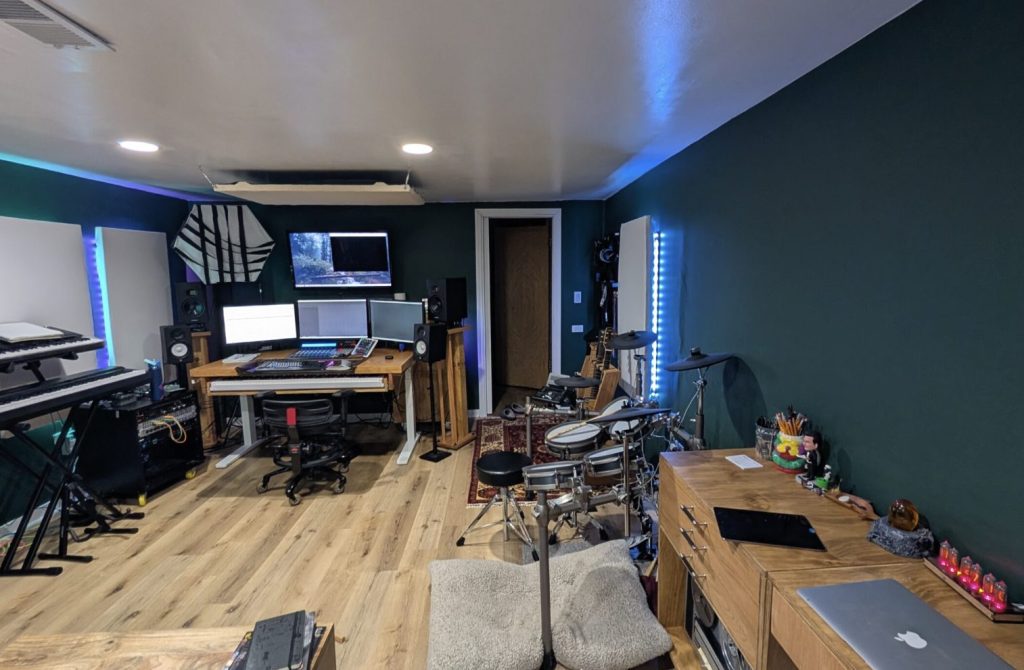
His earlier releases include MMXX in 2021 and Alphabet in 2023, but Place of Rest appears to be built with a different function in mind. It is less about presenting a set of pieces and more about creating a single night-length arc. That is where the continuous mix matters even more than usual because the listener can press play once and let the album do its work without needing to interact with it later.
The real test is whether it stays out of the way
The best sleep music usually disappears at the right time.
That does not mean it lacks detail. It means the detail stops asking for conscious attention. Place of Rest seems built around that exact challenge: create enough musical interest to help the listener enter the space, then gradually reduce the need to keep listening actively.
The track titles help the album feel readable before playback: “Deep Roots,” “4-7-8,” “Through the Window,” “An Ocean,” and “Delta.” Each title tells the listener where they are in the process without forcing a heavy concept onto the music.
For anyone dealing with stress, restless nights, or the constant mental noise that follows long creative days, Place of Rest offers a clear proposition. Put the album on, let the breath slow, let the outside room fade, and let the sound become less like entertainment and more like shelter.

Magnetic byline note: This byline is used for staff produced updates and short announcements, often based on press materials and official release information. Editorial responsibility: David Ireland (Editor in Chief) and Will Vance (Managing Editor). About: https://magneticmag.com/about/ Masthead: https://magneticmag.com/masthead/ Contact: https://magneticmag.com/contact/