This feature was created in paid partnership with Paul Oakenfold. I chose to cover the project because I genuinely connect with the music.
Paul Oakenfold has spent decades moving electronic music forward, but the Mission Underground album finds him doing something more interesting than simply revisiting his history. Released on Perfecto Records, the album connects the emotional architecture of classic trance with the harder, darker energy shaping contemporary techno and underground dancefloors right now. The result is both retrospective and forward-facing: familiar records are reinterpreted, new collaborations enter the conversation, and Oakenfold once again positions himself between generations rather than belonging exclusively to either one. Perfecto Records describes the project as “a journey through the future of trance and techno,” while recent singles from the album have included collaborations with Markus Schulz, Daxson and RAM, Marie Vaunt and Binary Finary, and ARGY, to name a few.
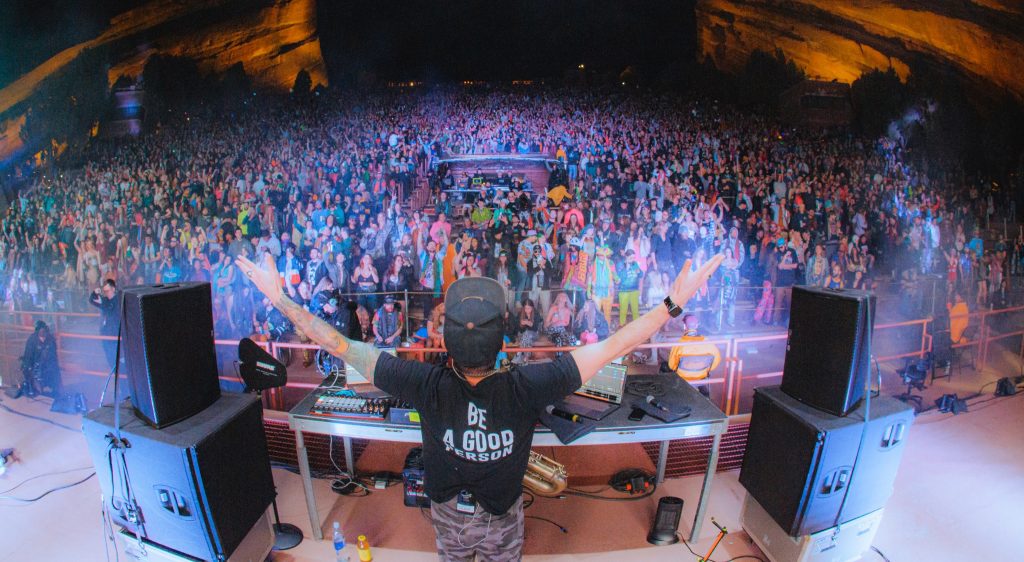
This fall, that concept expands beyond the album with the Mission Underground North American Tour, bringing Oakenfold across 17 markets in the United States and Canada during October and November, with The Crystal Method appearing on most dates. For an artist whose career has stretched from the earliest days of acid house and Ibiza through stadium tours, global festivals and modern EDM culture, the tour presents another opportunity to connect the history of electronic music with where the culture is heading next.
MAGNETIC: Mission Underground feels less like a nostalgia project than a conversation between different eras of electronic music. Was bridging the history of trance with what is happening in techno and underground dance music today part of the concept from the beginning?
Paul Oakenfold: Yes. I’ve been in the trance/psy space for many years, and I wanted to work and collaborate with some of my favorite artists. That being said, I wanted to take these classics and give them a modern twist with a techno fill. That was the whole idea behind the album.
MAGNETIC: Trance is experiencing a genuine resurgence with younger audiences. Why do you think its combination of melody, emotion and euphoria is connecting so strongly again in 2026?
Paul Oakenfold: I think that in the ‘90s, we had some of the best dance music [coming] out. Not just trance, but house, progressive, techno, etc. That was the period that shaped dance music in a huge way. I’m sharing those classics with a new interpretation that the younger generation can embrace and enjoy. I think people are craving this kind of connection, more than ever.
MAGNETIC: The album puts new material alongside reimagined records with enormous history behind them. How do you decide when a classic deserves to be revisited, and what has to change creatively for a new version to justify its existence?
Paul Oakenfold: First of all, you have to keep the integrity of the original. You showcase the major parts – like the riff and the vocals – but with a modern twist. If you do it right, it works so well.
MAGNETIC: Several generations of electronic artists appear across the project. What interests you most about collaboration at this stage of your career: the artist’s sound, their perspective, or simply the chemistry that happens in the studio?
Paul Oakenfold: We are in a wonderful place in dance music right now, and artists from all the different genres are collaborating. I like to hear what other producers will do during the collaborative process. You never know what magic might happen in the studio.
MAGNETIC: Your recent releases around the project have connected you with artists including Markus Schulz, Daxson and RAM, Marie Vaunt and Binary Finary, and ARGY. Has working with artists from different corners of contemporary electronic music changed your own production instincts at all?
Paul Oakenfold: No, not really. I just think that we all bring different things to the table, which can be very interesting.
MAGNETIC: Once an album becomes a tour, the relationship with the music changes dramatically. What elements of Mission Underground were you already imagining in a live environment while you were making the record?
Paul Oakenfold: In a live environment, the rhythm needs to be tougher, so I was changing the drums, giving them a techno style, adding new sounds, and adding darker elements for the dancefloor.
MAGNETIC: What should someone walking into a Mission Underground show expect from you musically? Are you approaching these performances as a journey through different periods of your career, or primarily as a snapshot of where your sound is today?
Paul Oakenfold: I would say, as a snapshot of where my sound is today. I think you’ll find that sound being represented on the album.
MAGNETIC: The Crystal Method are joining you on most of the North American dates. Both of you helped push electronic music into American popular culture at a time when DJs and electronic acts still had to fight for that space. Why does this pairing make sense now?
Paul Oakenfold: I’ve always been a fan of Scott [Kirkland of The Crystal Method]. So much so, that I just did a remix of their most popular track, “Name of the Game”. I felt that the tour would complement the both of us, and it does. I’m really pleased to see that there’s been a big demand for it. The Mission Underground tour can actually be considered the third leg of our multi-year touring together.
MAGNETIC: The audiences on this tour will likely include longtime fans alongside people encountering Paul Oakenfold for the first time. How conscious are you of balancing those two audiences when constructing a set?
Paul Oakenfold: It’s always important to embrace the next generation, and I look forward to sharing this new album with this generation and people who have never heard these tracks before.
MAGNETIC: North America has played an important role throughout your career. How has the American electronic music audience changed from the period when you were first touring here to the EDM era and now into this current post-EDM landscape?
Paul Oakenfold: I first came to America many years ago to tour. I fell in love with America, the club scene, and most importantly, the clubbers. I really focused on pioneering dance music in America, and I had my first residency for three years at Rain Nightclub in Las Vegas at the Palms Casino Resort, before dance music exploded in Vegas as we know it today. I did major tours all over, bringing colleagues like Calvin Harris, NERVO, and Chuckie along with me. When I’ve scored films or done cues for movies the likes of Swordfish, The Matrix Reloaded, The Bourne Identity, and Collateral, as well as TV/commercials for brands like Pepsi, I believe it’s helped dance music in America grow to where it is now. I’ve seen dance music grow from the underground scene to becoming fully mainstream. We are now in a place where we have the likes of EDC Las Vegas, where hundreds-of-thousands of people attend these festivals, shows like Fred Again. who played the Coliseum in Los Angeles, and many more I could mention. According to statistics I’ve read about America, dance music has become the sound of the youth, which used to be urban/hip-hop. We are definitely seeing a major shift.
MAGNETIC: You are also developing Perfecto Wellness, which takes the Perfecto name into an entirely different space. What is the idea behind the project, and why is wellness something you want to explore now?
Paul Oakenfold: I’ve actually been in the wellness space for five years, and I think it’s very important to look after yourself. Living on the road is very difficult. When I can share my knowledge and experience with my colleagues and the next generation, I do.
MAGNETIC: How are you integrating music to become part of Perfecto Wellness? For instance, are you incorporating music through meditation, movement, recovery, or is the vision broader or more narrow than that?
Paul Oakenfold: Of course music is an integral part of the Perfecto Wellness project, because music and sound have the power to heal. The project’s also focused on meditation, yoga, relaxation, and inspiration.
MAGNETIC: Wellness has become an enormous global industry, but it can also become very commercial and trend-driven. What would make Perfecto Wellness authentically different from simply putting the Perfecto name on wellness products?
Paul Oakenfold: My experience, knowledge and understanding and meeting/working with the pioneers in this space.
MAGNETIC: You have achieved virtually every conventional career milestone available to a DJ, so what motivates you now that ambition no longer has to be about proving yourself?
Paul Oakenfold: It has never been about proving myself to anyone! I think it’s important that you focus on yourself, so where I am in my life–I enjoy and love what I do. I’m always up for a challenge; which is the reason I performed live at Mt. Everest [Base Camp], atop the Great Wall of China, at Stonehenge, in the Galapagos, and Ushuaia, Argentina. Ushuaia is the southernmost city in the world, and I played deep inside the thousand-year-old subpolar rainforest of Tierra del Fuego. These are all shows I push myself to do. What’s next? Any ideas?
Follow @Paul Oakenfold on Instagram and visit https://pauloakenfold.com/

Magnetic byline note: This byline is used for staff produced updates and short announcements, often based on press materials and official release information. Editorial responsibility: David Ireland (Editor in Chief) and Will Vance (Managing Editor). About: https://magneticmag.com/about/ Masthead: https://magneticmag.com/masthead/ Contact: https://magneticmag.com/contact/