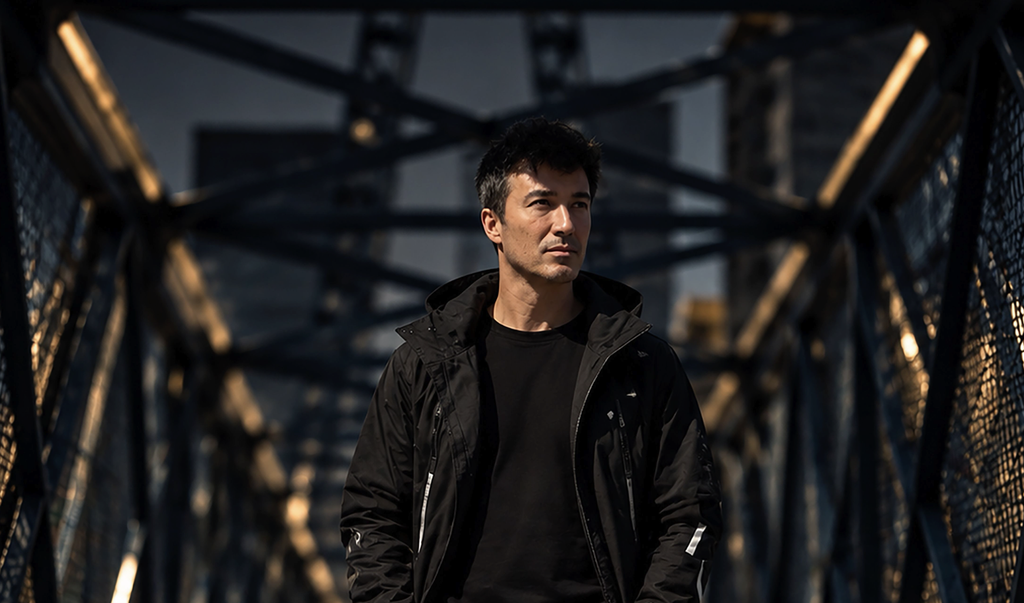
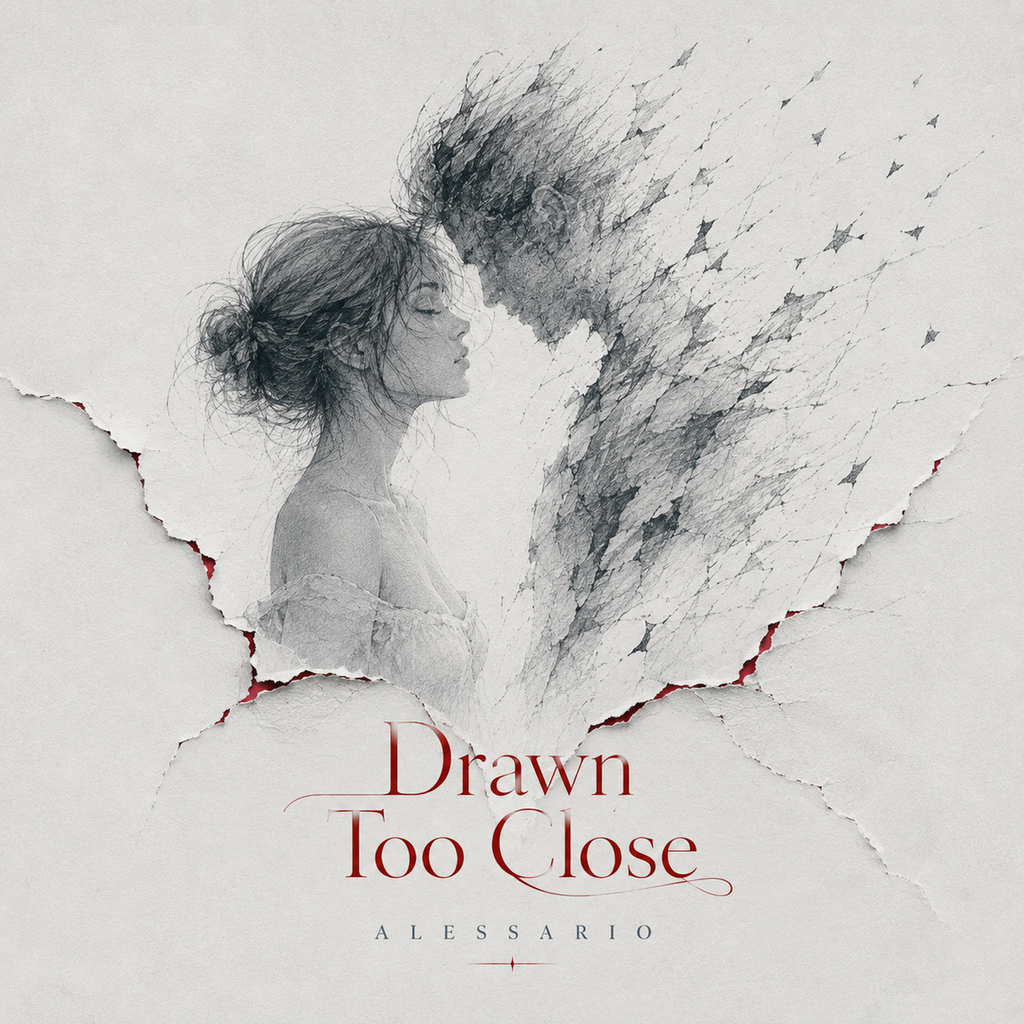
Alessario’s “Drawn Too Close” centers on a feeling that is easy to recognize and hard to admit: sometimes a person is most beautiful before we actually know them.
The single, releasing October 16, follows a narrator who has filled in the blanks around someone from a distance. A silhouette, a movement, a bit of light, maybe one gesture, and suddenly the mind has written a full story. The person becomes a portrait before they have had a chance to be a person.
That is where “Drawn Too Close” gets its tension: the song sits in the uncomfortable space between attraction and disillusionment, where closeness starts to reveal details the fantasy can’t survive.
The key line is “I should have left you beautiful.” It carries regret, but not the obvious kind, and the narrator has seen the cracks in the portrait, yet she still feels pulled toward the image she once created. That contradiction gives the track a serious amount of emotional weight.
The Production Keeps the Drama Moving
“Drawn Too Close” works because it lets a dance rhythm carry a psychological scene.
Musically, Alessario places the track in cinematic house with an expressive dance-pop chorus, an R&B groove, and a bit of French pop drama. That mix gives the single a theatrical quality without turning it into full melodrama. The close female vocal in the verses feels almost whispered, like an inner monologue trying to keep itself under control.
Then the chorus opens. The track moves from private thought into something wider and more physical, where the emotional stakes can grow without the song becoming heavy-handed. In Alessario’s words, “For us, it was important to let a dance rhythm carry a story inwhich reality has already begun to show through the painted image, but the attraction has not yet faded.”
That kind of balance is difficult in dance-pop because the format can easily flatten subtle emotions. I wrote about a similar production challenge in my How It Was Made feature on Psysop Studio’s “Twitch”, where the song’s pop shape depended on careful choices rather than piling on every possible idea.
“Drawn Too Close” takes a more cinematic route, but the same discipline applies.
The Details Make the Portrait Physical
The best part of “Drawn Too Close” is the way the imagery and arrangement keep mirroring each other.
The lyrics use paint, color, cracks, and portrait language to describe a fantasy losing its surface. The production answers that with small physical details: a heartbeat, cello in the instrumental break, a music box in the bridge, and a final chorus that begins restrained before the full rhythm and synths return.
Those choices make the song feel staged without losing intimacy. The heartbeat pushes anticipation forward. The cello gives the track a more tactile ache. The music box narrows the room until the song feels fragile and almost ghostly.
That idea connects with the kind of emotionally charged house music I covered in my article on Rommii and Dev’s “Deep End”. Different sound, different story, but a related instinct: let club-adjacent production carry feelings that are too complicated for a straight ballad.
“Drawn Too Close” Builds on “Hope to Flame”
Alessario’s previous single, “Hope to Flame,” dealt with emotional numbness and the moment something external cuts back into your life enough to restore feeling. “Drawn Too Close” looks at the other side of that spark.
The first stage is attraction from a distance. You see someone before reality interrupts the image. Your mind adds the personality, the tenderness, the intimacy, the possible future. “Drawn Too Close” begins after that first imagined story is already written, then starts to collapse.
That makes the single feel like a companion piece, even if it stands on its own. “Hope to Flame” was about feeling returning. “Drawn Too Close” is about what happens when feeling gets too close to the thing it invented.
That honesty is sharp, and many people have experienced some version of it: a stranger in a café, someone at school, a person on public transit, a brief exchange that becomes larger in the mind than it ever was in real life. Sometimes the person disappears and stays perfect.
Sometimes you meet them, and the portrait starts to change.
That cinematic emotional pull also brings to mind my coverage of Hydrah’s “My Paradise”, where house-influenced production and emotional writing meet in a way that feels large without losing the human center.
Alessario Finds the Tragedy in Proximity
“Drawn Too Close” is a song about proximity as a kind of damage. Not because knowing someone is bad, but because knowing someone can destroy the version of them that only existed in imagination.
That is a more interesting angle than a standard heartbreak song. The narrator is losing the version she created before closeness made that version impossible to keep.
The production leans into that with enough elegance to make the collapse feel beautiful and uncomfortable at the same time. The whispered verses, dramatic chorus, cello, heartbeat, and music box all keep circling the same point: the fantasy was fragile, but the pull was real.
“Drawn Too Close” is out now as of October 16, 2026.

Magnetic byline note: This byline is used for staff produced updates and short announcements, often based on press materials and official release information. Editorial responsibility: David Ireland (Editor in Chief) and Will Vance (Managing Editor). About: https://magneticmag.com/about/ Masthead: https://magneticmag.com/masthead/ Contact: https://magneticmag.com/contact/