Getting an artist interview published usually starts well before you email an editor, because one of the biggest misconceptions I see on the receiving end of music pitches is that a new release automatically gives a publication enough material for an interview. A single coming out Friday, an EP arriving next month, or a run of shows on the calendar can all give an editor a timely reason to talk to you, although none of those things explain what the conversation should actually be about, and that distinction is where a lot of otherwise decent pitches lose me.
I have been the managing editor at Magnetic Magazine since 2022, and after reading an enormous number of submissions, commissioning interviews, writing questions, editing responses, and pitching my own music from the other side of the inbox, I have found that artists tend to put far too much energy into proving that they deserve attention and far too little into explaining what the resulting article could actually contain. Streaming numbers, chart placements, label support, festival appearances, and DJ support can help establish where somebody sits, although they rarely give me enough to start writing questions.
What I need is a subject.
Maybe you started a label because your experience releasing music elsewhere left you wanting greater control. Maybe becoming a parent cut into the time you could spend producing and forced you to reconsider how you work. Maybe several years of touring altered how you write records because you started hearing your own music differently in clubs. Maybe you moved into a new studio, changed your hardware setup, abandoned a production habit you had relied on for years, or began collaborating with somebody whose process exposed weaknesses in your own.
Here’s What We’re Covering
Those details give me somewhere to go.
The release date gets my attention because it tells me why the interview should happen now. The experience behind the release gives me the interview itself.
What Makes an Artist Worth Interviewing?
There is no streaming threshold that suddenly makes somebody interviewable, and I think artists sometimes wait far too long because they assume they need a major career event before reaching out to media. I have interviewed established artists with long careers and developing artists whose public profile was still fairly small, and the deciding factor is usually whether there is enough substance around the person, project, or release to support a conversation that somebody else would want to read.
That substance does not need to come from fame. It can come from experience, decisions, access, technical knowledge, career changes, mistakes, disagreements, or a particular way of working that gives the editor something specific to investigate.
When I interviewed ANNA in 2026, for example, her ambient album provided an obvious reason for the conversation to happen when it did, although the article became considerably broader once we started discussing time away from touring, creative longevity, changes in her relationship with music, and what happens when somebody known for one area of electronic music begins working in a different format. The album gave the conversation timing, while those larger subjects gave the interview enough depth to extend beyond a release announcement.
The same thing happened when I spoke with Jeremy Olander around his debut album. There was already a clear promotional event, yet the subjects that made the interview worth reading involved discipline, sobriety, fatherhood, exposure, and what it meant to finally reach an album after years of releasing music in other formats. Those parts of the conversation tell you something about the person behind the record, and that is where an interview starts becoming editorial rather than promotional.
You can read the ANNA interview here and the Jeremy Olander interview here if you want to see what I mean in context.
Do You Need a New Release to Get an Interview?
You do not need a new release, although having something current gives an editor a clear reason to publish the conversation now, and that timing question matters because publications are usually working around release calendars, announcements, tours, label launches, premieres, and other events that give an article a natural publishing window.
A record is one way to create that window, although it is far from the only one.
You might be launching a label, changing your live setup, starting an event series, announcing a tour, moving into a new studio, opening an educational platform, beginning a collaboration, or reaching a point in your career where you have enough experience to speak credibly about something happening in your part of the industry. Any of those can support an interview if the publication has a clear reason to care.
The mistake is assuming that the current event carries the entire pitch.
If you email me because a new single is coming out, I still need to know what makes that single worth discussing. Tell me what changed while you were making it. Tell me where the idea came from. Tell me why it took longer than expected. Tell me what happened when you tested it live. Tell me why you nearly abandoned it. Tell me what you approached differently from your previous work.
That information is what turns a calendar event into an editorial subject.
Find the Interview Angle Before You Pitch
Before contacting a publication, I would spend a little time figuring out what you can speak about beyond the release itself, because this is where the pitch quality usually improves quickly.
Start with what has changed recently.
Maybe you have started running your own label and have suddenly found yourself hearing demos from the A&R side while still trying to finish your own records. That gives an editor several directions immediately, because now we can talk about whether hearing unfinished music from other producers changed how you judge your own work, whether running release schedules made you less patient with your own deadlines, whether you began noticing recurring mistakes in demo submissions, or whether dealing with distribution and promotion changed what you expect when another label releases your music.
That is already an interview.
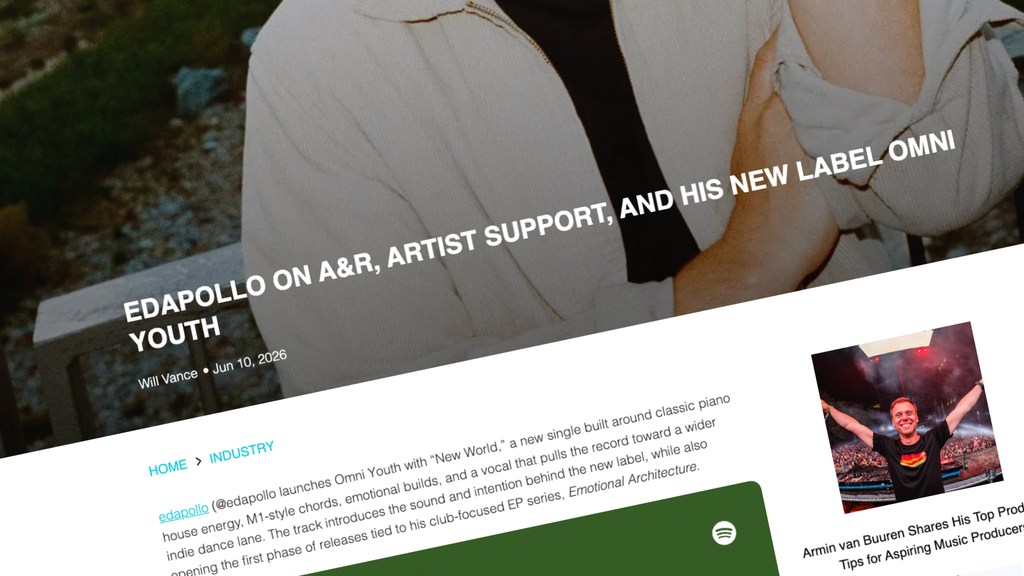
My conversation with edapollo around Omni Youth followed a similar principle. The launch of the label created the immediate reason for speaking with him, although the real discussion became about A&R, artist development, contextualizing new music, and what keeps somebody listening when they encounter an unknown artist. You can read that interview here.
This is the distinction I think artists should understand before they pitch anything.
A release tells me what happened.
An angle tells me why I should ask questions about it.
How to Pitch an Artist Interview to a Music Blog
Once you know what the conversation could be about, the actual pitch can stay fairly short because you no longer need to compensate for a weak idea with several paragraphs of biography.
I want to know who you are, why you are contacting me now, what the conversation could focus on, and where I can hear or research your work. That is enough for me to decide whether I want to keep reading.
Your subject line should also make the email easy to identify later. Something straightforward such as Interview: Artist Name + New Album + Topic is considerably better than something vague like Big Opportunity or Interview Request, because editors are often scanning crowded inboxes and returning to promising pitches after finishing other work.
The body should get to the point quickly. Introduce the artist, explain the current release or event, then give the editor one or two concrete subjects the artist can discuss from direct experience. After that, provide the listening link, short biography, press photos, artwork, relevant credits, and whatever other information the publication asks for.
Do not make the editor dig around for basic material.
Broken links, missing photos, outdated biographies, inaccessible private streams, and attachments with unclear filenames all create unnecessary work before anybody has even decided whether the interview is worth commissioning.
I have written about the wider promotion process in my article on how to promote your music without posting every day, and much of the same preparation applies here because the easiest pitches to work with are the ones where the artist has already thought about what the recipient needs.
What Should You Include in an Artist Interview Pitch?
A good interview pitch should give the editor enough information to understand the project without forcing them to research everything from scratch.
I would include the artist name, current release or project, relevant date, public or private listening link, current biography, press photos, artwork, social links, label information when applicable, and a short explanation of what the interview could focus on.
Previous press can help too, but I would be selective.
Sending somebody fifteen old links usually creates another sorting task. Sending two or three pieces that explain something relevant about your background gives the editor a clearer reference point and can help them avoid repeating questions you have answered elsewhere.
Previous interviews are especially helpful because they show what has already been covered. If I can read an interview from six months ago and understand where you were then, I can start thinking about what has changed since, which usually leads to better questions and a better article.
That is also one reason I think artist interviews can remain valuable long after the release attached to them has passed. A good interview becomes part of the public record around your project, and later writers can use it to understand how your thinking developed over time.
Your Artist Biography Should Give Editors Facts
Artist biographies often become less helpful as they become longer because too much space gets spent describing how the music feels instead of explaining who the artist actually is.
From my side, I want information I can work with.
I want to know where you are based, which labels have released your music, what you have put out recently, whether you run a label or event series yourself, and whether there have been any recent changes in your career that give me another direction for the interview. I also want collaborators, producers, vocalists, engineers, and anyone else connected to the project credited correctly, because those details often lead to better research and better questions.
I would also keep the biography current. If the pitch is centered around something happening now while the biography stops two years earlier, the editor has to reconstruct the missing period independently, and that is exactly the type of avoidable work that can make a submission easier to pass over.
Why Generic Interview Pitches Get Ignored
A generic interview request asks the editor to invent the entire reason for covering you.
Editors do that sometimes, especially when the music is good enough or the artist has a background that immediately suggests something worth discussing, although I would never build a pitching strategy around the assumption that the recipient will do that work for you.
The difference between two pitches can be very small.
One says:
“I have a new EP coming out next month and would love to do an interview.”
The other explains that the EP was completed after the artist stopped touring for a year, rebuilt the studio around hardware, and began writing without arranging anything inside the computer until the final stage.
The second pitch already gives me questions.
Why stop touring?
What changed when you stepped away?
Why move toward hardware?
Did the records take longer to finish?
Did the limitation change what you wrote?
What did you miss from the old process?
Once an editor can imagine the conversation, the pitch becomes easier to approve.
That becomes even more important for developing artists because a large name can create reader interest on recognition alone, while somebody with a smaller public profile usually needs to give the publication another reason to invest time in the article.
Give the Editor Something Spotify Cannot
An interview should tell the reader something they could not learn by opening your streaming profile, scrolling through Instagram, or looking at a release calendar.
Spotify can tell me what you released.
A venue page can tell me where you are playing.
Instagram can tell me what you have been posting.
An interview should explain decisions, experiences, consequences, disagreements, changes in approach, or parts of your work that are difficult to understand from the outside.
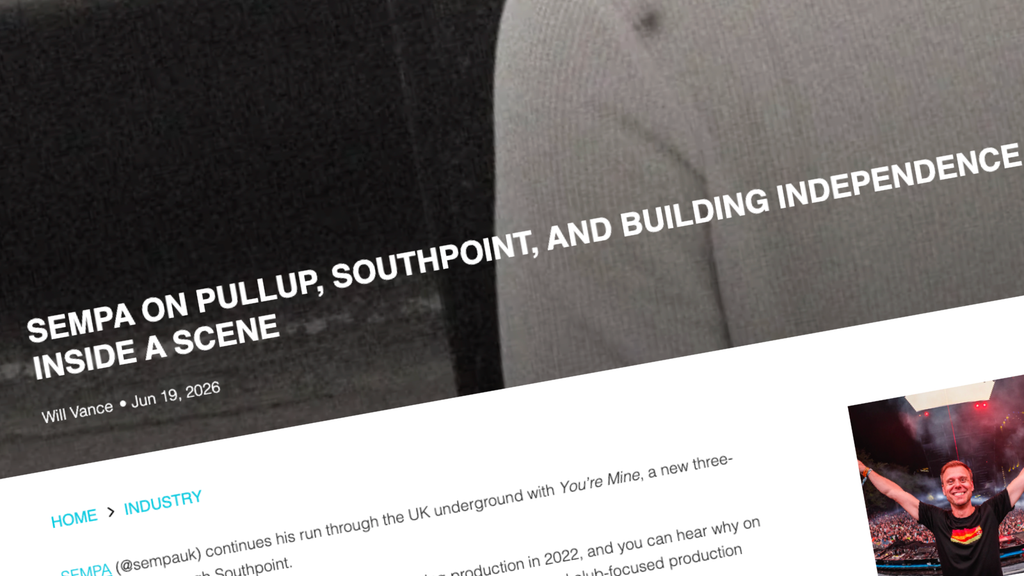
When I interviewed SEMPA, for example, the conversation dealt with creative relationships, independence, collaboration, and how the people around an artist affect their development. The release activity provided context, although the experience around it gave the article its substance. You can read the SEMPA interview here.
That is the question I would ask before contacting any publication:
What will somebody understand after reading this interview that they could not learn from my artist page in thirty seconds?
If the answer is unclear, the pitch probably needs more work.
Should You Send Interview Questions With the Pitch?
Usually, I would send subjects rather than a complete list of questions.
There are exceptions, especially if a publication specifically accepts finished Q&As or asks artists to submit prepared material, although a normal interview pitch should leave enough room for the editor to shape the conversation around the publication.
Sending a list of topics can help.
Sending twelve questions you wrote for yourself can start to feel closer to asking the publication to run promotional copy.
Editors usually get better material when they can research the artist and decide which areas deserve more attention, and different publications will naturally find different parts of the same story interesting.
A production-focused publication may want to spend half the interview discussing your studio, arrangement process, software, hardware, or recording decisions.
A club-culture publication may care much more about touring, programming, scenes, venues, and DJ culture.
A business publication may want to discuss management, labels, touring economics, ownership, or artist development.
The artist remains the same, while the reason for the interview changes according to the publication.
Research the Writer Before You Send the Pitch
One of the easiest ways to improve an interview pitch is to read the work of the person you are contacting.
Go through several recent interviews and pay attention to what they keep asking about.
Some writers focus heavily on production.
Others spend more time on touring, labels, career development, technology, songwriting, or the business surrounding music.
If you read five interviews from the same writer, you should have a fairly good idea of what they care about, and that should influence how you approach them.
Magnetic Magazine has a large artist interview archive, and reading several recent pieces before contacting us will tell you far more about what we publish than sending a generic request to “do an interview.”
You can also personalize the pitch without pretending to have a relationship that does not exist.
You do not need to tell somebody that you have followed their writing for years if you found them ten minutes earlier.
Mention a recent interview that connects to your own experience, explain why your perspective adds something different, then move on.
That is enough.
How Far Ahead Should You Pitch an Artist Interview?
If the interview is tied to a release, tour, album, label launch, or announcement, I would start several weeks ahead rather than waiting until release week.
There are several steps between accepting an interview and publishing it.
The editor needs to research the artist, write questions, send them over, receive answers, edit those answers, prepare the article, source or resize images, build the page, handle SEO, and schedule publication around everything else already on the calendar.
Written Q&As can look deceptively simple from the artist side because you might answer the questions in an evening, although there is still a publishing process after the document comes back.
Starting earlier also gives the interview room to improve.
If an answer needs another example, the editor can follow up.
If a photograph is missing, there is time to replace it.
If the release date changes, the article can move.
If a subject turns out to be much more interesting than expected, the editor has time to ask another question rather than closing the piece immediately.
Trying to complete the whole process in forty-eight hours removes most of those options.
Written Q&A or Live Interview?
I personally work with both formats, and I think the better choice usually depends on the subject, schedule, and artist rather than one being inherently preferable.
Written Q&As give the artist time to think carefully, verify details, and answer fairly technical questions without having to recall everything on the spot. They are also easier to coordinate when people live in different time zones.
Live conversations allow follow-up questions immediately, which can be valuable when somebody says something unexpected and the interviewer wants to explore it before moving on.
The format matters less than the quality of the answers.
If you receive a written Q&A, take the questions seriously.
One-sentence answers rarely give the editor much to work with, especially when the question is asking about a decision, experience, or change over time. Give examples. Mention places, dates, people, equipment, specific releases, mistakes, or moments where something changed.
Details give the article substance.
Do Artist Interviews Help Your EPK?
A good interview can be one of the better pieces of outside media to include in an EPK because it gives another editor, label, promoter, booking agent, or collaborator somewhere to learn about you beyond your own biography.
I would include interviews that explain something important about your work rather than adding every mention you have received.
If one article goes into your production process in detail and another explains the thinking behind your label, those two links tell somebody considerably more than six short release mentions.
Magnetic Magazine currently accepts artist, label, producer, and music-industry submissions, including interview consideration, and the submission page asks for the same type of material I would recommend preparing for any serious pitch: background information, current images, artwork, release details, and listening links.
Having those assets ready makes every future submission easier.
Can You Pay for an Artist Interview?
Some publications offer paid or sponsored interview placements, and there is an important distinction between that type of content and independently selected editorial coverage.
If payment guarantees that an article will be published, the commercial relationship should be clearly disclosed to the reader. The artist may still be answering real questions, the writer may still conduct research, and the finished article can still contain substantive information, although the reader should not be left with the impression that the publication independently selected the artist when publication was part of a paid arrangement.
I would also avoid any service where payment determines the writer’s opinion.
Paying for a sponsored interview should never mean buying praise, inventing claims, or pushing a predetermined conclusion about the artist or their music. We occasionally charge for sponsored interviews on the site, and we make it clear to artists and labels that the fee covers the time spent researching, conducting, editing, and publishing the interview. Payment does not guarantee positive coverage or influence the questions we ask, and we disclose the commercial relationship in the finished article.
Before paying for any placement, read the publication’s recent work, check how it identifies sponsored articles, review its writers and editorial history, and clarify exactly what the fee covers. If you would feel uncomfortable explaining the arrangement openly to someone reading the finished article, I would reconsider.
How to Get an Interview With Magnetic Magazine
If you are looking for an artist interview specifically, Magnetic Magazine accepts artist submissions for editorial consideration and also offers disclosed sponsored interview opportunities for those interested, and the advice I would give you before sending one is the same advice I have given throughout this article.
Do not send me a biography and ask whether I want to interview you.
Tell me what we should talk about.
Give me the current reason for having the conversation, then explain the larger subject underneath it.
Maybe your album took five years and several discarded versions to finish.
Maybe you are starting a label after a difficult experience releasing music elsewhere.
Maybe touring without management taught you something about independent booking.
Maybe becoming a parent forced you to rebuild your studio routine around a completely different schedule.
Maybe you stopped relying on a production method that had defined your previous records.
Maybe a collaboration with another producer exposed something about your own process that you had never noticed before.
Those are the details that help me see the article before I have written a question.
You can also submit your music and artist information directly to Magnetic Magazine here.
Include current music, press photos, artwork, your biography, relevant release information, and enough background for us to understand why you are contacting us now.
Then tell us what you can actually talk about.
What to Do After the Interview Gets Published
Once the interview is live, I would treat it as an asset you can continue using rather than something you share once on release day and forget about.
Add it to your EPK.
Link it from your website.
Send it when another journalist asks for background.
Pull individual ideas from your answers and develop them into social posts.
Use it when pitching the next release if the conversation explains something that is still central to your work.
Read the finished article again several weeks later and pay attention to which subjects people responded to, because sometimes one answer tells you much more about what interests people than the release announcement that started the interview in the first place.
That can affect how you pitch yourself next time.
If people respond to the section about running your own label, maybe that deserves greater attention in future interviews.
If the production discussion gets shared by other producers, perhaps that is an area where you have something valuable to contribute.
If the part about touring creates conversation, there may be another article there later.
A good interview can help you understand which parts of your experience actually connect with readers.
Getting an Artist Interview Published Starts With the Conversation
There are plenty of smaller decisions involved in getting an artist interview published. You need the right publication, current photos, a current biography, enough lead time, a clear subject line, working links, and somebody on the editorial side who covers your area of music.
All of those things improve your chances.
The part I would work out first is simpler.
Give the editor something worth asking about.
The release gives you a reason to contact them now, while your experience, decisions, changes, mistakes, knowledge, and perspective give them the article.
When those pieces connect, the pitch becomes easier to understand, the questions become better, and the finished interview has a reason to remain relevant after the release date has passed.
That is what I am looking for when an interview request reaches my inbox, and it is what I would work out before pitching any publication in 2026.

Will Vance is a professional music producer who has been involved in the industry for the better part of a decade and has been the managing editor at Magnetic Magazine since mid-2022. In that time period, he has published thousands of articles on music production, industry think pieces and educational articles about the music industry. Over the last decade as a professional music producer, Will Vance has also ran multiple successful and highly respected record labels in the industry, including Where The Heart Is Records as well as having launched a new label with a focus on community through Magnetic Magazine. When not running these labels or producing his own music, Vance is likely writing for other top industry sites like Waves or the Hyperbits Masterclass or working on his upcoming book on mindfulness in music production. On the rare chance he's not thinking about music production, he's probably running a game of Dungeons and Dragons with his friends which he has been the dungeon master for for many years.