CSC Music has credits for Kendrick Lamar and Taylor Swift
We love to see industry folk, taking an approach that’s outwardly, human.. The Copenhagen and LA-based publisher, manager and producer collective — founded by Simon Dilling, with credits spanning Kendrick Lamar, Taylor Swift and Omar Apollo — has spent 2026 running workshops with clinical psychologist Simon GentS, embedding his work directly into the fabric of how the roster operates. Communication, ego, honesty, trust: the things every creative company claims to value and few actually build systems around.
This isn’t a wellness perk. It’s written into what joining CSC means, sitting alongside vocal coaching, monthly meetups, and the transatlantic feedback loop between Scandinavian songwriters and Los Angeles producers. Dilling attends as a participant, not a facilitator. The sessions are already changing how the roster talks in the studio, and the plan is to keep them running through 2027.
So, there’s a novel idea.. Actually caring about the musicians you work with ay? We spoke to them to see what sort of witchcraft this is and.. if this sort of thing could, maybe perhaps.. catch on?
Connect with CSC: Website | Instagram
The music industry’s mental health problem is well-documented, but most responses to it are artist-facing — helplines, signposting, the odd pastoral rider. You’ve done something structurally different by bringing a psychologist into how the collective itself operates. Where did that idea actually come from?
It grew out of the studio, as making music is a collaborative craft for us, and when we started looking outward toward international opportunities, that shared goal had us building a network together. At some point I realised that the core of our business is the relationships. Taking that seriously meant treating the whole roster as a team, not a list of solo careers. A coach works on the individual, and what we needed was someone who works on the room. So I invited Simon Gents in, and shaping the collective together with him became our approach to business development.
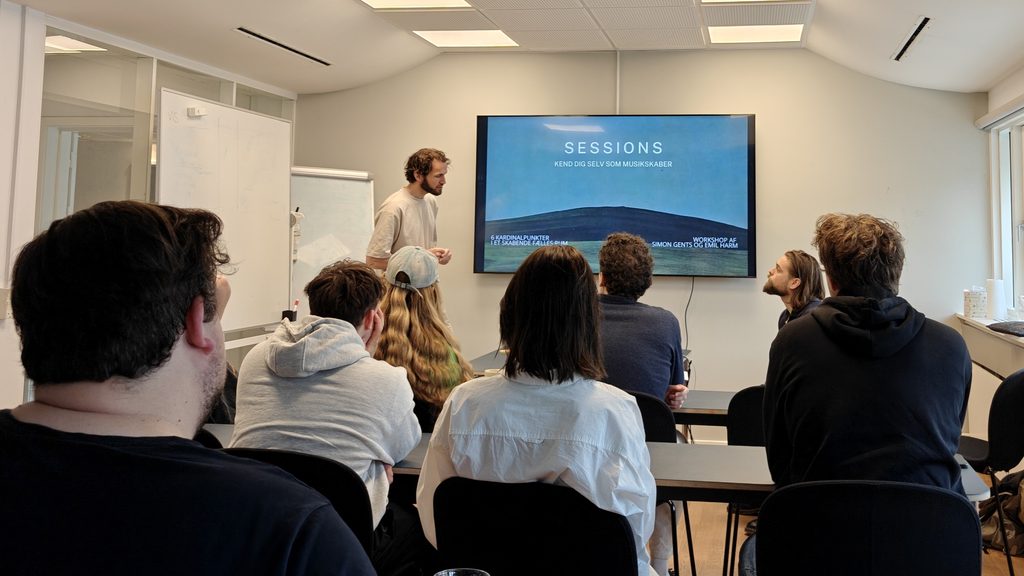
There’s a meaningful difference between offering therapy as a perk and embedding psychological work into the fabric of how a company runs. How did you make sure this didn’t just become the former?
We were clear from the start that a lot of this begins with the individual. What Simon created was a space where a mindset could grow about the things we share, and how we look after them so the collective grows together. It is now a part of what joining the collective means, next to shared vocal coaching, regular meetups and traveling together. The content of the work has centered around communication, taking responsibility for relationships and not only your own career, and building trust through honesty, which is much more that a wellbeing perk.
You sit in Simon Gents’s sessions as a participant rather than the person running the room, What’s that experience actually been like?
There lives a paradox in the center of my work – how do you lead a collective that is meant to lead itself? A lot of how the business is shaped comes from this question. Having someone from the outside shape how we operate and communicate helps me find my blind spots. I am in the room to learn, and I carry my share of responsibility for the relationships, my own and the ones inside the collective, and for keeping my ego in proportion to the group as well. I also listen in on their conversations, which helps me understand them better. A founder who is exempt from the work is the fastest way to make the work meaningless.
Your roster operates between Copenhagen and LA, which is already a complicated dynamic. Has the psychology work changed anything specifically about how that transatlantic relationship functions?
It will take time, and how we bring this work to LA has to be shaped with the people we work with there. The first step has been getting the people together, so the relationship between the two cities could form. We have been to LA many times, we have had the LA producers in CPH, and many collaborations are running between the two. Because this is already part of it, our work with Gents grows naturally from the collaborations, between the cities and among the LA talent themselves.
One of your artists, Miriam Majcherek says the sessions make things “more honest and constructive” rather than softer. What do you reckon she means by this?
We have talked a lot about honesty, because healthy honesty is a key part of building trust. But it rests on the responsibility everyone carries for themselves and for the relationships between them. Communication has been at the centre of the workshops. I think what Miriam means is that clearer, more honest conversations make the relationships more constructive and the collaboration very clear. When people actually start having the conversation, trust between them starts to extend.
The producers on your LA side — Jacob Spitzer, Mark Kraus, Breyer White — have credits with Kendrick Lamar, Taylor Swift, Omar Apollo. At that level of the industry, where the commercial stakes are high and egos are proportionally large, what does it mean to ask people to engage with this kind of work?
The people I work with understand the importance of collaboration – these are huge credits, but much of their day to day work is with emerging artists like KELS, Chad Tepper and ALEXSUCKS, where they are deeply involved in creating together. It starts with the individuals, and we are lucky to work with incredible people in LA who are open to this approach. They share our mindset, that it is about the music and the people making it, and the feeling of being part of the same team is growing across the Atlantic.
You and Simon Gents are now talking about taking this on the road and presenting it to other music companies. What’s the version of this that you think the broader industry is actually ready to hear?
We are learning a lot from this, and there is a lot worth sharing. We put collaboration at the centre, and Simon is an expert in team psychology, specifically for musicians. I believe the most interesting music comes out of cross cultural collaboration, and over time I think this way of working will change how we make it. I meet people in music all over the world, and everyone seems to be in it for the music. There is a growing wish to collaborate, so creating the best environment for new music to emerge is why we do this. What we are learning about healthy, long term collaboration is not only ours.
Download the music career resource bundle