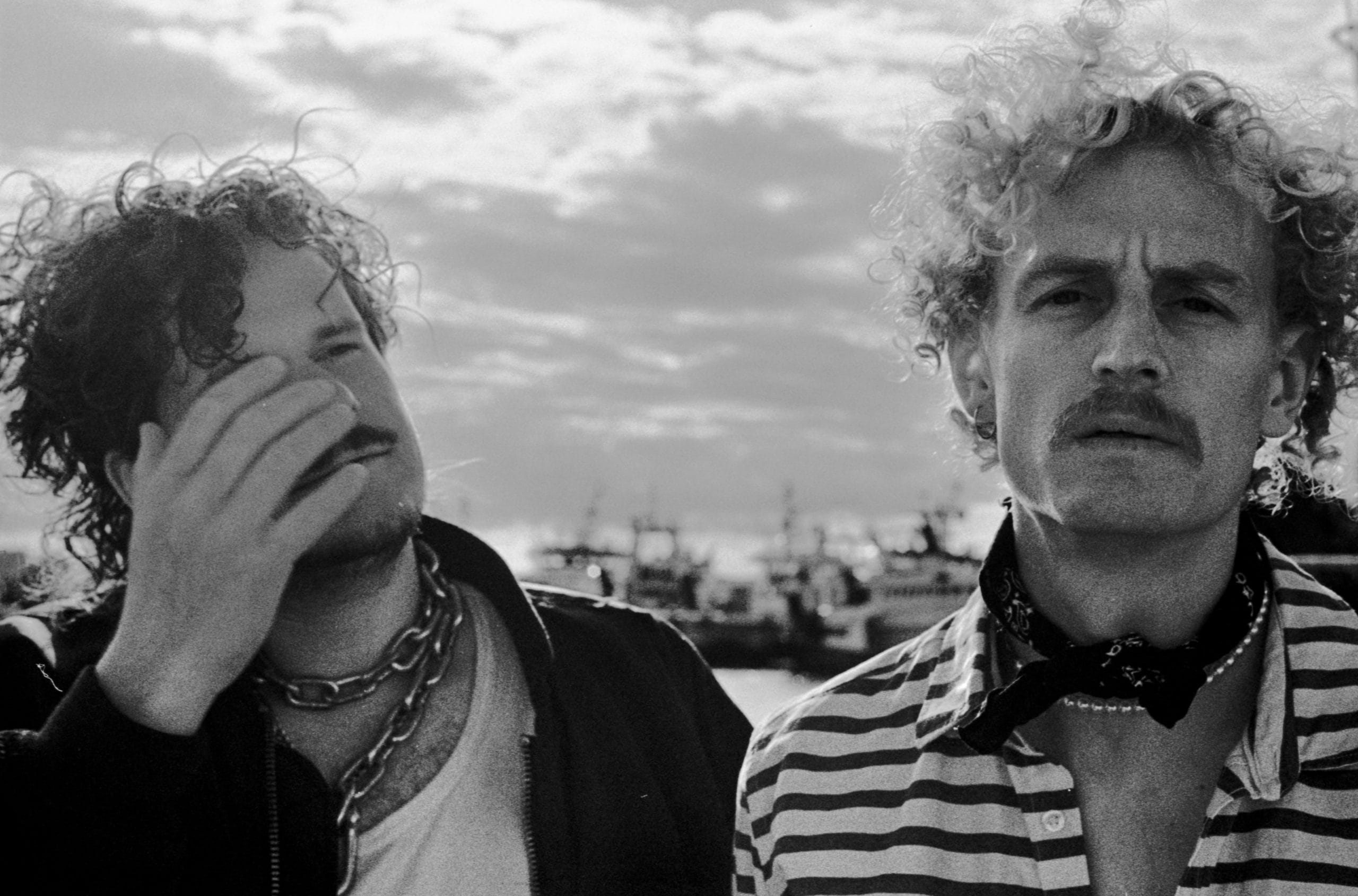
We chat to Velocity Made Good about their new project
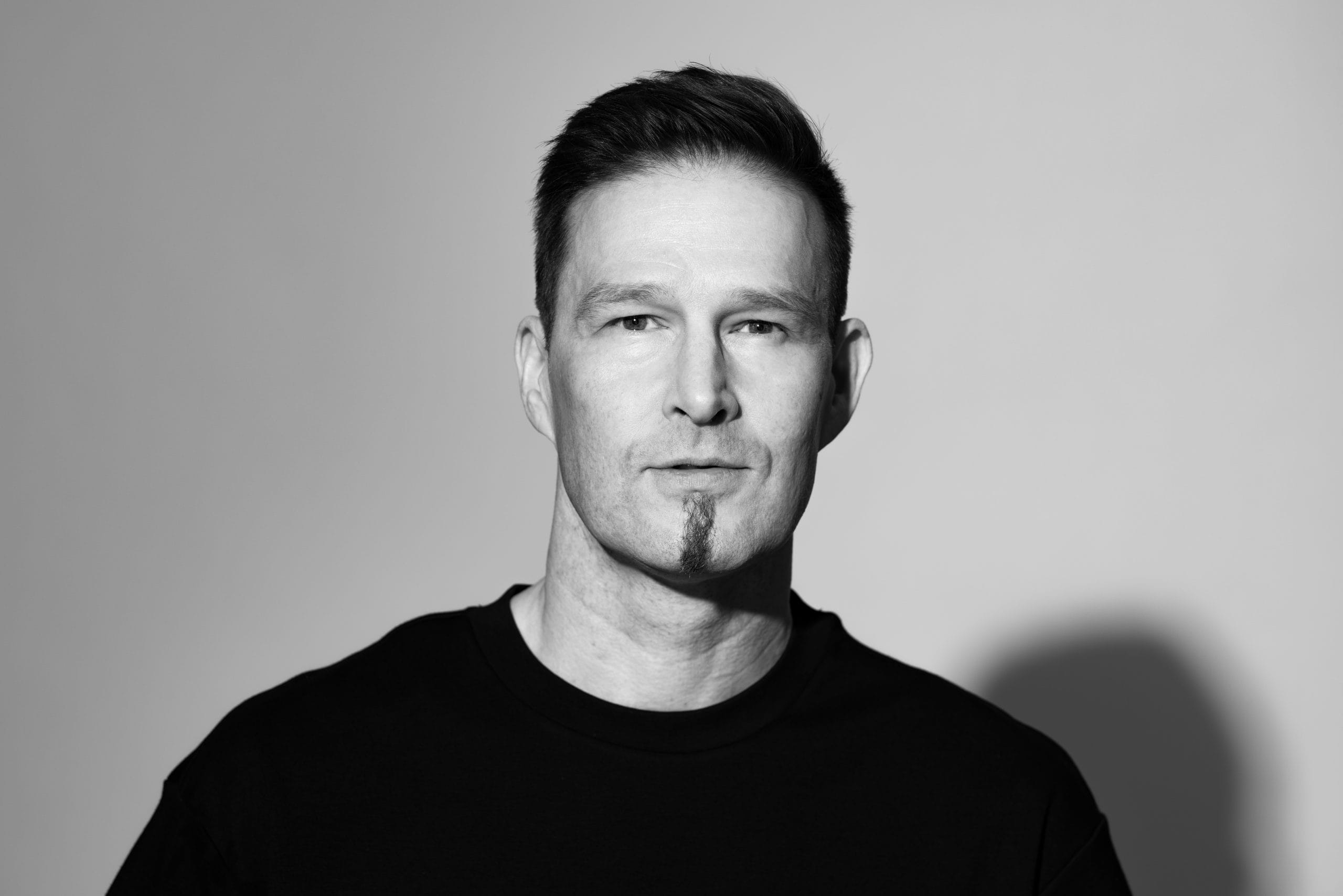
Photo credit – Lennard Fopma
For Velocity Made Good, the line between club culture and guitar music has never been particularly clear-cut. But with their new EP “Big Breakers”, the Dutch duo are leaning into a more direct, hard-hitting sound, swapping the confines of the dancefloor for something built to hit just as hard in a live setting.
Their journey to this point has been an unconventional one, beginning on a sailing boat off the Frisian coast, where early ideas took shape around modular synths below deck and microphones attached to the mast. After more than 100 live shows, a set at Groningen’s Paradigm festival became a turning point, helping the pair recognise the potential of a sound that could bring electronic experimentation and the raw energy of a rock band together.
That shift comes into focus on “Big Breakers”, where analogue synths and electronic textures collide with live drums and a deliberately rough-edged production. Working with producer Josh Baxter of PVA, the duo pushed their equipment to its limits, running synths through guitar amps at volume until the studio windows rattled. The result draws on the hypnotic drive of LCD Soundsystem and The Chemical Brothers, alongside the heavier influence of classic rock.
Amongst the collection is standout track ‘Reeling’, which captures that restless energy in particularly unpredictable fashion. Built around broken drum patterns, acid synths and competing arpeggios, it came together quickly in the studio but has proved a challenge to recreate onstage. With around 30 demos already in the works, the duo are clearly not short of ideas.
We caught up with Velocity Made Good to discuss their unexpected journey into rock, the experiments that shaped “Big Breakers”, and the challenge of translating its chaotic energy to the live stage.
Congrats on the release of your new EP, “Big Breakers”! You’ve described it as the point where you fully embraced your identity as a rock band. How has your approach to electronic production evolved along the way?
In the beginning, the focus was more on discovering what we could do with electronic instruments. We made our first EP on a sailboat along the Frisian coast, with modular synths below deck and microphones on the mast. It was a very experimental way of working, where the environment and the limitations of the space were part of the process.
After playing over a hundred shows across the Netherlands and Europe, we started looking at our music differently.We’ve played nightclubs, but also traditional live music venues. Nightclubs are great to do because you can completely surprise the crowd with a live show, but live venues are where we truly feel at home—where we feel people don’t just feel the music, but also understand it better. We wanted the records to have the same physical impact as our live shows. That didn’t mean leaving electronics behind, but rather using them in a harder, rawer, and more direct way. On Big Breakers,acoustic drums and loud synths dominate, and for the first time, there are vocals. We started thinking more like a rock band, without letting go of our electronic background. The rock element has always been inside us as musicians, even when we were making entirely electronic music.
Your sound blends the energy of rock with the repetition and textures of electronic music. With influences ranging from LCD Soundsystem to Led Zeppelin, how do you bring these worlds together in the studio?
For us, those two worlds have never really been separated. We grew up with the heavy drums of Led Zeppelin and Deep Purple, and later discovered the electronic energy of LCD Soundsystem and The Chemical Brothers. We love the physical power of rock, but also the repetition, the hypnotic structures, and the textures of electronic music.
In the studio, the writing process starts in the computer. That’s where the ideas begin. But the magic happens the moment we take the music out of the box and start playing and recording in the room. Synthesizers are pushed through massive guitar amps, drums are allowed to sound raw and undisciplined, and electronic patterns can clash against each other. We are less interested in technical perfection and more in what happens when different sounds merge into something bigger.
The production on “Big Breakers” feels particularly physical, with analogue synths pushed through amplifiers at high volumes. How did experimenting with sound in this way shape the EP?
We asked Josh Baxter to help produce the EP. Through his work with PVA as a producer and musician, he has a lot of experience navigating the tension between electronic music and rock. We wanted the music on the record to have the same impact as when we’re on stage, and Josh understood that immediately.
We ran analogue synthesizers through massive guitar amps and worked at high volumes. That also affected the room we recorded in: the windows started rattling, and the room itself became part of the sound. This was so inspiring that right after recording the EP, we bought a giant Ampeg bass amp that we now bring to our live shows for extra body and weight.
The focus track, “Reeling”, is chaotic and unpredictable, built around broken drums, acid synths and competing arpeggios. How did the track come together, and what gear helped shape its sound?
“Reeling” was a special track to make because it came together much faster than we’re used to. Normally, we can spend months on a song, but this track materialized during a few sessions with Josh Baxter. It didn’t feel like we were writing the song; we were mostly just trying to keep up with where it was taking us.
You can hear that in the music. The broken drums, the acid-like synths, the arpeggios, and the modular synths are all pulling in different directions. The song doesn’t follow a conventional pop structure and constantly feels like it wants to tear itself apart.
A standout element is the bassline. We didn’t use our usual ARP Odyssey for this, but a much smaller Erica Synths Bassline. It ended up producing so much low-end that it blew out a preamp during recording. It’s very fitting, because “Reeling” is about an energy you can’t fully control. That goes for both the recording process and how we play it live. Every show, we have to work incredibly hard to play the track properly. Something always goes wrong, but unexpected things happen too. In that sense, the track has an unpredictability that you can also feel in our rock influences, like Led Zeppelin or The Doors.
You worked with Josh Baxter of PVA on the EP, who encouraged you to push things to their limits in the studio. How did working with him influence your production process?
Josh encouraged us to get ‘out of the computer’ earlier and start experimenting live. We hate endless jamming, but playing our ideas live gave us new insights during the writing process. That physical sound, especially when re-amping at high volumes, naturally pushes the tracks in a certain direction that we can then explore further.
Your earliest material was recorded on a sailing boat off the Frisian coast, using modular synths and environmental sounds. How has that experimental approach carried through to your music today?
The sea has been an important part of our music from the very beginning. Our first EP was created during a sailing trip on the Wadden Sea. We literally worked in an environment we couldn’t fully control, and that setting became the inspiration and the literal soundscape of our first tracks.
That experience is still present in our music, though now on a more conceptual level. We didn’t actually use sounds of the sea on these recordings, but it has become a thematic source of inspiration. In “Coming Up Threes,” for example, we use an old sailor’s myth to build a track around our Frisian roots, while “One Night in Between” deals with a melancholic emptiness, inspired by the vanished artist Bas Jan Ader and his attempt to cross the Atlantic Ocean.
So for us, the connection between music and the sea isn’t just about recording on a boat. It’s about confronting something bigger than yourself, about uncertainty, and pushing the boundaries of what you can control. Those themes align perfectly with how we make music: we try things out, push the limits, and see where we end up.
You’ve mentioned having around 30 demos ready for future releases. Following Big Breakers, are there any new sounds, hardware or production techniques you’re excited to explore next?
Making Big Breakers felt like opening a floodgate for us. We’ve tapped into this new energy and workflow, and we feel like we haven’t even come close to getting everything out of it yet. With those 30 demos, we are incredibly excited to see what else emerges when we push this raw, physical approach even further. We’ve definitely found something that clicks,so rather than looking for completely different gear or techniques right now, we want to see how much deeper we can go into this sound. And we will absolutely be working with Josh again in the future. He really understands where we want to take this.
Inside a solar powered recording studio
Connect with Velocity Made good: Instagram