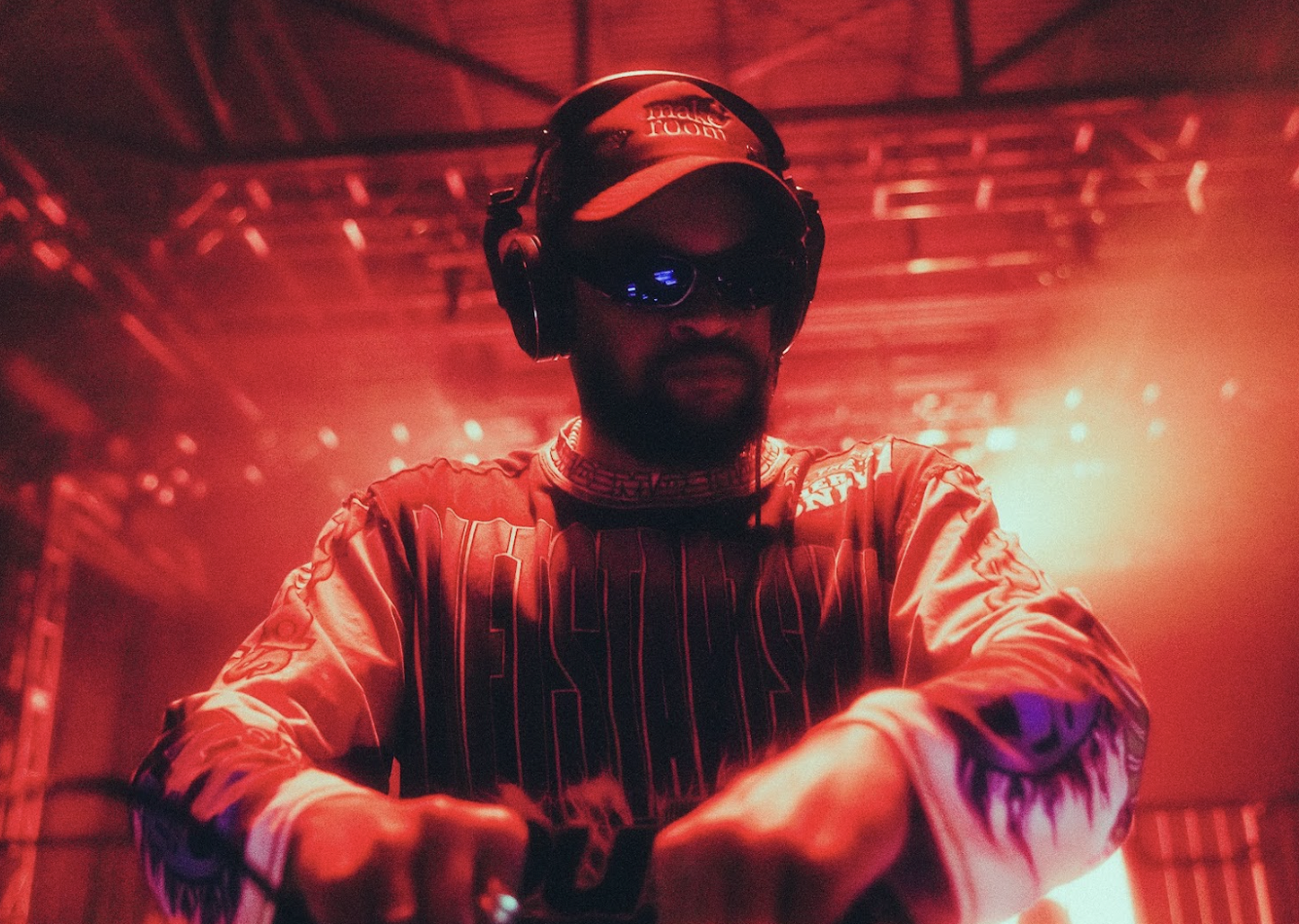
Malik Bey’s debut EP SCOOBIE comes directly from the house music he grew up around, pulling gospel, soul, Jersey club and Detroit techno into a project inspired heavily by his mom and the records she introduced him to.
The San Francisco-based DJ and producer built the entire project on an MPC Live III, often working from a hookah bar that became his makeshift studio and a place where he could reconnect with memories of listening to house music with his mom.
“CHURCH!” gets particularly specific with those references.
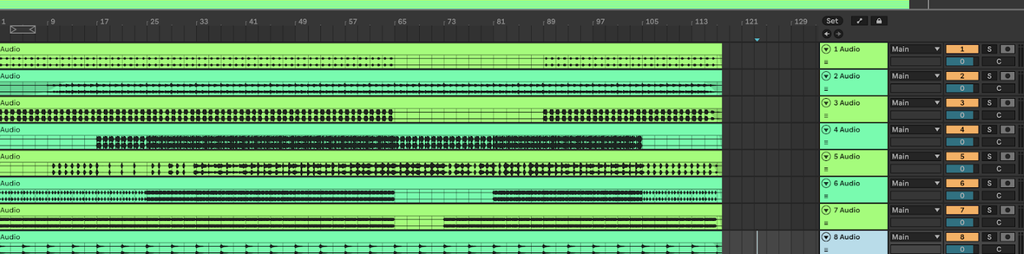
Bey sampled pieces of Louie Vega’s “How He Works,” Geoff C’s “This Is Hot (Yes Indeedy)” and Funky Dogs’ “FIRED UP,” then chopped and reworked those sources inside the MPC rather than simply recreating the records that influenced him. Piano chords, vocals, bass and additional processing gradually turn those references into something rooted in his own experience of gospel and house music.
That process is also tied to Bey learning production almost entirely from scratch. The MPC Live III was his first piece of production hardware, F9’s Origins Classic House expansion helped him understand how house music could be built inside it, and Ozone 12 became part of how he learned to control the increasingly busy layers inside “CHURCH!” Below, Malik Bey explains how the track came together.
MPC Live III – Sampling

This was the first piece of hardware I bought in February. I taught myself how to produce music on it by watching countless videos on YouTube and learning mostly through trial and error. After doing a lot of research, it was the first piece of equipment that felt really instinctive to me. I was already familiar with using drum pads and cue buttons while DJing, so the transition to the MPC Live III was super easy. I think this is a really great middle group for people who have found that using DAWs and the workflow just doesn’t work for them. This is literally a DAW in mobile form.
One of the main features I relied on when creating “CHURCH!” was the Sample & Sample Edit functionality on the MPC Live III. It made it incredibly easy to take the sounds and ideas I had in my head and immediately turn them into something that could live in the music I could sample anything; from acapellas and small pieces of records I’d heard to sounds from my own recordings; and isolate exactly what I needed to build the track.

The MPC Live III’s ability to create stems from anything recorded directly into the hardware opened up even more possibilities. Whether I was sampling a record or recording my own voice, I could break the sound down and turn it into individual one-shots that became building blocks for the track. For example, I sampled the bass from “How He Works” by Louie Vega because I loved the snap of the sound and used it as the foundation for the low end, then pushed its punch even further with a combination of effects with the Soft Clipper.
Sampling became a way for me to connect the past with the present. I pulled vocal samples from some of my favorite moments in “How He Works,” “This Is Hot (Yes Indeedy)” by Geoff C, and “FIRED UP” by the Funky Dogs. I wanted to pay homage to those records while still giving the sounds a completely new energy and context. Rather than simply recreating what I heard, I was taking pieces of the music that influenced me and reimagining them through my own perspective.
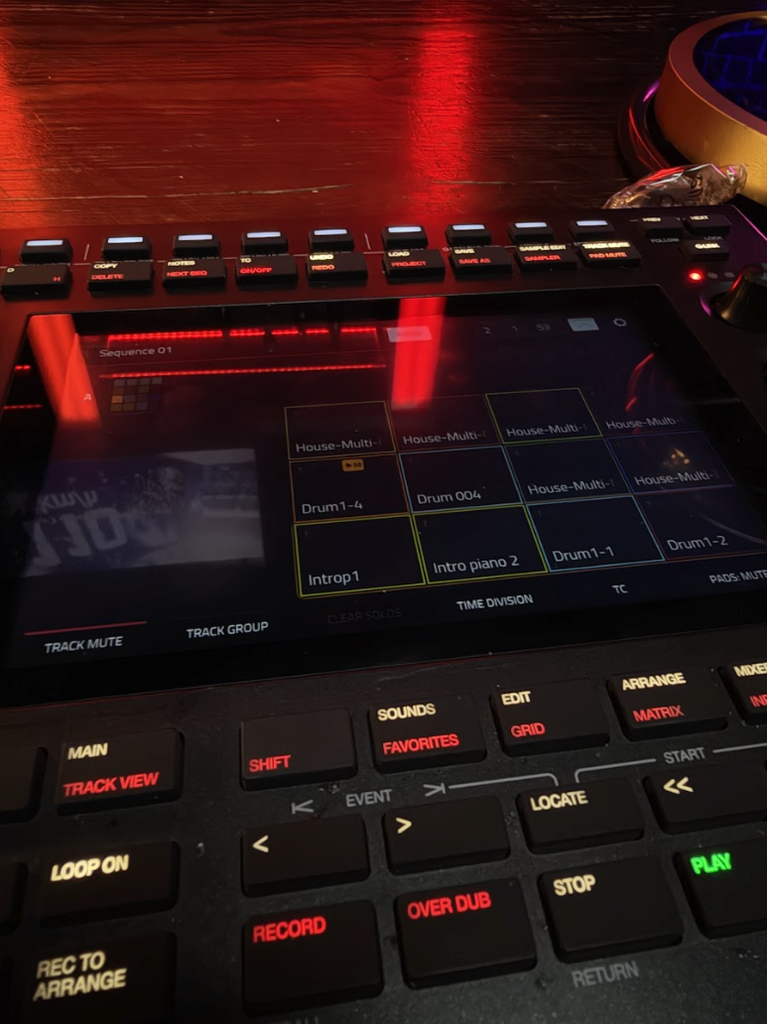
One of my favorite moments happens during the drop. I took a distorted vocal from “How He Works” and ran it through a stutter effect, creating this almost chaotic background vocal that runs throughout the section. That moment really captures what I was trying to accomplish with “CHURCH!”; taking the feeling of an old-school house record and pushing it somewhere new. The result sits somewhere between a praise dance at church and a late-night club. That tension is really the heart of the song: spiritual, familiar, nostalgic, but still completely alive in the present.

Ozone 12

I was first introduced to Ozone 12 by one of my friends; big shoutout to FUZZ. When I was first learning to produce, he always emphasized the importance of mastering your tracks and getting each layer to do exactly what you want. That advice stuck with me, and Ozone 12 became one of the tools that helped me do that.
What I like about Ozone 12 is that it doesn’t limit the creative process. It gives me the flexibility to experiment and sometimes find punch and clarity in sounds that I didn’t even know were there. For “CHURCH!,” that was especially important because there are so many elements competing for space.
There isn’t really a strict method to how I balance my layers. I think more about how I want the track to feel. With house music, the groove and bass have to cut through; I’m always thinking about how to make the low end shake the room and get people out of their seats. On the high end, I wanted something nostalgic but immediately attention-grabbing. The piano chords sampled from “This Is Hot (Yes Indeedy),” layered with claps and reverb, became the centerpiece. I wanted all of those elements to exist together without overpowering each other. That controlled chaos is what a praise break feels like to me: so many things happening at once, but everything somehow complementing each other while maintaining the energy of the moment.
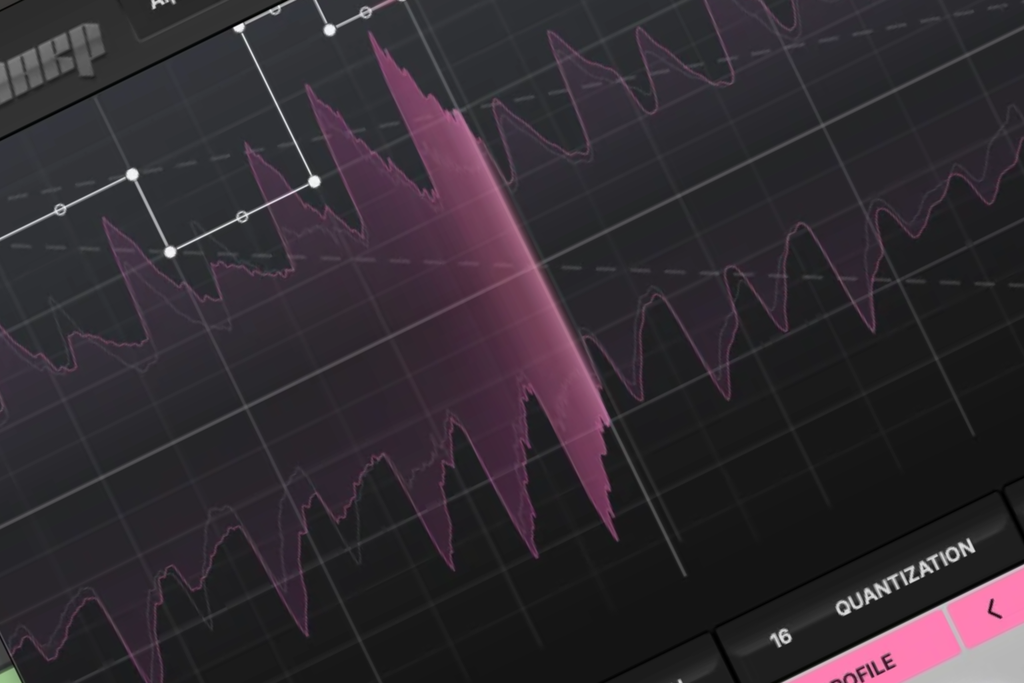
Ozone 12 helped me find that balance. While the one-click mastering feature can be a great starting point, I found that going into the individual layers and making intentional adjustments gave “CHURCH!” the punch and energy I originally heard in my head.
For me, the biggest lesson I learned with Ozone was: use the tools to support your vision, not dictate it. Take the time to make every layer do exactly what you want it to do.
F9 Origins Classic House
When I was first learning how to use the MPC Live III, I stumbled across an expansion pack that became a major foundation for how I started developing the sound of SCOOBIE.
At the time, almost every MPC Live III tutorial I found on YouTube was focused on rap, hip-hop, or trap. I was trying to make house music, so it was difficult to visualize how I could take the hardware and the ideas in my head and turn them into something that sounded like SCOOBIE. This expansion pack became a kind of playground; it showed me what was possible.
Working with it taught me how to edit instruments, make one-shots grittier, manipulate sounds, and sequence different elements into a complete track. A lot of the sounds are heavily quantized, but that actually made it a great starting point for learning the hardware. From there, I could experiment and start bending the sounds into something that felt like me – less robotic and more like myself
My advice to anyone learning new equipment or trying to find their sound is to find something that already exists within the genre or world you’re trying to create in. Use it as a starting point, but don’t just learn how to press the buttons; learn the cause and effect of different modulations, filters, and ways of shaping sound. That’s where you start developing your own language.
I’m especially grateful for this expansion pack because it came at a point when I was close to giving up on production. It showed me that house music was possible on the MPC Live III, and that realization became a huge part of how I found my way toward SCOOBIE; and ultimately, “CHURCH!”
Quick Fire Hot Takes on the Scene + Production

Hot Take #1
House music was born in the underground, and I still see glimpses of that spirit alive today. I think we keep the underground alive by continuing to be unapologetically ourselves.
Hot Take #2
You don’t need to know what every button on a piece of hardware does or what every feature in a software program can do. You don’t need to be the best to make something that is unapologetically you. Sometimes, the imperfections are what make a song even better.
Hot Take #3
Artists need to pay attention to the history of the genres they love. There are so many people and things that came before us that could broaden our perspectives.
Hot Take #4
I think too many artists are scared to be themselves because we are too worried about being who people expect us to be. Thats limiting as f*ck
Hot Take #5
I think we’ve lost some of the essence of what music has always meant to communities around the world. House music, especially, was born as a way to heal, connect, and bring people together; not as a means of serving the artist alone.

Will Vance is a professional music producer who has been involved in the industry for the better part of a decade and has been the managing editor at Magnetic Magazine since mid-2022. In that time period, he has published thousands of articles on music production, industry think pieces and educational articles about the music industry. Over the last decade as a professional music producer, Will Vance has also ran multiple successful and highly respected record labels in the industry, including Where The Heart Is Records as well as having launched a new label with a focus on community through Magnetic Magazine. When not running these labels or producing his own music, Vance is likely writing for other top industry sites like Waves or the Hyperbits Masterclass or working on his upcoming book on mindfulness in music production. On the rare chance he's not thinking about music production, he's probably running a game of Dungeons and Dragons with his friends which he has been the dungeon master for for many years.