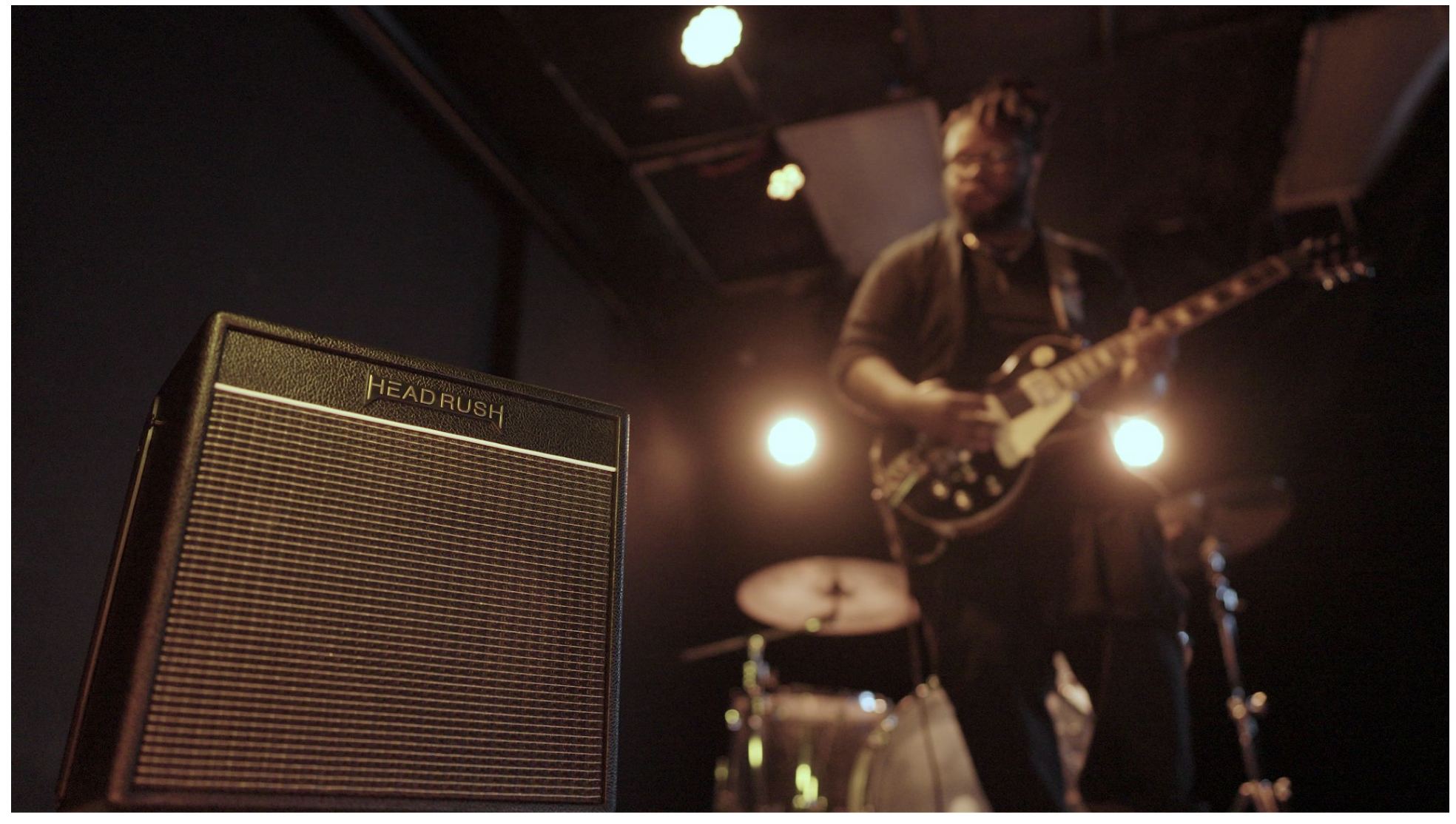
HeadRush is aiming at one of the biggest practical problems in modern guitar rigs: what happens after the tone leaves the modeler?
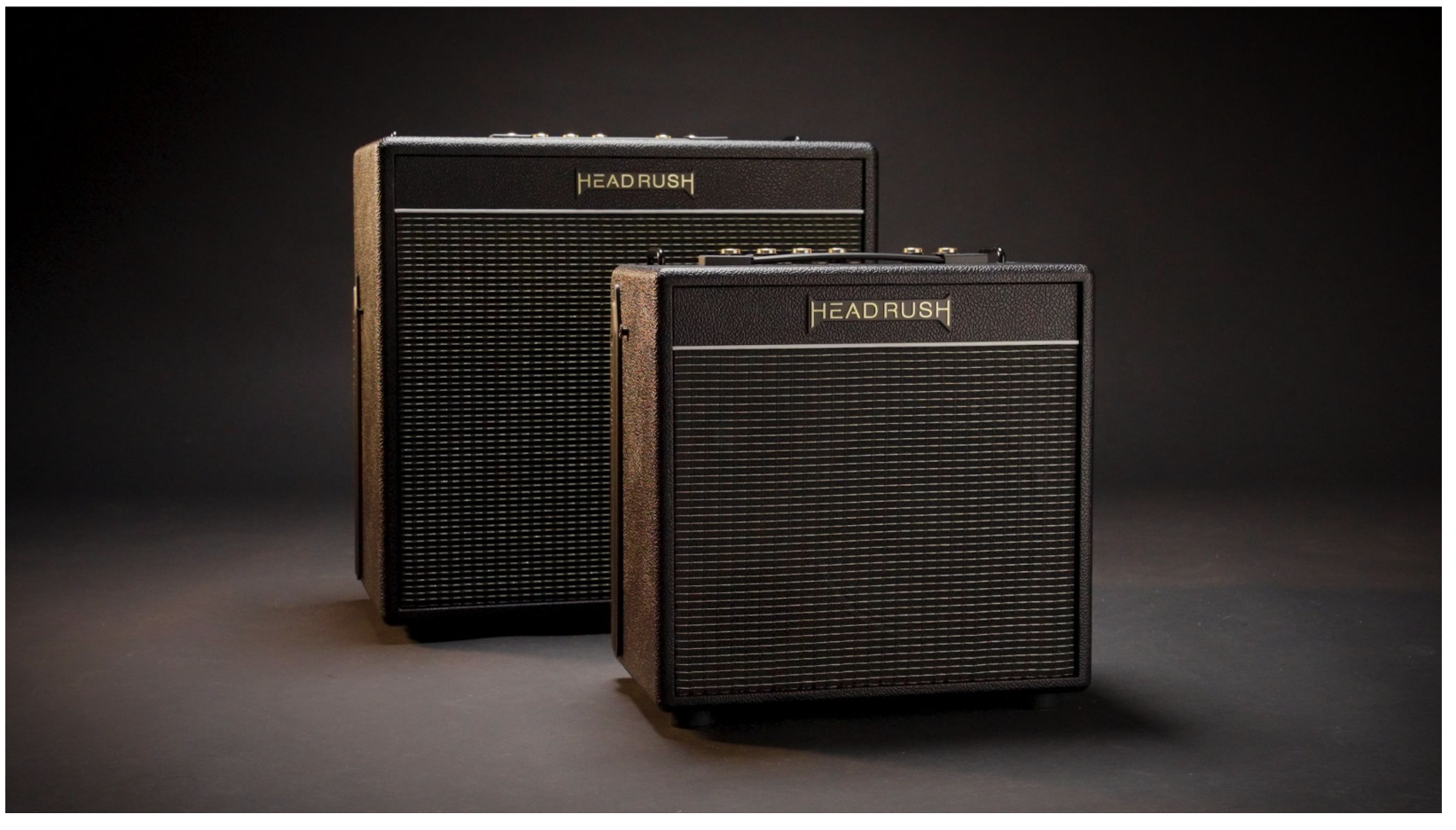
The new HeadRush FRFR CAB Series is built for players who create their sound inside modeling pedals, amp profiles, third-party IRs, Neural Amp Modeler, and capture-based setups, then need a cabinet that can reproduce that tone without pushing it back into traditional amp coloration. The line launches with two models, the compact FRFR-8 CAB and the larger FRFR-12 CAB, giving guitarists and bassists a more familiar amp-style cabinet format for rehearsal, recording, and live performance.
This is a very specific product category, but it solves a big issue. Modeling rigs have gotten better, faster, and more convincing, but the monitoring side still decides whether the player actually trusts what they built. A great preset can fall apart quickly if the speaker adds too much of its own voice, dulls the top end, or changes the low-end response in a room.
The point of the FRFR CAB Series is to get out of the way while still feeling like a guitar cabinet.
Modeling Pedals Need a Speaker That Does Less
Traditional guitar amps and cabinets are designed to color the sound. That is part of why players love them. The problem is that a modeling pedal has usually already done that work. The amp model, cabinet IR, mic choice, EQ, compression, and gain staging may already be baked into the patch before the signal reaches the speaker.
Put that into a normal guitar cab, and the tone can get colored twice.
The FRFR CAB Series is HeadRush’s answer to that problem. Both cabinets use full-range, flat-response amplification designed to preserve the tones players have already dialed in inside their modelers. That makes the cabinet less of a tone-shaping amp and more of a translation system for the rig.
That idea sits close to the broader gear conversation I covered in my article on hardware effects for synth rigs in 2026. Once musicians build more of their sound inside pedals, processors, and hybrid setups, the final playback stage becomes just as important as the source.
The EQ Is There for the Room, Not to Rebuild the Patch
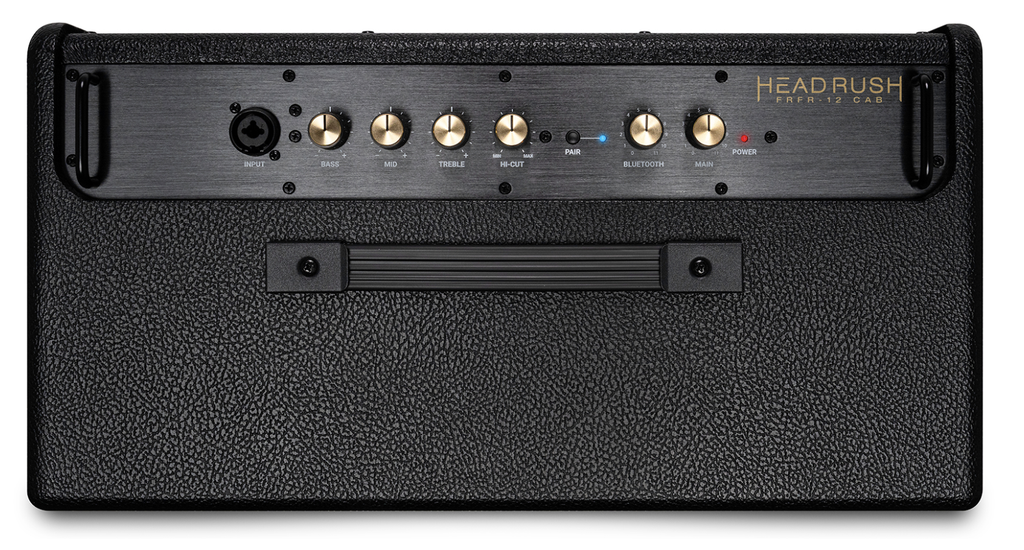
One smart detail is the 3-band Baxandall EQ with a variable high-cut filter. That gives players a fast way to adapt the cabinet to a rehearsal room, studio, or stage without going back into the modeler and rewriting the patch itself.
That distinction is important. Once a modeler patch is dialed in, players often do not want to rebuild it every time the room changes. A local cabinet EQ gives them a quicker way to trim the sound for the space.
The variable high-cut filter should be especially helpful because high-frequency behavior is one of the places modeled rigs can get exposed. A patch that feels good in headphones can feel sharp through a loud speaker. A quick high-cut can make the cabinet easier to fit in the room without compromising the original sound’s detail.
That also connects to my article on audio cables for music production, where the larger point was simple: the practical parts of a setup often decide how much confidence you have in what you are hearing.
Bluetooth Makes It a Practice Cabinet Too
Built-in Bluetooth 5.3 gives the FRFR CAB Series a second use case beyond normal modeler playback. Players can stream backing tracks, rehearsal mixes, or songs they are learning directly through the cabinet.
That is a simple feature, but it makes sense for the way guitarists actually practice. A modeler rig often becomes the whole home setup: guitar tone, effects, headphones, backing tracks, and recording. Adding Bluetooth to the cabinet means the speaker can handle more of that daily routine without extra routing.
The XLR/TRS combo input keeps the core connection straightforward, while the XLR line output can send a clean signal to the PA or link multiple cabinets. That gives the cabinets a flexible role in rehearsal and live setups, from personal monitoring to more complete stage use.

Will Vance is a professional music producer who has been involved in the industry for the better part of a decade and has been the managing editor at Magnetic Magazine since mid-2022. In that time period, he has published thousands of articles on music production, industry think pieces and educational articles about the music industry. Over the last decade as a professional music producer, Will Vance has also ran multiple successful and highly respected record labels in the industry, including Where The Heart Is Records as well as having launched a new label with a focus on community through Magnetic Magazine. When not running these labels or producing his own music, Vance is likely writing for other top industry sites like Waves or the Hyperbits Masterclass or working on his upcoming book on mindfulness in music production. On the rare chance he's not thinking about music production, he's probably running a game of Dungeons and Dragons with his friends which he has been the dungeon master for for many years.