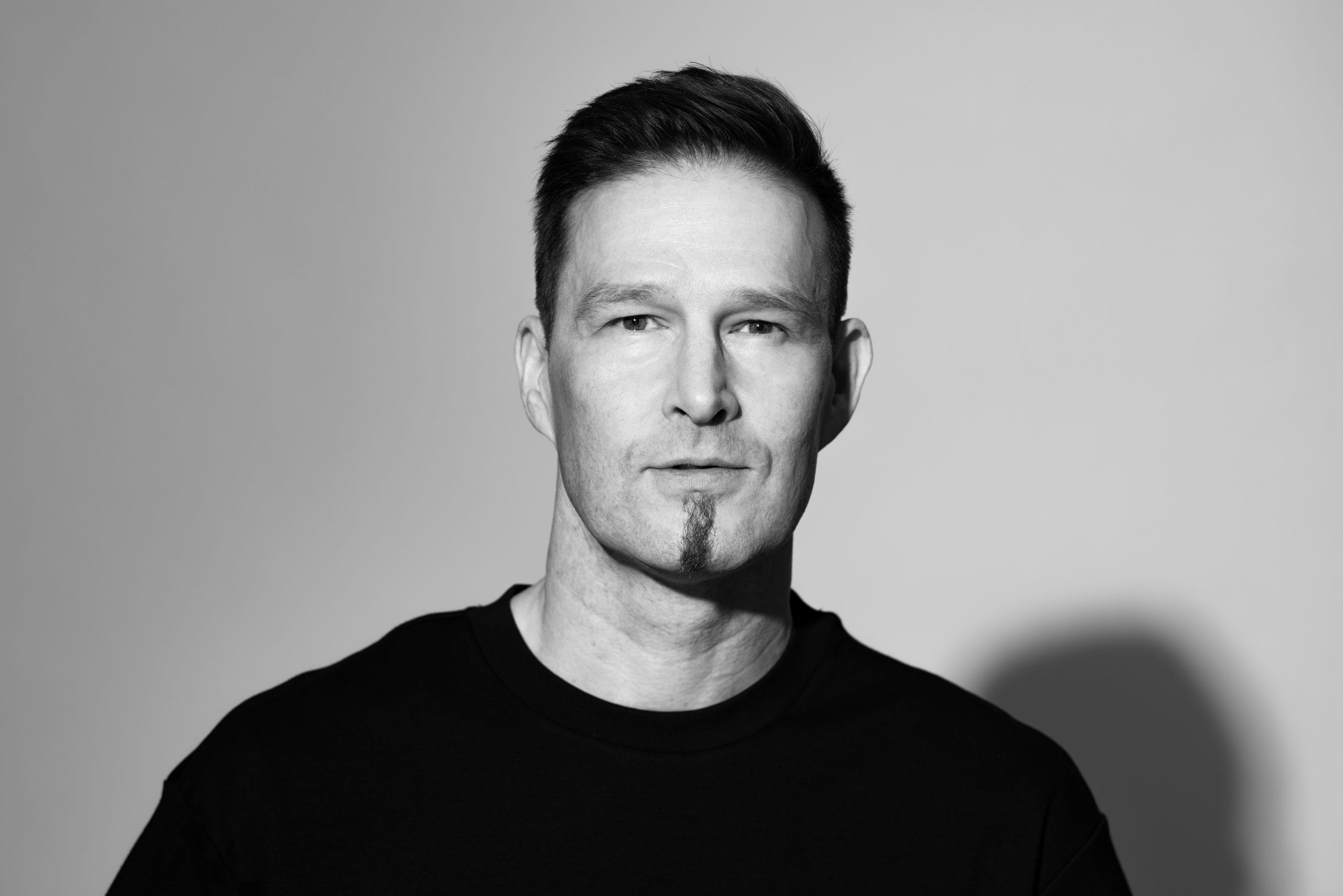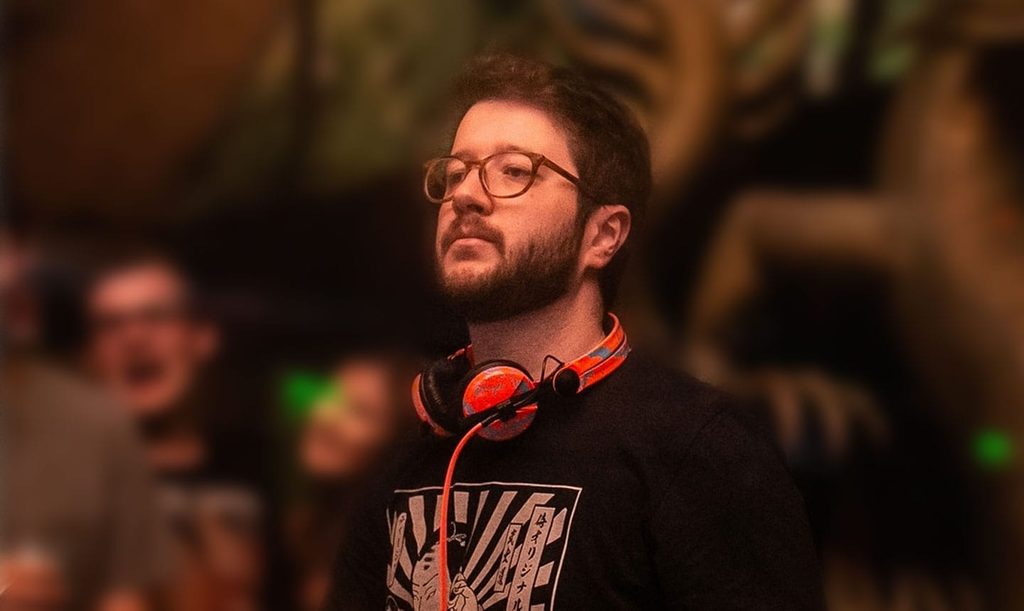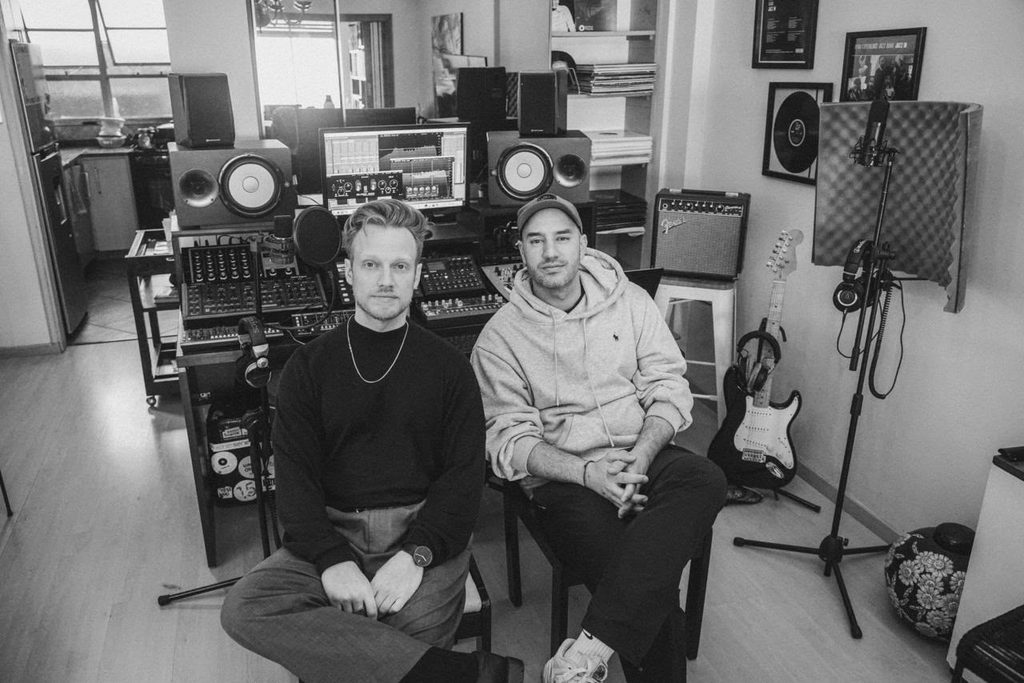
Pierre to a degree’s second album, Omen, dropped bakc on July 3 as a project built around trust, intuition, and the strange creative turns that appear when the artist does not control every step too tightly. Inspired by Paulo Coelho’s The Alchemist, the album follows the idea of listening to signs, pursuing a personal legend, and staying open to the path as it changes shape.
That idea shows up in the music itself. Omen moves between ambient music, organic and melodic house, cinematic downtempo, and more euphoric dance-floor moments, giving the record a sense of travel without forcing it into one fixed lane. Singles including “Dawn,” “Reverie (Where Dreams Lead),” “Campfire,” and “Becoming Wind” sketch out that range, while the larger album points back to Pierre’s broader language: progressive and melodic house, organic texture, and a kind of widescreen emotional atmosphere.
The interview below turns that album context toward a more current production question: what should artists protect as AI tools get faster, cleaner, and more convincing on the surface? Pierre’s answer is not built around fear of technology as much as it is built around protecting experimentation, accidents, uncertainty, and the pleasure of finding something you did not know you were looking for.
For an album shaped by omens, signs, and unexpected movement, that position feels central to the work.
Interview with Pierre To A Degree
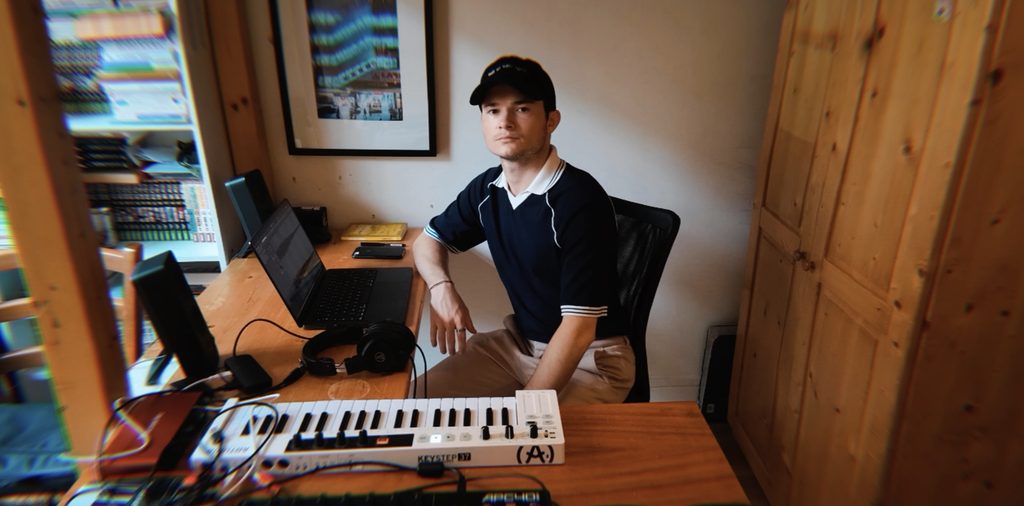
As music-production tools get easier to use and their outputs get “better,” which part of the process should artists protect most?
The outputs might get better, but the way I see it, there is something they fundamentally can’t provide. The way AI music production tools work is that they generate an output based on a specific intention, a prompt, and they produce something that statistically fits, based on patterns learned from massive amounts of existing music. The thing is, they’re fundamentally driven by intention: you ask for something specific, and that’s more or less what you get.
The thing is, in my experience, few producers are always purely intentional. Most of the time, we produce without knowing exactly in which direction we are going, and from my point of view, that’s the most fun, inspiring and accomplishing part of creating art.
In my case, in an age where AI can produce a track in a few prompts, what I want to protect most is my capacity to keep experimenting and trying things out, just for that minimal chance of stumbling upon what we call “happy incidents.”
Before automating part of the workflow, what should producers ask themselves?
Since most producers nowadays have to juggle between their day jobs and their passion project, the opportunity to automate some parts of the process, from production to promotion, is obviously great. Facing that opportunity, the question I asked myself was: what part of the process brings me the most, on a personal level?
On one hand, for example, regarding promotion or marketing, I’m more open to streamlining long hours of creating content, even though I like to keep a certain control over what I want to represent with my art. Therefore I still end up making a lot of things myself, for example coming up with hooks and ideas for social media, without relying too much on generative tools.
On another hand, for me specifically I know the creative and musical part has to be absolutely protected in that process, no matter the time it takes sometimes to create something I’m satisfied with. Because it is the reason I do music, like all musicians probably: I strongly believe the reason we do art is because there is something we need to express, something that we feel we need to create, even though we often don’t know what exactly before it’s just done. To me, it’s that experimentation, and that discovery of what we wanted to tell, which is absolutely amazing.
For example, I feel blessed to have spent a few hours slowly shaping the drifting bass sound for “Caravan,” rather than just asking an app to generate a “sick bass sound” or whatever.

How can artists tell when a tool has moved from helping the track to steering the track?
It’s a good question, since every time I stumble on one of those “happy incidents” in my creative process, it is as such kind of a loss of autonomy and intentionality. However, I personally do not regard those as an example of the tool steering the track away from my control, but rather like an unexpected event that challenges the way I, as an artist, will respond and adapt to that idea in order to make it fit my creative vision.
It’s actually an important idea from The Alchemist which inspired my track “Maktub”: how making a decision is only the beginning of things, and you have to be ready to adapt to whatever unexpected things end up on the path to your goal.
Where do artists need clearer boundaries around AI-assisted work?
As you might have understood by now, I don’t use AI tools for the music production part. However, I happen to use royalty-free vocal samples in many of my tracks, and I’m always doubtful concerning whether the sample is human made. And I’m always afraid that the audio is the product of an undeclared AI.
Just like we advocate for more traceability for what we consume in other industries, maybe we should advocate for more transparency on what was used to create sample packs? I mean, even beyond the question of boundaries around AI, I’m genuinely interested in knowing what synth was used, what plugin applied, what organic instrument played, like many other producers I think.
I would be super interested to know a bit more about the samples I scroll through looking for inspiration, sometimes.
How should producers think about AI as a pressure on behavior, rather than another tool category?
My hope is that the advent of AI makes us value even more the human factor in art.
I have already seen crowds in the cinema cheer loudly as the projection before the film began displayed “This film was made without AI.” And what about the new badges displayed on Spotify artist profiles to distinguish human and AI profiles? Those have to mean something, right? Therefore, as producers, I think we should value what is authentic, weird, surprising and imperfect in our art. Maybe even wear those imperfections as a badge of honor.
I remember watching this interesting and surprisingly refreshing in its optimism video essay by a creator named Medieval Mindset on YouTube, who argued that the 2030s have the potential to be a New Renaissance. In particular, he believed that in the age of AI, this New Renaissance would involve us falling in love with the human process again, including human error, an out-of-scale note, a tempo that’s slightly off but creates an interesting groove, or the use of an old broken synth creating an unreplicable sound. I want to believe in that too.
Closing Thoughts From The Editor
Pierre’s answers work because they give the AI debate a more precise target. He is not arguing that every automated process is useless, or that artists should reject anything that saves time. He draws the line at the part of music where uncertainty still has a role. Promotion, formatting, admin, and repetitive content work can be streamlined without destroying the reason a song exists. The creative part is different. That is where a producer often discovers the point of the work while making it.
That puts his thinking close to my interview with Kenji Takashima on why the creative process still counts in the AI era. Kenji’s argument was that the act of making still changes the artist, even if an outside system can create a finished-looking result faster. Pierre comes at the same issue from a softer, more exploratory place.
The “happy incident” is not a glitch in the workflow. It is the part of the workflow worth protecting.
That same tension showed up in my interview with Black Octopus Sound on building tools for the next era of producers. The production market is not simply moving toward more content. It is moving toward systems that promise speed, recommendation, generation, and organization. Pierre’s position is a useful reminder that producers still need to decide which parts of the process should remain slow enough for discovery to happen.
That is why Omen feels like the right project for this conversation. Its musical world moves between ambient reflection, organic texture, melodic house, and more euphoric movement, but the deeper thread is trust. Trust the imperfect process. Trust the accidental turn. Trust the rough edge that makes the track feel alive.
If AI pushes producers toward faster and cleaner outputs, Pierre’s answer is to protect the weird human detour that made the music worth finishing in the first place.

Will Vance is a professional music producer who has been involved in the industry for the better part of a decade and has been the managing editor at Magnetic Magazine since mid-2022. In that time period, he has published thousands of articles on music production, industry think pieces and educational articles about the music industry. Over the last decade as a professional music producer, Will Vance has also ran multiple successful and highly respected record labels in the industry, including Where The Heart Is Records as well as having launched a new label with a focus on community through Magnetic Magazine. When not running these labels or producing his own music, Vance is likely writing for other top industry sites like Waves or the Hyperbits Masterclass or working on his upcoming book on mindfulness in music production. On the rare chance he's not thinking about music production, he's probably running a game of Dungeons and Dragons with his friends which he has been the dungeon master for for many years.