Table of Contents
Studio monitors used to be sold around one question: how do they sound?
That question still matters, obviously, but the room around the speaker has become just as important. Producers are mixing in spare bedrooms, small studios, treated garages, writing rooms, post rooms, Atmos setups, and hybrid spaces where the monitors may be hard to reach once they are mounted or locked into position.
KRK’s new V Series Five Studio Monitors are aimed straight at that reality.
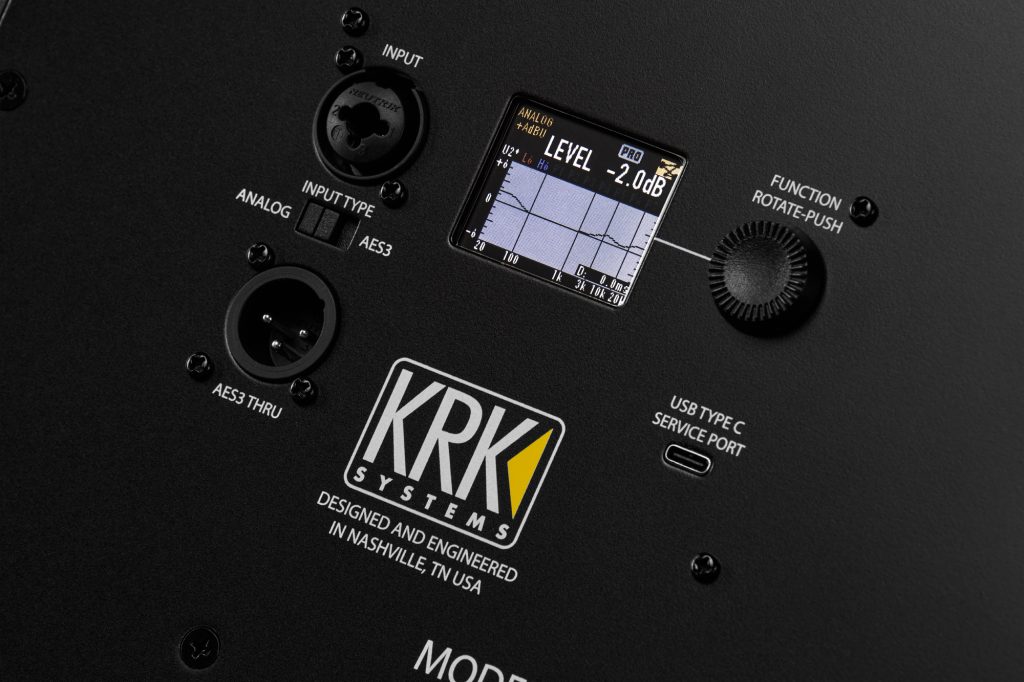
This is the latest generation of KRK’s flagship professional reference line, but the headline change is not only another driver update or a new cabinet shape. V Series Five introduces KRK Mesh® technology, which allows wireless control of the monitors through the KRK Control App®. Users can adjust settings, compare EQ profiles, manage levels, and tune the system from a mobile device without reaching behind the speaker.
That is a smart move for modern studios, especially once monitors are part of a larger Dolby Atmos® system or a room where speakers are mounted, spaced, and treated around a fixed listening position. The harder a monitor is to access physically, the more valuable remote control becomes.
KRK Mesh is the real headline
KRK Mesh lets V Series Five monitors be controlled wirelessly, individually, or as grouped speakers.
That changes the relationship between the user and the monitoring setup. Instead of walking around the room, reaching behind cabinets, checking tiny rear-panel controls, or changing one speaker at a time, engineers can manage the system from the listening position.
For stereo users, that means faster level checks, tuning comparisons, and profile changes. For immersive rooms, the payoff is bigger because speaker count turns every adjustment into a more tedious job. Grouping monitors and changing settings from the app makes the whole system feel more connected.
The Control App can manage system settings, EQ profiles, levels, and post-installation optimization. That last part is important because studios rarely stay frozen. Desks move, furniture changes and so much more and, the monitor system has to keep adapting, and KRK is clearly trying to make that easier from the chair.
I wrote about a related small-room issue in my roundup of desktop studio monitors for producers working in small rooms, where the whole point was that monitoring accuracy depends on how the speaker behaves in the actual room. V Series Five pushes that idea into a higher-end KRK platform with deeper control.
The acoustic tuning side is serious
The wireless control would be less interesting if the tuning options were thin.
KRK gives V Series Five users 49 preset Boundary EQ combinations and seven fully parametric PRO EQ filters. Three user presets can be stored and recalled, which lets engineers compare tuning profiles or adapt the same monitors to different production needs.
That is the kind of feature set that matters once a speaker leaves the marketing page and enters a real room. Low-end buildup, wall proximity, desk reflections, corner placement, and speaker height can all change what the monitor is telling you. Boundary EQ gives users a starting point, while parametric filters allow finer changes when the room needs more specific correction.
This is also where the V Series Five launch connects with the broader studio-treatment conversation. In my article on GIK’s newer bass trap range, the point was that low-frequency problems are often physical before they are electronic. KRK’s EQ and app control do not replace a better room, but they give engineers another way to tune the speaker side after the space has been addressed.
The V4, V6, and V8 choices are about room scale
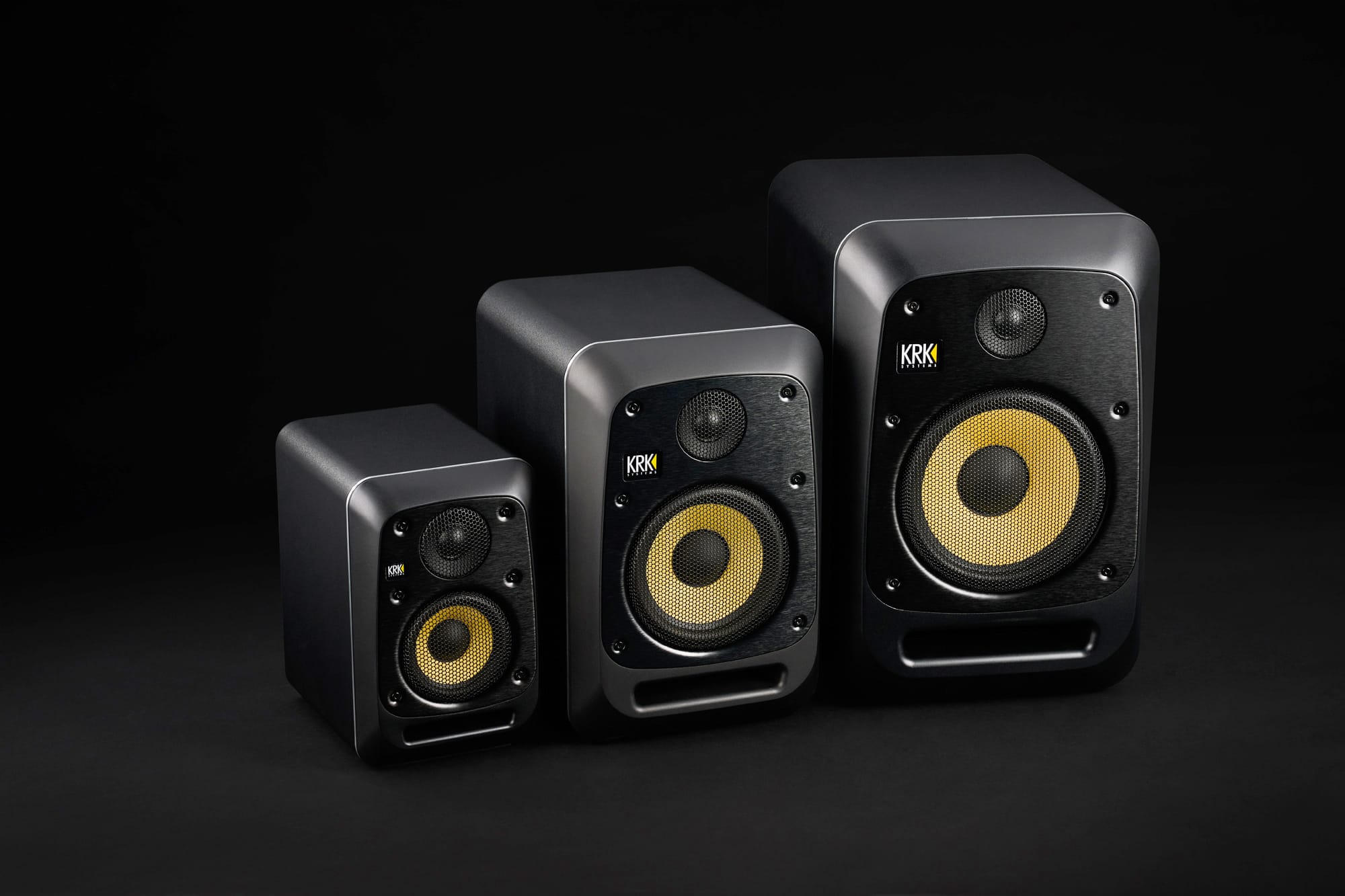
The V4 is the most compact model, and it is likely the one producers in smaller rooms will look at first.
A four-inch woofer with a 48 Hz low end gives it reach beyond what many small monitors manage, while the size still fits rooms where an eight-inch speaker would overload the space. For writers, editors, small production desks, and satellite rooms, the V4 may be the most realistic entry into the V Series Five line.
The V6 feels like the middle choice. A 6.5-inch woofer and 40 Hz extension should give producers more low-end confidence without jumping straight to the scale of the V8.
The V8 is the largest model, reaching 32 Hz with a peak output of 121 dB SPL. That puts it in the more serious mixing, mastering, and larger-room category, where headroom and low-end extension become a bigger part of the job.
That sizing question came up in my KRK Kreate 3 review, although from the opposite end of the market. Small monitors can be very helpful when the room is tight, but larger speakers make more sense once the room can handle the energy. V Series Five gives KRK a broader professional answer across that spectrum.

Connectivity and installation details round it out
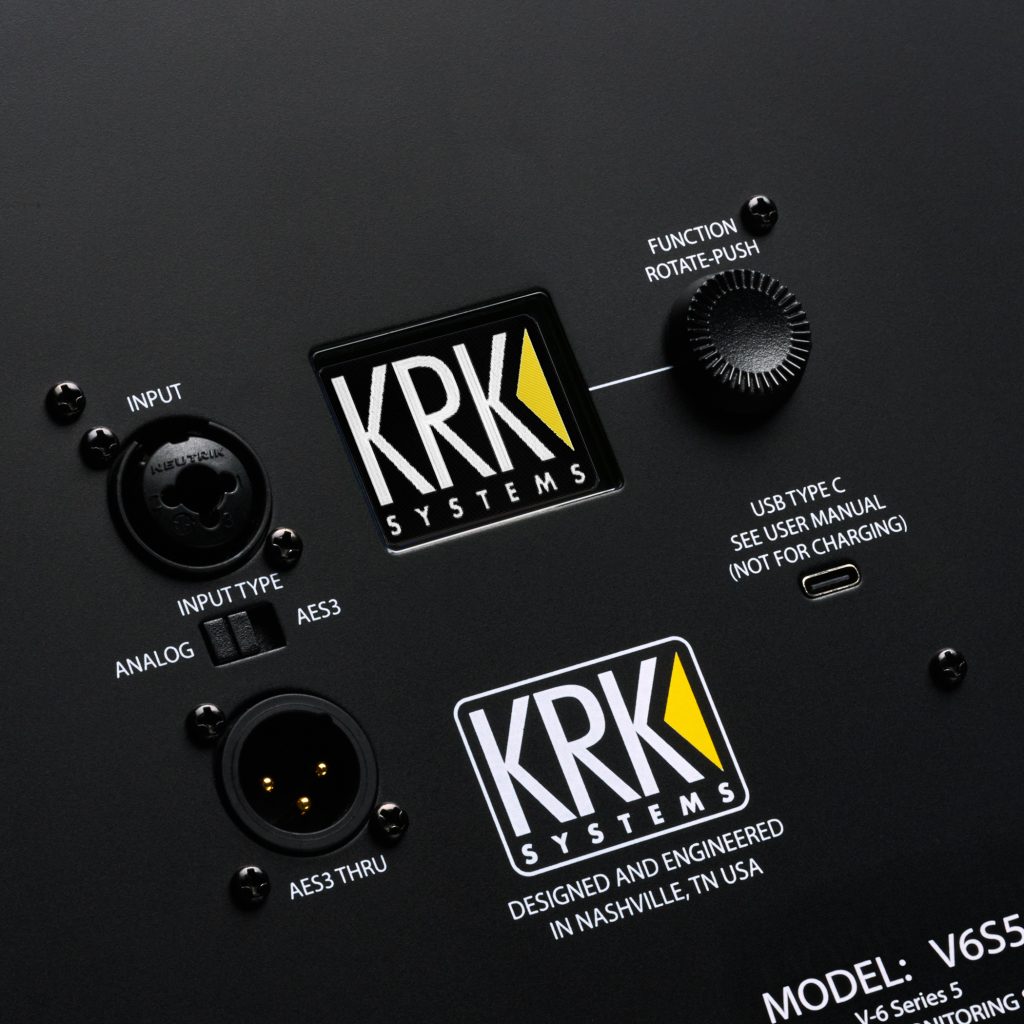
V Series Five includes an optimized front-ported bass-reflex enclosure, NEUTRIK® combo XLR/TRS connectivity, analog and AES3 digital inputs, standby control, ground lift, input sensitivity settings, and an illuminated logo that shows when the monitor is powered on.
Each monitor also includes a removable protective grille and integrated mounting points for installation.
Those are not glamorous features, but they matter in professional rooms. AES3 support gives the monitors a cleaner digital path for studios that want it. Mounting points help in immersive systems or fixed installations. Ground lift and input sensitivity control help when the studio setup has to play nicely with several pieces of gear.
Front porting may also help in rooms where placement is less forgiving, though speaker placement still needs care. KRK is clearly building the line for actual studio deployment, not only desktop placement.

Will Vance is a professional music producer who has been involved in the industry for the better part of a decade and has been the managing editor at Magnetic Magazine since mid-2022. In that time period, he has published thousands of articles on music production, industry think pieces and educational articles about the music industry. Over the last decade as a professional music producer, Will Vance has also ran multiple successful and highly respected record labels in the industry, including Where The Heart Is Records as well as having launched a new label with a focus on community through Magnetic Magazine. When not running these labels or producing his own music, Vance is likely writing for other top industry sites like Waves or the Hyperbits Masterclass or working on his upcoming book on mindfulness in music production. On the rare chance he's not thinking about music production, he's probably running a game of Dungeons and Dragons with his friends which he has been the dungeon master for for many years.