I’ve always been a sucker for a new piano library, although there are already enough excellent sampled pianos available that another release needs a pretty compelling reason to earn a place in my Kontakt collection. Most producers have access to traditional grands, uprights, and softer felt instruments, and while recording quality and microphone placement can make a difference, the underlying instruments often share familiar characteristics.
Every so often, though, a developer gets access to something genuinely unusual, and the resulting library offers a recording source that most musicians could never access themselves.
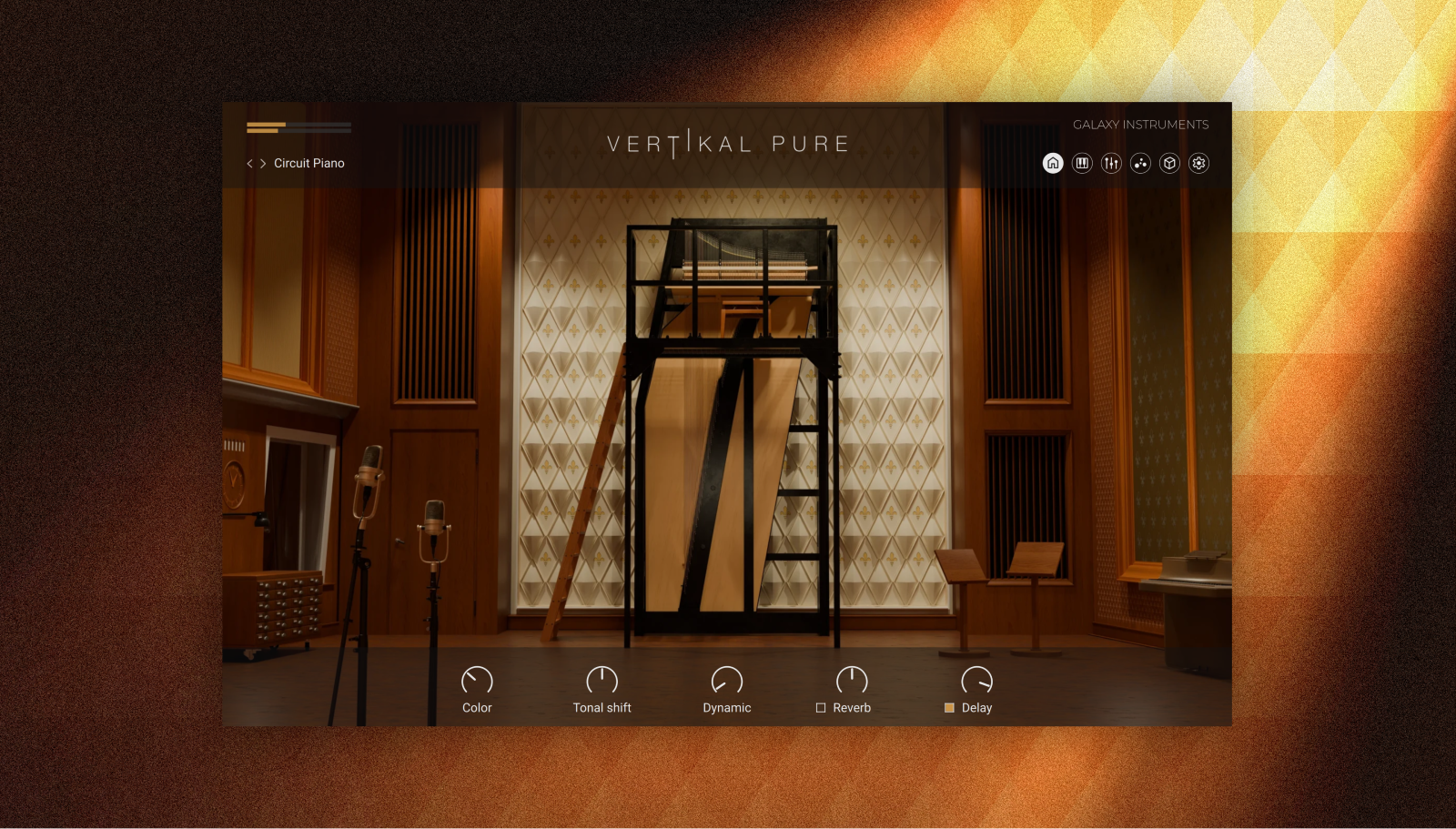
Native Instruments has released Vertikal, a new Kontakt 8 instrument built around Nils Frahm’s custom vertical concert grand, recorded inside his Saal 3 studio at Berlin’s historic Funkhaus complex. The piano stands 4.5 meters tall, with strings reaching 3.9 meters, and its unusual construction gives it physical characteristics that distinguish it from conventional upright and grand pianos.
Developed by Galaxy Instruments with Frahm’s official support, Vertikal comes in several configurations and adds a new generative processing system for composers, electronic producers, and sound designers.
What’s particularly interesting is the relationship between the physical piano and the software developed around it. Native Instruments already has a considerable collection of acoustic piano libraries, including Noire, which was also recorded in Frahm’s Saal 3 studio. Vertikal introduces a different instrument with its own mechanical characteristics, then extends those recordings through Particles 2.0, allowing producers to develop rhythmic patterns, evolving arrangements, and processed material from the sampled piano.
A 4.5-Meter Piano Recorded Inside Nils Frahm’s Studio
The physical instrument behind Vertikal is a custom-built vertical concert grand developed in connection with Frahm and Piano Day, the annual celebration of the piano he founded in 2015. Unlike a conventional upright, which is generally designed around relatively compact dimensions, this piano uses an exceptionally large vertical structure to accommodate strings reaching 3.9 meters.
Those dimensions affect the instrument’s resonance and sustain, particularly in the lower register, where longer strings can produce complex harmonic interactions.
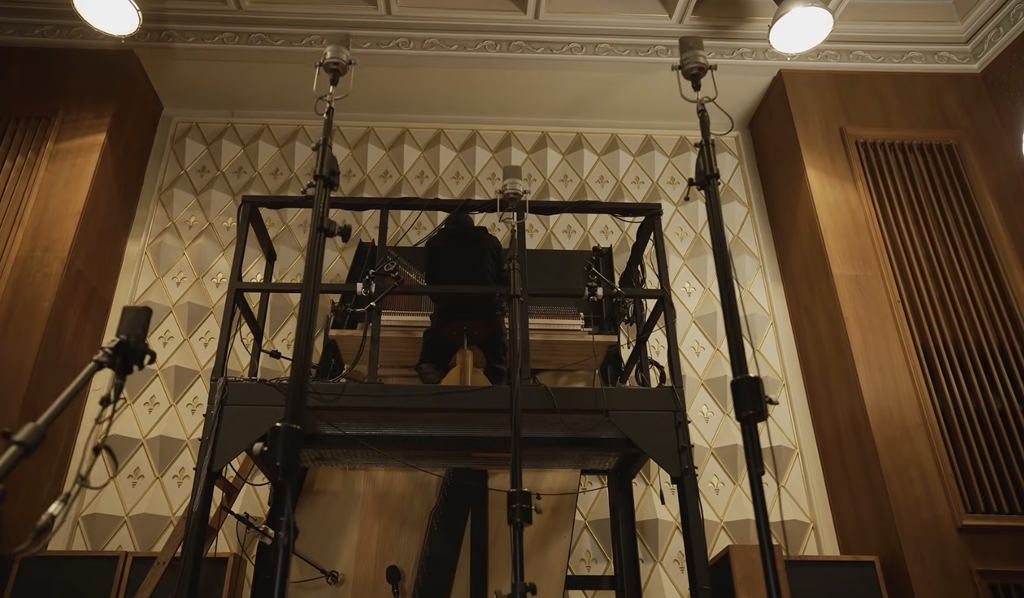
The piano was recorded inside Saal 3 at Funkhaus Berlin, a former broadcasting and recording complex that Frahm took over as his personal studio in 2016.
The room was originally designed for chamber music, and its acoustic properties are part of the recordings used in Vertikal. This matters because the resulting instrument captures the relationship between the piano and its recording environment rather than presenting a completely isolated set of samples without any room characteristics.
Galaxy Instruments handled the sampling and development, continuing its previous work with Frahm on Native Instruments’ Noire. The company has also developed libraries including Una Corda, The Giant, Claire, and Piano Colors, giving it considerable experience recording unusual acoustic instruments.
I previously discussed The Giant in our piano plugin roundup, which examined another exceptionally large vertical piano developed by David Klavins. Vertikal continues that interest in instruments whose physical construction creates recording possibilities that conventional piano libraries cannot reproduce directly.
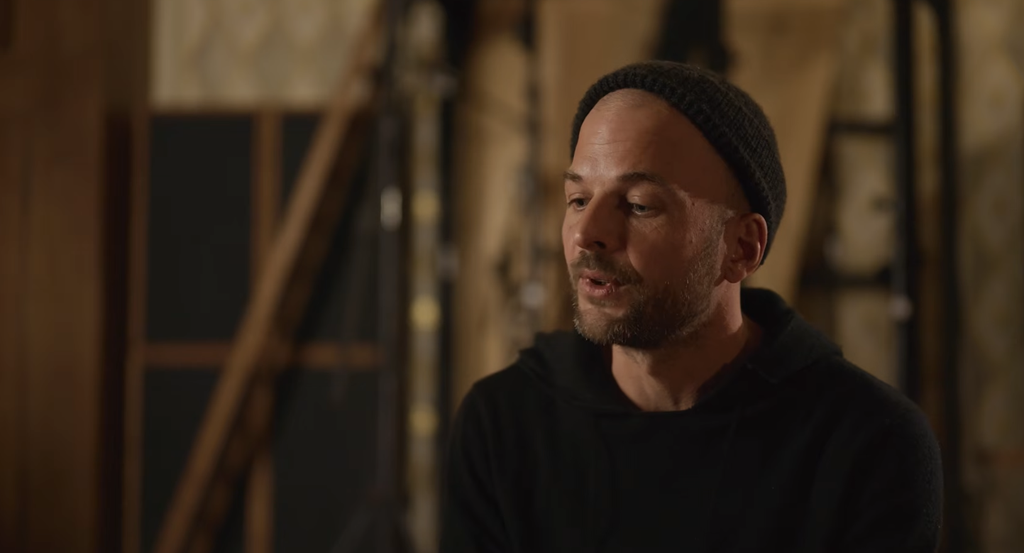
Pure, Felt, and Cotton Preparations Offer Different Playing Characteristics
Vertikal includes several playing configurations designed to capture different aspects of the piano.
The pure version presents the instrument without additional string damping, while the felt and felt-plus-cotton preparations introduce different amounts of physical damping. These preparations change the relationship between the initial hammer attack and the strings’ subsequent resonance, giving producers options for a softer piano sound without relying exclusively on EQ or conventional filtering.
I’ve discussed the importance of these characteristics in my Kontakt 8 review, particularly when evaluating how sampled instruments respond to performance and how additional controls influence the writing process.
There’s also a related example in our How It Was Made feature with Wingtip, where he explained how Kontakt’s The Grandeur helped provide natural piano recordings during sessions without access to a live instrument. Vertikal addresses a similar requirement from a different starting point, offering access to a rare physical piano and its original recording environment.
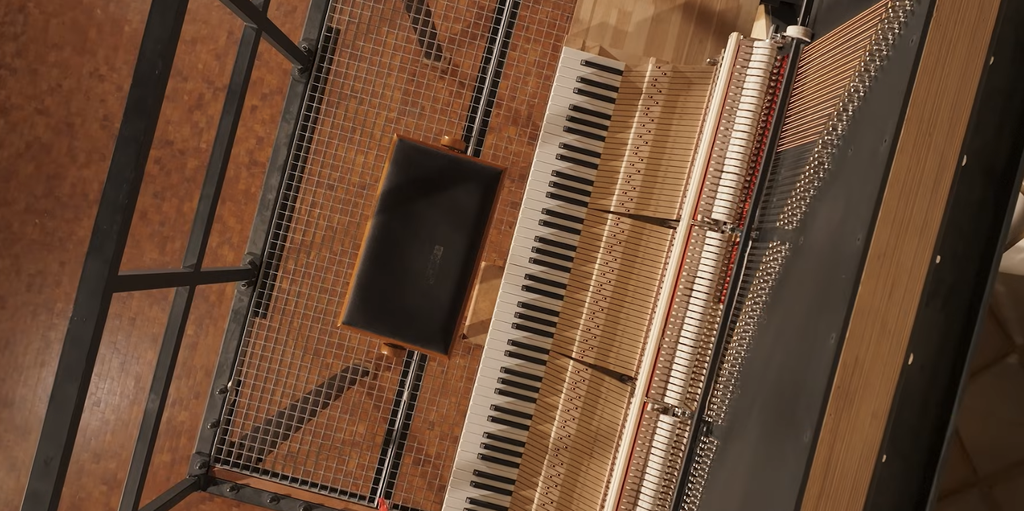
Particles 2.0 Turns Piano Performances Into Generative Arrangements
The second major component of Vertikal is Particles 2.0, an expanded version of the generative engine introduced with Noire. The original system allowed producers to generate additional notes and textures from their performances, while the new version introduces greater control over how those events are created and manipulated. Producers can work with expanded tonal, percussive, and textural sources, adjust individual particle envelopes, and control the characteristics of the resulting patterns.
One of the main additions is Rhythm Mode, which generates reproducible patterns rather than relying exclusively on continuously changing note events. That’s an important distinction when writing music inside a DAW because it allows producers to develop repeating parts that can remain consistent throughout an arrangement.
Particles 2.0 also introduces directly playable sound sources, independent pan and timbre controls, and detailed envelope adjustments, expanding the ways the piano recordings can be used beyond conventional keyboard performance.
Native Instruments Vertikal Pricing and Compatibility
Vertikal is available from November 5, 2026, for $149 / €149, requiring Kontakt 8 or the free Kontakt 8 Player. The library also supports Native Kontrol Standard integration, allowing compatible Native Instruments controllers to access mapped parameters and performance controls without manually assigning everything inside the DAW.
The instrument arrives with Frahm’s official support, and its development reflects an ongoing relationship between the composer, Galaxy Instruments, and Native Instruments. The earlier Noire library concentrated on Frahm’s custom-intoned Yamaha concert grand, while Vertikal captures an entirely different piano whose physical construction is central to its character. The inclusion of Particles 2.0 also means the new library extends beyond straightforward piano sampling, providing additional options for building arrangements and manipulating the original recordings.
Native Instruments has offered to provide review licenses, and I’m particularly interested in examining how the different piano preparations compare, how Particles 2.0 responds to actual performances, and whether the new Motion controls provide enough flexibility for detailed electronic arrangements.
Those questions require hands-on testing, especially when comparing Vertikal with the company’s existing piano libraries. For now, the combination of an unusual acoustic instrument, Frahm’s recording environment, and expanded generative processing makes this one of the more interesting Kontakt releases to examine this year.
Vertikal is available through Native Instruments and participating retailers.

Will Vance is a professional music producer who has been involved in the industry for the better part of a decade and has been the managing editor at Magnetic Magazine since mid-2022. In that time period, he has published thousands of articles on music production, industry think pieces and educational articles about the music industry. Over the last decade as a professional music producer, Will Vance has also ran multiple successful and highly respected record labels in the industry, including Where The Heart Is Records as well as having launched a new label with a focus on community through Magnetic Magazine. When not running these labels or producing his own music, Vance is likely writing for other top industry sites like Waves or the Hyperbits Masterclass or working on his upcoming book on mindfulness in music production. On the rare chance he's not thinking about music production, he's probably running a game of Dungeons and Dragons with his friends which he has been the dungeon master for for many years.