Table of Contents
If you are trying to learn how to promote music on Instagram, the answer usually has very little to do with posting your cover artwork every few days and reminding people that your new single is out. Most artists already do that, and most listeners scroll past because they have seen the same type of release post hundreds of times.
Your music needs to be ready before serious promotion begins. The mix needs to translate properly, the master needs to compete with the records around it, and the artwork needs to represent the artist you want people to remember. Once those pieces are handled, the music can no longer carry the entire campaign on its own. You need material around the release that explains who you are, what you care about, and why someone should follow your account after hearing the song.
That is where Instagram promotion becomes far easier because the song becomes the main subject, while interviews and editorial coverage give you several ways to discuss it. Collaborations introduce your work to new audiences, and personal posts give followers a reason to connect with the person making the music.
The best way to promote music on Instagram is to build these smaller wins consistently, and that’s certainly something I’ve learned from running Magneticm.com and also running our record label and promoting the artists that we sign on Magnetic Magazine Recordings. You publish something, pull several posts from it, introduce the release to another audience, and use that response to create the next opportunity. You are gradually building an artist profile that appears active and credible to the right person.
Build something people can find before asking them to care
A professional song is the beginning of the campaign, and your next job is to build an online footprint around it. This is especially important for developing artists because people will search for your name before they respond to your email, consider your demo, offer you a booking, or agree to work with you.
What do they find when they search?
If the results include a streaming profile and an Instagram account with five release graphics, they know that you make music, yet they still know very little about you. If those same results include an interview and a detailed production article, they can see how you discuss your work and where your music may fit.
That difference carries into every pitch you send later.
An electronic press kit becomes far better when it contains published editorial alongside your biography and music. A promoter can see that a publication has taken an interest in your work, and a label manager can read how seriously you approach your career. Another artist can learn enough about you to decide whether a collaboration could fit.
Editorial also gives your name a permanent page outside your own channels. Social posts move down the feed quickly, while a published interview can continue to appear in search results and support pitches long after release week. It becomes part of the public record around your career, and each new piece adds another result that confirms your activity.
This is why I think interviews are especially effective for artists building their first group of meaningful placements. An interview gives you room to discuss the music in your own words, and it can cover the decisions behind the release without forcing everything into one caption. You also leave the interview with several personal quotes that can later become Instagram posts.
If you are ready to start building that editorial footprint, you can submit your music to Magnetic Magazine for consideration. We cover electronic music through interviews and premieres, as well as other editorial formats, and the submission page gives you a direct route to our team.
Turn one interview into weeks of Instagram content
One of the biggest mistakes artists make when learning how to promote music on Instagram is assuming that every post needs a new idea. That approach creates far too much work, especially when you are already writing music and managing releases.
The easier approach is to create one substantial piece and divide it into smaller posts.

An interview works well because the finished article already contains several talking points connected to your release. You can begin by announcing the feature and sharing the headline alongside the release artwork. The caption can explain what the conversation covers and send readers toward the article.
A few days later, pull one sentence from your answer and create a quote card. Choose a line that says something specific about your music or production process, then use the caption to expand on it. You already wrote the idea during the interview, so the Instagram post is just a quick edit rather than another piece you have to create from scratch.
You can return to the same answer again with a Reel. Speak directly to the camera, add a section of the song underneath, and explain the idea in a slightly different way. Later in the campaign, the same topic can become a carousel that gives followers additional context.
The interview can also sit inside your EPK and give you a credible reason to contact industry people again. Instead of emailing someone another reminder that the song exists, you can send them a published conversation explaining why the release deserves their attention.
You are no longer asking one announcement to do everything. You have a central editorial piece, several Instagram posts connected to it, and a new link to support later pitches.
I wrote about this process in my article on content creation for music producers, which covers how artists can turn their existing work into repeatable post ideas without allowing social media to consume the week.
Create a Canva template you can reuse every week
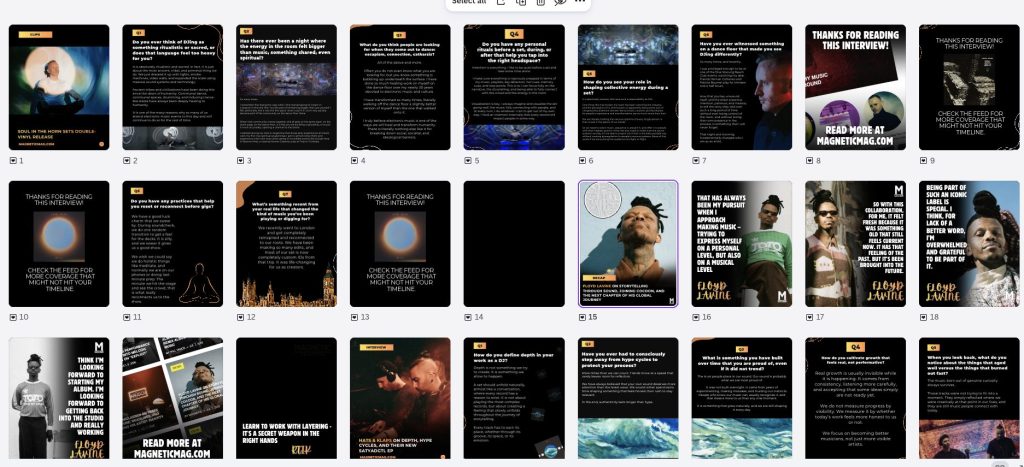
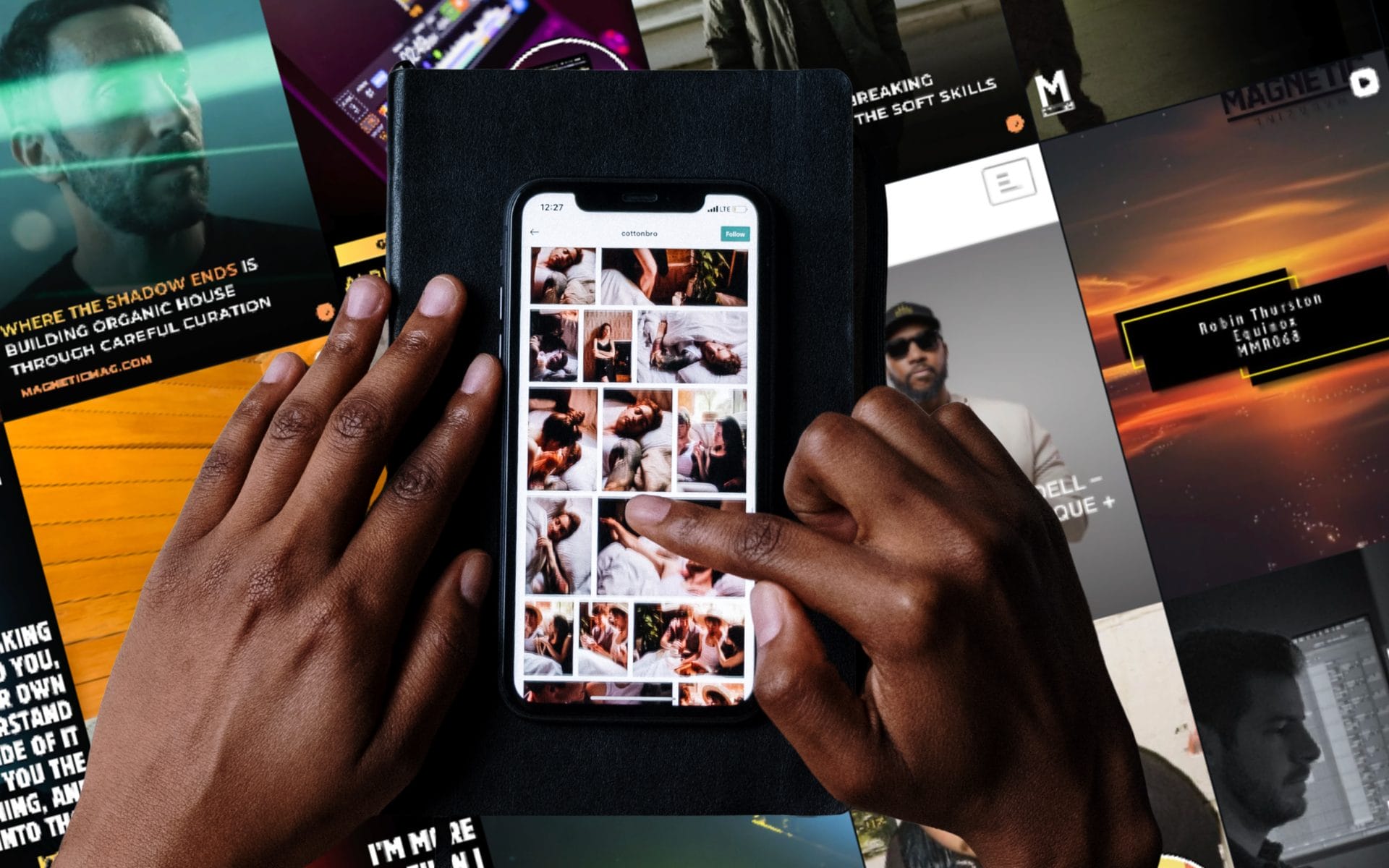
Consistency becomes much easier when you find one type of Instagram post that fits your personality and create a reusable Canva template or even their Canva brand kit functioanlity for it. You make the main design once, then replace the image and copy whenever you have something new to share.
A quote template is an easy place to start. Add your artist name, select the fonts and colors that match your visual identity, and leave a designated area for a short quote. When an interview is published, you can copy a sentence into the design and export the post within a few minutes.
The same idea works for production tips, release updates, and show announcements. You can create a small group of layouts with the same fonts and color palette, then use them repeatedly without making the page look identical from post to post.
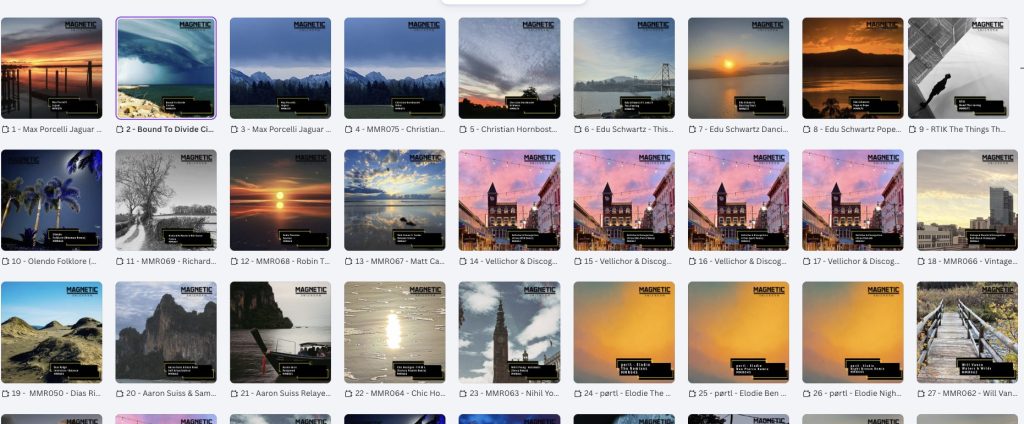
You do not need advanced design experience to make this work. Keep the layout readable on a phone, leave enough space around the text, and avoid adding information that nobody will be able to read while scrolling. The goal is to develop a recognizable format that you can update quickly.
This also removes one of the most common excuses for skipping Instagram: the idea that you no longer need to decide how every post should look. The design has already been made, and your only job is to add the new material.
Once you find a format that feels natural, turn it into a recurring series. You might share one production observation each week or pull one quote from each interview you complete. A recurring format gives followers something recognizable, while the Canva template keeps the workload manageable and the visual identity consistent.
The content still needs to say something specific. A polished template cannot rescue a vague caption or an empty quote. Use the design to present a real idea from your music, your career, or the way you work.
Make content with brands and borrow their reach
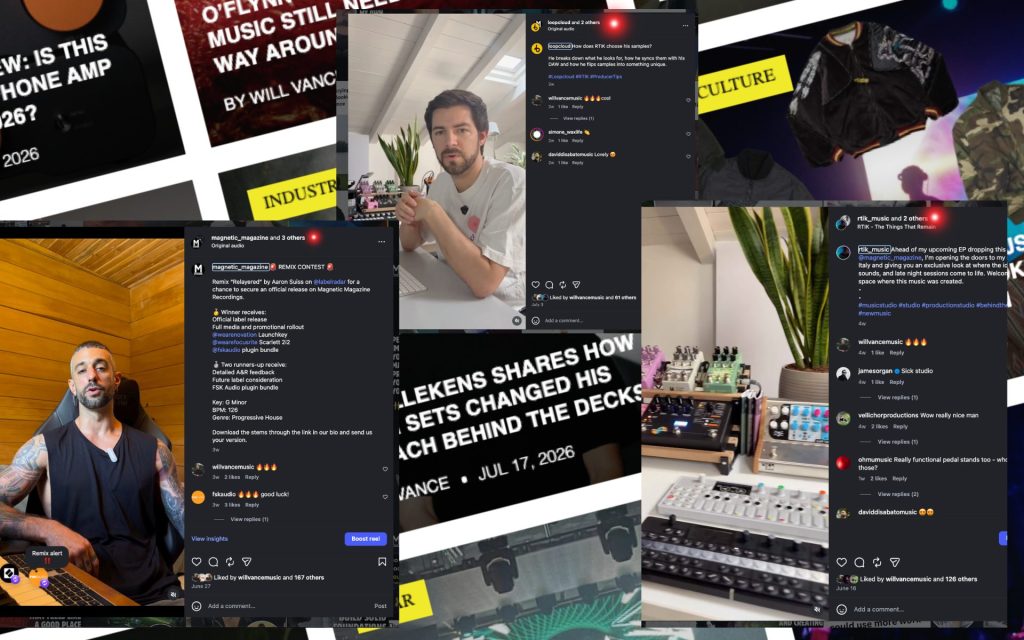
Posting consistently helps you communicate with existing followers, although growth often comes from finding credible ways to appear in front of someone else’s audience. Artist collaborations can do this, and production brands can be an equally good opening.
Smaller and mid-sized plugin developers, software companies, and gear manufacturers often need artist-led content for their social pages. Their teams may have plenty of product information, yet they still need musicians who can demonstrate how those products are used in a real project.
That creates an opening for you.
Look at the products you already use and identify one company whose music fits your style. Contact the brand with a specific content idea rather than a general sponsorship request. You could offer to record a short Reel explaining how you used one of its products on your latest song. You could also create a carousel that covers one production technique using the company’s software.
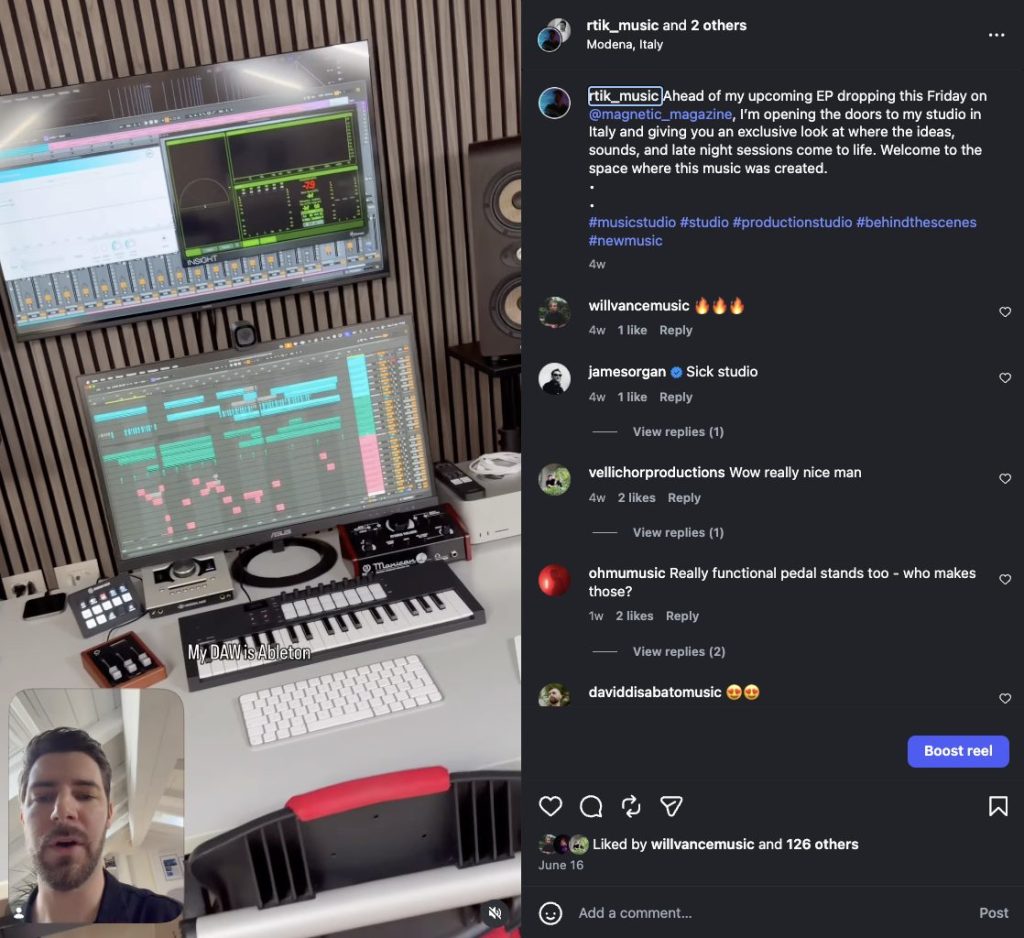
Keep the pitch focused on what you can make for the brand. Include a link to your music and one example of your existing content, then explain the proposed post in a few sentences. If your account is still small, the quality and relevance of the idea can be more important than your follower count.
A brand may publish the finished content on its own account, invite you into an Instagram collaboration post, or repost your original video. Any of those outcomes can place your name in front of producers who already spend money and time on music, which is far closer to your likely audience than a random burst of broad exposure.
Being featured by a respected production company also adds credibility to your artist profile. A label manager or potential collaborator can see that a company trusts you to explain its product publicly. You receive content for your account, and the brand receives artist-led media that demonstrates the product in use.
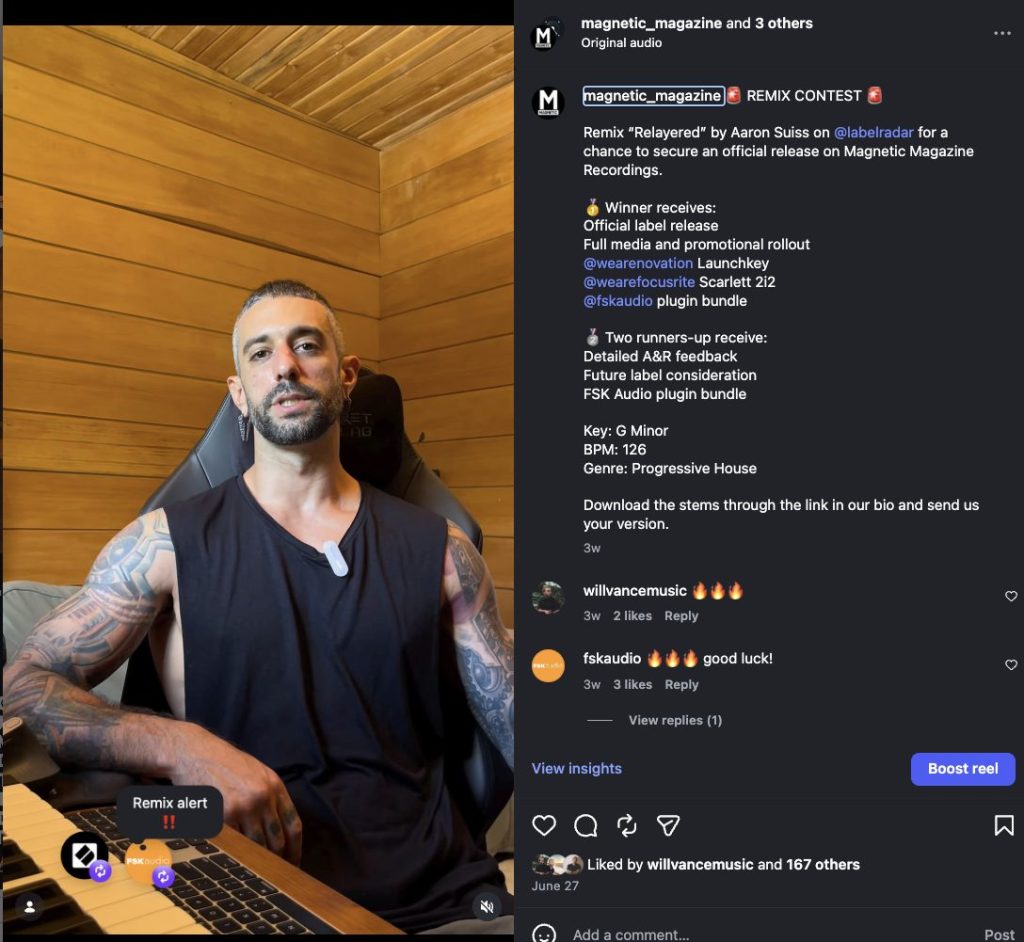
Do not limit this approach to large companies. Smaller developers may be easier to contact and more open to ideas from developing artists, especially when you already use the product and can speak about it accurately. A focused piece made for the right company can reach a smaller audience with a high level of interest in your subject.
Make sure the relationship is presented accurately. If the company paid you or supplied a product, disclose that connection according to advertising rules and Instagram’s branded-content policies. Credibility comes from transparent relationships and accurate claims.
Let people follow the person behind the music
Learning how to promote music on Instagram does not mean every post needs to sell a song. If every caption asks people to stream something, buy something, or click a link, the account begins to feel like a series of repeated advertisements (spoiler alert, people hate being sold to).
People also want to know who they are following.
Your wider interests can help fill the content calendar while giving followers a clearer idea of who you are. Photography can work well if visual work already plays a role in your artist identity. Images from places you visit can add context to the atmosphere behind your music, especially when travel or the outdoors influences how you work.
Lifestyle updates can also fit when they relate naturally to your public identity. You might share part of your studio routine or a book you have been reading. The connection does not need to be forced back to a release in every caption. Sometimes the post can exist because it shows another part of your life that followers may relate to.
The key is choosing subjects that belong beside the music. If your artist identity centers on late-night club culture, your photography and clothing posts can reflect that setting. If your music is connected to outdoor spaces, location images and field-recording clips may fit naturally beside production posts.
These personal posts can also make conversations easier. Someone may have little to say under another release announcement, while a photo from a place they recognize gives them a direct reason to comment. That exchange creates a real connection, and it can make the person more likely to pay attention when the next song appears.
Your Instagram account should give people a rounded sense of your interests and personality. Music remains the main reason the account exists, while the surrounding material helps followers understand the person creating it.
Keep the conversation active between releases
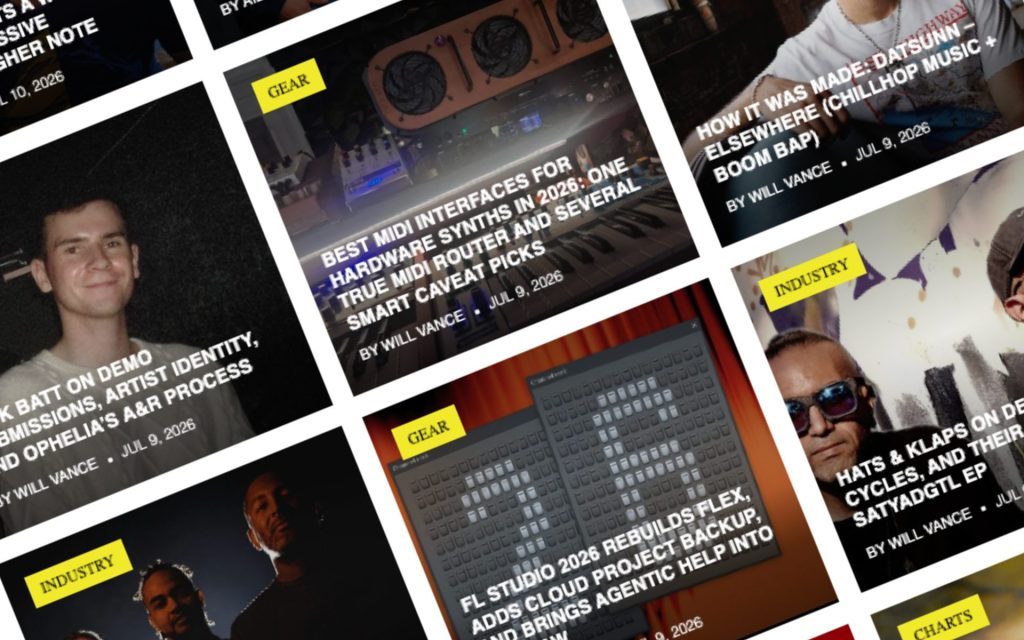
Most artists can find something to post during release week. The harder part begins two weeks later, when the first announcement has passed and the next record is still months away.
This is where the material around your music becomes essential.
Return to an interview and pull a different answer. Revisit an earlier song and explain what you would change if you produced it today. Share a clip from a collaboration that has yet to be released, or talk about the first decision that started the new project.
You can also return to the brand content you have made. Share a shorter edit of the original video or follow it with another technique using the same product. If the company shared your first post, mention that placement accurately and direct followers toward the complete piece.
Mix those promotional posts with photography and lifestyle updates, and the account can remain active without asking people to stream a song every few days. You do not need a major announcement every week. You need a relevant reason to continue the conversation.
Older editorial remains especially helpful because the article continues to support you even after the first campaign ends. You can return to it several months later and share a section that connects with your current work. If an answer describes how you approached melody on an earlier release, post it alongside a clip from your newest project and explain how your approach has changed.
This steady rhythm gives people repeated chances to remember your name. It also allows you to see which subjects receive saves, shares, profile visits, or link clicks. If followers respond to studio explanations, create additional posts around production. If personal photography generates comments, let it remain part of your calendar.
My article on how music analytics help artists grow on Spotify and TikTok goes further into reading audience behavior and using it to decide where your promotional energy should go. The same thinking applies to Instagram.
Build the next opportunity from the one you have now
Music promotion works best as accumulation. One interview gives you several Instagram posts and a link for your EPK. One brand collaboration introduces your name to a relevant audience and gives you media for your own page. One reusable Canva template turns each new quote or production idea into a post you can finish quickly.
None of these actions needs to carry the entire career. Their purpose is to make the next action easier.
Your first editorial placement can support your next pitch. Your first brand feature can help you approach another company with evidence that you can produce accurate, engaging content. Your growing Instagram account can show a label that you know how to discuss your music after release day.
My breakdown of how to build an effective music marketing strategy covers this wider planning process, while my article on how to promote your music on Spotify explains how Instagram activity can support streaming.
The main lesson in how to promote music on Instagram is simple: give yourself enough to talk about. Finished music gives you the main topic, editorial adds depth, and outside collaborations introduce you to relevant audiences. Personal posts then give followers a reason to connect with you between promotional periods.
If your music has reached a professional level and you need a published piece that can support everything after it, submit your music to Magnetic Magazine. A well-placed interview or release feature gives you something to share now, something to add to your EPK, and something credible to bring into your next pitch.

Will Vance is a professional music producer who has been involved in the industry for the better part of a decade and has been the managing editor at Magnetic Magazine since mid-2022. In that time period, he has published thousands of articles on music production, industry think pieces and educational articles about the music industry. Over the last decade as a professional music producer, Will Vance has also ran multiple successful and highly respected record labels in the industry, including Where The Heart Is Records as well as having launched a new label with a focus on community through Magnetic Magazine. When not running these labels or producing his own music, Vance is likely writing for other top industry sites like Waves or the Hyperbits Masterclass or working on his upcoming book on mindfulness in music production. On the rare chance he's not thinking about music production, he's probably running a game of Dungeons and Dragons with his friends which he has been the dungeon master for for many years.