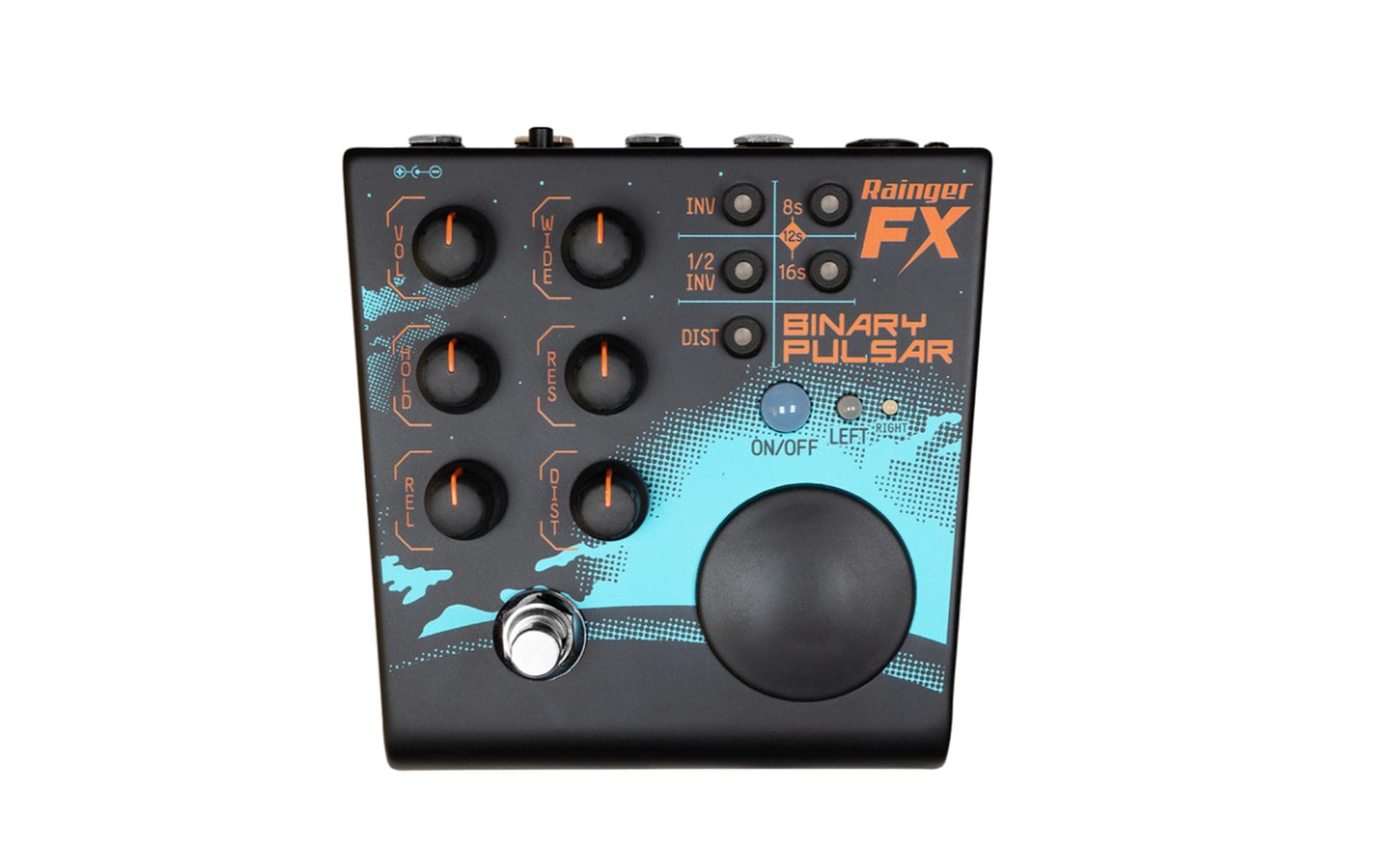
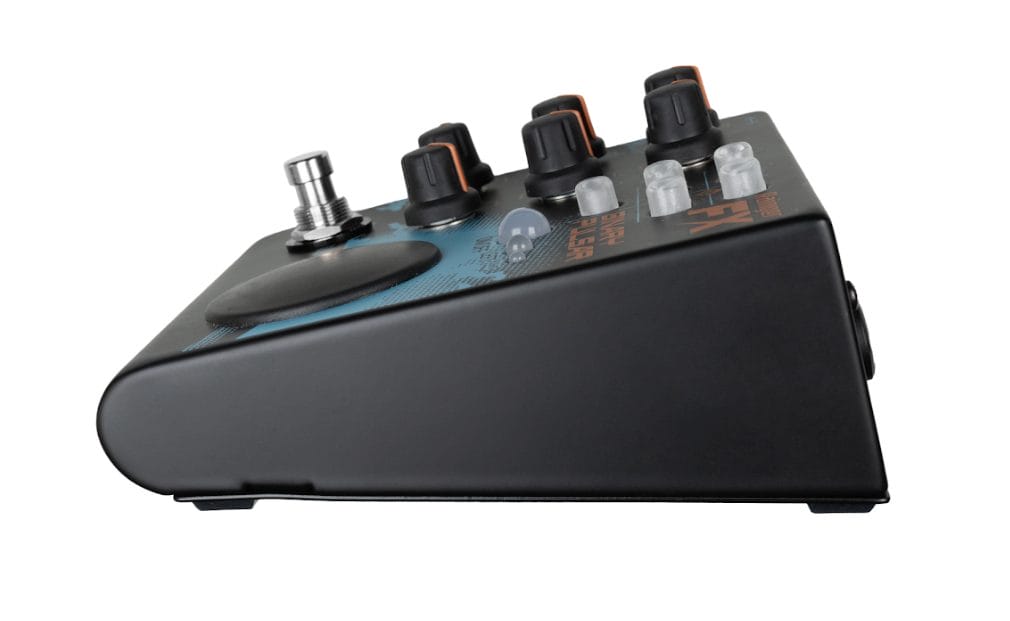
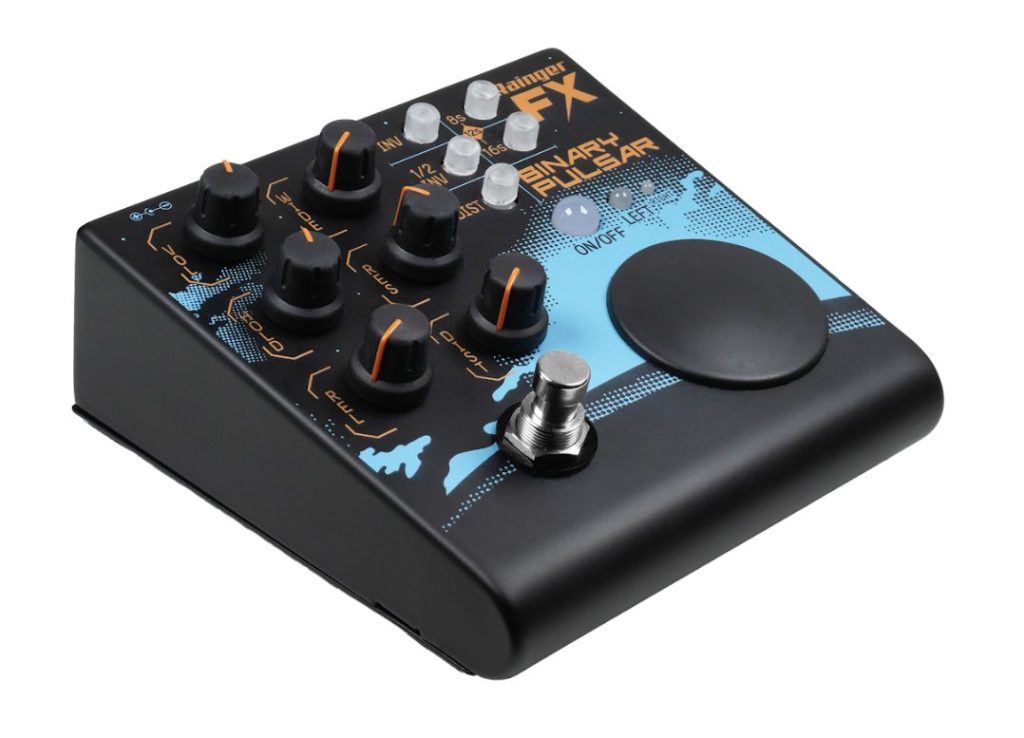
Rainger FX’s Binary Pulsar is a stereo sidechainer, panner, and tremolo pedal built for dips, pulses, sweeps, chops, and stereo movement that can be played from a desk or placed on the floor like a more traditional pedal.
The pedal is based on Rainger FX’s earlier mono Pulsar mini-pedal, though this version expands the idea into stereo, adds a new custom enclosure, and brings in a wider set of control options for studio, live, modular, and hybrid setups. It is all digital, but it also includes a switchable analog warm circuit for users who want a less clinical tone with some gentle overdrive, a small high-frequency rolloff, and a little midrange push.
At £232.50, with the UK VAT-inclusive price listed at £279, Binary Pulsar is aimed at musicians who want sidechain-style movement outside the usual plugin setup.
That is probably the biggest appeal here. Instead of treating sidechain dips as something you draw inside a DAW or trigger from a compressor, this turns that movement into something physical, performable, and easy to push into stranger rhythmic territory.
A Stereo Sidechain Pedal With More Ways To Move
Binary Pulsar can sync from several sources. It can follow CV or gate signals from a modular synth setup, connect with the Rainger FX Snare Trap, run from internal tap tempo, or respond to external triggers from a microphone, drum machine percussion output, or any sharp transient source.
That gives it a lot of room in a session. Put a mic near a kick drum and it can trigger dips or pulses from the drummer. Feed it a modular signal and it can lock into a synth rig. Use tap tempo and it becomes a more direct live tool for guitarists, synth players, DJs, and hardware-focused producers who want movement without staring at a laptop.
The tap tempo system is also correctable. Once a tempo is set, users can tap again if the pedal starts drifting from an external track, which is especially useful in DJ or hybrid performance contexts where everything is not always locked to a single clock. From a 4s input, it can generate pulses in 4s, 8s, 12s, 16s, and 32s, which opens up a lot of rhythmic subdivisions from one trigger source.
The Creative Part Is The Dip Itself
The more interesting part of Binary Pulsar is how much Rainger FX lets users manipulate the dip rather than simply triggering it. The Wide control delays the right side, turning a simple dip into a stereo event, and higher settings can double up the dips or create a swing feel. The Res control adds a synth-like squelch, while the INV switch flips the behavior from dips into pulses. There is also a half-invert mode that flips one side, creating bigger stereo movement.
This is where Binary Pulsar connects to something I keep thinking about from our SIDEPIECE interview on listening again. The larger takeaway from that conversation was that producers can get so caught up in analyzing music that they stop reacting to it emotionally and physically. A pedal like this pulls that idea into the room because the movement is not just a mix decision anymore, it is something you play, correct, exaggerate, and respond to in real time.
That is useful for creativity because it can turn a static part into a performance prompt.
A synth pad, guitar loop, drum bus, vocal chop, or hardware sequence can suddenly start interacting with the rhythm in a way that asks for a reaction, and those small moments are often where the session starts to point somewhere more interesting.
Built For Studio Weirdness And Live Control
Binary Pulsar also includes a distortion and flanging combination effect tied to the pad.
Pressing the pad activates it momentarily, while holding it for longer than three seconds latches it until the pad is held again. That adds another layer of performance to the pedal, especially for breakdowns, transitions, and moments when the movement needs to be less polite.
The whole design feels very Rainger FX in the best way. It takes a familiar production concept, sidechain movement, then pulls it into a strange hardware format with a lot of personality. For anyone who wants stereo movement, tempo-corrected pulses, modular triggering, mic-triggered dips, panning, filtering, distortion, and hands-on rhythmic control in one box, Binary Pulsar gives that idea a very specific physical shape.

Will Vance is a professional music producer who has been involved in the industry for the better part of a decade and has been the managing editor at Magnetic Magazine since mid-2022. In that time period, he has published thousands of articles on music production, industry think pieces and educational articles about the music industry. Over the last decade as a professional music producer, Will Vance has also ran multiple successful and highly respected record labels in the industry, including Where The Heart Is Records as well as having launched a new label with a focus on community through Magnetic Magazine. When not running these labels or producing his own music, Vance is likely writing for other top industry sites like Waves or the Hyperbits Masterclass or working on his upcoming book on mindfulness in music production. On the rare chance he's not thinking about music production, he's probably running a game of Dungeons and Dragons with his friends which he has been the dungeon master for for many years.