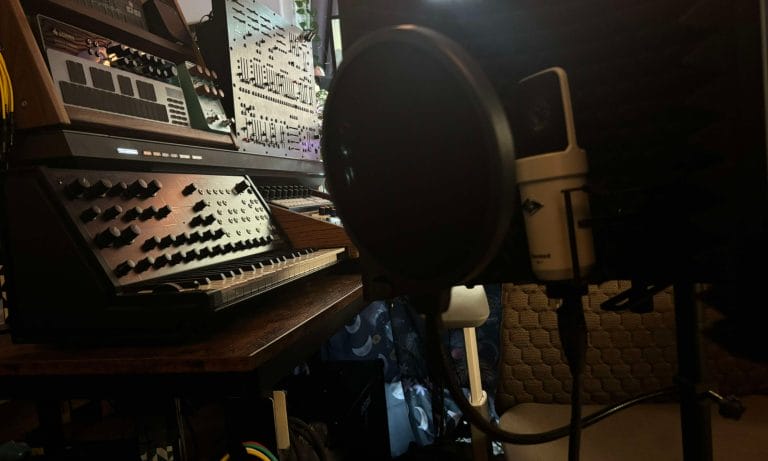
Recording vocals in an untreated room changes what I want from a microphone. Extra detail sounds appealing on paper, yet bedroom walls, computer fans, hard floors, and traffic can become far easier to hear once compression lifts the lower-level information in the take. The wrong microphone can leave you spending half the mix trying to reduce a room sound that was recorded from the start.
That is why I pay close attention to pickup pattern, rear rejection, and working distance when reviewing microphones in my home studio. A condenser can capture an impressive amount of vocal detail from the right position, though it can also pick up reflections that a directional microphone places much farther behind the singer. My article on what to consider when choosing a microphone for your room or studio covers why polar pattern and room size deserve as much attention as frequency response during the buying process.
Distance is equally important. Bringing the singer closer raises the vocal in relation to the room, which often does far more for the recording than another plugin added later. Producers working within a tighter budget can also compare these picks against the best microphones for recording under $300, since spending more on the microphone will not automatically solve poor placement or uncontrolled reflections.
Every microphone below has appeared in a full review I have written after using it myself.
I have also included options for producers who want to address the room itself, since even temporary absorption can expand the number of microphones that work well in the space. My review of affordable acoustic treatment for home studios explains what changed after I installed dedicated panels in my own room.
These are the vocal mics I would consider first for bedroom recording, spare-room studios, and production rooms without permanent acoustic treatment.
Best vocal mics for untreated rooms at a glance
| Microphone | Microphone type | Best fit | Main room advantage |
|---|---|---|---|
| Universal Audio SD-1 | Cardioid dynamic | Best overall | Excellent rear rejection |
| Shure SM7B | Cardioid dynamic | Louder vocalists | Controlled close-mic recording |
| Beyerdynamic M 70 PRO X | Cardioid dynamic | Lower budgets | Focused vocal pickup |
| DPA 2028 | Supercardioid condenser | Performers who move while singing | Tight directional pattern |
| Lauten Audio LA-320 V2 | Cardioid tube condenser | Producers adding basic room control | Onboard tone filters |
| Universal Audio SC-1 | Cardioid condenser | Producers using Hemisphere | Adjustable modeling after recording |
Universal Audio SD-1
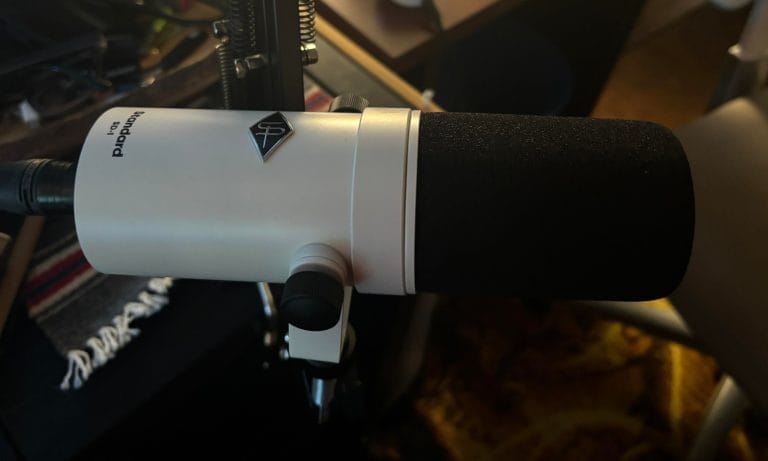
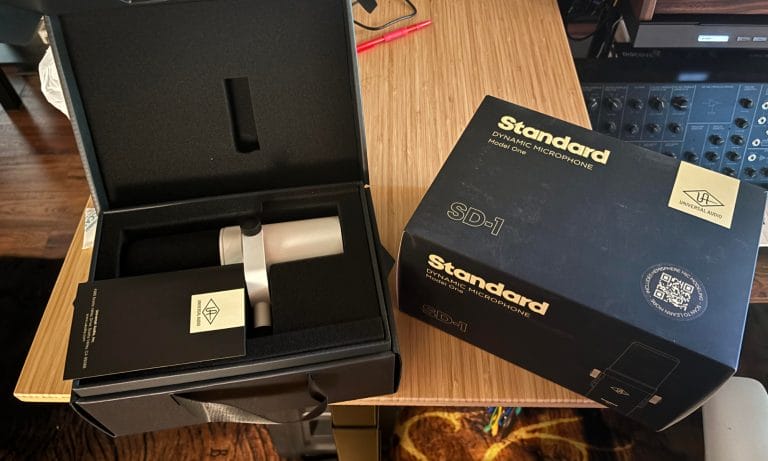
The Universal Audio SD-1 is my first recommendation for most producers recording vocals in an untreated room. During my review, I kept an air cleaner running behind my microphone position and found that the SD-1 captured almost none of it.
I also recorded myself speaking behind the microphone, and the level dropped so heavily that the test made its directional behavior obvious without relying on a specification sheet. That rear rejection gives the producer a direct way to reduce computers, open doorways, and other recurring household noise by aiming the back of the microphone toward them.
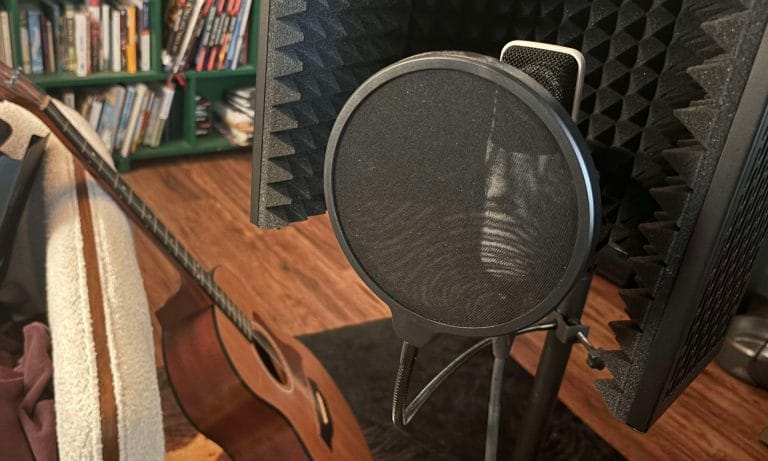
The low-cut switch helps manage proximity buildup, while the articulation setting can add upper-mid presence when a vocal needs additional definition inside an electronic production.
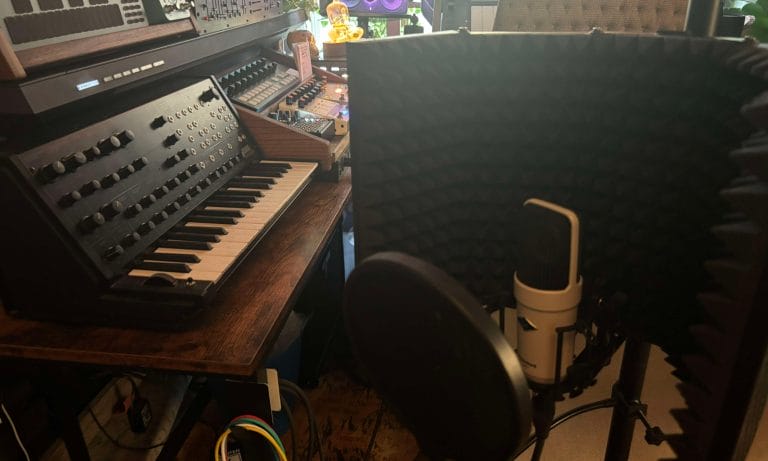
I preferred its low-frequency response to the SM7B during my tests because the SD-1 gave my voice a closer and fuller presentation. It still needs close to 50 dB of preamp gain in many setups, so producers should check their interface before ordering one.
For an untreated bedroom where room rejection comes first, the SD-1 offers the best combination of focused pickup, vocal tone, and price among the microphones I have reviewed.
Shure SM7B
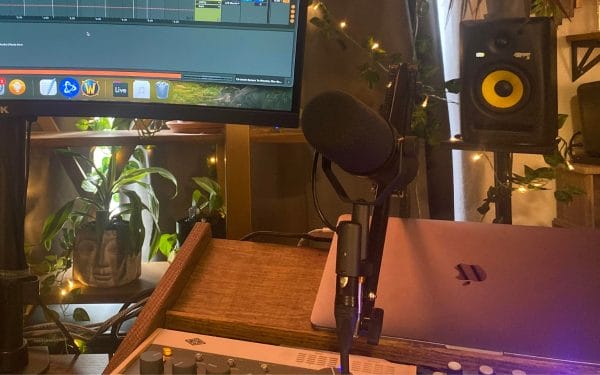
The Shure SM7B that we reviewed a while ago remains my choice for louder singers who want to work close to the capsule. Its cardioid pattern reduces off-axis sound, while the integrated windscreen and pop filter help control plosives at short recording distances.
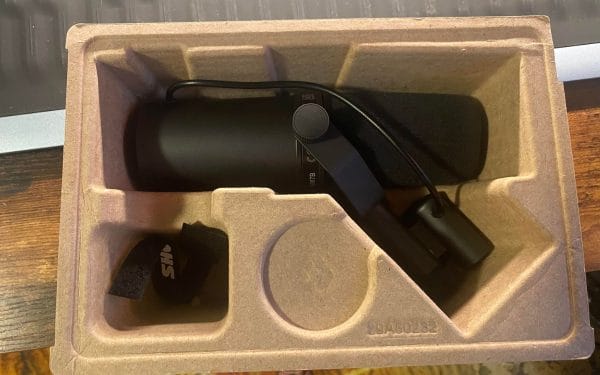
That close position raises the vocalist relative to the room, which gives producers a drier recording before any noise reduction or gating enters the process. The SM7B also includes electromagnetic shielding that can reduce hum around displays, computers, and other studio electronics. One concern is its low output, since a restrained singer can force an ordinary preamp near the upper end of its gain range.
This reminds me of the production discussion for Foreign Air’s “Maniac”, where the artist explained, “The Neumann takes a lot less gain as opposed to the SM7b which is the other mic I use a decent amount on vocals.” That comment backs up what producers need to plan for here because an SM7B purchase may also involve an inline preamp or an interface offering around 60 dB of low-noise gain.
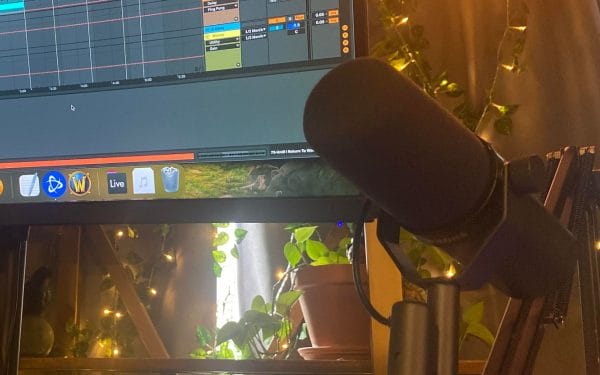
Buy this one when the singer has enough projection, the preamp can support it, and reducing the sound of the bedroom takes priority over capturing every upper-frequency detail.
Beyerdynamic M 70 PRO X
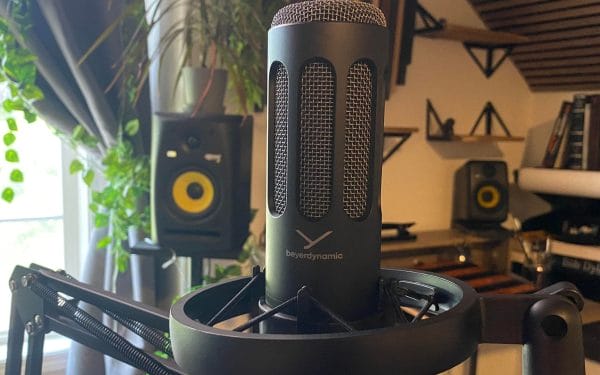
The Beyerdynamic M 70 PRO X is the lower-cost option I would consider before buying a cheap condenser for an empty bedroom. Beyerdynamic designed it primarily for speech, and its front-address dynamic capsule minimizes room echo when the vocalist stays close. Its frequency response adds energy near the vocal range, which can help a recorded part remain present without relying on heavy upper-mid EQ later. I found that it handled vocals and acoustic guitar well, giving smaller studios one microphone that can cover songwriting demos alongside finished vocal takes.
The microphone also ships with a shock mount and pop filter, which lowers the number of accessories a new producer needs to purchase. Proximity still needs attention because working too close can exaggerate low frequencies while making breaths and mouth noise harder to manage.
Start several inches from the grille with the pop filter in place, then move closer until the room becomes less audible without letting the vocal become overly thick.
Compared with the SD-1, the M 70 PRO X gives up some tonal fullness, yet its current pricing makes it an easy recommendation for producers building their first bedroom recording setup.
DPA 2028 vocal mic
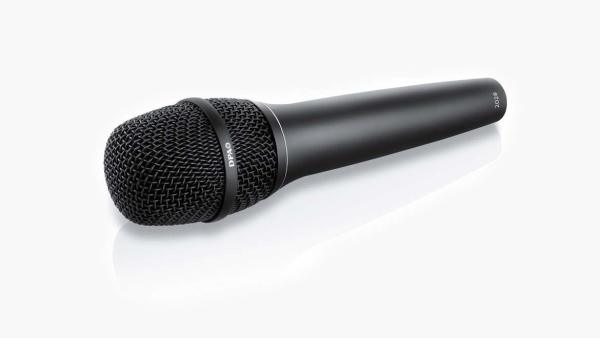
The DPA 2028 which we did a quick breakdown of a long time ago, still approaches the untreated-room problem from a performance microphone angle. Its supercardioid pattern concentrates on the singer while reducing sound reaching the capsule from the sides, which helps when a room contains nearby equipment or reflective surfaces. DPA also designed its off-axis response to remain consistent, so small movements create fewer abrupt tonal changes than they can with less controlled directional microphones.
That behavior can help vocalists who perform naturally and struggle to remain fixed in front of a stand-mounted studio condenser.
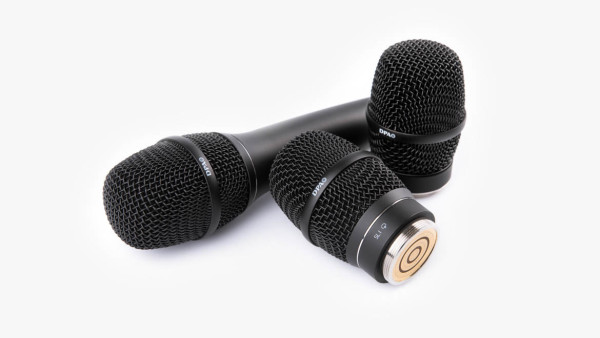
The 2028 is a condenser, so it captures considerably more vocal information than the M 70 PRO X while retaining the focused pattern associated with stage use. It can still hear the room when the singer moves too far away, which means close placement remains part of the setup. Place the monitor, computer, or loudest reflection toward the side-rejection area and run a recorded test while the singer moves as they normally would. I would choose the DPA 2028 for expressive vocalists who want studio-level detail and need some freedom to move without giving the bedroom an equal role in the recording.
Lauten Audio LA-320 V2

The Lauten Audio LA-320 V2, even to this day, stands as one of the best mics I’ve ever reviewed on the site; it is the microphone I would choose when tone takes priority, and the producer can add temporary absorption. I used it extensively in my small home studio on vocals and guitar, and its tube circuit gave recordings the dense midrange character that kept it in regular use afterward. Its cardioid pattern provides directional control, while the 120 Hz high-pass switch can reduce low-frequency rumble and excessive proximity buildup before recording.
The 12 kHz low-pass switch is equally relevant in a hard bedroom because it can soften some of the upper-frequency information created by bare walls and windows.

This reminds me of my production feature with SOHMI for “Want U 2 Love Me”, where she said, “I wrote, laid down, and recorded the entire vocal topline in less than 2 hours in my bedroom.” She used the same inexpensive Samson condenser she had owned for years, which shows how microphone familiarity and controlled performance can support a released vocal without a commercial recording room.
The LA-320 V2 asks for greater placement care than the SD-1 because its condenser capsule hears far more of the surrounding space. Choose it when you can hang thick blankets behind the vocalist, keep the capsule away from bare corners, and spend time finding the position where its tube tone comes forward without bringing the room with it.
Universal Audio SC-1
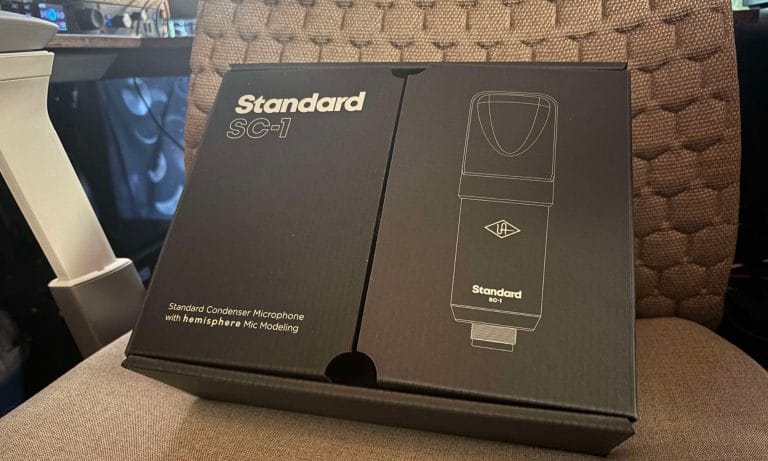
The Universal Audio SC-1, which we checked out a while ago, fits producers who want condenser detail and expect to use Universal Audio’s Hemisphere software. During my review, its low self-noise and detailed capture worked particularly well on vocals and guitar, though that sensitivity means the room needs greater attention than it would with the SD-1.
Hemisphere adds microphone models alongside proximity and axis controls, allowing producers to adjust the recorded tone after the performance. The axis control has real relevance here because untreated-room recordings often need a small off-axis placement to reduce harsh reflections or upper-frequency buildup. Software adjustment cannot remove a bedroom from a recording, so the original microphone position still decides how much room reaches the take.
I would place the SC-1 near thick furniture or curtains, add absorption behind the singer, and avoid the center of a square room. Compared with the LA-320 V2, the SC-1 offers a more neutral starting point and wider tonal adjustment afterward, while the Lauten commits earlier to its tube character.
This is the condenser I would choose for a producer already working inside the Universal Audio system who wants several microphone profiles without storing several physical microphones.
Vocal mics on my radar
The microphones below have features that fit untreated-room recording, though I have yet to complete dedicated Magnetic reviews of them. These are leads for later testing rather than personal recommendations based on studio time.
| Shure MV7+ | Dynamic capsule, close vocal focus, XLR and USB-C connections, plus onboard noise reduction |
| Electro-Voice RE20 | Cardioid dynamic design with Variable-D technology intended to limit proximity changes |
| Aston Stealth | Directional dynamic design with selectable voicings and an integrated active preamp |
| Lewitt LCT 440 PURE | Large-diaphragm cardioid condenser supplied with a shock mount and magnetic pop filter |
Wrapping things up
The best vocal mic for an untreated room is the microphone that keeps the singer well ahead of the surrounding space. For most producers, I would start with the Universal Audio SD-1 because its rear rejection was easy to hear during my own studio testing.
The Shure SM7B is the next choice for louder singers, provided the interface offers enough gain to keep preamp noise under control. Beyerdynamic’s M 70 PRO X covers the lower end of the budget while still giving producers the close, focused pickup needed in a bedroom. The DPA 2028 fits performers who move while singing, while the LA-320 V2 fits producers willing to add temporary absorption in exchange for tube coloration. Universal Audio’s SC-1 offers another condenser route for Apollo users who want Hemisphere adjustment after recording.
Every option still depends on placing absorption behind the vocalist and pointing the microphone’s rejection area toward the room’s loudest problem. Pick the microphone that fits your singer and interface, then spend the remaining time learning the exact distance and position that produces the driest convincing take.

Will Vance is a professional music producer who has been involved in the industry for the better part of a decade and has been the managing editor at Magnetic Magazine since mid-2022. In that time period, he has published thousands of articles on music production, industry think pieces and educational articles about the music industry. Over the last decade as a professional music producer, Will Vance has also ran multiple successful and highly respected record labels in the industry, including Where The Heart Is Records as well as having launched a new label with a focus on community through Magnetic Magazine. When not running these labels or producing his own music, Vance is likely writing for other top industry sites like Waves or the Hyperbits Masterclass or working on his upcoming book on mindfulness in music production. On the rare chance he's not thinking about music production, he's probably running a game of Dungeons and Dragons with his friends which he has been the dungeon master for for many years.





![How It Was Made: Lang Father i(Junkyard Dog) [Welofi]](https://magneticmag.com/wp-content/uploads/2026/10/Press-Pic_2-1024x576.jpg)