Brandon Blackwell, a renowned sound engineer who has worked with prominent artists like Alicia Keys, Steve Lacy, Kendrick Lamar, Camillia Cabello, Lizzo, A$AP Rocky, Drake, and Big Sean, offers an expert perspective on a topic the majority of the nation deems only to be a nuisance.
In every school-age classroom, there seems to be at least one kid who sits distracted at the back of the room tapping out a rhythm or writing a rhyme, constantly on the verge of reprimand for their inability to pay attention to the curriculum of the day. While many view this child as the “one with a problem,” a select few, including Blackwell, recognize this as their superpower.
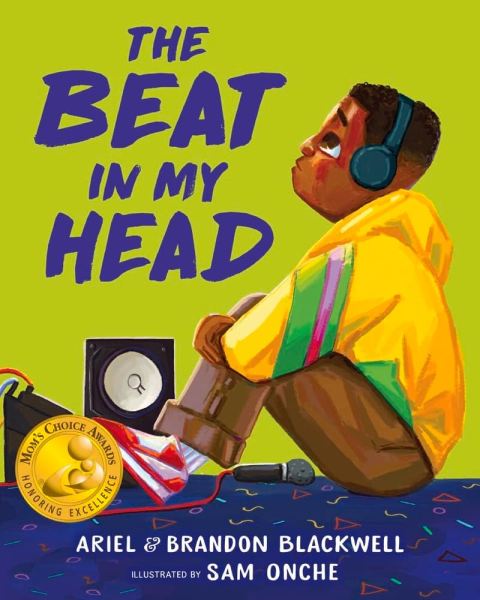
Blackwell’s passion for using music to foster concentration and learning culminated in his recent collaboration with his wife Ariel, co-authoring the first-ever award-winning audio engineer children’s book, “The Beat In My Head.” This book encourages children and parents alike to embrace individuality and pursue their passions, no matter how unconventional they may seem.
Brandon has also introduced his custom edition Sennheiser HD 25 headphones to make the musical journey more immersive. Known for their high sensitivity due to lightweight aluminum voice coils, they deliver an unparalleled audio experience, capable of handling high sound pressure levels. These headphones, a favorite of Brandon’s, are perfect for extended listening sessions due to their comfort and adaptability. Their single-sided, detachable cable and rotatable capsule for single-ear listening cater to professional audio engineers and casual music enthusiasts alike.
In our latest interview, Brandon helps us explore the science behind music’s impact on the brain, how personal listening devices like his custom Sennheiser headphones can enhance focus in school settings, and the potential benefits and drawbacks of using music as a learning aid. Additionally, we discuss the effectiveness of different musical genres for promoting concentration and attention among children and how music can be combined with other educational tools to maximize its benefits.
By examining the role music plays in education and cognitive development through the lens of Brandon Blackwell’s personal experiences and professional expertise, this article offers valuable insights and inspiration for educators, parents, and anyone interested in the transformative power of music.
Snag The Book On Amazon Here
HOW DOES MUSIC AFFECT THE BRAIN AND COGNITIVE FUNCTIONS, AND HOW CAN THIS HELP CHILDREN STAY FOCUSED IN THE CLASSROOM?
Music exerts a profound influence on the brain’s cognitive functions by ingeniously employing the fundamental elements of a song to construct distinctive neural patterns. These patterns, especially prominent in repetitive compositions, effectively sustain cognitive engagement. Some of my cherished all-time favorites songs boast these repetitive motifs, subtly modifying core elements to craft captivating auditory experiences. The building blocks of a song—Tempo, Rhythm, Melody, and Harmony—converge synergistically to forge these unique patterns.
This intricate interplay is rooted in mathematics, dictating the song’s trajectory—whether towards a resonant chorus or a compelling bridge. In dissecting Tempo and Rhythm, the meticulous observation of Time becomes paramount, measuring and comparing the duration and moment of each note. Melody and Harmony, too, find their mathematical
essence in frequencies. When a melody’s frequency harmonizes with another placed above or below, the resulting union epitomizes harmony—a fusion driven by pure mathematical alignment. The revelation that music is fundamentally an amalgamation of varying frequency amplitudes across time begets an acute awareness of these intricate patterns.
For youngsters, this consistency within music provides a focal point, a constant auditory guide. The act of counting kicks or high hats in a composition further channels their focus.
WHAT ROLE DO HEADPHONES AND OTHER PERSONAL LISTENING DEVICES PLAY IN USING MUSIC AS A FOCUS AID IN SCHOOLS?

In the bustling world we inhabit, the ability to find a haven of focused contemplation can be a challenge. For many, myself included, this sanctuary lies within the realm of music and headphones. The act of slipping on a pair of headphones has an almost magical effect—an effect that allows thoughts to crystallize amid the symphony of life’s distractions.
Personally, I’ve always found that immersing myself in music through headphones creates an intimate space within my mind. This enclave offers clarity of thought, shielding me from the cacophony of external disturbances. But the allure of headphones extends beyond their ability to amplify music; they have the power to transport us to a different realm altogether. Picture a crowded flight: the relentless hum of engines, the intermittent cries of restless children, and the occasional commotion of fellow passengers. It’s in these moments that my trusty noise-canceling headphones become an indispensable companion. Even in the absence of music, the silence they bestow or the reduction of cabin noise becomes an oasis of calm. This tranquility becomes particularly precious in the face of anxiety that often accompanies air travel.
The potential benefits of this concept ripple beyond personal experience. Consider the modern classroom—an environment teeming with energy and curiosity. During a recent visit my wife Ariel and I made to Chicago elementary schools, the vivacity of Pre-K and
1st Graders was palpable. After reading our book, “The Beat In My Head,” to these young minds, we were met with an outpouring of questions and uninhibited expressions. Their spontaneity was endearing, yet occasionally overwhelming, even to someone who’s spent over 30 years navigating life’s complexities.
In such contexts, the notion of introducing headphones as tools for focused learning becomes intriguing. Imagine students equipped with headphones, each enveloped in their auditory cocoon, unaffected by the exuberant ramblings of their peers. Beyond the potential to enhance concentration, this approach might offer solace to those who find themselves at odds with the bustling classroom ambiance. Like the silence within the eye of a storm, these headphones could provide a haven, shielding students from the distractions that can hinder their learning journey.
However, as with any innovation, challenges must be navigated. The risk of isolating students from collaborative learning experiences must be weighed against the advantages of heightened concentration. Practical concerns such as access to equipment and the need for clear communication channels also come to the fore.
Ultimately, the dynamic interplay of headphones, music, and focused learning presents a compelling avenue for exploration. It’s a symphony of possibilities that could harmonize the classroom, granting students a space to compose their thoughts, and educators a means to orchestrate an environment conducive to deep learning. As we continue to navigate the ever-evolving landscape of education, let us be attuned to the potential that lies within these auditory envoys.
ARE THERE ANY SPECIFIC GENRES OF MUSIC THAT ARE PARTICULARLY EFFECTIVE FOR PROMOTING FOCUS AND ATTENTION AMONG CHILDREN?
While I haven’t conducted my own experiments on the most effective genres of music for promoting focus and attention among children, this is an avenue of research that genuinely intrigues me and one I’m considering delving into soon. However, I have noticed an interesting trend– the prevalence of classical music playlists tailored for babies across various music streaming platforms I frequently use.
There’s an undeniable allure to classical music that seems to capture a certain essence. On a personal note, when I seek to wind down after a high-energy concert where intense focus is paramount, my go-to choice is smooth and contemporary jazz. As someone who is deeply involved in the music industry, particularly through concert mixing, I find that the act demands immense concentration. It’s during moments of rest that I turn to the works of one of my cherished artists, Bob James. I was introduced to his music at a young age. I’ve always found something inherently calming about his arrangements and keyboard solos.
James’ early albums stand out for their harmonies, textures, and the spaces they create. These elements have a timeless appeal to my ears, offering a soothing respite from the auditory intensity of a live concert. There’s truly nothing quite like unwinding
with the velvety notes of smooth jazz as I lie in my bunk on the tour bus, the strains of Bob James’ melodies gently lulling me into relaxation.
In light of these personal experiences it’s fascinating to ponder how various genres can impact focus and attention in children. I look forward to exploring this avenue further and uncovering the potential benefits that music can offer to young minds.
ARE THERE ANY POTENTIAL DRAWBACKS OR ADVERSE EFFECTS OF USING MUSIC TO KEEP KIDS FOCUSED IN SCHOOL?
Certainly there are several potential drawbacks and adverse effects to consider when utilizing music as a tool to enhance focus among students in a school setting. While music can undoubtedly have positive impacts on concentration and engagement, a thoughtful approach is necessary to mitigate potential challenges.
One significant concern revolves around the diversity of musical preferences among individuals. Music taste is inherently subjective, shaped by factors such as culture, personal experiences, and individual perspectives. As a result, finding a single playlist that universally caters to every student’s preferences might prove to be a challenging task. The diversity of the student body should be acknowledged, ensuring that the chosen music resonates positively with a broad spectrum of listeners.
Moreover, the question of censorship arises when selecting music for educational environments. It becomes crucial to ensure that the chosen tracks are free from inappropriate language, explicit content, or themes that might be unsuitable for young audiences. This introduces a potential dilemma: Should teachers be responsible for vetting each track for suitability, or is this a role best left to the parents, who hold primary responsibility for their children’s exposure to content?
The balance between providing a conducive learning atmosphere and preserving students’ individuality requires careful consideration. To navigate these challenges, collaboration between educators, parents, and students themselves is essential. Establishing clear guidelines and open communication channels can help in selecting music that maintains a positive and focused learning environment without compromising on cultural sensitivities or age-appropriate content.
In essence, while music has the potential to enhance focus in schools, acknowledging the complexities of individual preferences and ensuring the appropriateness of the selected music are vital steps in harnessing its benefits effectively.
HOW CAN MUSIC BE USED IN COMBINATION WITH OTHER LEARNING TOOLS OR TECHNIQUES TO MAXIMIZE ITS BENEFITS FOR STUDENTS?
Integrating music with other learning tools and techniques can yield a range of benefits for students, enhancing their overall learning experience. By synergizing music with educational activities, educators can tap into various aspects of students’ cognitive development and create a more engaging and effective learning environment.
One powerful approach is the incorporation of music-based activities that encourage students to create and analyze songs. These endeavors not only foster critical thinking but also nurture creativity. When students compose, dissect, and understand a song’s elements, they are refining their musical prowess and honing their analytical skills. This holistic approach encourages them to think outside the box and consider multiple perspectives, skills that extend beyond the realm of music.
Reflecting on personal experiences, I recall the effectiveness of music as a memory aid during my early education. The clever use of catchy tunes to teach the alphabet exemplifies how music can create rhythm and melody, transforming information into a memorable and enjoyable experience. Such techniques leverage the inherent mnemonic power of music, enhancing students’ capacity to retain and recall information across subjects.
Moreover, the integration of music into learning environments fosters relaxation and focus. Educators create a calming atmosphere that facilitates concentration and productivity by introducing soothing melodies. Music provided a supportive framework to enhance engagement and performance for students like me, who struggled with attention and concentration. Music’s ability to induce a state of flow can elevate the quality of students’ work and increase their sense of accomplishment.
In a broader context, integrating music with various learning tools and techniques exemplifies the diverse ways educators can cater to different learning styles. Recognizing that each student possesses unique strengths and preferences, this approach ensures a more inclusive and effective educational journey.
In conclusion, the strategic fusion of music with other learning tools and techniques creates an enriched educational experience that promotes critical thinking, creativity, memory retention, and focused engagement. As an individual who has personally reaped the benefits of music-infused learning, I firmly believe in its potential to empower students on their academic journey.
WHAT’S NEW WITH BRANDON BLACKWELL?
In the dynamic world of music and mentorship, I always aim to prioritize and maintain my commitment to nurturing young talent. While my day job as a Front of House Engineer for acclaimed artists like Alicia Keys is exciting, I am especially proud to share about the partnerships we’ve recently formed with some incredibly impactful organizations, continuing my the goal of inspiring and mentoring young minds as with “The Beat In My Head”. I am working closely with Guitars over Guns, a 501(c)(3) nonprofit offering students from vulnerable communities mentorship and an outlet through music education, and with the My Brother’s Keeper Alliance, an Obama Foundation initiative focused on building safe and supportive communities for boys and young men of color.
Through our partnership with Guitars over Guns and the My Brother’s Keeper Alliance, we aim to shape the future of aspiring sound engineers and artists. This collaboration recently took a meaningful turn when my wife Ariel and I embarked on an unforgettable journey with a group of youth from these organizations who are preparing to start college. The students were taken on a behind the scenes tour that not only exposed them to the intricacies of my role as Alicia Keys’ Front of House engineer but also provided them with a broader perspective on the music industry as a whole.
Beyond the glitz and glamor of the stage, I have faced my fair share of challenges while climbing the ladder of success, and am glad to be able to have candid conversations with youth from these important organizations on the significance of resilience, perseverance, and most importantly, mental health. By openly discussing my own experiences, I hope to continue destigmatizing mental health challenges in an industry often characterized by its demanding nature.
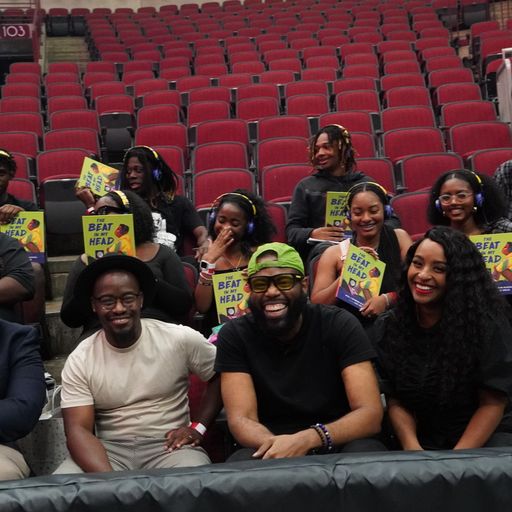
With this, Ariel and I were determined to do our part to educate and inspire these young minds. We penned ten heartfelt letters to the students we met, hoping to share some wisdom and advice to serve as guiding lights when the path ahead gets tough, and continue a career-spanning mentorship with this group. Alongside these personalized messages, we curated a special package for each student: a copy of “The Beat In My Head”, HD 25 headphones from Sennheiser and some of our favorite organic plant based candy.
The responses from the students touched us. Their deep appreciation for the thoughtful gestures and impactful advice as they are heading off to college means the world to us, and we are thrilled to collaborate with Sennheiser to give these future music industry leaders a pair of top-of-the-line HD 25 headphones, a personal favorite that I always take on the road, to accompany them on their next adventures in higher education and the musical arts.

Our collaboration with Guitars Over Guns and the My Brother’s Keeper Alliance is much more than a partnership; it’s a beacon of hope and a bridge to a brighter future. By sharing my real experiences, both the triumphs and the tribulations, I am not only imparting technical skills on future audio engineers and artists, but also nurturing the emotional intelligence and resilience necessary for success in the competitive world of music for these future leaders.
In a world that can often be overshadowed by self-doubt and uncertainty, my mission to inspire, mentor, and ensure that the beat goes on for generations to come is always top of mind. As my partnerships with these organizations continue to flourish and make impacts in the lives of aspiring artists, one thing is clear: we are writing a harmonious and inspiring new chapter in the world of music and mentorship.

Will Vance is a professional music producer who has been involved in the industry for the better part of a decade and has been the managing editor at Magnetic Magazine since mid-2022. In that time period, he has published thousands of articles on music production, industry think pieces and educational articles about the music industry. Over the last decade as a professional music producer, Will Vance has also ran multiple successful and highly respected record labels in the industry, including Where The Heart Is Records as well as having launched a new label with a focus on community through Magnetic Magazine. When not running these labels or producing his own music, Vance is likely writing for other top industry sites like Waves or the Hyperbits Masterclass or working on his upcoming book on mindfulness in music production. On the rare chance he's not thinking about music production, he's probably running a game of Dungeons and Dragons with his friends which he has been the dungeon master for for many years.