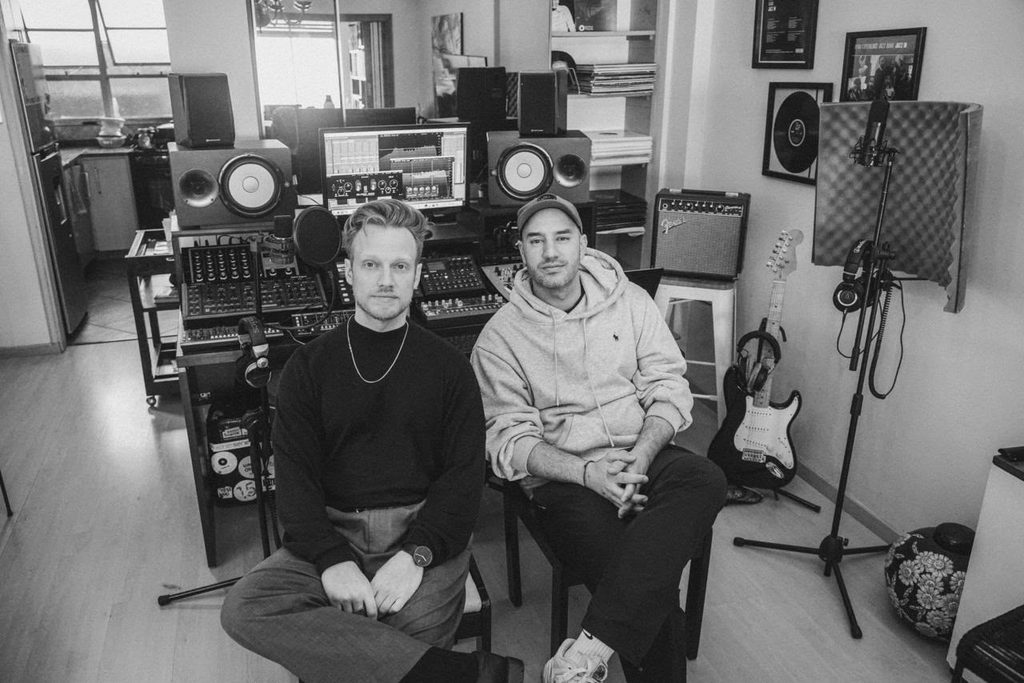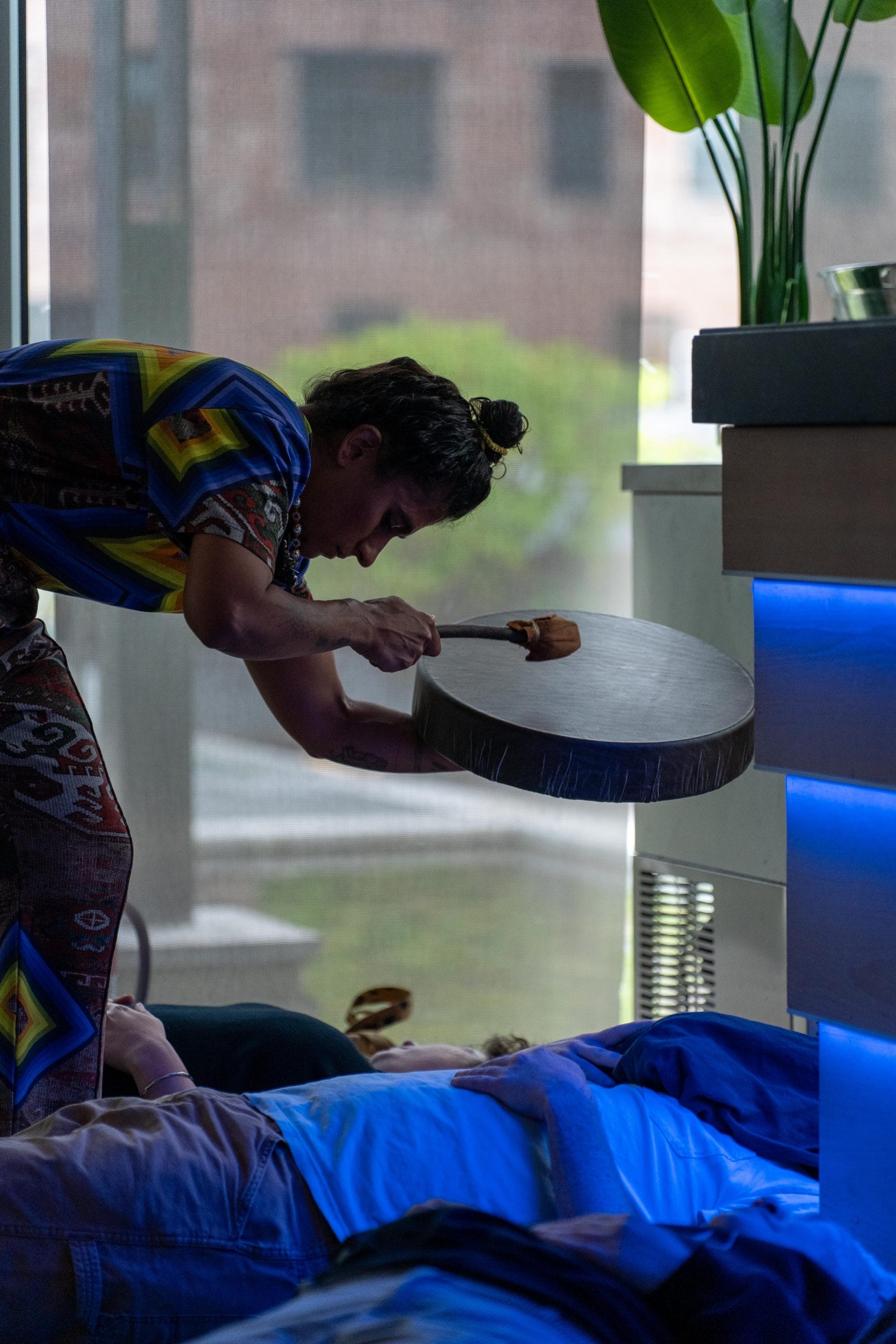
Unity is easy to flatten into a slogan, especially in music, where a word like oneness can drift toward soft-focus spirituality before it ever has to touch the harder work of living with other people. Ektā gives Madame Gandhi (@madamegandhi)a better frame because the record does not sound like agreement.
It sounds like someone trying to return to the body first, then asking what community can look like once the nervous system has stopped bracing against the world.
That distinction is all over her answers. The album arrives after a period when the artist and activist had to rebuild her sense of connection from the inside out, following years of community work in Los Angeles that were then disrupted by the pandemic.
Before 2020, she was leading artist-activist events, teaching beat-making inside the prison system with Give A Beat, donating menstrual care products on Skid Row, and placing her music inside a larger practice of service. After the isolation of the pandemic, she found herself moving toward nature, yoga, meditation, breath, and the slower work of healing before trying to gather people again.
That gives Ektā, made with Antaeus, Cafe De Anatolia, and amani sol, a reason to exist beyond the usual album-cycle language. It also comes at a very interesting time, as she is a proud governor on the @grammys SF Chapter board, it was her joy to bring community together around our latest album Ektā to create more inner peace and personal healing, which she shared in a recent press release with us.
The record is built from breath, drums, field recordings, guided meditation, vocals, and live one-take contributions, with the intention of making the listener pause, dance, cry, breathe, and return inward. In the interview below, Madame Gandhi talks about activism after burnout, nature as collaborator, the vulnerability of one-take performance, and what practicing unity can look like on an ordinary Tuesday.
Interview With Madame Gandhi

Ektā means oneness, but the record doesn’t sound like everyone agreeing. What was the moment in your own life that made you want to write about unity rather than just call for it?
Post-pandemic, there’s been a bigger need for healing and community building. Between 2015, when my London Marathon free bleeding story went viral, and 2020 before the pandemic, I had built up so much community in Los Angeles as an artist and activist. I was leading artist-activist events to get out the vote, teaching beat-making inside the prison system through Give A Beat, donating menstrual care products on Skid Row, centering my music around my activism was the whole joy of it.
Then I came out of the pandemic and a lot of that had simply disappeared.
What I noticed afterwards was that everyone was starving for in-person connection. And the more time I spent in nature, in meditation, in yoga, in my own inner healing, the more I found joyfulness, a reclamation of healing inside activism, and actual inner peace.
So when I came to this album with Antaeus, Cafe De Anatolia and amani sol, the perspective I wanted to bring was: what does it actually feel like to meditate, to touch a moment of peace, and then to build community out of that calm and healed state?
That’s the intention for anyone who listens, and it’s what we built our four global launch parties around too.

You’ve described your sound as built from breath, drums, and field recordings of the natural world. What are you actually trying to do to a listener’s body with those choices?
I see our production as ritual. My hope is that someone plays the album top to bottom and the album itself inspires them to pause, to dance, to cry, to breathe, to go inward.
There are so many external things fighting for our attention, and so much of it is still advertising built on the idea that we are not good enough.
My intention with the percussion and the meditative contributions is the opposite of that. Every single time I take the time to connect with my inner world, I come out more relaxed and the anxiety is gone. I want the listener to come out of this record happier, more at peace, more joyful.

Your work began with gender liberation and now holds the planet in it too. How did nature become part of the music itself?
The first five years of my career I focused on women’s empowerment. The next five, I focused on women’s empowerment and on loving our planet and protecting nature. You can hear my bird field recordings on “Ocean,” and in that song I’m inviting the listener to imagine themselves in conversation with nature.
I’ve been partnering with EarthPercent, the organization founded by ambient music pioneer Brian Eno, to donate a portion of my streaming royalties to nature conservation.
Almost all of your contributions to this record were captured in a single take. What does that one-take approach protect that a polished performance would lose?
That’s the thing I trust most about this album. Nearly all of my contributions were made in one take. When we were recording “Shiva Nirvana” at Seahorse Studios in Los Angeles, the engineer put the mouse down, closed his eyes and received the meditation with me while I performed it. That’s how I know the quality is authentic and effective.
These guided meditations were live, performed in one take, with the intention of channeling something and then capturing it as an audio timestamp of emotion.

For someone who feels pulled apart right now, by their politics, their family, or the state of the world, what does practicing unity actually look like on a Tuesday?
I’ve found that when I take the time to breathe, go inward and remove the external distractions, I re-harmonize and regulate my inner world and come back to a sense of wholeness and peace. When you are not fragmented within, it becomes much easier to create harmonious, positive relationships externally too.
You end up giving from a cup that is overflowing rather than feeling depleted and forced to switch on a social battery. With this album, and with the gorgeous music that Antaeus, Cafe De Anatolia and amani sol brought to it, our goal is for these 35 minutes to work as spiritual music as medicine, and to leave our listeners with more healing and more positivity than they came in with.
Closing Thoughts From The Editor
The most interesting thing about Ektā is how Madame Gandhi frames activism after depletion.
She is not describing a retreat from the world, and she is not using healing language as a way to soften the politics of her work. She is saying that the body has to come back into regulation before community can become something other than another demand placed on an already exhausted person.
That makes the record sit naturally beside my piece on Cafe De Anatolia’s publishing deal with Sony Music Publishing.
That article focused on Cafe De Anatolia’s global reach and its role in bringing culturally rooted electronic music to wider audiences. Ektā takes that same international language and turns it inward, using the label’s broad, cross-cultural sensibility to support something more meditative and restorative.
There is another connection with Zong’s interview on cross-cultural resonance, prayer, memory, and music as a common language. Zong talked about sound as a way of binding people together across difference, and Madame Gandhi is reaching toward a related idea from a more activist and embodied place. In both pieces, music becomes a space where culture is carried by repetition, ritual, and shared feeling rather than explanation alone.
The one-take detail is important because it keeps the record from feeling over-designed. Madame Gandhi is trusting the live moment, the breath, the spoken meditation, and the engineer’s response in the room. That sits close to the studio thinking in Diego Miranda’s How It Was Made feature for “The Magician & The Book of Spells”, where live takes, analog gear, and real-time movement were central to keeping the track breathing.

There is also a clear line to Jonathan Thomas Miller’s conversation about taste, field recordings, instinct, and sound as place. Miller spoke about music’s ability to create an imagined location, while Ektā uses nature recordings, percussion, breath, and meditative voice to make the listener feel located inside the body first. It is a different application of the same larger idea: sound can hold a place that language cannot fully describe.
“Chicken soup for the soul” is the easy version of what this kind of record is doing, and it would undersell how specific Madame Gandhi’s angle is. She is talking about yoga, meditation, nature, menstrual equity, Skid Row, prison-system beat-making, voter engagement, streaming royalties for conservation, and the exhaustion that follows a long period of trying to serve the world from a fragmented place. Ektā pulls those threads together without needing every one of them to become a lyric or a slogan.
The nature piece may be the album’s most quietly radical part.
Madame Gandhi is not only singing about the planet as an abstract good; she is recording birds, imagining conversation with nature, and connecting royalties to conservation through EarthPercent. In that sense, nature enters the album as sound, subject, and economic participant, which gives the environmental message more weight than a generic call to care more.
That is why the album’s title works. Oneness here does not mean smoothing everything into the same feeling. It means returning to wholeness inside the self, then asking what kind of community can grow from that state. That is a harder idea than togetherness as branding, and it gives Ektā its emotional center.
The broader takeaway is that Madame Gandhi seems less interested in unity as agreement than unity as practice. Breathe, listen, regulate, reconnect, give from what is overflowing rather than what is depleted, and let the music create a room where the body can remember calm. For an artist whose work has long tied liberation to public action, Ektā suggests that the next layer of that work may begin somewhere quieter, before it moves back out into the world.

Magnetic byline note: This byline is used for staff produced updates and short announcements, often based on press materials and official release information. Editorial responsibility: David Ireland (Editor in Chief) and Will Vance (Managing Editor). About: https://magneticmag.com/about/ Masthead: https://magneticmag.com/masthead/ Contact: https://magneticmag.com/contact/