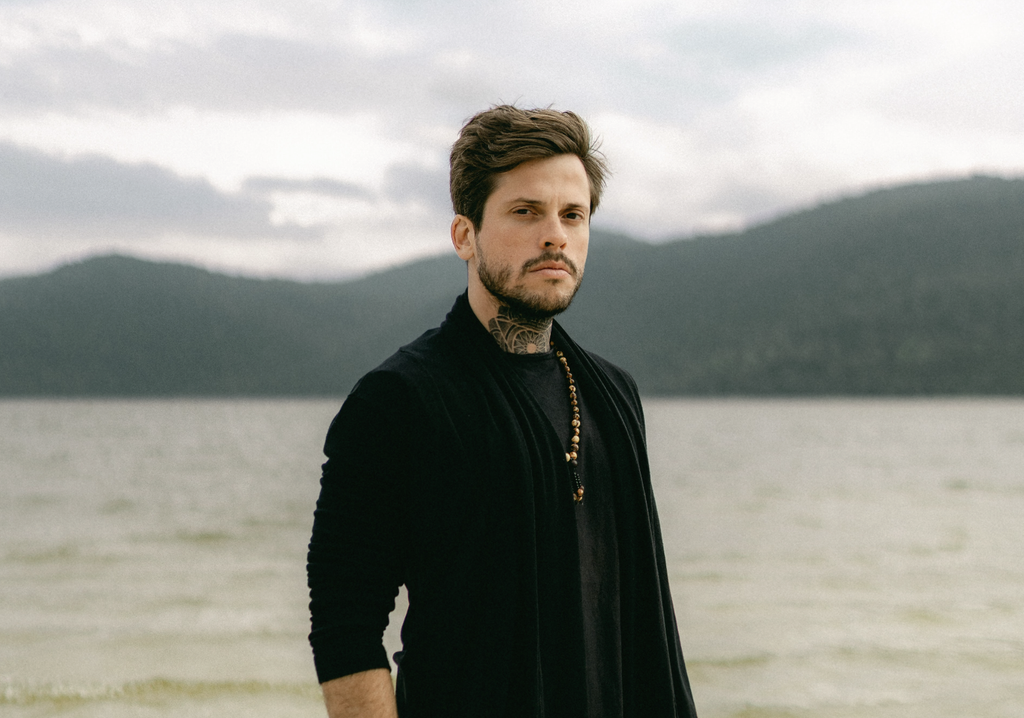
Joachim Garraud has spent decades working at the intersection of electronic music production, technology, and live performance, collaborating with artists including David Guetta, Jean-Michel Jarre, David Bowie, and Kylie Minogue. His latest project takes those interests in a different direction, combining original electronic music with aerial filmmaking and a solar-powered recording studio built inside a bus.
THE INFINITE WEST is a 4-minute, 17-second film shot across the California desert, with Garraud responsible for the music, filming, and production.
What makes the project particularly interesting is the relationship between the music and the environment in which it was developed. Rather than composing in a conventional studio and sourcing footage afterward, Garraud has spent years developing LAGoodVibe, a mobile recording facility that lets him work with electronic instruments while traveling through remote locations.
The bus runs on solar power, providing the electricity needed for music production without relying on a conventional electrical connection. It has already served as the setting for a collaborative recording documentary, and THE INFINITE WEST returns to the same region with a considerably different approach to presenting the experience.
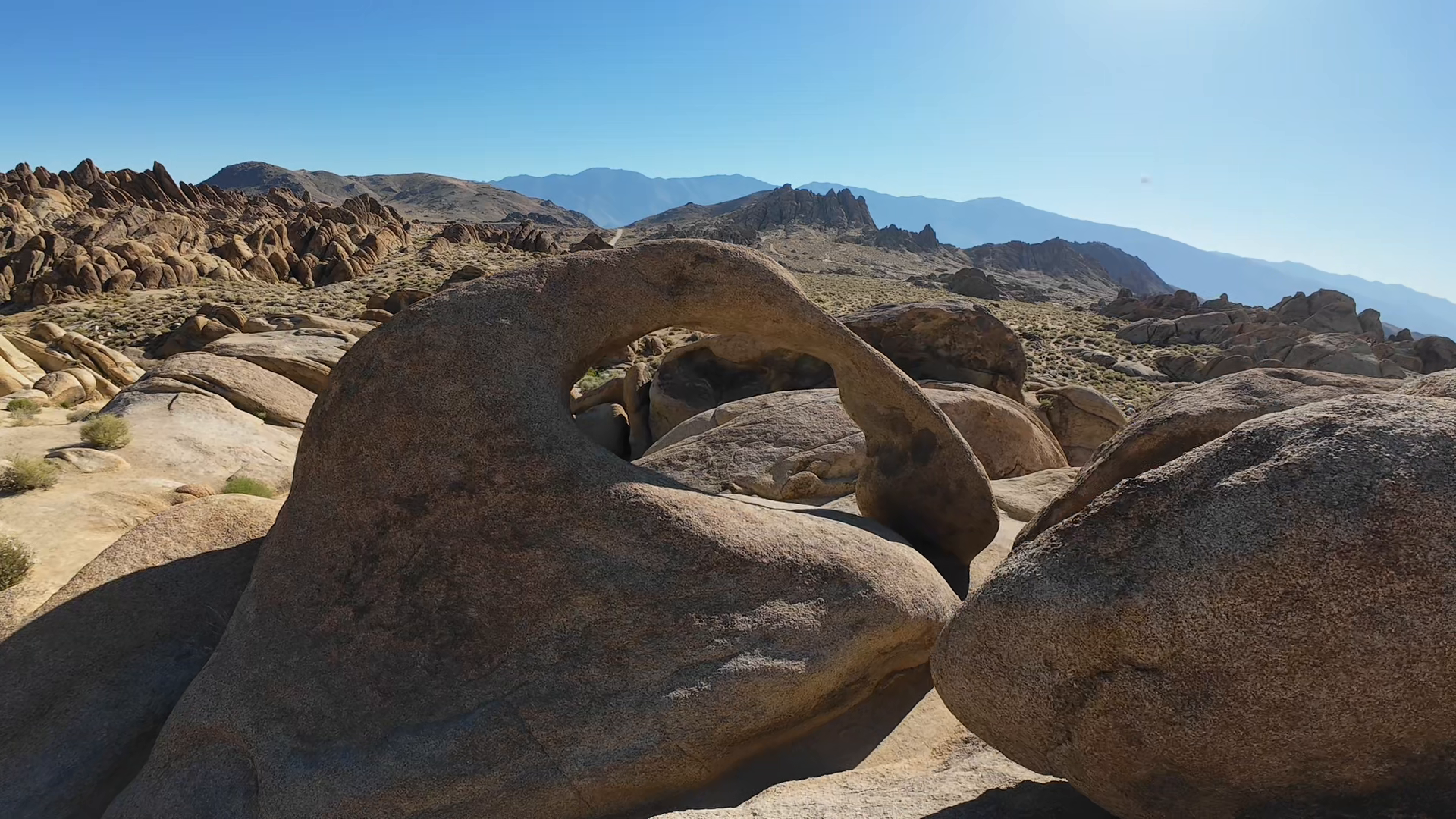
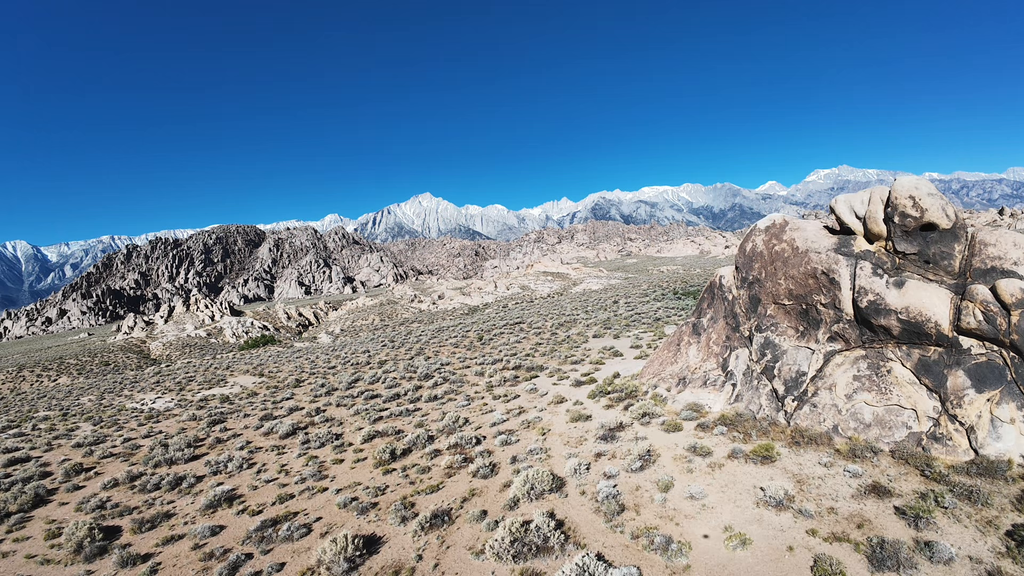
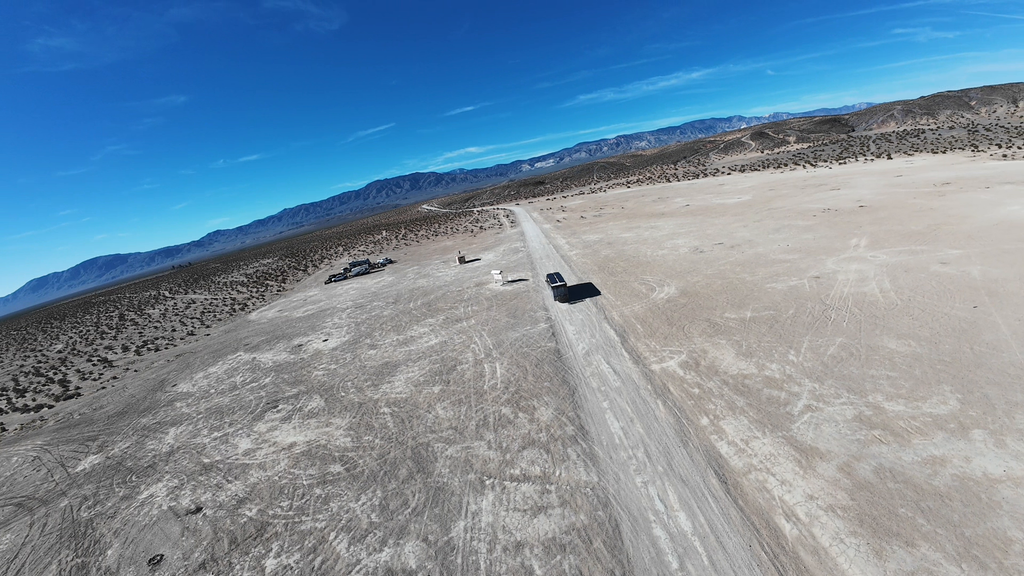
The new film contains no spoken dialogue, interviews, or explanatory voiceovers. Instead, it features aerial footage captured with drones and first-person-view flight technology, accompanied by an original experimental electronic score. The locations include a dry lake bed, the geological formations at Trona Pinnacles, and Alabama Hills beneath the Sierra Nevada mountains, before concluding at Mobius Arch.
Garraud has removed the documentary interviews and recording-session footage from his earlier project, focusing on the relationship between the moving images and the original music.
A Solar-Powered Recording Studio Built for the California Desert
LAGoodVibe is a professional mobile recording studio built into a bus, allowing Garraud to compose, record, and produce music in locations that would otherwise lack the infrastructure required for an electronic music workspace. The vehicle runs on solar power, making it particularly well-suited to the desert environments where he has spent considerable time working.
The concept presents a different approach to mobile music production.
Most portable setups center on laptops, compact controllers, audio interfaces, and headphones, letting producers work while traveling without carrying a full studio. LAGoodVibe extends that concept through a dedicated vehicle containing recording equipment and its own power infrastructure, providing a more complete production environment that can operate away from conventional buildings.
That distinction matters because remote work adds considerations beyond simply transporting equipment. Producers need to account for available electricity, recording conditions, temperature, storage, and how long their systems can run without external power. Solar generation reduces dependence on electrical infrastructure, but it also requires planning around available sunlight and the energy demands of the equipment.
We’ve previously examined similar considerations in our article on producing music while traveling, which discussed the equipment, power systems, and logistical decisions involved in maintaining a mobile recording setup. LAGoodVibe approaches many of those requirements on a larger scale, with the recording space integrated into a vehicle designed specifically for music production.
The location also directly relates to Garraud’s creative process.

Working in the California desert allows him to spend time away from a conventional studio while maintaining access to the instruments and recording equipment he uses professionally. It also provides the scenery that appears in his films, giving him opportunities to develop musical and visual material during the same trips.
That combination of activities has become central to the LAGoodVibe project. The studio serves as a place to record music, while the vehicle and its surroundings provide material for the films Garraud develops alongside his compositions.
THE INFINITE WEST Uses Original Music and Aerial Cinematography
The film was produced in 1920 × 1080 resolution at 30 frames per second, with its visual material captured entirely through conventional drones and FPV equipment. Garraud composed the original electronic score himself, with no dialogue, lyrics, or third-party material in the final production.
The locations offer several distinct visual subjects across the California desert.
The opening includes a dry lake bed, followed by the rock formations at Trona Pinnacles and the larger boulder formations of Alabama Hills. The film concludes at Mobius Arch, a natural rock formation near the eastern Sierra Nevada.
Those locations are well suited to aerial filming because their scale, geological features, and surrounding terrain can be recorded from viewpoints that would be difficult to achieve using ground-based cameras. Drone movement also lets the filmmaker change distance and perspective throughout a sequence without traditional camera tracks or supporting equipment.
We previously explored some of those considerations in my interview with Pablo Nouvelle about composing electronic music for film. Nouvelle discussed his work as an electronic music producer and filmmaker, including how visual storytelling influenced his approach to composition. Garraud’s new project connects those disciplines through a different production process, with the same person responsible for the music and aerial cinematography.
Where to Watch THE INFINITE WEST
THE INFINITE WEST is available through Joachim Garraud’s official YouTube channel. The video premiered on July 26, 2026, and was subsequently shared with Magnetic Magazine as part of the film’s current editorial promotion.
The film also provides another opportunity to consider the role of location in electronic music composition. Recording outside a conventional studio introduces logistical challenges, but it can also change the conditions under which an artist develops ideas, collaborates, and approaches musical decisions.
For Garraud, that relationship has already supported a full collaborative documentary, several original recordings, and now a shorter film built around his own compositions and aerial footage. The continued development of LAGoodVibe suggests that the vehicle has become a recurring part of his approach to making music rather than a temporary recording experiment.
THE INFINITE WEST provides a concise look at that work, combining original electronic composition, aerial cinematography, and a mobile studio designed to operate independently of conventional electrical infrastructure.
Additional information is available through the official Joachim Garraud website and the LAGoodVibe project website.

Will Vance is a professional music producer who has been involved in the industry for the better part of a decade and has been the managing editor at Magnetic Magazine since mid-2022. In that time period, he has published thousands of articles on music production, industry think pieces and educational articles about the music industry. Over the last decade as a professional music producer, Will Vance has also ran multiple successful and highly respected record labels in the industry, including Where The Heart Is Records as well as having launched a new label with a focus on community through Magnetic Magazine. When not running these labels or producing his own music, Vance is likely writing for other top industry sites like Waves or the Hyperbits Masterclass or working on his upcoming book on mindfulness in music production. On the rare chance he's not thinking about music production, he's probably running a game of Dungeons and Dragons with his friends which he has been the dungeon master for for many years.