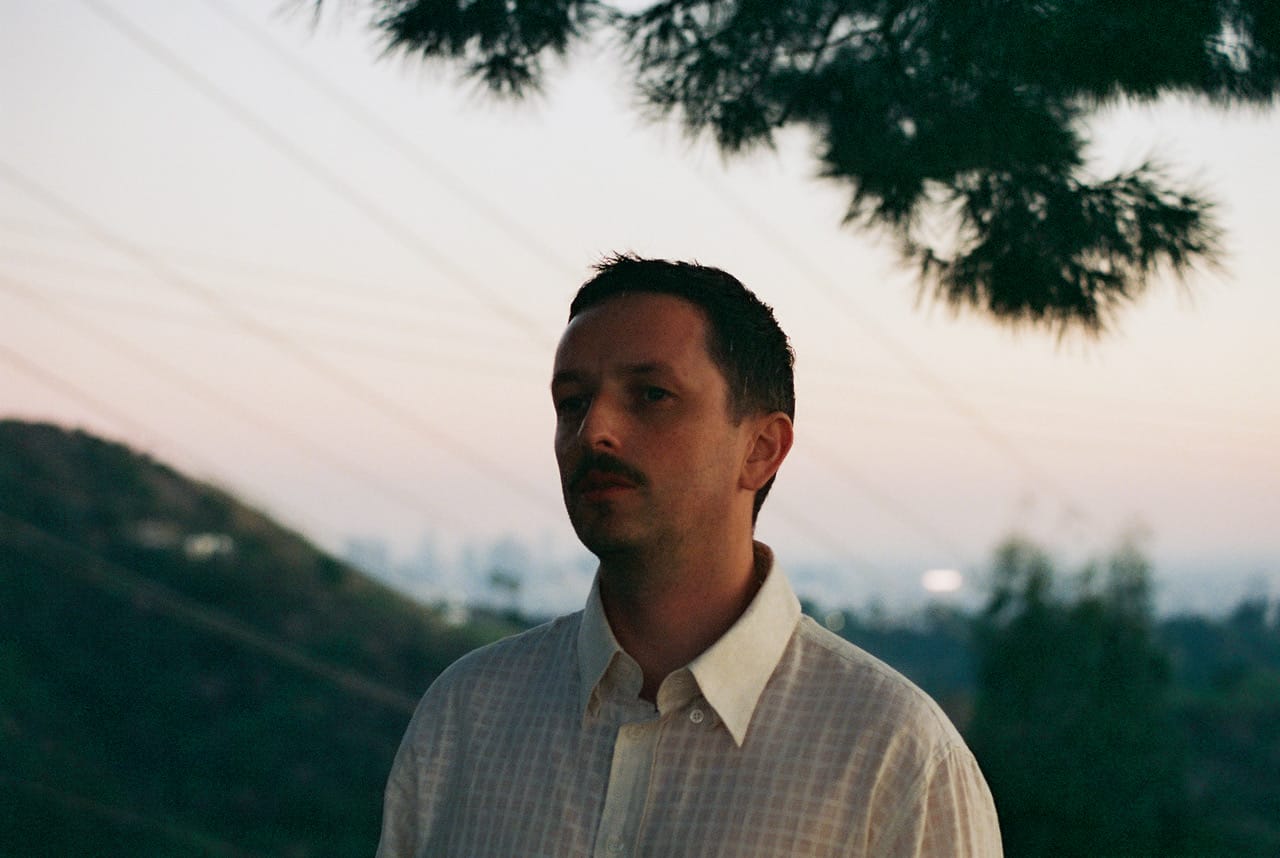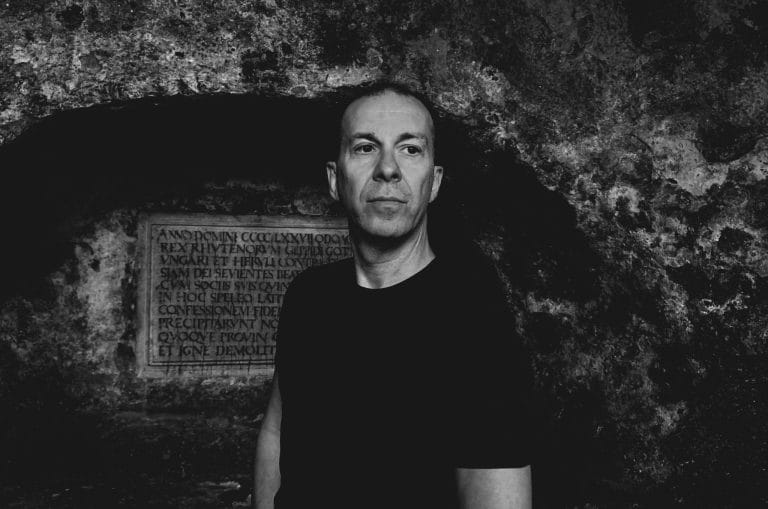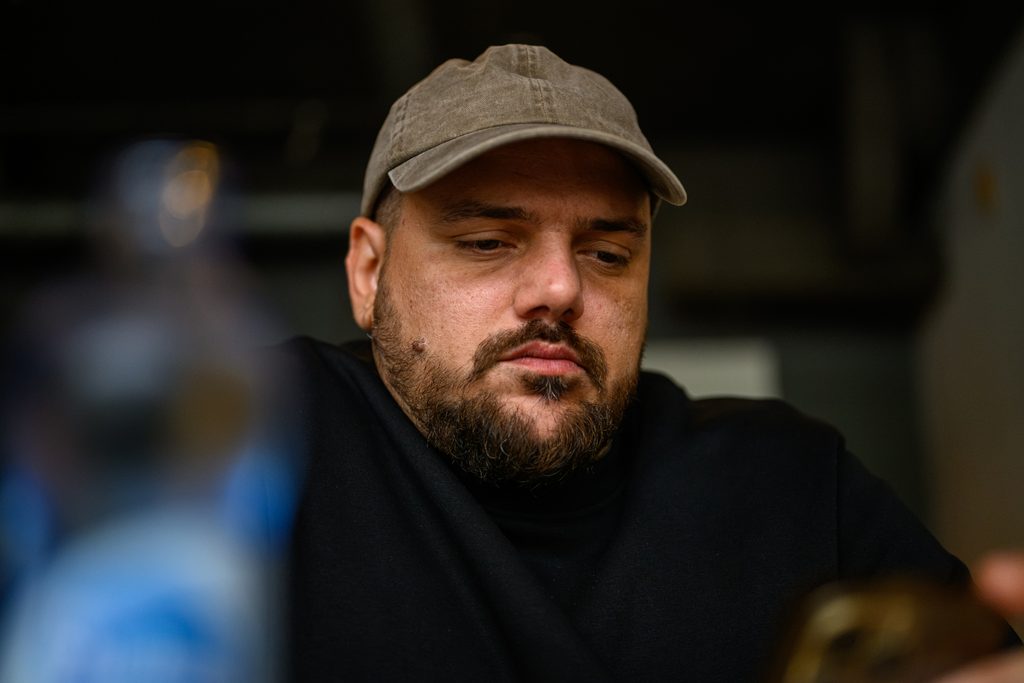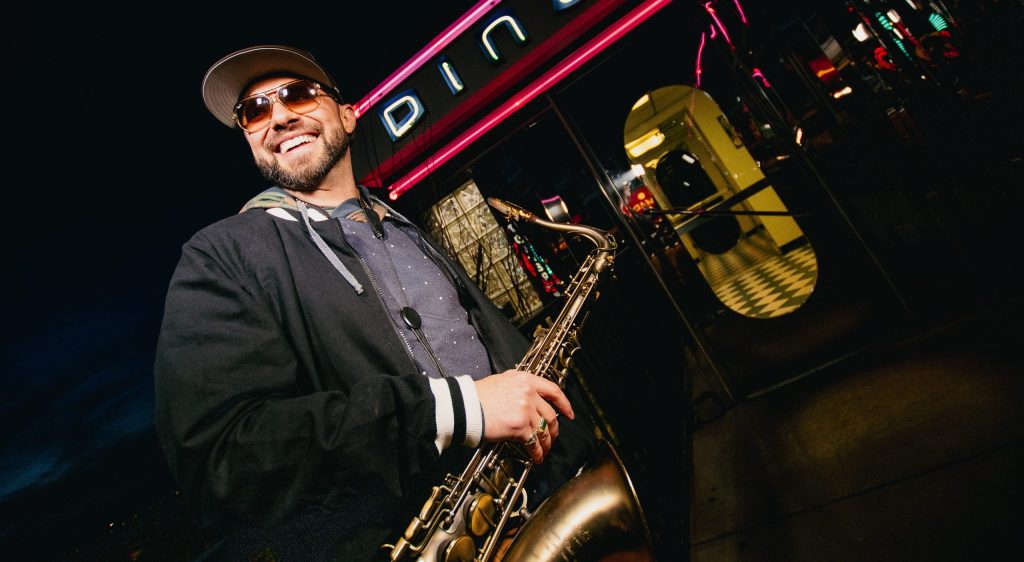
Cale Anderson’s (@caleanderson_) Yemaya (We All Come from the Goddess) is a strange, hypnotic, and devotional folktronica album from the Victoria, Australia-based singer-songwriter and producer. Built largely on the Maschine MK3, with guitar, vocals recorded on a Rode NT-1, and a production palette leaning heavily on UVI plugins, the album moves between electronic music, folk, devotional writing, art pop, spiritual imagery, and leftfield bedroom-production instincts without trying to sand down the more unusual parts of its personality.
That Maschine-driven approach also puts the record in conversation with the hands-on production workflows I’ve covered before, including my article on Maschine 3’s major update and new sound library.
The album’s pitch describes it as a devotional work, but the record itself does not treat devotion as something polished, solemn, or easily explained.
Anderson writes about Goddess worship, romance, rebirth, loss, mythology, spiritual longing, and absurdity with a voice that is direct about its own imperfections. That is part of what gives Yemaya its odd pull. It is deeply sincere without feeling overly formal, and it lets folk songwriting, synth-heavy production, spiritual symbolism, and surreal lyricism sit beside each other without forcing them into a cleaner shape.
In the interview below, Anderson talks about what devotion means inside the album, how he approached Yemaya as a personal spiritual symbol rather than a religious authority, and why the “pseudo” in pseudo-folktronica matters. He also opens up about schizoaffective disorder, spiritual imagination, lyrical obscurity, humor, and the creative chapter that Yemaya seems to close before his next projects begin.
Interview With Cale Anderson
You describe Yemaya as a devotional album presented in an unconventional form. What does devotion mean within this record, and how did that definition affect the writing?
I think the unconventional aspect of Yemaya comes from the way the album constantly shifts between genres while still feeling like one complete work. Across the record you’ll hear recurring motifs, familiar instrumentation, and vocal ideas that hold everything together, but lyrically it’s a bit of a beautiful mess. It’s always reaching toward these high spiritual concepts, but it never takes itself so seriously that it becomes rigid. There’s an edge to it, and at times almost a sense of satire. I liked the idea that something deeply devotional could also be strange, playful, and unpredictable.
To me, devotion is an undying attention to a person, place, or idea that transforms the way you experience the world. It can lead you into novelty, romance, higher understanding, or even enlightenment. If that devotion is directed toward another person, it can unlock a way of existing where service, admiration, unity and respect become second nature. You’re no longer simply observing them—you begin to experience life alongside them, almost as one.
That understanding of devotion informed nearly every creative decision on the album. It shaped what I was writing about, but it also influenced how the music itself should feel. I wanted the production to be immersive and hypnotic, using unusual synth textures, strange chord voicings, and unconventional sounds—like triggering recordings of footsteps from the pads of my Maschine MK3—to create something that felt ritualistic without becoming overly solemn.
Once I understood that Yemaya was fundamentally a devotional record, the lyrical direction became much clearer. The songs naturally gravitated toward the figure of a goddess, her children, the idea of returning home, finding strength through unity, romance, and even the recurring imagery of mudfossils. Those ideas might seem unrelated on paper, but they all orbit the same central feeling: the search for something sacred, approached through my own imperfect, curious, and sometimes irreverent perspective.
Who is Yemaya within the traditions that informed the record, and how did you approach a subject with established cultural and religious meaning?
My first encounter with the name Yemaya wasn’t through religion at all—it was through Yemaya Festival in 2015. I didn’t know who Yemaya was at the time; I just loved the sound of the name and wanted to go. Looking back, that period of my life was also when my schizoaffective disorder was beginning to emerge, although I didn’t understand that then. Since receiving my diagnosis, I’ve had a lot of time to reflect on how that experience shaped the spiritual framework I was building for myself.
Because of that, I don’t speak about Yemaya as a practitioner of Yoruba religion or any of the traditions in which she is a living and deeply respected deity. My relationship with Yemaya is personal rather than religious. Over the past decade, she has become a central figure within my own inner world and spiritual imagination. She’s less a theological definition and more a symbolic presence that I’ve returned to again and again while trying to make sense of my experiences.
Even before making this album, she had already found her way into my music. I used to chant “Om Mani Yemaya” in songs such as “Surprise! Rabbit” under my alternative project, FRET LeK. In many ways, Yemaya isn’t the beginning of that relationship—it’s the culmination of ten years of exploring it.
Within my own worldview, I often see Yemaya as different expressions of the same universal feminine presence. I find parallels with Sophia in Gnosticism, Wisdom in Christianity, Gaia, Brigid from Irish tradition, Mother Ayahuasca, and even the universe itself. I’m not suggesting these figures are literally the same within their respective traditions, but in my own creative and spiritual language they became different faces of a shared idea.
That personal approach was also how I tried to remain respectful. Rather than presenting myself as someone interpreting an established religion, I focused on telling the truth about my own experience. I wasn’t trying to explain who Yemaya is for anyone else—I was exploring who she had become within my own life. Throughout the album I also allow that central figure to appear through different names and identities, almost as if the same presence is wearing different skins. That felt more honest to my experience than trying to create a definitive portrait.
For me, the greatest act of devotion wasn’t trying to sound authoritative—it was simply being myself as truthfully as I could.
Folk songwriting often relies on direct storytelling, while your lyrics lean toward stranger and less literal imagery. How did you decide how much information to give the listener?
I don’t consciously avoid explaining everything—at least I don’t think I do. I just don’t feel the need to explain every image or every line. There are definitely deeper meanings woven throughout the lyrics if someone wants to spend time with them, but I hope there’s enough space left for the listener to build their own inner world while they’re listening. That’s something that’s really important to me.
More than anything, I want people to arrive at their own interpretations. I almost hope that somewhere out there are people whose minds work similarly to mine, where a lyric that seems completely abstract to one person suddenly makes perfect emotional sense to someone else. Those moments feel more meaningful than if I’d simply told the listener exactly what to think.
A huge influence on that approach is Emilie Nicolas. I love the way she sings lyrics that seem to exist in two places at once. Sometimes, depending on how you’re listening, the same phrase can suggest completely different meanings. I don’t know if that’s an intentional technique or a beautiful consequence of her multilingual background, but it’s something I’ve always admired. It reminds me that lyrics don’t have to exist as fixed objects—they can feel fluid and alive.
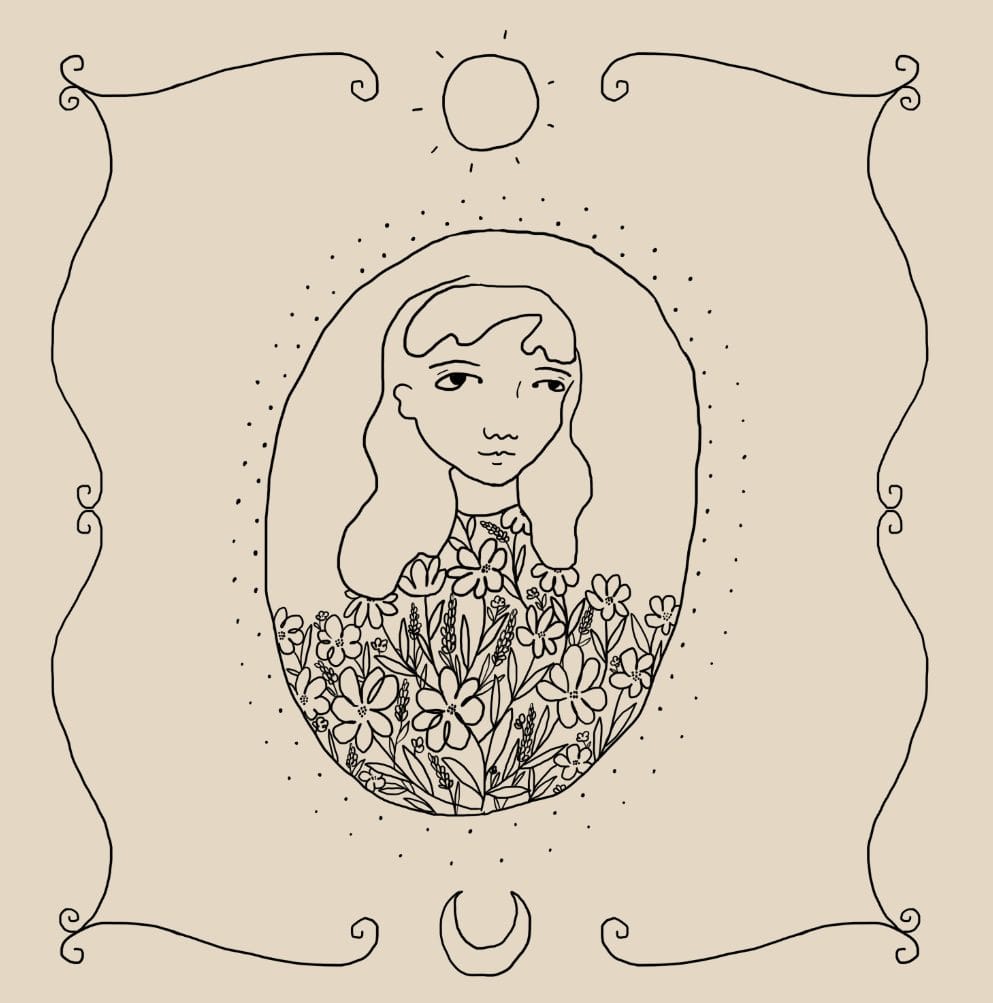
I’ve also been deeply influenced by the poet Pendragon through his collaborations with Estas Tonne, as well as Thomas Moore, particularly my own interpretation of his poem O’ Bessie. Visually, Sara Gsilva’s tarot-inspired artwork, including the commissioned pieces she created for Yemaya, helped shape the symbolic language of the album just as much as the words themselves.
I think symbolism can sometimes communicate wisdom more effectively than straightforward narrative communicates knowledge. You can understand every lyric on a record and still miss its feeling. For me, music is ultimately about that feeling. Sometimes a symbol reaches somewhere that an explanation simply can’t.
There is definitely a point where lyrics become too obscure, and I know I’ve crossed that line many times—including on Yemaya. But I’m okay with that. I’d rather occasionally disappear into the strange than constantly explain myself. That’s just part of who I am as a writer.
Most of my lyrics begin with dreams, spiritual experiences, emotions, relationships, or vivid mental images. Once those fragments exist, the music tells me what belongs together.
The production and lyrics developed alongside one another. The surreal imagery naturally found a home inside the strange timbres of instruments like the PPG Wave, UVI’s Synth Anthology, and the Casio CZ-1. Those sounds already feel uncanny and dreamlike, so the lyrics became a bridge into that sonic world rather than something separate from it.
You have described the album as pseudo-folktronica. What does the “pseudo” distinction allow you to communicate that the standard folktronica label would miss?
I wouldn’t simply call Yemaya folktronica because, although it follows some of the traditions of folk music, it only really borrows certain aspects of them. The record isn’t trying to faithfully inhabit the genre—it’s using pieces of it as a language to say something else.
That’s where the word pseudo comes in. I find it funny because it almost admits to being an inauthentic version of folktronica before anyone else can point it out. I’m borrowing from folk music, but I’m not pretending I’ve fully earned that label. In my mind, it’s closer to imagining what folk music might have sounded like if someone had leaned harder into the drum machines and synthesizers of the late ’70s and early ‘80s. It’s less about recreating tradition and more about reinterpreting it.
There were definitely records that made me realise existing genre labels weren’t enough. Emilie Nicolas’ Tranquille Emile is a great example. You could probably describe it as jazz fusion or alternative pop, but neither label really captures what it feels like. To me, it sounds like pop music from the future. That record made me realise genres are useful reference points, but they rarely tell the whole story.
So pseudo-folktronica became a label that was descriptive, playful, and a little tongue-in-cheek. It acknowledges the influence without pretending to be definitive.
If someone had never heard my music and saw that label, I imagine they’d be a little confused—and I actually like that. I think Mother of Souls would immediately reassure them with its obvious folktronica roots, but as the album unfolds, those expectations begin to shift. By the end, they might not have a perfect definition of pseudo-folktronica, but hopefully they’d understand why I needed a slightly imperfect label for a record that doesn’t sit comfortably inside a single genre.
I don’t think genres should be prisons. They’re better when they’re invitations. If someone finishes Yemaya and thinks, “Oh… I guess this is pseudo-folktronica,” then the label has done exactly what I wanted it to do.
Were there moments when the spiritual concept began to feel too direct or overly formal, and how did you bring the writing back toward your own voice?
Definitely. Earlier in my songwriting, I think I sometimes drifted into being a bit preachy. That was something I gradually outgrew through years of writing and experimenting. Looking back, I can hear it in songs like Free as a Sheep and How It Feels. I still genuinely love those songs, but I also recognise that they can feel overly direct, political, or as though they’re trying to persuade the listener.
These days, I know a song has stopped sounding like me when it’s trying too hard to communicate a specific message to a specific person. If I’m writing with one individual in mind and hoping they’ll understand exactly what I’m saying, the lyrics usually become too literal. That’s when I know I’ve drifted away from the kind of writing that feels natural.
Humour and absurdity have become my way back. They’re a huge part of how I write now, and they were essential to Yemaya. They soften the edges of the spiritual ideas and stop the record from feeling overly solemn. I wanted the album to explore devotion without sounding like it was delivering a sermon.
I also made a conscious effort to include ordinary, everyday moments alongside the spiritual imagery. That contrast helps keep the songs grounded. Some tracks changed quite dramatically because of that process, especially 444 and Mother of Souls. They originally leaned further toward being overtly religious or serious, but as I kept rewriting, I found myself introducing stranger images and moments of levity that felt much more like my own voice.
For me, spirituality has always had room for humour. If a universal goddess exists, I don’t imagine she’d want us to lose our sense of playfulness. So rather than removing the spiritual ideas, I let the weirder ones stand beside them. That balance feels much more honest.
Looking back across the album, The Mindless Serenade probably represents that balance best. The writing is simpler and more relaxed, but it still carries the emotional and spiritual ideas I wanted to explore. It trusts the listener rather than trying to convince them, and that’s become much closer to the kind of songwriter I want to be.
After completing Yemaya, did the record resolve the spiritual need that initiated it, or did it leave you with new questions that may continue into your next project?
Finishing Yemaya definitely gave me a sense of peace and completion. More than anything, it felt like I had finally put a name and a shape to something I’d been carrying around internally for almost ten years. My relationship with Yemaya changed simply because I had finally expressed it. It was no longer just living inside me—it had become an album.
In many ways, Yemaya feels like the end of a ten-year cycle. That chapter feels complete.
At the same time, I don’t think it’s the last time I’ll explore these ideas. I can imagine returning to them one day, perhaps with another album whose artwork and central themes resonate with the same idea that runs through Yemaya: we all come from the Goddess. Whether I use the name Yemaya again or approach it from another angle, I think those ideas will always be somewhere in my work.
The questions I’m left with are more personal than musical. How can I become more in tune with higher concepts? How can I bring those ideas more deeply into both my creative life and my inner world? And is there a belief system that truly reflects the landscape I’ve been building inside myself all these years?
Making Yemaya hasn’t fundamentally changed the way I write songs, but it has given me new creative tools that I’ll carry forward. I imagine I’ll continue writing with absurdity, uncanny imagery and emotional honesty, because those are the places where I feel most like myself.
I also feel another project pulling me in a completely different direction. I’m not living inside Yemaya anymore.
Lately I’ve been excited by the idea of making an album with the Teenage Engineering Medieval sampler. I want to lean into medieval themes purely because it sounds fun. I came across someone joking, “This isn’t house music, this is castle music,” in a YouTube tutorial about the sampler, and that line stuck with me. It inspired the working title of my next project: Castle. It feels like a chance to step into a completely different world.
I’ve also just completed another album, Dreaming of Hedgehogs, inspired by the artwork of Roos Stokkel, who also created the album cover. So while Yemaya closes one important chapter, it also leaves me feeling excited to see where the next one begins.
Thanks for taking the time to talk with me.

Will Vance is a professional music producer who has been involved in the industry for the better part of a decade and has been the managing editor at Magnetic Magazine since mid-2022. In that time period, he has published thousands of articles on music production, industry think pieces and educational articles about the music industry. Over the last decade as a professional music producer, Will Vance has also ran multiple successful and highly respected record labels in the industry, including Where The Heart Is Records as well as having launched a new label with a focus on community through Magnetic Magazine. When not running these labels or producing his own music, Vance is likely writing for other top industry sites like Waves or the Hyperbits Masterclass or working on his upcoming book on mindfulness in music production. On the rare chance he's not thinking about music production, he's probably running a game of Dungeons and Dragons with his friends which he has been the dungeon master for for many years.