Images Courtesy Of Vinyl Floor
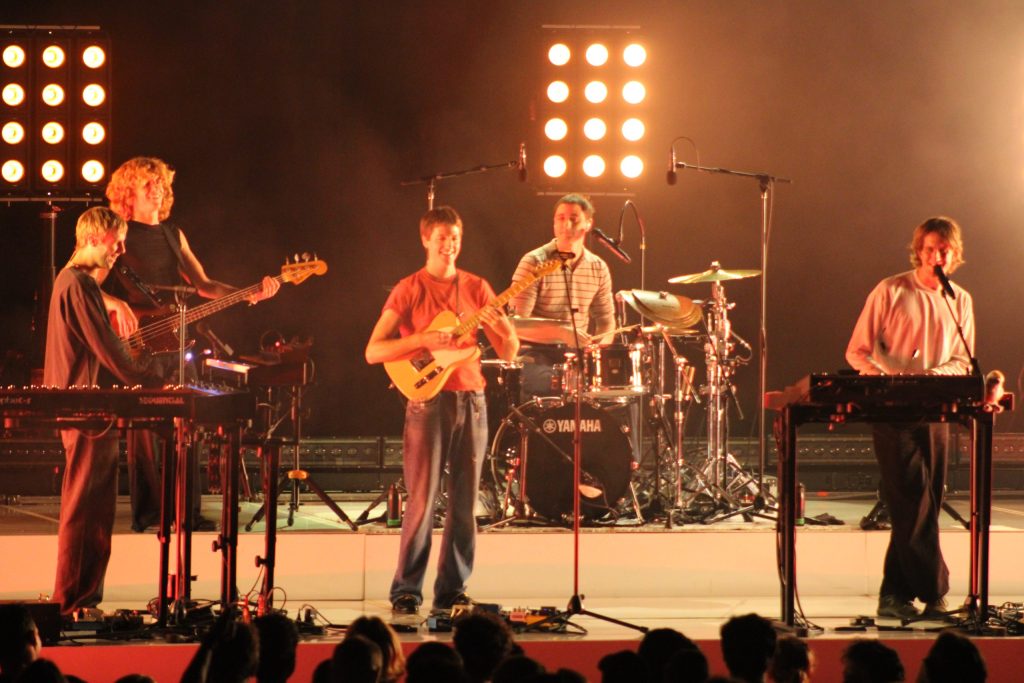
Vinyl Floor’s Balancing Act feels like the work of a band that knows exactly how much space a song needs before it starts asking for too much. The Copenhagen duo, formed by brothers Thomas Charlie Pedersen and Daniel Pedersen in 2007, return with their sixth full-length album, and the record carries the calm assurance of writers who trust melody, tone, and pacing without chasing instant impact.
Released through Karmanian Records, Balancing Act runs 13 songs and just under 48 minutes, which is certainly enough for me to sink my teeth into, and it’s a challenge I took up this weekend. The album was built from live basic tracks recorded at Studio Möllan in Malmö with producer and engineer Emil Isaksson, with overdubs and vocals completed in Copenhagen.
Søren Vestergaard handled the mix and master at The Shelter, and that production path matters because the record feels played, not assembled.
The Record Feels Warm Because the Band Lets the Performances Breathe
Acoustic guitars, piano, drums, bass, horns, strings, electronics, and close vocal harmonies all move through the same room-like warmth. Nothing feels crammed in for the sake of scale. Even when the arrangements widen, the songwriting stays at the center.
“All This and More” and “I’m on the Upside” Set the Album’s 90s-Hearted Tone
“All This and More” opens the album with relaxed confidence. The keys and drums set a reflective tone, then the harmonies arrive with the kind of melodic ease that makes the song feel familiar without feeling recycled. It carries some late-60s and early-70s British pop DNA, though Vinyl Floor never treats those references like museum pieces.
“I’m on the Upside” brings a little more grit into the drums and guitar, pushing the record into brighter indie rock territory while keeping the vocal blend at the center. It is one of the early signs that Balancing Act is not trying to stay in one exact pocket. The album moves, though it moves carefully.
That melodic discipline is one of the album’s best qualities and is what really floored me during my listens this weekend.
The songs are arranged with care, but they rarely feel over-decorated which is what my article on how song structure can improve your lyrics broke down exactly as it gets into why placement matters so much when melody and storytelling have to carry a track, and I think the guys really knocked this exact ethos out of the park.
Balancing Act uses that idea across the entirety of the record, letting each section serve the song instead of treating every chorus as a forced peak.

The Middle Run Is Where Balancing Act Starts to Open Up
“The Helping Hand” softens the pace, moving toward a ballad form with gentle percussion, piano, and an almost floating quality. It is followed by “Mr. Rubinstein,” one of the album’s clearest emotional centers. The song builds slowly around piano, acoustic guitar, and string work from Christian Ellegaard of the Danish Symphony Orchestra.
It has a late-evening feel, patient and carefully held, with enough harmonic detail to reward repeat listens.
“Tell the World It Happened” Gives the Album Its Most Immediate Lift
“Tell the World It Happened” is one of the record’s best turns. The looping piano movement, darker vocal color, and drum urgency give it a different kind of tension from the earlier tracks. It feels slightly more dramatic without breaking the album’s tone.
“Land of the Desert” then pulls back again, leaning into a more intimate melodic space that hints at folk without fully stepping away from the band’s classic pop-rock foundation.
The Back Half Keeps Finding New Colors Without Losing the Thread
“Back of My Hand” brings one of the album’s most distinct instrumental moods. The rhythm has a steady pull, and the arrangement carries an Eastern-leaning melodic flavor that gives the track a cinematic edge. It is followed by “Puppet Laureate,” a faster and more playful song that brings some bounce back into the album without sounding lightweight.
“The Swan of Eileen Lake” makes good use of vocal harmony, especially around the hook, while “Adelaide” slows the record into a piano-led character piece. It is one of the more understated songs here, and while it does not hit with the same force as the album’s best moments, it helps maintain the record’s narrative patience.
“Less Dystopian Book” and “Jacaranda Blossoms” Bring the Final Stretch Into Focus
The final stretch adds some of the album’s richest details. “Less Dystopian Book” brings a slightly heavier drum sound and some of the album’s sharper lyrical energy, touching on creative fatigue and industry reality without letting bitterness take over the writing. “Jacaranda Blossoms,” the longest song here, opens with piano and gradually expands into a looser pop-rock shape, giving the band room to move through several moods before the title track closes the album in compact form.
The title track, “Balancing Act,” is brief but fitting. Its rhythm has a slight bounce, the vocal and instrumental parts feel measured, and it ends the album without trying to summarize everything too neatly. That choice works because the album has already made its case by then.
Why Balancing Act Rewards a Full Listen
What makes Balancing Act satisfying is its patience. Vinyl Floor are not trying to overwhelm the listener with volume, speed, or studio gloss. They are writing songs with shape, melodic memory, and enough human detail to feel lived-in.
That same relationship between craft and long-term artistic identity came up in my article on Blu and Exile’s advice for building a lasting career through faith and authenticity, and while the genre is different, the principle carries over. Artists last when the work sounds like it comes from a real point of view.
Vinyl Floor Made an Album That Takes Its Time for the Right Reasons
Balancing Act is a warm, thoughtful album from a band still refining its voice six records in, and while its best songs are quietly memorable, its arrangements are full without feeling crowded, and its emotional tone lands through restraint it still hits with an air of rugged authenticity which few bands of their size and scale are able to pull of so well.
For listeners who miss alternative and melodic rock albums built around patience, musicianship, and careful songwriting, Vinyl Floor have made a record worth sitting with.

Will Vance is a professional music producer who has been involved in the industry for the better part of a decade and has been the managing editor at Magnetic Magazine since mid-2022. In that time period, he has published thousands of articles on music production, industry think pieces and educational articles about the music industry. Over the last decade as a professional music producer, Will Vance has also ran multiple successful and highly respected record labels in the industry, including Where The Heart Is Records as well as having launched a new label with a focus on community through Magnetic Magazine. When not running these labels or producing his own music, Vance is likely writing for other top industry sites like Waves or the Hyperbits Masterclass or working on his upcoming book on mindfulness in music production. On the rare chance he's not thinking about music production, he's probably running a game of Dungeons and Dragons with his friends which he has been the dungeon master for for many years.